By Sir Hannibal
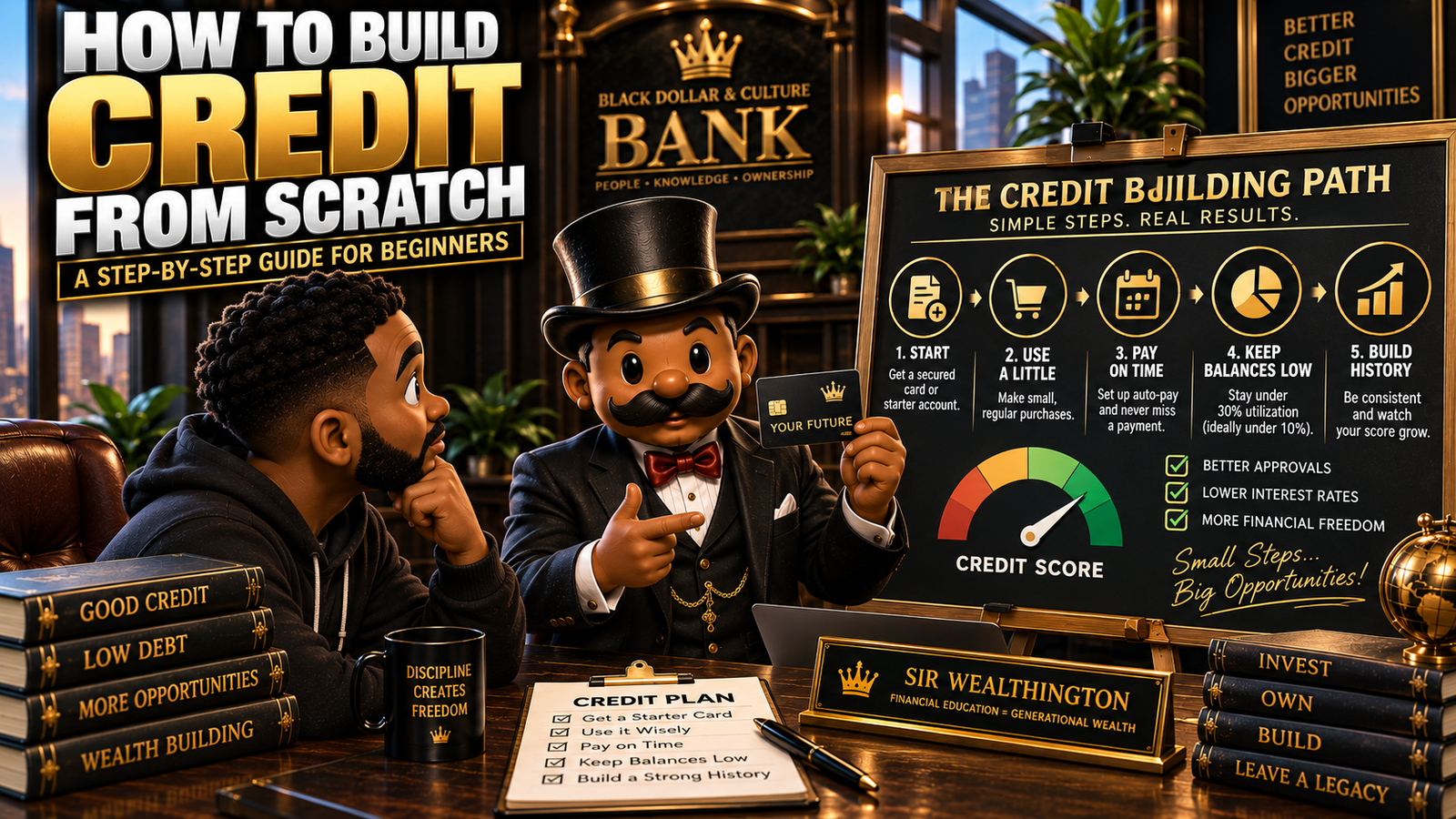
Everybody tells you that you need good credit.
Then you try to get credit and discover the problem: lenders want to see that you’ve successfully managed credit before they’ll give you credit.
So how are you supposed to build a credit history when you’re starting with nothing?
The good news is that you don’t need a $30,000 car loan, five credit cards or years of debt to begin. Building credit from scratch is mostly about establishing one or two accounts that report to the credit bureaus and managing them consistently over time.
The goal isn’t to borrow as much money as possible.
The goal is to demonstrate that when someone extends credit to you, you handle it responsibly.
Your credit score is really a financial reputation
Your credit score isn’t based on how much money you make.
FICO says its scores are calculated from information contained in your credit report. For the general population, the major categories are payment history at 35%, amounts owed at 30%, length of credit history at 15%, new credit at 10%, and credit mix at 10%. The exact importance can vary depending on someone’s credit profile.
That tells us something immediately.
If you’re starting from scratch, you don’t need to obsess over complicated credit tricks.
You need to establish a record showing:
I borrow responsibly. I don’t max out my available credit. And I pay what I owe on time.
That’s the foundation.
A secured credit card can give you somewhere to start
If you have no credit history, getting approved for a traditional unsecured credit card may be difficult.
One alternative is a secured credit card.
With a secured card, you provide a refundable security deposit that typically helps establish your credit limit. For example, you might deposit $500 and receive a $500 credit line.
The CFPB specifically identifies secured credit cards as one option for establishing or rebuilding credit.
But before applying, check the terms carefully.
You want to know whether the issuer reports your payment activity to the major credit bureaus, what fees you’ll pay, whether there’s an annual fee, and whether the account can eventually graduate to an unsecured card.
You don’t need to carry a balance and pay interest to build credit.
The CFPB recommends paying credit-card balances in full each month to avoid finance charges while continuing to establish positive payment history.
That’s a huge point.
Paying interest isn’t the price of building credit.
Put one small recurring expense on the card
Here’s how simple this can be.
Imagine you receive a secured card with a $500 limit.
Instead of treating that $500 like additional income, put one small predictable expense on it.
Maybe:
$20 streaming subscription
or
$40 phone bill
Then set the account to automatically pay the full statement balance from your checking account every month.
You’re creating activity.
The account reports.
The bill gets paid.
Then you repeat the process.
You’re not trying to impress the credit system by spending $500.
You’re establishing a pattern.
Your credit limit isn’t your spending budget
This is one of the most important lessons for someone building credit.
Suppose your card has a $1,000 limit.
You spend $900.
You haven’t technically exceeded the limit, but you’re using 90% of the available credit.
That’s called credit utilization, and utilization is an important component of FICO’s “amounts owed” category. Generally, lower utilization is better than being close to maxed out.
The CFPB notes that some experts suggest staying below 30% while others recommend below 10%.
But don’t turn those percentages into another game.
If you can comfortably keep reported balances low and pay the statement balance in full, do that.
A $1,000 credit limit doesn’t mean you suddenly have $1,000 more money.
You still only have the money you actually earned.
Your payment history deserves serious attention
Of all the factors FICO identifies, payment history carries the largest percentage for the general population: 35%.
So if you’re building credit from scratch, create a system that makes missing payments difficult.
Turn on payment reminders.
Set up autopay.
Keep enough money in the connected checking account.
Check the account monthly.
Don’t depend on remembering that your credit-card payment is due on the 17th while you’re managing work, family, bills and everything else.
Automation can protect you from forgetfulness.
And remember: autopay isn’t permission to ignore your accounts. You should still review statements for incorrect or fraudulent charges.
Don’t open five accounts because you’re excited about your first approval
Once someone gets their first credit card, there’s a temptation to start applying everywhere.
One card approves you.
Then another.
Then the department store offers 20% off if you apply.
Then another company sends a “preapproved” offer.
Slow down.
FICO considers new credit and recent account openings when calculating scores. Applying for several accounts over a short period can indicate greater risk, particularly for someone with a short credit history.
A credit-card application can also result in a hard inquiry appearing on your credit report, which may affect your score.
You’re trying to build a history, not a collection of plastic.
Give your first account time to age.
Building credit requires something you can’t hack: time
This is the frustrating part.
You can make the right decisions today, but you can’t manufacture five years of credit history tomorrow.
For a valid FICO Score, FICO says your report generally needs at least one account opened for six months or longer and at least one account reported to the credit bureau within the previous six months.
That doesn’t mean everyone automatically gets a particular score after six months.
It means building credit is a process.
Month after month, you’re creating data.
Paid on time.
Paid on time.
Paid on time.
Balance managed responsibly.
Account kept open.
Over time, that history becomes valuable.
Check what the credit bureaus actually know about you
You should periodically review your credit reports.
The federally authorized site AnnualCreditReport.com currently allows consumers to request free weekly online credit reports from Equifax, Experian and TransUnion.
Get your official free credit reports
Look for accounts you don’t recognize, incorrect balances, inaccurate late payments and incorrect personal information.
Your credit score is built from information in your credit report.
So you want that information to be accurate.
Don’t buy things just to “build credit”
This deserves its own section because it can save someone thousands of dollars.
You don’t need a new car to prove you’re financially responsible.
You don’t need furniture financing.
You don’t need to take out an unnecessary personal loan.
You don’t need to pay interest simply to have different types of credit.
FICO does consider credit mix, but it accounts for about 10% of a typical score calculation, and FICO explicitly says you don’t need one of every type of credit account.
Don’t spend thousands of dollars chasing a few theoretical credit-score points.
Build your finances first.
Let credit support your financial life—not control it.
A simple first-year credit-building system
If I were explaining credit to someone starting completely from zero, I’d keep the system straightforward.
Get one appropriate starter credit product, such as a secured card that reports to the credit bureaus.
Put a small recurring expense on it.
Keep the balance comfortably below the limit.
Set autopay for the full statement balance.
Don’t miss payments.
Don’t constantly apply for new accounts.
Review your credit reports.
Then give the process time.
That’s not exciting.
There isn’t a secret “800 credit score hack.”
But the CFPB itself says rebuilding credit takes time and that there are no shortcuts or secrets.
And that’s actually good news.
You don’t need a secret.
You need a system.
Good credit should eventually save you money—not encourage you to borrow more
Building credit isn’t about reaching a high score so you can collect bigger debts.
A strong credit profile can potentially help you qualify for better borrowing terms when you actually need credit. The CFPB notes that a good credit history can help with access to housing, credit cards and loans and can reduce borrowing costs.
That’s the bigger objective.
Imagine eventually buying a home.
Starting a business.
Financing an income-producing asset.
Or simply qualifying for better financial terms.
Credit becomes another tool in your financial toolbox.
But remember:
A high credit score isn’t the same thing as wealth.
Someone can have excellent credit and no savings.
Someone can have a large income and enormous debt.
Your bigger goal should be building the entire financial picture:
Credit. Savings. Investments. Ownership. Income. Protection. And eventually, family wealth.
Build your credit carefully.
Then use that stronger financial foundation to build things you actually own.

Turn Strong Credit Into a Bigger Family Wealth Strategy
Credit can help you access financial opportunities. The next question is what your family does with those opportunities once you begin accumulating capital and assets.
Family Bank Starter System
Get the Family Bank Starter System
Family Wealth Trust Blueprint / ILIT Guide