Sammy Davis Jr.: The Black Entertainer Who Broke America’s Color Barrier

For decades, America loved Black entertainment… but refused to fully accept Black entertainers. That was the world Sammy Davis Jr. was born into on May 12, 1926. A world where a Black man could sell out theaters… then be denied a hotel room after the show. A world where applause came easier than equality. But Sammy Davis Jr. refused to stay inside the box society built for him. He became one of the most talented entertainers America had ever seen — singer, dancer, comedian, actor, musician, and impressionist all in one. He didn’t just perform on stage… he dominated it. And while many know him as a member of the legendary Rat Pack alongside Frank Sinatra and Dean Martin, his real legacy was much deeper than Hollywood glamour. Sammy Davis Jr. helped crack open doors that America tried hard to keep shut. Before the civil rights movement gained national momentum, Black entertainers were often allowed to perform for white audiences… but could not eat with them, sleep in the same hotels, or enter through the front doors of venues. Imagine that. You entertain the crowd.You make the venue money.You become the reason people buy tickets. But you are still treated like an outsider. Sammy lived that reality. Yet instead of disappearing, he sharpened his craft until the world could no longer ignore him. That’s what made him dangerous to segregation. Excellence. Not just talent — undeniable excellence. His presence in Las Vegas helped pressure casinos and entertainment venues to begin integrating spaces that once excluded Black performers and guests. In many ways, he represented a transition period in America where old racial barriers were beginning to crack under public pressure and undeniable Black achievement. But success came with a cost. Sammy Davis Jr. faced constant racial insults, public scrutiny, and attacks from both white America and parts of Black America that questioned some of his choices and associations. He carried the pressure of representing Black progress in rooms that often never wanted him there in the first place. And still… he performed. Still… he pushed forward. Still… he broke barriers. That’s an important lesson today. Because many people think history only changes through politics. But culture changes history too. Music changes history.Film changes history.Ownership changes history.Visibility changes history. And every time a Black entertainer forced America to recognize Black brilliance, another crack formed in the wall of segregation. Sammy Davis Jr. was one of those cracks. A major one. Today, many entertainers benefit from doors that men like Sammy helped open decades ago. Opportunities in television, film, Las Vegas, and national advertising were not simply “given” to Black performers. People fought social pressure, humiliation, and exclusion to create those opportunities. That’s why remembering these stories matters. Not just to celebrate talent… But to understand sacrifice. Because behind the lights and applause was a man carrying the weight of racism while still smiling on stage. And despite everything, Sammy Davis Jr. became unforgettable. “Talent is not enough. You’ve got to have talent plus determination.” — Sammy Davis Jr. ❤️ Support Independent Black Media Black Dollar & Culture is 100% reader-powered — no corporate sponsors, just truth, history, and the pursuit of generational wealth. Every article you read helps keep these stories alive — stories they tried to erase and lessons they never wanted us to learn. 📘 Build Generational Wealth: The Family Bank Starter System 🏦 Protect Your Legacy With an ILIT: Get Your Family Wealth Trust Blueprint Now – ILIT 📚 Learn the Hidden History They Tried to Erase: The First World Before Erasure Sammy Davis Jr. proved that excellence could force a nation to confront its contradictions. Long before diversity became a corporate slogan, Black entertainers were risking careers, safety, and dignity just to stand on the same stages as everyone else. Their struggle was bigger than entertainment — it was about visibility, humanity, and access. And every generation that understands that history becomes harder to erase. If stories like this matter to you, share this article and help keep Black history alive through Black-owned media. #BlackHistory #TodayInBlackHistory #SammyDavisJr #BlackExcellence #CivilRights #BlackCulture #HollywoodHistory #EntertainmentHistory #BlackDollarAndCulture #Legacy #AfricanAmericanHistory #RatPack #BlackMedia #GenerationalWealth Focus Keyphrase: Sammy Davis Jr Black History Slug: sammy-davis-jr-black-history Meta Description: Discover how Sammy Davis Jr. broke racial barriers in Hollywood and helped reshape American entertainment during segregation. Learn the powerful legacy behind the icon.
If You Don’t Control the Flow of Money… You Don’t Control Your Future (PowerNomics)

There are moments in history when the answers are already written… but ignored. In 1995, Dr. Claud Anderson released PowerNomics — not as motivation, not as theory, but as a blueprint. A structured plan to build economic power through one principle most people still overlook: group economics. And decades later, the question isn’t whether it works… it’s whether we’re finally ready to apply it. Because the issue was never a lack of talent, creativity, or ambition. The issue has always been structure. Money flows in… and flows right back out. Paychecks are earned, spent, and gone before they ever have the chance to circulate, multiply, or build anything lasting. That’s not an economy — that’s a pass-through system. And as long as money behaves that way, wealth will never take root. Group economics starts with a simple but uncomfortable truth: you cannot build wealth alone in a system designed around collective power. Every successful community understands this. Their money doesn’t just move — it moves with intention. It circulates internally. It supports businesses within the group. It hires within the group. It builds systems that reinforce itself before reaching outward. That’s not accidental. That’s design. When Dr. Claud Anderson laid out this framework, he wasn’t asking for support out of sympathy — he was outlining a strategy of survival and control. Because whoever controls the flow of money… controls the outcome. And when money leaves immediately, so does opportunity, ownership, and influence. Think about it in real terms. A dollar earned today can either disappear by tomorrow… or circulate five, six, seven times — creating jobs, sustaining businesses, and funding growth along the way. That’s the difference between spending and building. One is temporary. The other is intentional. But group economics requires a shift in thinking — from individual success to collective progress. It means asking different questions before every transaction: Who am I supporting? Where is this money going? What is this building? Because every dollar is a vote. And too often, those votes are cast without strategy. The blueprint is clear. First, money must circulate. Then, ownership must follow. Then institutions are built. And finally, legacy is secured. But without that first step — without group economics — everything else collapses before it ever begins. This is why so many efforts fail. People jump straight to ownership without circulation. They try to build institutions without a base. They aim for wealth without a system to sustain it. And when the foundation isn’t there, nothing holds. That’s what makes this conversation different. This isn’t about doing more. It’s about doing differently. Because once money begins to circulate, something powerful happens. Businesses stabilize. Networks form. Opportunities increase. And slowly, control begins to shift. Not overnight — but consistently. That’s how real economic power is built: quietly, strategically, and collectively. And that’s exactly why this message still matters today. Because the blueprint was never lost. It was just never fully applied. So the real question isn’t whether group economics works… It’s whether we’re finally ready to stop letting money pass through our hands — and start making it work for us. Start Building the System (Don’t Just Learn It) If this message resonates, the next step is structure — not just understanding. 👉 Build Your Internal Economy (Family Bank Starter System)https://stan.store/blackdollarandculture/p/the-family-bank-starter-system 👉 Protect & Pass Down Wealth (ILIT Trust Blueprint)https://stan.store/blackdollarandculture/p/get-your-family-wealth-trust-blueprint-now Because building wealth is one thing… Keeping it — and passing it down — is everything. 🔁 Support the Movement 👉 Discover and support businesses that keep money circulating:https://blkcirculation.com 📊 FAQ: Group Economics & PowerNomics What is group economics?It’s the practice of circulating money within a community to build collective wealth, reduce dependency, and increase economic control. Why is group economics important?Because money that leaves immediately cannot multiply. Circulation is what turns income into wealth. What did Dr. Claud Anderson teach in PowerNomics?That economic power comes from structure — group economics, ownership, institutions, and long-term planning. Why hasn’t this been widely applied?Because most systems condition individuals to operate independently rather than collectively, weakening economic impact. 🔑 Final Thought They knew this in 1995. The blueprint didn’t change. The system didn’t change. The only thing left… is whether we will. #GroupEconomics #PowerNomics #ClaudAnderson #BlackWealth #GenerationalWealth #EconomicEmpowerment #Ownership #WealthBuilding #FinancialLiteracy #BlackBusiness #CommunityWealth #MoneyCirculation #FamilyBank #ILIT #WealthStrategy Group Economics PowerNomics group-economics-powernomics-1995-blueprint Discover Dr. Claud Anderson’s Group Economics blueprint from PowerNomics and learn how to build, circulate, and protect generational wealth today.
Ella Baker: The Architect of Grassroots Power They Rarely Teach

History remembers the speeches. But historians remember the structure. And when you study the Civil Rights Movement closely, one name keeps appearing—not in headlines, but in the foundation: Ella Baker. She was not simply a participant in history. She was one of its chief designers. Early Life: A Mind Formed by Resistance Ella Baker was born in Norfolk, Virginia, and raised in North Carolina in the early 1900s—a time when Black life in America was defined by segregation, violence, and systemic exclusion. But her worldview wasn’t shaped by fear. It was shaped by story and resistance. Her grandmother, who had been enslaved, told her stories of refusing to marry a man chosen by a slave owner—choosing punishment over submission. That story stayed with Baker. It taught her something critical early: 👉 Authority is not always legitimate👉 Resistance is a choice She carried that mindset into everything she built. Education and Awakening Baker attended Shaw University, one of the oldest HBCUs in the country, where she graduated as valedictorian. But unlike many who pursued personal advancement, Baker moved toward collective struggle. In the 1930s, during the Great Depression, she became involved in cooperative economic movements—organizations focused on shared ownership and group survival. This is often overlooked. Before civil rights organizing…Ella Baker was already studying economic systems. The NAACP Years: Building From the Ground Up When Baker joined the NAACP, she didn’t stay in an office. She traveled. Town to town.Community to community. Listening. Organizing. Building. She eventually became a national director of branches, helping grow the NAACP’s reach across the country. But more importantly… She built local leadership. Not followers. Leaders. That distinction would define her entire legacy. Challenging Power Within the Movement Baker later worked with the Southern Christian Leadership Conference, where she crossed paths with Martin Luther King Jr.. But she didn’t blindly follow. In fact, she challenged the structure of the organization. She believed it was too dependent on charismatic leadership. Too centralized. Too fragile. Her position was clear: A movement that depends on one leader… can collapse with one leader She pushed for a broader base of empowered individuals. That idea would soon reshape the movement. The Birth of SNCC: Her Most Powerful Contribution In 1960, as student sit-ins spread across the South, Baker saw something others didn’t: A new generation ready to lead. She organized a meeting at Shaw University, bringing these young activists together. From that meeting came the Student Nonviolent Coordinating Committee. SNCC became one of the most effective grassroots organizations in American history. And its structure reflected Baker’s philosophy: This wasn’t just activism. This was strategy. A Leadership Style Rooted in Humility Unlike many public figures, Ella Baker avoided the spotlight. She didn’t seek recognition. She didn’t build a personal brand. She built people. She mentored young leaders like: And through them, her influence multiplied. This is why her impact is so difficult to measure. It lives inside the actions of others. The Historian’s Conclusion: Why She Matters From a historical standpoint, Ella Baker represents a different model of power. Not symbolic power. Not performative power. Structural power. The kind that: She understood something timeless: If you want change to last… you must design it to survive you BD&C Perspective: This Is the Same Blueprint for Wealth Take her philosophy and apply it today: Most people chase income. Few build systems. Most people build for themselves. Few build for generations. Ella Baker’s model translates directly into modern wealth strategy: This isn’t new thinking. It’s historical thinking. Build What Lasts If you’re serious about applying this level of strategy to your life: 👉 Start your family’s internal systemThe Family Bank Starter Systemhttps://stan.store/blackdollarandculture/p/the-family-bank-starter-system 👉 Lock in long-term protection and legacyGet Your Family Wealth Trust Blueprint (ILIT)https://stan.store/blackdollarandculture/p/get-your-family-wealth-trust-blueprint-now Final Reflection Ella Baker didn’t need a microphone to shape history. She needed vision. Discipline. And a deep understanding of how power really works. Her name may not always be the loudest… But her impact is among the deepest. FAQ: Ella Baker in Depth Where was Ella Baker born?She was born in Norfolk, Virginia, and raised in North Carolina. What made her leadership unique?She focused on grassroots organizing and empowering everyday people instead of relying on centralized leadership. Who did she mentor?She influenced major figures like John Lewis and Diane Nash, among many others. Why is she less well-known?Because she intentionally stayed behind the scenes, prioritizing impact over recognition. Continue the Real Story 📘 The First World Before Erasurehttps://stan.store/blackdollarandculture/p/the-first-world-before-erasure Final Word Some leaders build movements. Ella Baker built the people who built the movements. That difference… Changes everything. #EllaBaker #BlackHistory #CivilRightsMovement #SNCC #NAACP #BlackLeaders #GenerationalWealth #BlackDollar #EconomicPower #Ownership #Legacy #BDandC Focus Keyphrase: Ella Baker civil rights strategistSlug: ella-baker-civil-rights-strategistMeta Description: Explore the life of Ella Baker, the strategist behind the Civil Rights Movement, and learn how her approach to leadership connects to generational wealth and lasting systems today.
PowerNomics Explained: The 1995 Blueprint for Black Wealth We Still Haven’t Used

In 1995, a blueprint was laid out that most people never truly studied. Not because it was hidden.Not because it was complicated. But because it required something most people weren’t ready for: Discipline, structure, and long-term thinking. Dr. Claude Anderson didn’t speak in vague ideas. He didn’t deal in motivation. He laid out a system — one that explained exactly why wealth wasn’t sticking, and what it would take to change that. And if we’re being honest… The problem was never a lack of information. It was a lack of application. The Real Issue Was Never Just Money Most people think the problem is income. “If we just made more, everything would change.” But that’s not how wealth works. Dr. Anderson pointed to something deeper — something most people overlook: Control. You can make money and still be broke in the long run if you don’t control: If money comes in and immediately leaves, it doesn’t matter how much you earn. You’re not building wealth. You’re financing someone else’s. How Money Actually Builds Power Let’s slow this down and make it real. Imagine two different communities. Community A The money is gone within days. No ownership. No return. No growth. Community B Now that same dollar: It doesn’t just move. It multiplies. That’s the difference between spending and circulation. And that difference determines everything. Why Ownership Is the Foundation One of the clearest messages from PowerNomics is this: If you don’t own it, you don’t control it. That applies to: When you don’t own these, you are always operating inside someone else’s system. That means: You participate… but you don’t direct. And participation without ownership doesn’t build lasting wealth. The Hidden Trap: High Income, No Structure This is where a lot of people today get caught. There are more people making money now than ever before. But ask yourself: Because here’s the reality: You can have a high income and still leave nothing behind. Why? Because income without structure turns into: But not long-term power. Why Wealth Keeps Resetting Every Generation This is one of the most important parts of the conversation. A generation works hard. They buy a house.They save some money.They build something. Then life happens: And because there’s no structure: So the next generation… Starts over. That’s not bad luck. That’s a missing system. The Part PowerNomics Tried to Fix Dr. Anderson wasn’t just pointing out problems. He was trying to install a mindset shift: From: To: From: To: From: To: Because wealth isn’t about one person getting ahead. It’s about building something that continues after you’re gone. What This Looks Like in Real Life Let’s bring this down to something practical. Instead of thinking:“I made money this year.” The question becomes:“What system did I build this year?” That could mean: Because once systems are in place… Money starts working differently. This Is Where Most People Need to Get Serious A lot of people agree with these ideas. But agreement doesn’t change anything. Execution does. And execution requires: Because the default system is designed for money to leave your hands. You have to intentionally build something that keeps it. If You’re Ready to Move From Ideas to Structure This is where most people stop. They understand the concept… but don’t build the system. If you’re serious about applying what you just read, you need tools that actually help you implement it. 👉 Start building your internal system here:The Family Bank Starter Systemhttps://stan.store/blackdollarandculture/p/the-family-bank-starter-system 👉 Make sure what you build actually lasts:Get Your Family Wealth Trust Blueprint (ILIT)https://stan.store/blackdollarandculture/p/get-your-family-wealth-trust-blueprint-now 👉 Understand the deeper historical context behind all of this:The First World Before Erasurehttps://stan.store/blackdollarandculture/p/the-first-world-before-erasure The Truth Most People Don’t Want to Say Out Loud The blueprint wasn’t missing. It wasn’t hidden. It was there. Since 1995. Clear. Direct. Actionable. So the real question now isn’t about awareness. It’s about accountability. What are you going to build with the information you already have? FAQ What is PowerNomics?A framework created by Dr. Claude Anderson focused on building wealth through ownership, group economics, and strategic control of resources. Why is ownership more important than income?Because ownership gives you control over assets, opportunities, and long-term wealth, while income alone is temporary. What is a Family Bank?A structured system where families pool and circulate money internally to fund opportunities and build wealth collectively. What is an ILIT and why does it matter?An Irrevocable Life Insurance Trust helps protect and transfer wealth efficiently, preventing assets from being lost through taxes or poor planning. #PowerNomics #BlackWealth #GroupEconomics #OwnershipMatters #GenerationalWealth #FamilyBank #FinancialStrategy #WealthBuilding #EconomicPower #BlackDollar Focus Keyphrase: PowerNomics Blueprint ExplainedSlug: powernomics-blueprint-explainedMeta Description: A deep breakdown of Dr. Claude Anderson’s PowerNomics blueprint and how ownership, circulation, and structure build real generational wealth.
10 Ways the System Blocks Wealth (And What to Do About It)

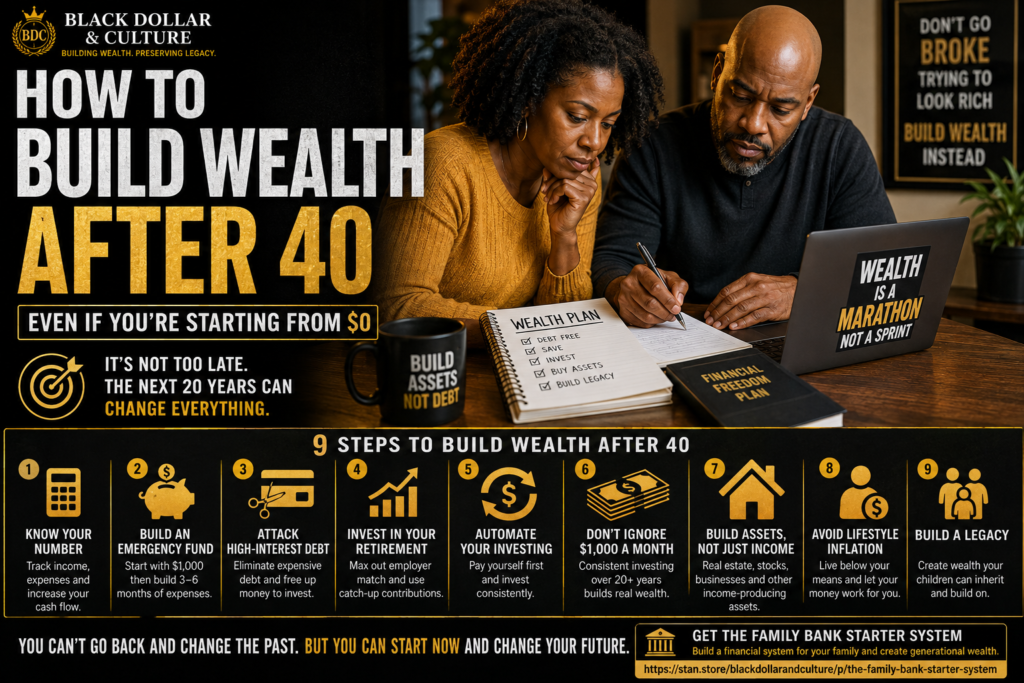
Let’s be real for a second. Most people aren’t broke because they’re lazy. They’re stuck because they were never shown how money actually works—and in many cases, the system is designed to keep it that way. Not in a conspiracy-theory way… but in a very practical, everyday way. The rules of money are there—but they’re not taught where most people spend their time: school, work, and even at home. So what happens? You play the game without knowing the rules. Let’s break down 10 real ways the system blocks wealth—and more importantly, how you move around it. 1. School Teaches You to Work, Not Build From a young age, you’re trained to follow instructions, meet deadlines, and aim for a “good job.” But there’s almost zero focus on ownership, investing, or building assets. What to do instead:Start learning money on your own terms. Study: Your real education begins after school ends. 2. The 9–5 Trap A job gives stability—but it also caps your time and income. You’re trading hours for dollars, and there’s only so many hours in a day. What to do instead:Keep your job if needed—but build something on the side: The goal isn’t to quit your job fast—it’s to outgrow it. 3. Taxes Hit Workers the Hardest Employees get taxed before they even see their money. Meanwhile, businesses and investors often get tax advantages. What to do instead:Learn how to legally reduce taxes by: Don’t just make money—learn how to keep it. 4. Credit Is Used Against You Instead of For You Most people use credit to survive—cars, clothes, emergencies—then get stuck in high-interest cycles. What to do instead:Use credit strategically: 5. Consumer Culture Keeps You Spending Everywhere you look, you’re being told to buy something. New phone, new car, new look. It’s designed to keep your money moving… just not toward you. What to do instead:Shift from consumer to owner: 6. Lack of Ownership Most people don’t own anything that produces income. No stocks, no businesses, no real estate—just bills. What to do instead:Start small, but start: Ownership is the real key to wealth. 7. Information Is Scattered and Confusing There’s so much financial information online—but it’s either too complex, too basic, or straight-up misleading. What to do instead:Stick to simple, proven principles: Don’t chase every trend—build a foundation. 8. Debt Is Normalized Debt isn’t always bad—but the way it’s pushed on people is dangerous. High-interest debt keeps you working just to stay afloat. What to do instead:Control your debt: 9. No Blueprint for Generational Wealth Most families pass down habits—not assets. So every generation starts from scratch. What to do instead:Become the blueprint: This is how cycles get broken. 10. Fear and Lack of Exposure If you’ve never seen wealth up close, it can feel out of reach. Fear of losing money keeps people from even starting. What to do instead:Expose yourself to new environments: Confidence comes from action—not waiting. Final Thoughts The system doesn’t reward people who just “work hard.” It rewards people who understand how money flows—and position themselves on the right side of it. Once you see that, everything changes. You stop chasing money…And start building systems that bring it to you. If you’re serious about taking control of your financial future, start building your own structure: 👉 The Family Bank Starter Systemhttps://stan.store/blackdollarandculture/p/the-family-bank-starter-system 👉 Get Your Family Wealth Trust Blueprint (ILIT)https://stan.store/blackdollarandculture/p/get-your-family-wealth-trust-blueprint-now These aren’t theories—these are tools to help you move differently with money and start thinking long-term. Hashtags (copy & paste):#BlackWealth #GenerationalWealth #FinancialFreedom #MoneyMindset #WealthBuilding #Ownership #InvestingBasics #FamilyBank #FinancialLiteracy #BuildAssets Focus Keyphrase: system blocks wealthSlug: system-blocks-wealthMeta Description: Discover 10 ways the system blocks wealth and learn practical steps to build financial freedom, ownership, and generational wealth starting today.
Traveling While Black Was Dangerous… How the Green Book Saved Lives (Hidden Black History)

You’re driving down a long, quiet road in 1940s America. The sun is starting to drop… and your heart starts to beat a little faster. Not because you’re lost.Not because you’re tired. But because in this America… being on the road after dark could cost you everything. You can’t stop at just any gas station.You can’t pull into just any hotel.You can’t walk into just any restaurant. And one wrong stop… could turn into a situation you can’t get out of. So before Black families even turned the key in the ignition, they made sure of one thing… They had a book. A small, green book. A book that didn’t promise comfort…It promised survival. This was The Negro Motorist Green Book. Created in 1936 by Victor Hugo Green, a Black postal worker who saw a problem that most of America ignored. Black people were traveling more—buying cars, taking road trips, visiting family, building lives beyond the limits society tried to place on them. But the road wasn’t safe. Not for them. So Victor Hugo Green did something powerful… He built a solution. At its core, the Green Book was simple. It listed places where Black travelers were welcome. Places where they wouldn’t be turned away.Places where they wouldn’t be humiliated.Places where they could exist… without fear. Hotels.Restaurants.Gas stations.Barbershops.Tourist homes. Each listing was more than a business… It was a safe haven. Because during segregation, America wasn’t just divided… It was unpredictable. There were towns known as sundown towns—places where Black people were expected to be gone before nightfall. No warnings. No second chances. Just an understanding… enforced by fear. Imagine driving with your family. Your children are in the back seat, asking when you’re going to stop. They’re hungry.They’re tired. And you’re passing place after place that looks normal… but you know better. You keep driving. Because you can’t afford to be wrong. So you reach for the Green Book. Flip through its pages. Search for a name… a location… a place that says, “You’re safe here.” And when you find it… That feeling isn’t luxury. It’s relief. But here’s what most people miss about the Green Book… It didn’t just help Black people survive. It helped Black people build. Because inside those pages was something deeper than safety. It was a network. A system. An economy. Black-owned hotels.Black-owned restaurants.Black-owned service stations. All connected. All supporting each other. All keeping the dollar moving within the community. Every time a traveler used the Green Book… They weren’t just spending money. They were strengthening a system built for them… by them. This is what we call today… circulation. And this is where the real lesson begins. Because the Green Book wasn’t just a response to oppression… It was a blueprint for power. It showed what happens when people decide: “If we can’t rely on the system… we’ll build our own.” For decades, the Green Book expanded across the country. It became known as the “Bible of Black travel.” You didn’t leave home without it. Because without it… You were guessing. And guessing could get you hurt. Then, in 1964, everything shifted. The Civil Rights Act was passed. Segregation was outlawed. Public spaces were no longer allowed to discriminate—at least by law. And slowly… The Green Book began to fade. By 1967… It was gone. On the surface, that made sense. If access is equal… You don’t need a separate guide. But here’s the question we don’t ask enough: What else disappeared with it? Because while the Green Book was born out of necessity… It created something powerful. Unity. Ownership. Intentional support. It created a system where Black people knew where to go… And who to support. Today, we have more access than ever before. We can go anywhere.Buy from anyone.Travel freely. But access doesn’t always mean ownership. And convenience doesn’t always mean circulation. So now the question becomes… Are we still building systems like they did? Are we still supporting each other with intention? Are we still thinking about where our dollar goes… After we spend it? Because the Green Book wasn’t just about travel. It was about trust. It was about strategy. It was about survival turning into structure. And if you really understand that… You understand this: We’ve already done this before. We’ve already built networks. We’ve already circulated our dollars. We’ve already created systems that worked for us… Even in the worst conditions. So imagine what we can build now. ❤️ Support Independent Black MediaBlack Dollar & Culture is 100% reader-powered — no corporate sponsors, just truth, history, and the pursuit of generational wealth. 📘 Start Building Your Family Bank Todayhttps://stan.store/blackdollarandculture/p/the-family-bank-starter-system 🏦 Protect & Pass Down Wealth the Right Way (ILIT Blueprint)https://stan.store/blackdollarandculture/p/get-your-family-wealth-trust-blueprint-now 📖 The First World Before Erasure (Black History They Hid)https://stan.store/blackdollarandculture/p/the-first-world-before-erasure 💬 The Green Book wasn’t just a guide… It was a message. A quiet reminder passed from one generation to the next: If they don’t build it for you… Build it yourself. And once you do… Support it. Grow it. Protect it. Because that’s how you survive. And more importantly… That’s how you build legacy. 🔥 #GreenBook #BlackHistory #TravelingWhileBlack #JimCrow #BlackWealth #GenerationalWealth #BlackDollar #BlackEconomics #SupportBlackBusiness #HiddenHistory #FinancialFreedom #WealthBuilding #Ownership #BLKCirculation #EconomicPower
She Trained in Dirt… Then Made Olympic History | The Story of Alice Coachman

Before the world knew the name Alice Coachman… she was just a young girl in Albany, Georgia who loved to run, jump, and compete. But her story didn’t start on an Olympic stage. It started in the backyard. As a child, Alice wasn’t allowed to train on official tracks, so she created her own. She used sticks, ropes, and whatever she could find to build makeshift hurdles. She would race against boys in her neighborhood—and beat them. Not because she had better equipment… but because she had something stronger: obsession. She loved the feeling of pushing her body beyond limits. And people started to notice. By the time she reached high school, her natural talent was undeniable. She attended Albany State College High School, where her track abilities began to take shape. Soon after, she was recruited to the legendary Tuskegee Institute, where her journey truly accelerated. At Tuskegee, she trained under Coach Cleveland Abbott, one of the top track minds of the time. This is where raw talent turned into refined excellence. And she didn’t just improve… She dominated. Alice Coachman went on to win 10 consecutive national championships in the high jump from 1939 to 1948. Think about that. Nearly a decade of complete control over her event. But it didn’t stop there. She also excelled in: She wasn’t just a high jumper… she was a complete athlete. During this time, the Olympics had been canceled in 1940 and 1944 due to World War II. That meant years of her prime passed without the world stage she deserved. But she stayed ready. So when the 1948 Summer Olympics finally arrived, she didn’t hesitate. She delivered. With grace, power, and precision, Alice cleared 5 feet 6 1/8 inches—higher than anyone else that day—and secured her place in history as the first Black woman to win Olympic gold. And here’s a detail most people don’t know… She was the only American woman to win gold in track and field at those Olympics. Not one of many. The only one. After her victory, she was personally awarded her medal by King George VI. Her name was now etched into global history. But what’s even more powerful is what she did next. Alice Coachman didn’t chase fame. She chose purpose. After retiring from athletics, she became a teacher and a mentor. She worked with young people, guiding the next generation—not just in sports, but in discipline, confidence, and self-belief. She also became one of the first Black female athletes to secure a major endorsement deal, partnering with Coca-Cola. That move quietly opened doors for future athletes to be seen as marketable, valuable, and worthy beyond competition. And through it all… She remained grounded. No arrogance. No noise. Just legacy. Alice Coachman lived a life that proved greatness doesn’t need an audience to be real. It just needs commitment. ❤️ Support Independent Black Media Black Dollar & Culture is 100% reader-powered — no corporate sponsors, just truth, history, and the pursuit of generational wealth. Every article you read helps keep these stories alive — stories they tried to erase and lessons they never wanted us to learn. 🔑 Build What They Tried to Block 👉 Start your family’s financial system here:The Family Bank Starter Systemhttps://stan.store/blackdollarandculture/p/the-family-bank-starter-system 👉 Protect and pass down wealth the right way:Get Your Family Wealth Trust Blueprint Now – ILIThttps://stan.store/blackdollarandculture/p/get-your-family-wealth-trust-blueprint-now 👉 Unlock the hidden history they never taught you:The First World Before Erasurehttps://stan.store/blackdollarandculture/p/the-first-world-before-erasure 📢 Final Thought She didn’t need perfect conditions.She didn’t need recognition to stay consistent. She just needed one moment… And when it came—she was ready. BlackHistory, TodayInBlackHistory, AliceCoachman, OlympicHistory, BlackExcellence, WomenInSports, TrackAndField, Legacy, Discipline, Greatness, BlackDollarCulture, UntoldStories Focus Keyphrase: Alice Coachman life story Olympic goldSlug: alice-coachman-life-story-olympic-goldMeta Description: Discover the full life story of Alice Coachman, from her childhood training to becoming the first Black woman to win Olympic gold and her legacy beyond sports.
The Only 3 ETFs You Need to Build Real Wealth (Stop Overcomplicating Investing)

There’s a lie being sold every day in the financial world…That you need dozens of stocks, constant trades, and perfect timing to build wealth. But the truth? The people who quietly build real wealth… don’t move like that. They don’t chase.They don’t guess.They own systems. And one of the most powerful systems ever created… is the ETF. Because an ETF isn’t just a stock.It’s ownership in an entire strategy. It’s how the wealthy simplify what others overcomplicate. So let’s strip everything down. If you had to build wealth from scratch…If you wanted something simple, powerful, and proven… There are only three ETFs you really need. 1. Vanguard S&P 500 ETF (VOO) — Owning the System This is where wealth begins. When you buy VOO, you’re not buying a random investment…You’re buying into the 500 most powerful companies in America. Apple.Microsoft.Amazon.The companies that shape the world you live in. This is the machine behind the economy. And here’s what most people miss:You don’t need to guess which company will win…Because VOO already owns the winners. Over time, weak companies fall off.Strong companies rise. And you stay positioned… the entire time. This is how real wealth compounds quietly. 👉 If the system grows… you grow. 2. Invesco QQQ (QQQ) — Owning the Future If VOO is the system… Then QQQ is the future of that system. This ETF is heavy in technology, AI, and innovation.The companies that are not just participating in the economy… They are reshaping it. Artificial intelligence.Cloud computing.Digital infrastructure. This is where the next wave of wealth is being created. Yes, it moves faster.Yes, it drops harder sometimes. But that volatility? That’s the price of outsized growth. 👉 This is where wealth accelerates. 3. Vanguard Total Stock Market ETF (VTI) — Owning What’s Next Now this is where strategy becomes complete. VTI doesn’t just give you the biggest companies… It gives you everything. Small businesses.Mid-sized companies.Future giants that haven’t been discovered yet. Because every billion-dollar company…Started small. And VTI quietly positions you in those early stages. So while everyone is chasing what’s already big… You’re already invested in what’s coming next. 👉 This is how you stay ahead without guessing. The Wealth Formula (Simple, But Powerful) Here’s how a disciplined investor would move: No stress.No constant trading.No confusion. Just ownership… across the entire economic spectrum. Why This Matters (The Part They Don’t Teach) Most people are stuck in survival mode financially. Saving money.Spending money.Repeating the cycle. But wealthy families? They build systems where money circulates and grows. This is where your strategy shifts. Instead of just earning income…You begin owning assets that produce it. And when structured correctly… These same assets can become the foundation of something bigger: A Family Bank. Where your money: 👉 That’s how wealth stops being temporary… and becomes legacy. If You’re Serious About Building Real Wealth Start simple. Pick your structure.Stay consistent.Think long-term. And if you want to take it further… Learn how to turn investments like these into a full wealth system your family can use for generations: 👉 The Family Bank Starter Systemhttps://stan.store/blackdollarandculture/p/the-family-bank-starter-system 👉 Get Your Family Wealth Trust Blueprint (ILIT)https://stan.store/blackdollarandculture/p/get-your-family-wealth-trust-blueprint-now Final Thought The goal isn’t to look rich. The goal is to build something that lasts. Because once you understand this… You stop chasing money. And start owning the systems that create it. #ETFInvesting #GenerationalWealth #BlackDollarAndCulture #FamilyBank #StockMarketForBeginners #WealthBuilding #FinancialFreedom #InvestSmart #PassiveIncome #Ownership Focus Keyphrase Top 3 ETFs to build wealth Slug top-3-etfs-to-build-wealth Meta Description Discover the top 3 ETFs to build real wealth. Learn how VOO, QQQ, and VTI create a simple, powerful strategy for long-term financial growth and ownership.
Yasuke: The African Samurai Who Defied History in 16th-Century Japan
An Unexpected Arrival Yasuke’s arrival in Japan during the late 16th century represents a remarkable occurrence in the historical narrative of the era. Linked to a group of Jesuit missionaries, Yasuke was an African who arrived on Japanese shores, challenging the strict socio-cultural expectations of a society that was, at the time, predominantly homogeneous. His introduction to Japan was not merely a personal voyage, but rather a significant moment that would resonate through the ages, particularly in discussions surrounding race and identity. Upon arrival, it is documented that Yasuke caused a profound sensation among the local populace. The striking difference in his appearance, coupled with his status as a foreigner, incited a mixture of curiosity and apprehension among the Japanese. Such cultural shock invited various interpretations; for instance, some viewed him as an enigma, while others regarded him with skepticism, reflective of the rigid norms prevalent in the society of that time. The physical traits that set Yasuke apart, namely his skin color and stature, inevitably prompted conversations about what it meant to belong or to be accepted within a society that had long been defined by its insular identity. Moreover, Yasuke’s presence opened up dialogues about race that had hitherto been minimal, if not entirely absent, in Japan. His status as a samurai not only punctuated the complexities of cultural exchange but also illustrated how individuals could defy societal boundaries. Yasuke’s life story became a confluence of different worlds, where the traditional Japanese constructs of merit and honor intersected with the broader narratives of colonialism and globalization. As the legacy of Yasuke unfolds, it becomes evident that his unexpected arrival was a catalyst for challenging preconceived notions of race and identity, setting the stage for a more inclusive understanding of humanity in a time characterized by conformity. First Impressions: The Reaction of Japanese Society The arrival of Yasuke in Japan in 1579 caused quite an uproar, as the local populace had never encountered someone of African descent before. The sight of this towering, muscular man, with his deep skin tone and unique features, elicited immediate astonishment and intrigue among the Japanese people. His physical differences, epitomizing a stark contrast to the prevailing populace of the time, led to a blend of wonder and prejudice. Some viewed him with admiration, interpreting his distinctiveness as a sign of strength, while others succumbed to stereotypes that challenged their understanding of foreign cultures. Cultural integration in 16th-century Japan proved to be a complex process for Yasuke. While he was initially met with bewilderment, this fascination quickly morphed into curiosity as the Japanese sought to learn more about this enigmatic figure. Yasuke’s unique background as an African brought forth numerous questions from the local community. They were captivated by his stories from lands far away, igniting imaginations and breaking down some barriers of misunderstanding. As Yasuke garnered attention, he faced challenges that often accompany the integration of an outsider into a tightly-knit society. Stereotypes surrounding his appearance and origin led to initial skepticism regarding his capabilities, particularly in a culture that placed immense value on honor and tradition. However, his adeptness in adapting to local customs and his prowess in martial arts facilitated a gradual shift in perception. This ability to conform while still retaining his unique identity contributed to his acceptance and rising significance in Japanese society. Ultimately, Yasuke’s presence served as a reminder of the complex interplay between culture, identity, and societal norms during a time of significant change and exchange. The initial reactions of the Japanese people not only reflected their views on difference but also marked the beginning of Yasuke’s remarkable journey towards becoming a samurai, effectively defying the boundaries imposed by history and culture. Earning the Trust of Oda Nobunaga Yasuke’s journey from an African foreigner to the trusted samurai of one of Japan’s most powerful daimyos, Oda Nobunaga, is a remarkable narrative that encapsulates themes of loyalty and mutual respect. When Yasuke first arrived in Japan, he was an exotic figure, eliciting curiosity due to his distinct appearance. His stature and commanding presence caught the attention of Nobunaga, who was intrigued by this seemingly extraordinary warrior. The pivotal moment in their relationship came when Nobunaga personally met Yasuke. Histories recount that Yasuke’s impressive demeanor and strength left a profound impression on Nobunaga. Instead of dismissing Yasuke as just a foreigner, Nobunaga recognized his potential, thus beginning a relationship built on trust and admiration. This moment marked the beginning of Yasuke’s transformation into a samurai, a role reserved traditionally for those of Japanese descent, which signifies the breakdown of racial barriers in feudal Japan. As Yasuke proved his loyalty and combat skills, his bond with Nobunaga deepened. He was not only a capable warrior but also a confidant, accompanying Nobunaga in numerous campaigns. This level of acceptance and respect from Nobunaga highlights a significant departure from the societal norms of the time, where ethnic differences would typically delineate hierarchies. Instead, through actions that demonstrated valor, Yasuke earned a place of honor, further solidifying the trust between him and Nobunaga. Yasuke’s evolution from a foreign slave to a revered samurai showcases how personal merit can transcend cultural boundaries. Their relationship serves as an inspiring example of loyalty, illustrating how trust can be fostered through mutual respect and shared experiences in a tumultuous era. The Legacy and Mystery of Yasuke’s Fate The narrative of Yasuke, the first recorded African samurai in Japan, is intricately tied to the tumultuous history of 16th-century Japan, particularly the fall of the powerful daimyō Oda Nobunaga. After Nobunaga’s demise in 1582, much of Yasuke’s fate becomes shrouded in ambiguity. Various accounts suggest that he may have fought alongside Nobunaga until the end, yet definitive records of his life thereafter remain elusive. This uncertainty highlights not just the individual story of Yasuke but also illuminates the broader complexities of historical narratives concerning race and identity. Yasuke’s journey from Africa to Japan and his rise to the ranks of samurai challenges the traditional narratives of race and
After Integration: Why Black Wealth Stalled — And What We Must Do Now

There was a moment in American history when the doors finally opened. Schools began to integrate. Businesses that once turned us away now allowed us to walk in. Opportunities that were once denied started to appear within reach. From the outside, it looked like progress.It looked like victory. But underneath that surface… something else was happening. Because while we were celebrating access, we were quietly losing control. Before integration, Black communities had no choice but to depend on themselves. And out of that necessity came something powerful—circulation. Black dollars moved through Black hands. Black doctors served Black families. Black teachers educated Black children. Black banks funded Black dreams. Entire ecosystems were built, not because it was trendy… but because it was required. Places like Tulsa’s Greenwood District—often called Black Wall Street—weren’t accidents. They were the result of forced unity, economic discipline, and a clear understanding: if we don’t build for ourselves, nobody will. But integration changed the direction of that energy. For the first time, we were allowed to spend freely outside of our communities. And understandably, many did. After generations of exclusion, the ability to go anywhere felt like freedom. But here’s the part nobody talks about enough: Access without ownership is not power. Because while we gained access to other systems… we slowly stopped investing in our own. The same dollar that once circulated multiple times within our neighborhoods began to leave almost immediately. Black-owned businesses, once the backbone of the community, started losing consistent support. Institutions we built out of necessity were now competing with systems that had far more resources, visibility, and capital. And over time, the shift became clear. We integrated into the economy…But we didn’t anchor ourselves within it. So instead of controlling wealth, we began participating in it. There’s a difference. Participation means you can spend money.Control means you can direct where it goes, how it grows, and who it benefits. And that difference is what we’re still feeling today. Now let’s be clear—this is not about going backwards. This is not about rejecting integration. This is about understanding what was lost… so we can rebuild it with intention. Because the real issue was never integration itself. The issue was that we integrated without a strategy. We entered larger systems without building strong systems of our own first. We pursued inclusion without securing ownership. And we adopted spending habits without maintaining economic discipline. And the result? We became some of the most influential consumers in the world…But not the most powerful owners. So the question becomes: What must we do now? Not emotionally.Not politically.But economically. Because wealth is not built through feelings—it’s built through systems. 1. Rebuild Internal Circulation (The Foundation) Every strong community has one thing in common: money flows within it before it flows out. Right now, the Black dollar leaves the community faster than almost any other group. That means even when money is earned, it doesn’t stay long enough to multiply. This is where intentionality comes in. Supporting Black businesses is not just about culture—it’s about economics. Every dollar spent internally creates jobs, strengthens businesses, and builds stability. And this is exactly where action meets solution. Because one of the biggest problems today isn’t willingness… it’s visibility. People want to support Black businesses.They just don’t always know where to find them. That’s why platforms like: 👉 https://blkcirculation.com …are so important right now. BLK Circulation is built to solve the discovery problem—connecting the community directly to Black-owned businesses so the dollar doesn’t just get earned… it gets recycled. Instead of money leaving immediately, it can now circulate intentionally. Discover. Support. Build. That’s how ecosystems are rebuilt. 2. Build Family Financial Systems (Not Just Income) Income alone doesn’t create wealth. Systems do. Most families operate financially as individuals—everyone earning, spending, and surviving on their own. But wealthy families think differently. They operate like institutions. That’s where the concept of a Family Bank comes in. Instead of sending interest to outside banks, families can create internal lending systems—funding businesses, covering emergencies, and keeping capital circulating within the family unit. This is how money starts to work for the family instead of constantly leaving it. 👉 Start building yours here:💰 Family Bank Starter Systemhttps://stan.store/blackdollarandculture/p/the-family-bank-starter-system 3. Protect Wealth Before You Build It One of the biggest mistakes people make is focusing only on making money… without protecting it. Because if wealth isn’t structured properly, it can disappear just as fast as it’s created—through taxes, legal issues, or lack of planning. This is where tools like trusts come in. An Irrevocable Life Insurance Trust (ILIT) allows families to pass down wealth efficiently, avoiding unnecessary taxation and ensuring the next generation actually benefits. 👉 Learn how to structure yours here:🛡️ ILIT Trust Blueprinthttps://stan.store/blackdollarandculture/p/get-your-family-wealth-trust-blueprint-now 4. Shift From Consumer Identity to Owner Identity We’ve mastered influence. Music. Culture. Trends. Style. Language. But influence without ownership is rented power. The next level is ownership. Ownership of businesses.Ownership of land.Ownership of systems.Ownership of platforms. Because when you own, you don’t just participate in the economy—you shape it. 5. Think in Generations, Not Moments Everything changes when the mindset shifts from: “What can I do this year?”to“What can my family control in 30 years?” That’s how wealth is built. Not through one viral moment.Not through one paycheck.But through consistent systems that outlive the individual. The truth is… integration gave us access. But access alone was never the goal. Ownership is. Control is. Legacy is. And the next chapter won’t be defined by what we were allowed into… It will be defined by what we build, protect, and pass down. Because the real power was never just in being included. It’s in owning the system itself. Two families. Same income. Different mindset.One spends freely and hopes for the best.The other builds systems, protects assets, and circulates money intentionally. Ten years later, one is still working for money…The other has money working for them. The difference isn’t luck. It’s structure. If you’re ready to stop just participating in the economy—and start building