Economic downturns can feel frightening. News headlines scream about layoffs, falling stock prices, inflation, and uncertainty. Many people stop investing altogether because they’re afraid they’ll lose money.
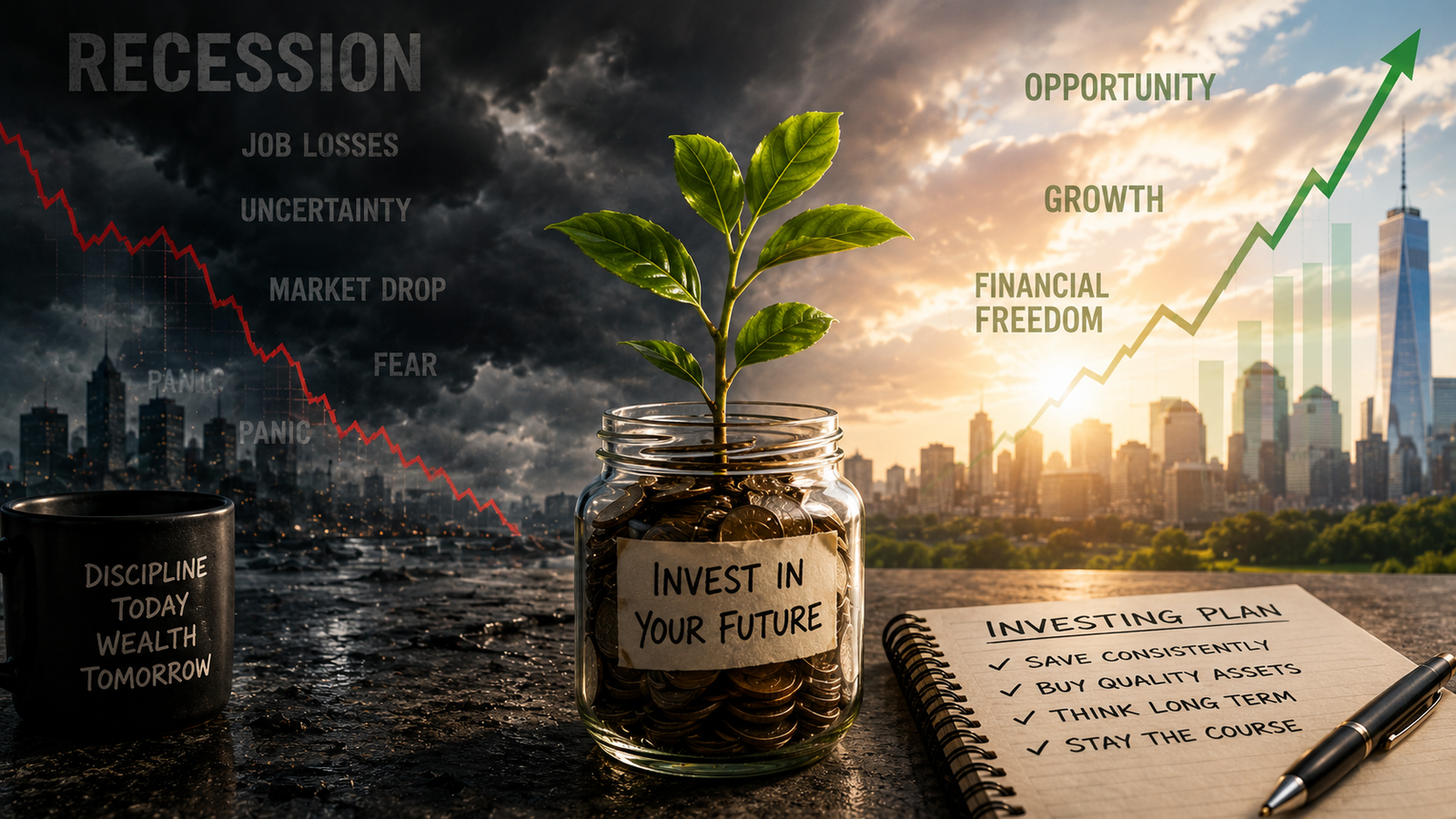
Ironically, history shows that some of the greatest wealth-building opportunities have happened during recessions.
While many people panic and sell their investments, disciplined investors often continue buying quality assets at discounted prices. Warren Buffett famously said, “Be fearful when others are greedy, and greedy when others are fearful.” Although Buffett isn’t the focus here, the principle remains timeless.
If you’ve ever wondered whether you should invest during a recession, this guide will walk you through exactly how to approach it—step by step.
What Is a Recession?
A recession is a period when the economy slows down for several months. Businesses make less money, unemployment often rises, consumer spending decreases, and stock prices may decline.
Common signs include:
- Rising unemployment
- Falling stock market prices
- Lower consumer spending
- Business closures
- Reduced corporate profits
Although recessions are uncomfortable, they are also a normal part of economic cycles.
Should You Invest During a Recession?
For long-term investors, the answer is often yes.
Trying to predict the exact bottom of the market is nearly impossible. Instead of waiting for the “perfect” time, successful investors consistently invest through good markets and bad markets.
Historically, every major U.S. recession has eventually been followed by economic recovery.
The key is focusing on long-term ownership rather than short-term fear.
Step 1: Build Your Emergency Fund First
Before investing aggressively during a recession, make sure you have financial stability.
Aim for:
- 3–6 months of living expenses
- A separate emergency savings account
- Enough cash to cover unexpected bills
Having cash available prevents you from selling investments during market downturns.
Step 2: Keep Investing Consistently
One of the biggest mistakes people make is stopping their investments when markets fall.
Instead, continue investing on a regular schedule.
This strategy is called Dollar-Cost Averaging (DCA).
Example:
Instead of trying to guess the perfect day to invest, you invest:
- $100 every week
- $250 every month
- $500 every paycheck
When prices fall, your money buys more shares.
When prices rise again, those shares can appreciate significantly over time.
Step 3: Buy Quality Businesses
A recession isn’t the time to chase hype.
Focus on companies with:
- Strong profits
- Large cash reserves
- Consistent earnings
- Products people always need
- Long histories of success
Many of the world’s biggest companies have survived multiple recessions and continued growing afterward.
Quality businesses tend to recover faster than weaker companies.
Step 4: Continue Investing in Index Funds
If picking individual stocks feels overwhelming, index funds are one of the simplest ways to build wealth.
Popular index funds provide ownership in hundreds of companies simultaneously.
Benefits include:
- Instant diversification
- Lower risk than owning one stock
- Lower fees
- Long-term historical growth
Many beginner investors build their portfolios almost entirely around broad-market index funds.
Step 5: Think Like an Owner
Instead of asking:
“How much money can I make today?”
Ask:
“What businesses do I want to own for the next 10–20 years?”
Ownership changes your mindset.
Temporary price drops become opportunities rather than disasters.
Step 6: Ignore Daily News
During recessions, negative headlines dominate every news cycle.
You’ll hear predictions about:
- Market crashes
- Economic collapse
- Housing concerns
- Inflation
- Job losses
If your investment plan changes every time the news changes, you’ll struggle to build long-term wealth.
Successful investors follow their strategy rather than reacting emotionally.
Step 7: Reinvest Your Dividends
Many companies pay dividends even during difficult economic periods.
Instead of spending those payments, consider reinvesting them.
Reinvesting dividends allows you to purchase additional shares automatically.
Over decades, this compounding effect can become one of the biggest drivers of long-term portfolio growth.
Step 8: Avoid High-Interest Debt
Before aggressively investing, eliminate expensive debt whenever possible.
Examples include:
- High-interest credit cards
- Payday loans
- Personal loans with very high rates
Paying 24% interest while hoping to earn 10% in the market usually isn’t a winning strategy.
Reducing costly debt can be one of the best financial decisions you make.
Step 9: Stay Invested
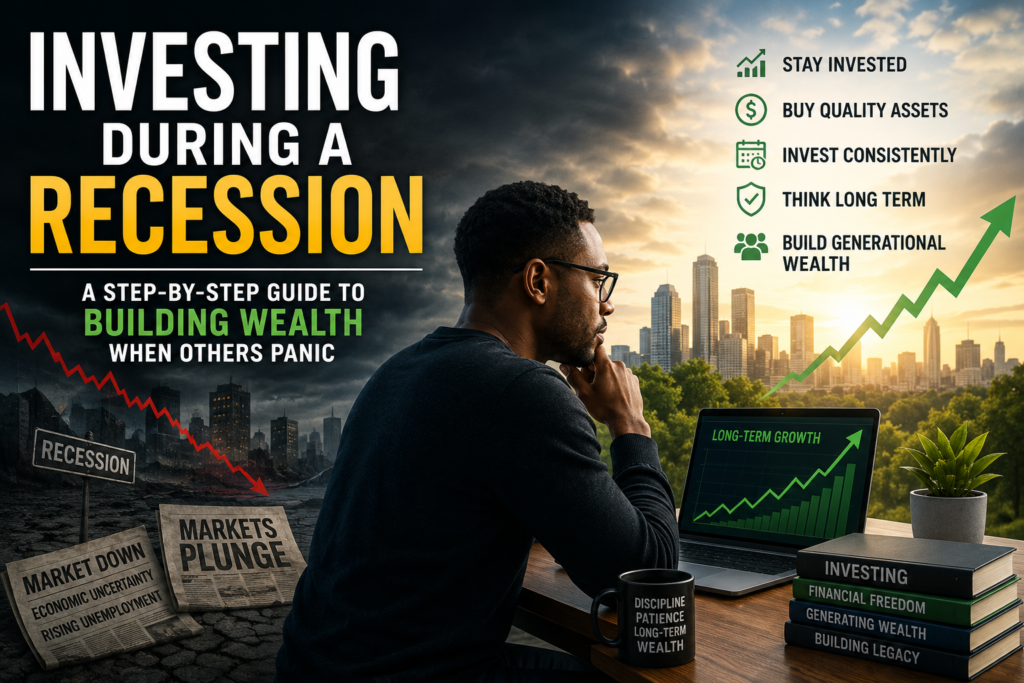
Many investors lose money not because they picked bad investments—but because they sold at the worst possible time.
Markets often recover long before the economy feels normal.
Selling during panic locks in losses.
Patience allows investments time to recover.
Step 10: Continue Learning
Every recession teaches valuable lessons.
Study topics like:
- Investing
- Personal finance
- Business ownership
- Real estate
- Taxes
- Estate planning
Knowledge compounds just like money.
The more you learn, the better your future decisions become.
Common Mistakes to Avoid
Many investors hurt themselves by making emotional decisions.
Avoid these common mistakes:
- Waiting forever to invest
- Trying to perfectly time the market
- Selling during market declines
- Investing money you’ll need soon
- Chasing risky “get rich quick” opportunities
- Ignoring diversification
- Investing without a plan
Frequently Asked Questions
Is a recession a good time to buy stocks?
Historically, many strong companies have become available at lower prices during recessions. Long-term investors often view downturns as buying opportunities, though no investment is guaranteed.
Should beginners invest during a recession?
Yes—if they have an emergency fund, manageable debt, and a long-term investment plan. Consistent investing can help reduce the pressure of trying to time the market.
What investments perform well during recessions?
Broad-market index funds, financially strong companies, dividend-paying stocks, high-quality bonds, and defensive sectors have often shown resilience, but performance varies from one recession to another.
How long do recessions usually last?
Every recession is different. Some last only a few months, while others continue longer. Markets often begin recovering before the broader economy fully improves.
Final Thoughts
Recessions test investors emotionally, but they can also create opportunities for those who stay disciplined. Building an emergency fund, investing consistently, focusing on quality assets, and maintaining a long-term perspective can position you for future growth when the economy recovers.
Remember, wealth is rarely built by reacting to fear. More often, it is built through patience, consistency, and ownership over time.
Continue Your Wealth Journey
If you’re serious about building lasting wealth, don’t stop with one article.
At Black Dollar & Culture, we cover practical strategies for investing, family wealth, ownership, entrepreneurship, and financial education designed to help families create generational wealth.
Be sure to explore our other step-by-step guides, and if you’re ready to go deeper, check out our books on investing, ownership, and the Family Bank system.
Meta Title: Investing During a Recession: A Step-by-Step Guide for Beginners
Meta Description: Learn how to invest during a recession with this beginner-friendly, step-by-step guide. Discover smart investing strategies, common mistakes to avoid, and how to build long-term wealth during economic downturns.
Slug: investing-during-a-recession
Focus Keyword: Investing During a Recession
Article Category: Wealth & Investing