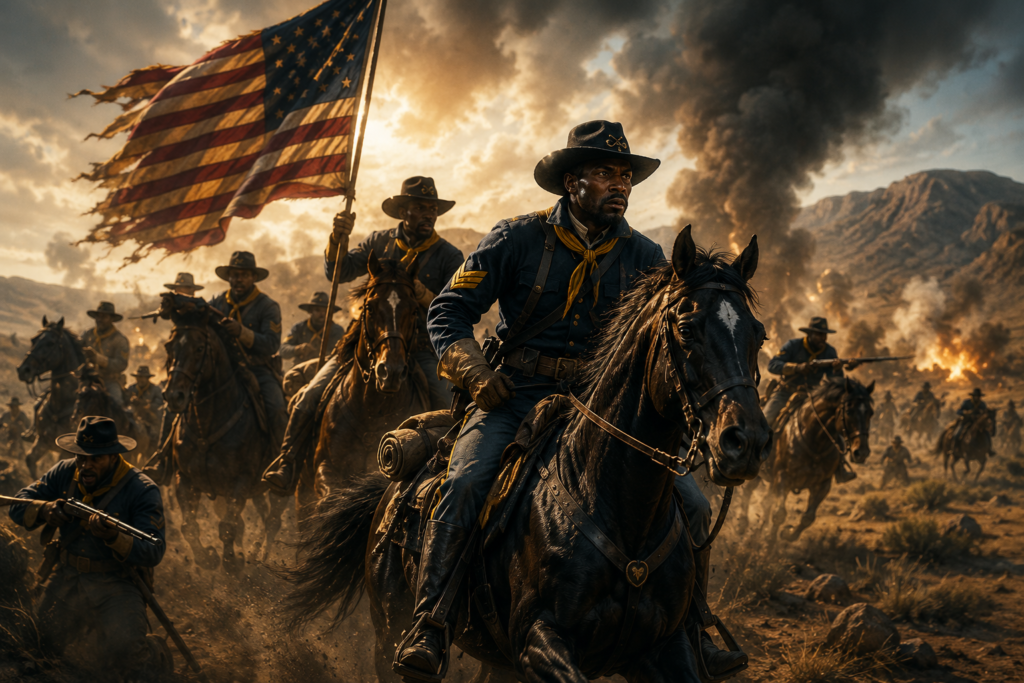
On the night of August 22, 1791, one of the most extraordinary revolutions in human history erupted in the French colony of Saint-Domingue, the land we know today as Haiti.
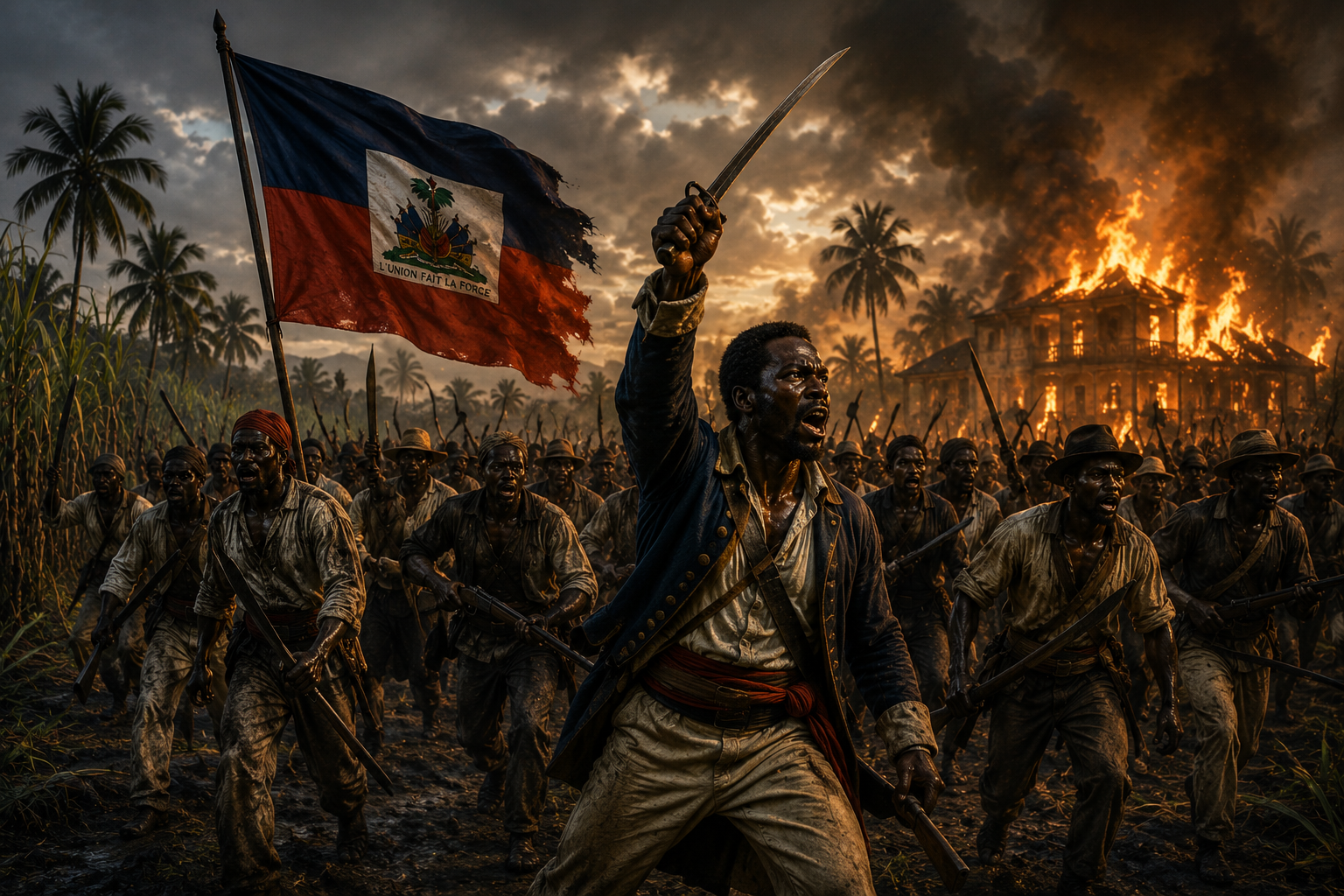
Enslaved Africans began a massive uprising against a plantation system built on their forced labor, suffering, and death.
What followed wasn’t simply another rebellion.
It became the Haitian Revolution—a struggle that would eventually destroy slavery in the colony, defeat European armies, overthrow French colonial rule, and establish the world’s first independent Black republic.
For people across the African diaspora, August 22 represents something powerful:
Enslaved people didn’t simply resist slavery. They organized, fought back, defeated one of the world’s great military powers, and created their own nation.
The Richest Colony Built on Enslaved Labor
Before Haiti existed as an independent nation, France controlled the western portion of Hispaniola and called the colony Saint-Domingue.
By the late 1700s, it had become extraordinarily profitable.
Its plantations produced enormous quantities of sugar and coffee for European markets. But that wealth depended upon the brutal exploitation of hundreds of thousands of enslaved Africans.
Enslaved people dramatically outnumbered the colony’s white population.
Plantation conditions were notoriously deadly. Forced labor, physical punishment, disease, malnutrition, and exhausting working conditions made life extraordinarily difficult.
France was getting rich.
The enslaved Africans producing that wealth were paying the price.
The Night Everything Changed
By 1791, resistance had been building.
Then came August.
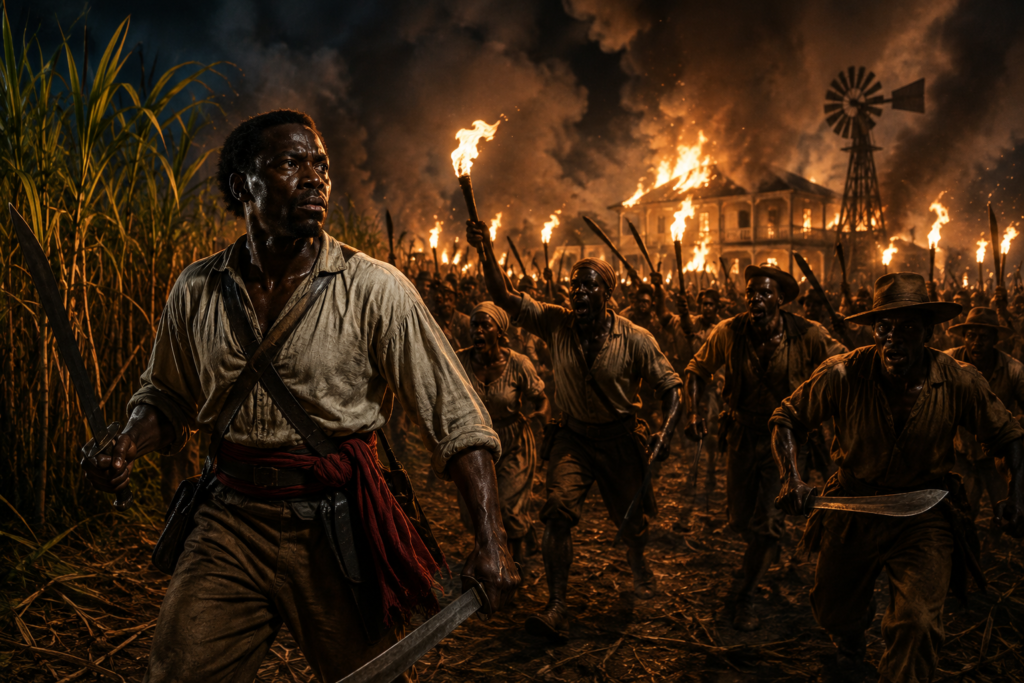
Following organizing and unrest among enslaved communities, a massive rebellion erupted across northern Saint-Domingue.
Plantations burned.
Enslaved workers abandoned the fields.
Armed groups confronted plantation owners and colonial forces.
Within weeks, tens of thousands had joined the uprising.
The plantation system that had generated tremendous wealth for France suddenly faced an existential threat.
This wasn’t simply an escape attempt.
It was revolution.
Toussaint Louverture Emerges
One of the most important figures to emerge from the revolution was Toussaint Louverture.
Born enslaved in Saint-Domingue, Toussaint eventually became free before the revolution.
When conflict engulfed the colony, he developed into an extraordinary military and political strategist.
Toussaint understood something critical:
The revolution wasn’t happening in isolation.
France, Spain and Britain were competing for power throughout the Caribbean.
Toussaint maneuvered between these competing empires while building a disciplined Black military force capable of defending the revolution.
His forces battled armies belonging to some of Europe’s greatest powers.
And they kept surviving.
Eventually, Toussaint became the dominant political and military figure in Saint-Domingue.
Napoleon Wanted Haiti Back
France wasn’t willing to permanently lose its incredibly profitable Caribbean colony.
After Napoleon Bonaparte came to power, France launched a massive military expedition in 1802 to regain control.
Toussaint Louverture was eventually captured and transported to France.
He died imprisoned there in 1803.
France may have believed removing Toussaint would destroy the revolution.
It didn’t.
Other Black military leaders—including Jean-Jacques Dessalines—continued the fight.
The revolutionary forces refused to surrender.
The Formerly Enslaved Defeat Napoleon’s Army
The fighting became devastating.
French forces battled revolutionary armies while disease ravaged European troops.
But the Haitian revolutionaries continued fighting.
In November 1803, Haitian forces defeated the French at the decisive Battle of Vertières.
France’s attempt to regain control had failed.
One of Europe’s greatest military powers had been defeated by an army largely composed of people who had once been enslaved.
Then came the moment that changed world history.
January 1, 1804
On January 1, 1804, Jean-Jacques Dessalines declared the former colony independent.
Saint-Domingue became:
HAITI.
Haiti became the first independent Black republic and the first modern nation created through a successful revolt of enslaved people.
The message traveled far beyond the Caribbean.
People who had been told they were property had defeated their enslavers.
People who had been denied political power had created a country.
People who had been told freedom was impossible had taken it.
The Revolution Changed America Too
The Haitian Revolution didn’t only transform Haiti.
It changed the geopolitical future of North America.
Napoleon had dreamed of rebuilding a massive French empire in the Americas, with Saint-Domingue serving as an economic centerpiece.
The Haitian Revolution helped destroy that dream.
Without Saint-Domingue, France’s enormous Louisiana territory became less strategically valuable.
In 1803, Napoleon sold approximately 828,000 square miles of territory to the United States in what became known as the Louisiana Purchase.
The deal nearly doubled the size of the United States.
A Black revolution in the Caribbean had helped reshape the map of America.
Why Haiti Terrified Slaveholding Societies
To enslaved people throughout the Americas, Haiti represented possibility.
To slaveholders, it represented something terrifying.
Proof.
Haiti proved that an enslaved population could organize, fight and overthrow the system controlling them.
News of the revolution traveled throughout the Atlantic world.
The United States and European powers were slow to recognize Haiti’s independence, partly because governments built around or connected to slavery feared what Haiti represented.
The idea was dangerous:
Black people could govern themselves.
Haiti Paid a Heavy Price for Freedom
Winning independence didn’t mean Haiti’s struggle ended.
In 1825, France demanded an enormous indemnity from Haiti in exchange for recognizing its independence.
Haiti was effectively being forced to compensate former French slaveholders and colonists for property they claimed to have lost—including formerly enslaved people.
The resulting debt burden damaged Haiti’s economy for generations.
It remains one of history’s clearest examples of how political freedom does not automatically produce economic freedom.
And that lesson still matters today.
Why August 22 Matters
The Haitian Revolution challenges the way slavery is sometimes taught.
Black history isn’t simply a history of what was done to Black people.
It’s also the history of what Black people did.
They resisted.
They organized.
They strategized.
They fought.
They built communities.
And in Haiti, they defeated an empire and created a nation.
On August 22, 1791, the world began witnessing something many powerful people believed could never happen.
Enslaved Africans began turning resistance into revolution.
Thirteen years later, Haiti was free.
That is why the Haitian Revolution remains one of the most important freedom struggles in world history.
📚 Build It. Protect It. Pass It Down.
History teaches us that freedom and ownership are deeply connected. Today, families can continue that legacy by learning how to build, organize and protect what they own.
🏛️ Family Wealth Trust Blueprint
Learn how trusts, estate planning, probate and legacy strategies can help you protect what your family builds and prepare it for future generations.
👉 Get the Family Wealth Trust Blueprint
💰 Family Bank Starter System
Learn how to create a family system for saving, lending, investing, holding wealth meetings and keeping more money circulating within your household.
👉 Get the Family Bank Starter System
Meta Title: Haitian Revolution: How Enslaved Africans Defeated an Empire
Meta Description: On August 22, 1791, a massive uprising of enslaved Africans helped ignite the Haitian Revolution. Discover how the revolution defeated French colonial rule and created the world’s first independent Black republic.
Slug: haitian-revolution-august-22-1791
Focus Keyword: Haitian Revolution