October 7, 1856
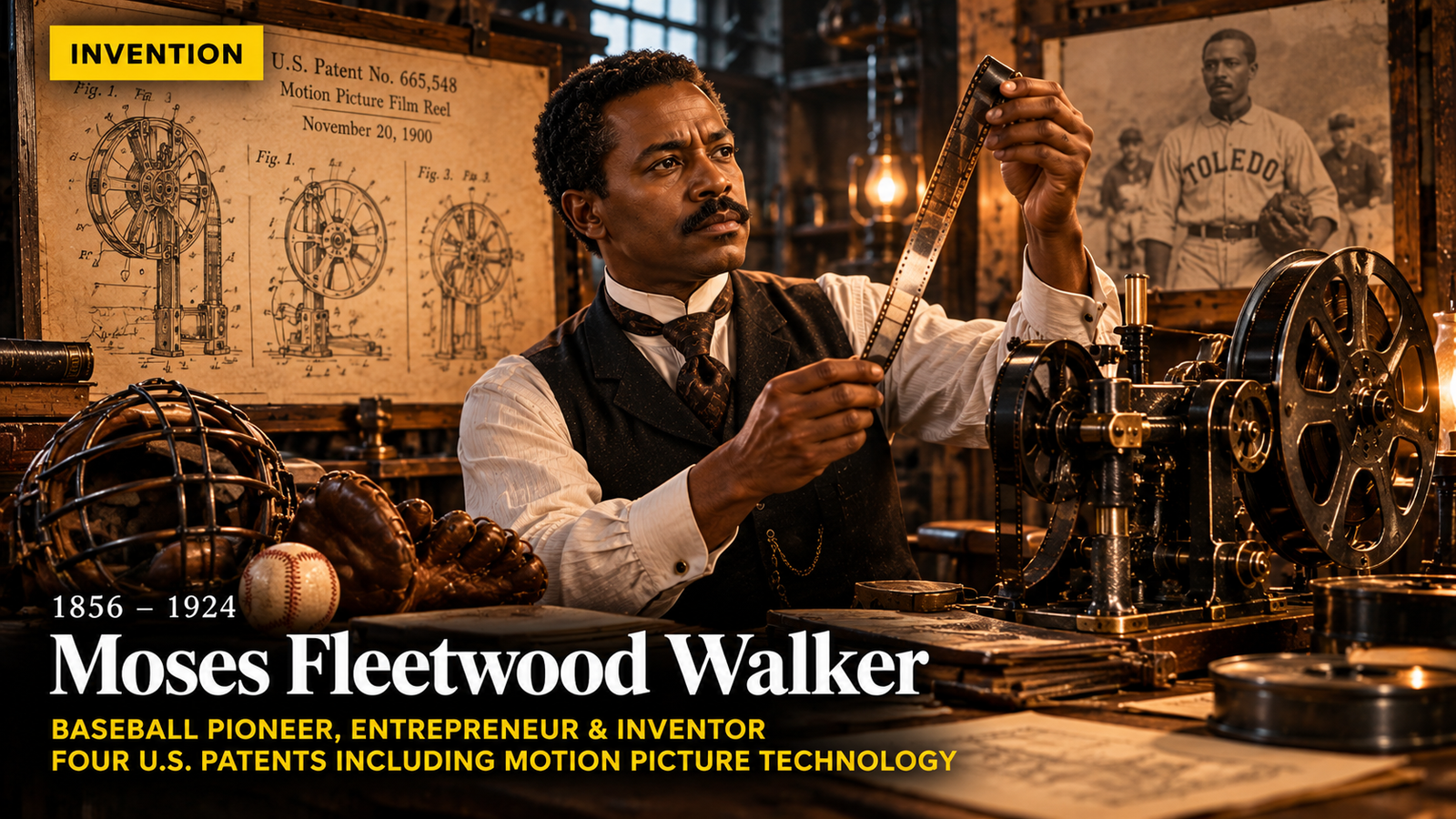
Long before Jackie Robinson stepped onto a Major League Baseball field, another Black man had already crossed baseball’s color line.
His name was Moses Fleetwood Walker.
But baseball is only half of his remarkable story.
Walker would go from catching baseballs in front of hostile crowds to developing inventions and receiving U.S. patents.
His life is a story about talent, opportunity—and what happens when racism shuts a door on someone determined to keep moving.
A Young Man With an Unusual Opportunity
Moses Fleetwood Walker was born on October 7, 1856, in Mount Pleasant, Ohio, and grew up in Steubenville.
His father, Moses W. Walker, was a minister and physician, while his mother, Caroline, was a midwife.
Education became an important part of young Walker’s life.
He attended Oberlin College, where he studied philosophy and the arts while also becoming an accomplished baseball player.
Walker later attended the University of Michigan Law School.
But baseball was quickly becoming his greatest opportunity.
And in the 1880s, that opportunity would put him directly in the middle of America’s racial divide.
Before Jackie Robinson, There Was Fleet Walker
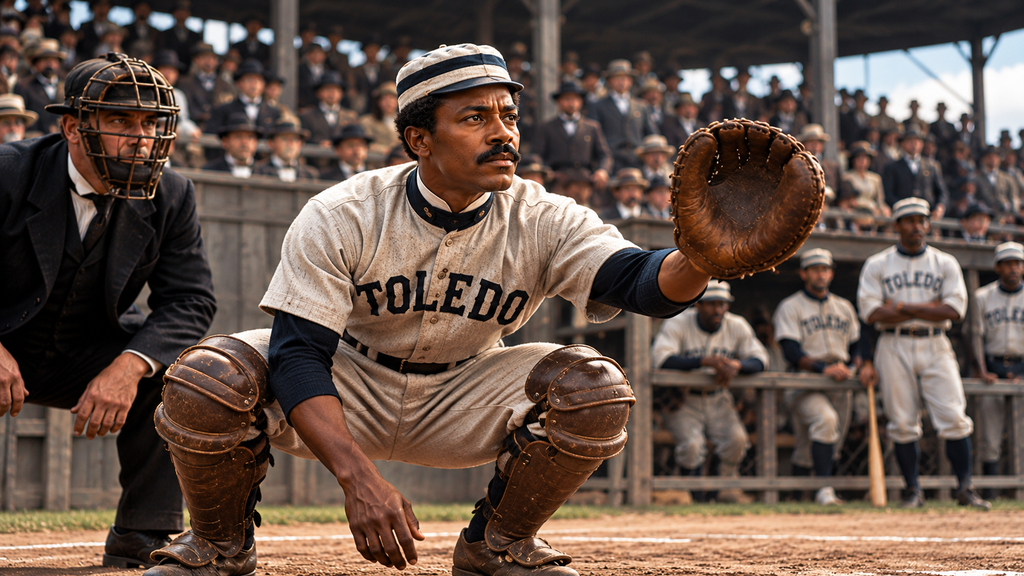
Walker eventually joined the Toledo Blue Stockings.
In 1884, Toledo entered the American Association, which was then considered a major league.
That put Walker on a Major League Baseball roster.
He played catcher—a particularly demanding position.
And he did it while facing racism from opposing players, spectators and even some of his own teammates.
One of the most famous examples involved star pitcher Tony Mullane.
Mullane later admitted that he would sometimes ignore Walker’s signals because he didn’t want to take instructions from a Black catcher.
Think about what that meant.
Walker was expected to catch pitches traveling at high speed without always knowing what pitch was coming.
This wasn’t simply disrespect.
It potentially put his body in danger.
Yet Walker continued playing.
Then Baseball’s Doors Began Closing
Walker’s Major League career was short.
He appeared in 42 games for Toledo during the 1884 season.
He continued playing professionally in the minor leagues afterward, but organized baseball was moving toward racial segregation.
By the late 1880s, opportunities for Black professional players had largely disappeared as baseball’s color barrier hardened.
It would remain entrenched for decades.
Then, on April 15, 1947, Jackie Robinson famously took the field for the Brooklyn Dodgers and broke Major League Baseball’s modern color barrier.
That was roughly 63 years after Walker had played for Toledo.
This makes Walker’s story particularly important.
Black athletes weren’t simply waiting outside professional baseball hoping to be admitted.
Black players had already been there.
Then racism helped push them out.
But Walker Didn’t Stop With Baseball
This is where his story takes an unexpected turn.
For many people, losing a professional sports career would have been devastating.
Walker reinvented himself.
He worked in business.
He became an author.
He became involved with theaters.
And eventually…
he became an inventor.
Walker began developing ideas involving mechanical technology and received several U.S. patents.
One area that particularly interested him was the rapidly developing motion-picture industry.
Movies were still new.
Film projection technology had major limitations, and Walker began looking for ways to improve the process.
The Baseball Player Became a Movie Technology Inventor
Walker and his brother Weldy Walker became involved with motion-picture exhibition.
They operated theaters in Ohio and began experimenting with technology associated with motion pictures.
Walker developed improvements related to film reels and equipment used in the emerging movie industry.
He ultimately received four U.S. patents for his inventions, including technology connected to motion pictures and an artillery projectile.
The transformation was extraordinary.
A man who had once crouched behind home plate catching baseballs was now studying mechanical systems and developing patented inventions.
Athlete.
Businessman.
Author.
Inventor.
Walker refused to remain inside one box.
His Story Was Also Complicated
Moses Fleetwood Walker’s entire life shouldn’t be turned into a simple inspirational story.
Years of intense racial discrimination deeply affected his worldview.
In 1908, Walker published Our Home Colony, in which he argued that Black Americans should consider leaving the United States and establishing themselves elsewhere rather than expecting racial equality in America.
His conclusions reflected the bitter racial environment he had experienced during his lifetime.
Walker had lived through Reconstruction, the rise of Jim Crow, racial violence and the increasing exclusion of Black Americans from institutions in which they had previously participated.
His life therefore tells us something larger than baseball history.
It shows how racial barriers could erase opportunities even after Black Americans had already demonstrated they were capable of succeeding in them.
Why Moses Fleetwood Walker Matters
Walker died in 1924.
Today, Jackie Robinson remains the towering symbol of baseball integration—and deservedly so.
But knowing Walker’s story gives us a fuller picture.
More than six decades before Robinson wore number 42 for Brooklyn, Moses Fleetwood Walker had already stepped onto a Major League field.
And when baseball eventually pushed men like him aside, Walker didn’t stop creating.
He took his intelligence somewhere else.
He pursued business.
He explored technology.
He secured patents.
He kept building.
That may be the most powerful part of his story.
When one industry closed its doors, he refused to let that industry determine the limits of his life.
The Black Dollar & Culture Lesson
There’s a wealth lesson here too.
Your knowledge doesn’t have to belong to a single career.
Walker went from sports → business → entertainment → invention.
That’s intellectual ownership.
That’s adaptability.
And more than 100 years later, that’s still a valuable lesson for entrepreneurs.
Learn skills. Own ideas. Build intellectual property. And don’t allow one profession to become your entire identity.
Today, October 7, remember the name:
MOSES FLEETWOOD WALKER
1856–1924
Baseball pioneer. Entrepreneur. Author. Inventor.
A Black man entered Major League Baseball decades before Jackie Robinson—and when America tried to limit his future, he found another field to build in.