Most people know Rosewood because of how it ended.
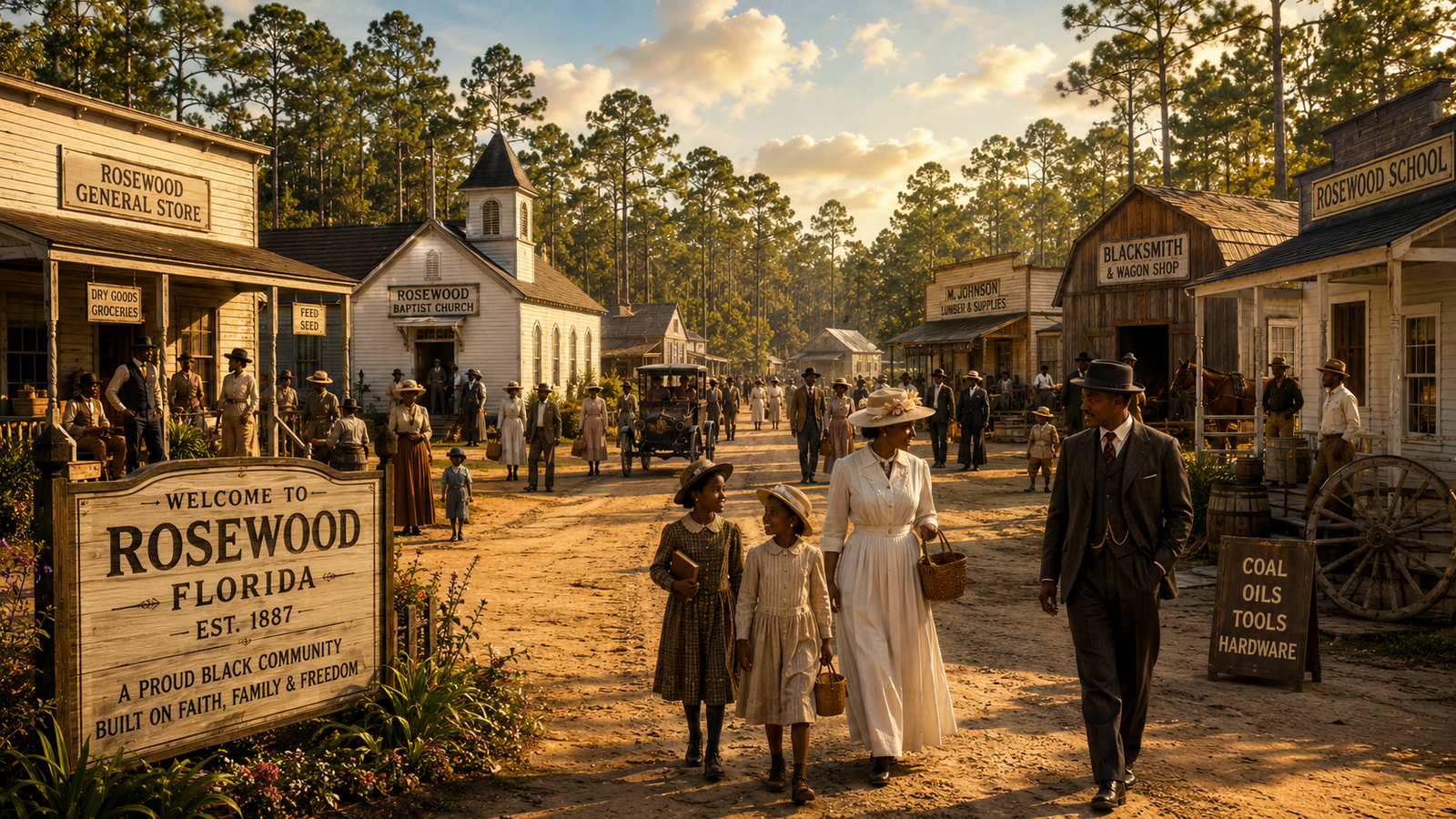
Far fewer understand how it lived.
The story of Rosewood, Florida, is often remembered for the racial violence of January 1923 that destroyed a once-thriving Black community. The tragedy deserves to be remembered, but focusing only on its destruction overlooks an equally important story—the determination, entrepreneurship, and self-reliance that allowed Rosewood’s residents to build prosperous lives in the decades before the violence.
If we study only the town’s final days, we miss the lessons found in the years that came before.
The history of Rosewood is not simply a story of loss.
It is also a story of resilience, ownership, hard work, and community.
A Community Built Through Determination
Following the end of slavery, many Black families sought opportunities to build independent lives across the South.
Rosewood became one of those places.
Residents established homes, purchased land, founded churches, educated their children, and developed businesses that supported the growing community.
Although opportunities were often limited by segregation and discrimination, families continued investing in their futures.
The lesson remains timeless.
Strong communities are often built one family, one home, and one business at a time.
Land Was More Than Property
For many Rosewood families, land represented security.
Owning acreage meant having a place to build a home, raise children, grow crops, harvest timber, or pass something valuable to the next generation.
Land created options.
It offered independence that renting could not provide.
Throughout American history, land ownership has frequently served as the foundation upon which families build long-term wealth.
Skilled Work Created Prosperity
Rosewood was not sustained by a single industry.
Residents worked as farmers, carpenters, laborers, teachers, ministers, craftsmen, and entrepreneurs.
Many earned their living through the region’s timber economy while others provided services that every growing town required.
Prosperous communities depend upon people with different skills working together.
Economic strength is rarely built by one profession alone.
Churches Became Community Anchors
Churches served purposes far beyond worship.
They became gathering places where families organized, celebrated milestones, supported neighbors during hardship, and strengthened community relationships.
In many Black communities throughout the early twentieth century, churches also encouraged education, leadership, and mutual assistance.
Strong institutions often strengthen strong communities.
Education Was An Investment
Parents understood that education could create opportunities unavailable to previous generations.
Schools helped prepare children for skilled work, leadership, and professional careers.
Knowledge became an investment that no one could easily take away.
Generations have demonstrated that education often becomes one of the most valuable assets a family can possess.
Neighbors Supported One Another
Communities become stronger when trust exists between neighbors.
Families shared information.
They helped one another during difficult seasons.
Local businesses depended upon loyal customers, while customers depended upon dependable business owners.
These relationships created social capital alongside financial capital.
Trust itself became an economic asset.
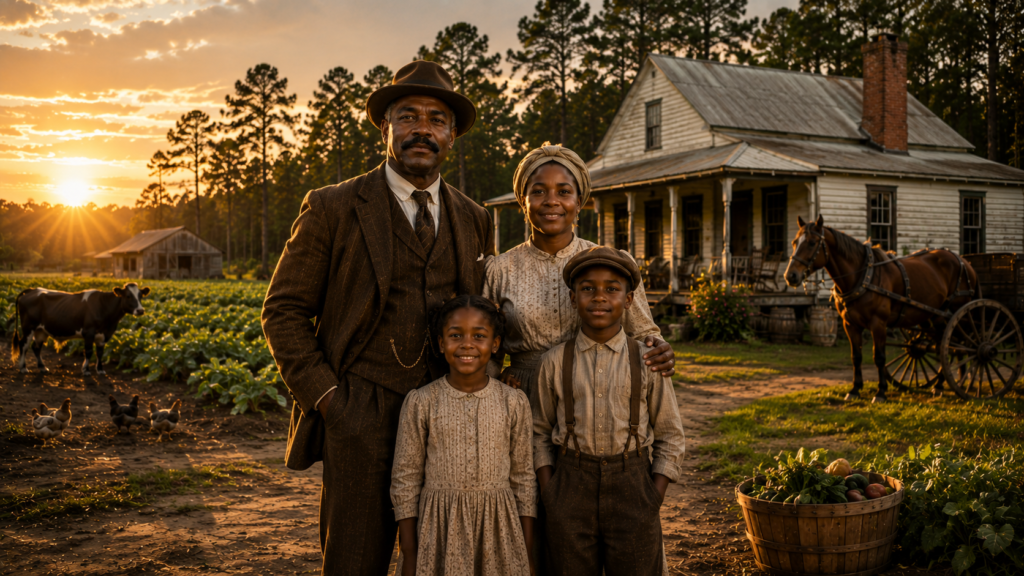
Wealth Is More Than Money
Rosewood reminds us that wealth cannot always be measured by bank accounts alone.
A family’s home.
A church.
Friendships.
Knowledge.
Land.
A reputation for honesty.
These forms of wealth helped sustain communities through both prosperity and hardship.
Financial assets matter, but so do the relationships and institutions that support them.
History Also Teaches Preparedness
The destruction of Rosewood remains one of the most painful chapters in American history.
Many families lost homes, businesses, personal belongings, and property they had spent years building.
The lasting consequences extended well beyond one generation.
The tragedy reminds us that preserving records, protecting property rights, maintaining strong family networks, and documenting ownership are important parts of safeguarding a family’s legacy.
Legacy Lives Beyond Buildings
Although Rosewood itself was destroyed, its story did not disappear.
Descendants preserved family histories.
Researchers documented the town’s past.
Historians continued uncovering records that help tell a fuller story of the people who lived there.
Their determination ensured that Rosewood would be remembered not only for tragedy but also for the lives its residents built before 1923.
The Greatest Lesson
Rosewood teaches that communities are created through ownership, education, skilled work, faith, cooperation, and long-term thinking.
Its history reminds us that prosperity requires patience.
Homes are built over years.
Businesses grow through consistency.
Families create legacies by investing in future generations rather than focusing only on the present.
Remembering Rosewood means remembering more than its destruction.
It means honoring the determination of the families who built something worth preserving.
Conclusion
The story of Rosewood deserves to be studied not only because of what was taken, but because of what was created.
Its residents demonstrated that ownership, education, community, and perseverance could lay the foundation for prosperity even under difficult circumstances.
History is most valuable when it helps us understand both the challenges people faced and the principles that helped them succeed.
The true lesson of Rosewood is not simply that a town was lost.
It is that its legacy continues to remind us why building strong families, strong institutions, and lasting assets still matters today.
SEO Title: The Hidden Lessons of Rosewood: What History Teaches About Ownership and Legacy
URL Slug: hidden-lessons-of-rosewood
Meta Description: Discover the hidden lessons of Rosewood and learn how ownership, land, faith, education, and community built a thriving Black town before 1923.
Focus Keyphrase: Hidden Lessons of Rosewood