There was a time in America when Black wealth wasn’t a theory… it was a system.
Not a trending topic.
Not a motivational speech.
Not something people were “trying” to figure out.
It was already working.
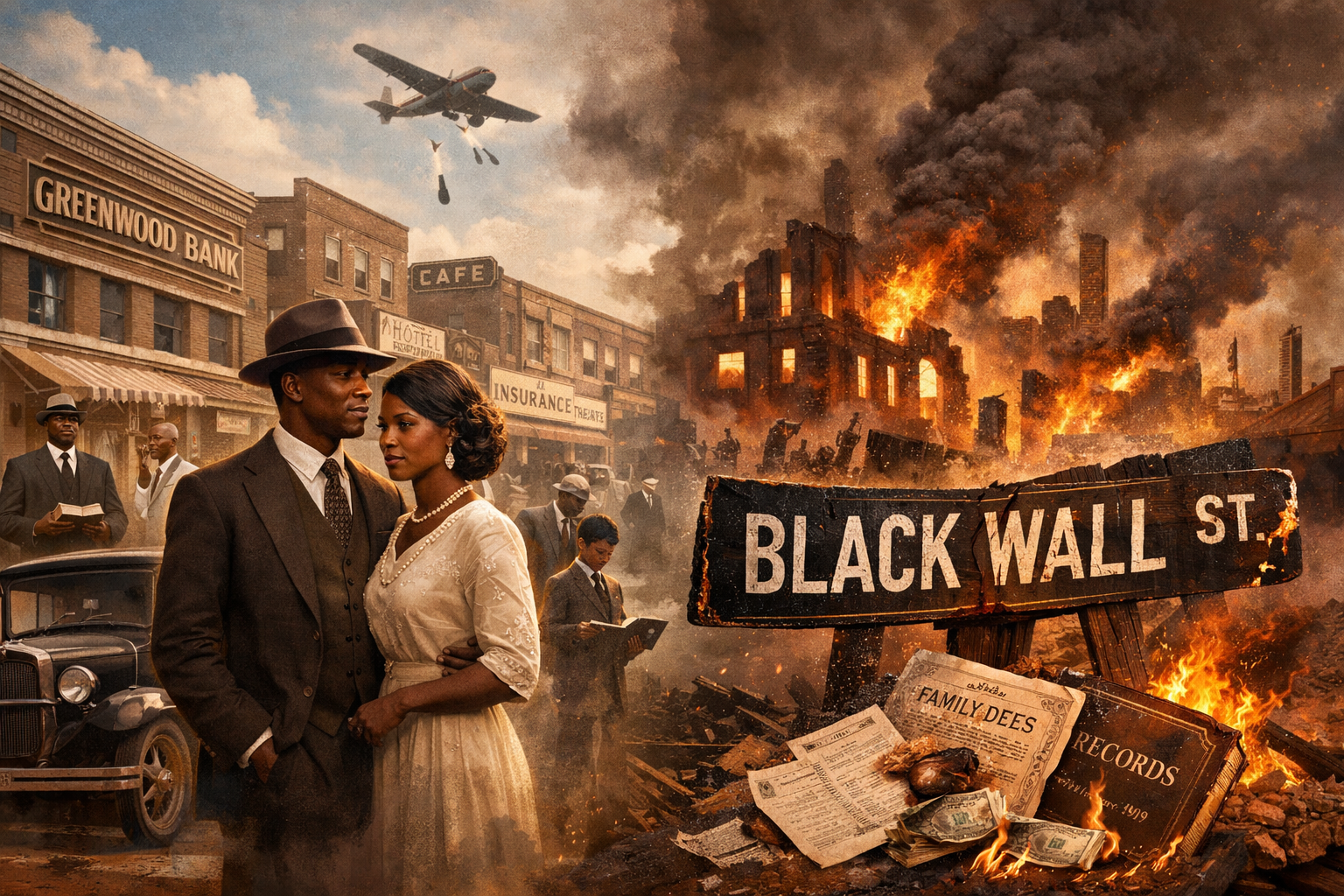
In Tulsa, Oklahoma—specifically in a community called Greenwood—Black families had quietly built one of the most powerful economic ecosystems this country had ever seen. And they did it under conditions most people today wouldn’t survive in for a week.
No access to traditional banks.
Limited protection under the law.
Constant racial hostility.
And still… they built wealth.
Not just money.
Not just businesses.
But circulation.
That’s the part most people miss.
Because Black Wall Street wasn’t rich because of one big entrepreneur.
It was rich because the money never left.
The System That Made Greenwood Powerful
If you walked through Greenwood in the early 1900s, you wouldn’t see struggle.
You’d see ownership.
Hotels.
Restaurants.
Barbershops.
Doctors.
Lawyers.
Movie theaters.
Grocery stores.
Banks.
Over 600 Black-owned businesses operating in one concentrated area.
But here’s what made it different…
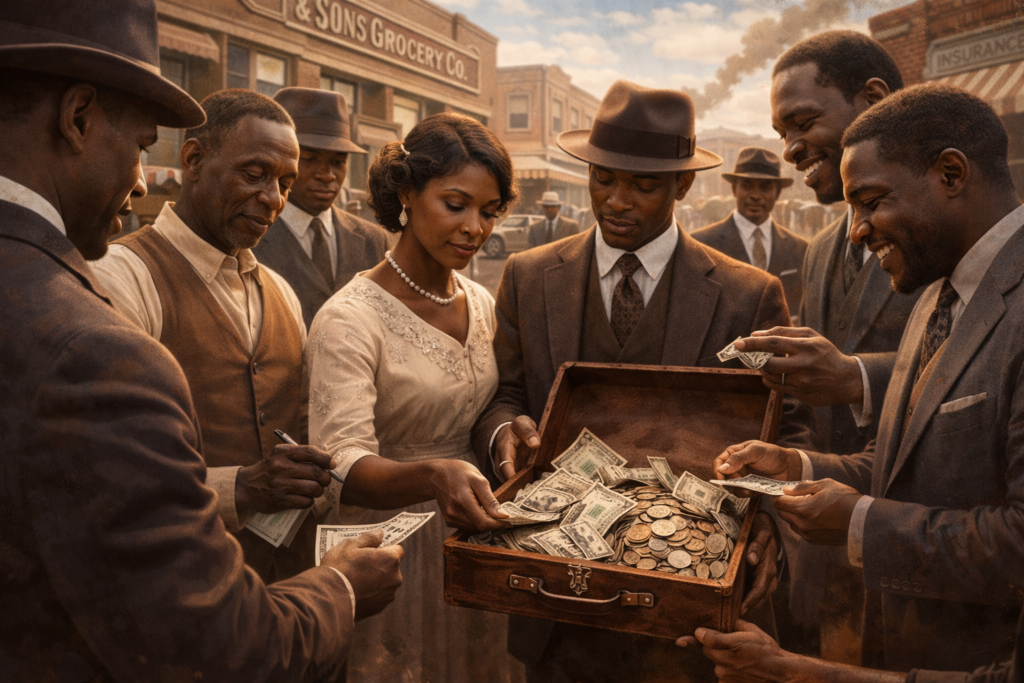
When a dollar entered Greenwood, it stayed there.
One family would earn it.
Another family would spend it.
Another family would reinvest it.
Another family would grow it.
And that same dollar could circulate dozens of times before ever leaving the community.
Today, in many communities, a dollar leaves within hours.
Back then? It moved like blood through a body.
That’s not luck.
That’s design.
No Banks? No Problem.
Let’s talk about something most people don’t realize…
Greenwood didn’t rely on traditional banking systems the way we do today.
Because they couldn’t.
So what did they do?
They created their own.
Informal lending.
Community-backed investments.
Business partnerships.
Trust-based capital.
If someone wanted to start a business, they didn’t go begging to a bank that didn’t believe in them.
They went to their people.
And their people funded them.
Not because it was charity…
But because it was understood:
“If you win, we all win.”
That mindset alone is worth more than any loan approval.
Wealth Was Built Through Ownership, Not Income
This is where things start to separate from today’s thinking.
Greenwood wasn’t built on jobs.
It was built on ownership.
People didn’t just work…
They owned.
Owned the land.
Owned the buildings.
Owned the businesses.
Owned the systems.
And ownership changes everything.
Because when you own, you don’t just earn money…
You control where it goes next.
That’s how wealth compounds.
That’s how families build legacy.
That’s how entire communities rise.
The Truth About Why It Was Destroyed
Now here’s where the story takes a turn most people have heard about…
But not fully understood.
In 1921, violence broke out in Tulsa.
And within hours, Greenwood was under attack.
Homes burned.
Businesses destroyed.
Lives lost.
But let’s be clear about something…
This wasn’t random.
This wasn’t just chaos.
This was targeted.
Because Greenwood represented something dangerous…
A fully functioning, independent Black economy.
It showed what was possible without relying on systems that excluded them.
And that kind of independence?
It threatened the structure of power at the time.
So they didn’t just destroy buildings…
They disrupted a system.
A system that had figured out how to circulate wealth internally.
A system that was working.
What Most People Get Wrong About Black Wall Street
Here’s the part that often gets simplified…
People talk about Black Wall Street like it was just a tragic event.
But it was more than that.
It was a blueprint.
And the tragedy wasn’t just that it was destroyed…
It’s that the system behind it wasn’t rebuilt.
Because if you understand Greenwood correctly, you realize:
The real power wasn’t in the location.
It was in the behavior.
The discipline.
The unity.
The circulation.
The ownership mindset.
Those are things that can exist anywhere.
Even today.
What This Means for You Today
Let’s bring this out of history for a second.
Because this isn’t just about Tulsa.
This is about what we’re doing right now.
Today, most people earn money…
Then immediately send it outside their community.
Bills.
Brands.
Corporations.
Subscriptions.
And before they even realize it, the money is gone.
No circulation.
No reinvestment.
No system.
That’s the exact opposite of what Greenwood mastered.
And that’s why the lesson still matters.

Rebuilding What Was Lost (The Modern Way)
We don’t live in 1921.
But the principles still apply.
If anything, they matter more now.
Because today, we actually have tools they didn’t have:
Digital businesses
Online platforms
Investment access
Global reach
But none of it matters without structure.
And that’s where most people fall short.
Because wealth isn’t built off random decisions.
It’s built off systems.
The Modern Version of That System
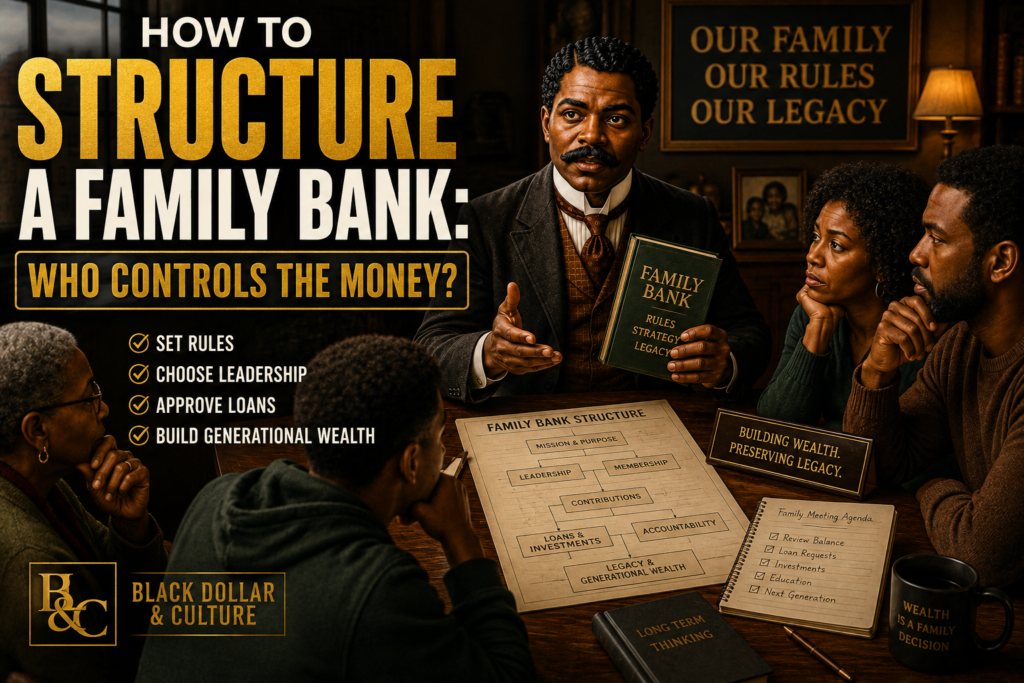
This is exactly why the idea of a Family Bank is so powerful.
Instead of relying on outside institutions for everything…
Families can start creating their own internal financial systems again.
Lending to each other.
Funding opportunities.
Keeping money circulating within the family.
The same concept Greenwood used…
Just adapted for today.
If you want to understand how to actually set that up step-by-step, this breaks it down clearly:
👉 Start Your Family Bank Here
https://stan.store/blackdollarandculture/p/the-family-bank-starter-system
Because the goal isn’t just to make money…
It’s to control what happens to it after you make it.
Protecting Wealth This Time Around
Another lesson Greenwood teaches us…
Building wealth is one thing.
Protecting it is another.
Because what happened in Tulsa wasn’t just about loss…
It was about vulnerability.
And today, that vulnerability shows up in different ways:
Taxes
Probate
Lack of planning
No legal protection
That’s why tools like trusts exist.
Not just for the wealthy…
But for anyone serious about keeping what they build.
If you’ve never looked into it, this is a powerful place to start:
👉 Secure Your Family Wealth (ILIT Blueprint)
https://stan.store/blackdollarandculture/p/get-your-family-wealth-trust-blueprint-now
Because wealth that isn’t protected…
Is wealth that can disappear.
The Bigger Picture Most People Miss
Black Wall Street wasn’t just about money.
It was about control.
Control of resources.
Control of opportunities.
Control of future generations.
And when you really look at it…
That’s still the game today.
The people who control systems…
Control outcomes.
The Story They Don’t Want Fully Told
For years, stories like Greenwood were either ignored… or watered down.
Because if people truly understood what was built there…
They might start asking different questions.
Questions like:
Why aren’t we circulating money like that today?
Why aren’t we building systems like that now?
Why aren’t we taught this in school?
And once those questions start…
Things begin to change.
If you want to go deeper into the history they rarely teach — the real foundations before erasure — this breaks it down:
👉 The First World Before Erasure
https://stan.store/blackdollarandculture/p/the-first-world-before-erasure
Final Thought
They didn’t destroy Black Wall Street because it was failing.
They destroyed it because it was working.
And the real lesson isn’t just to remember what happened…
It’s to understand what made it possible in the first place.
Because once you understand that…
You realize something powerful:
It can be built again.
black wall street, tulsa massacre, black wealth, generational wealth, family bank, black history facts, wealth building strategies, financial literacy, black ownership, economic empowerment

Focus Keyphrase
Black Wall Street wealth
Slug
black-wall-street-built-wealth-destroyed
Meta Description
Discover how Black Wall Street built real generational wealth through ownership and circulation—and the truth behind why it was destroyed. Learn how to apply those lessons today.