
In 1745, on the Caribbean island of Guadeloupe, a child was born into contradiction. His father was a wealthy French plantation owner. His mother, Nanon, was an enslaved African woman. The child’s name was Joseph Bologne. History would later know him as the Chevalier de Saint-Georges.
From the beginning, his existence challenged the rigid hierarchies of the 18th century.
He was taken to France as a boy and raised within elite circles. At a time when most men of African descent were denied status, education, and recognition, Joseph was trained like nobility. He studied literature. He studied music. And he trained in fencing with a discipline that bordered on obsession.
By his teenage years, he had become one of the finest swordsmen in Europe.
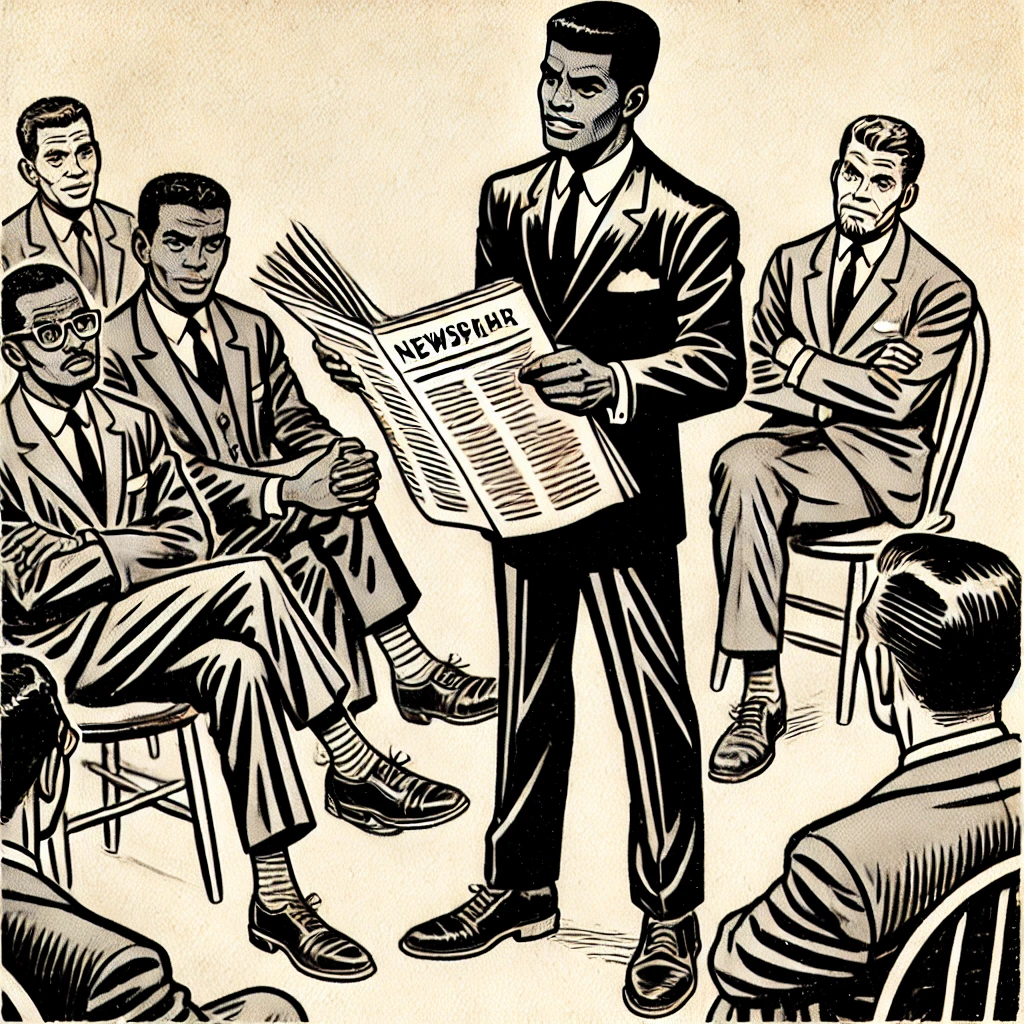
Crowds gathered to watch him duel. Newspapers praised his speed, his elegance, his precision. He defeated seasoned masters. His skill was so extraordinary that it forced even the prejudiced to acknowledge him. Steel could not be debated. Skill could not be denied.
But the blade was only one part of his genius.
Music was where he transcended.
Joseph Bologne became a master violinist, not merely competent, not merely talented, but exceptional. He performed across France. He composed symphonies and violin concertos that displayed complexity, innovation, and emotional depth. He directed orchestras with authority and grace.
He was not an outsider peering into Europe’s cultural elite. He was inside it.
Paris embraced him — cautiously at first, then enthusiastically. He led one of the most prestigious orchestras in Europe, Le Concert des Amateurs. His compositions rivaled the most celebrated works of the era. His presence in royal circles was undeniable.
And yet, even at the height of his brilliance, the boundaries of race lingered.
When he was considered for a directorship at the Paris Opéra, several prominent singers petitioned the queen. They refused to be directed by a man of mixed heritage. Talent was not enough to shield him from prejudice.
But Joseph did not retreat.
Then the French Revolution erupted.
While many artists remained safely within salons and theaters, Joseph stepped onto the battlefield. He became a colonel and led one of the first all-Black regiments in European history — the Légion Saint-Georges. These soldiers fought for revolutionary ideals of liberty and equality in a nation still struggling to practice both.
He carried a sword not for sport now, but for principle.
Yet revolutions are rarely clean. Political chaos consumed France. Joseph himself was imprisoned during the Reign of Terror, despite his service. Suspicion was indiscriminate. Loyalty meant little in an age of paranoia.
He survived.
But after his death in 1799, something quieter happened.
Silence.
His compositions gradually disappeared from concert halls. His name faded from textbooks. His legacy, once undeniable, was minimized. Europe remembered many of its great composers — but not him. History did not erase him in one dramatic act. It simply neglected him.
And neglect can be just as powerful.
For generations, his music gathered dust. His story was reduced to footnotes. His existence complicated the narrative many preferred — that genius in classical Europe had a singular image.
But truth has endurance.
In recent decades, historians and musicians have revived his work. His symphonies are performed again. Scholars study his life not as novelty, but as significance. Films and biographies have brought his name back into public consciousness.
Joseph Bologne was not a side character in someone else’s era.
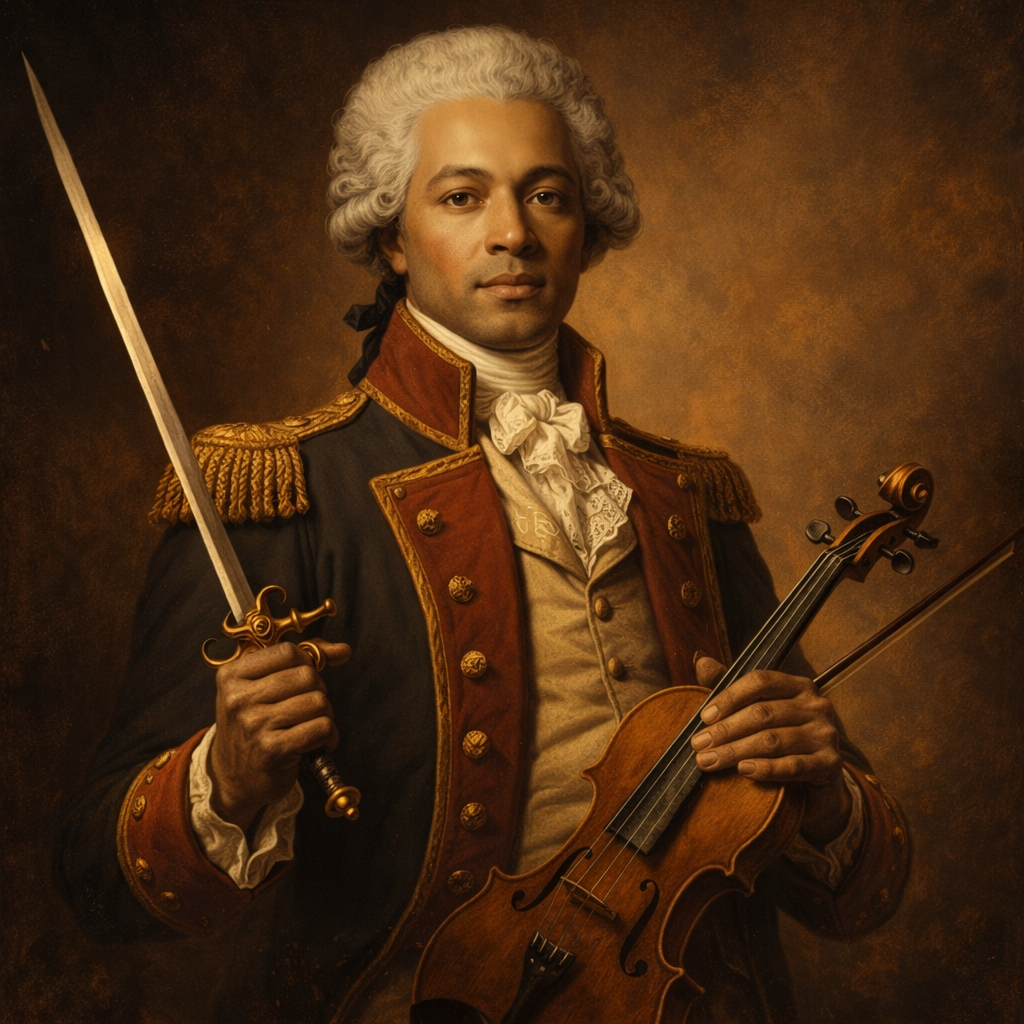
He was a master fencer.
A virtuoso violinist.
A respected composer.
A military colonel.
A revolutionary.
He embodied excellence in spaces that were not designed for him to thrive.
And perhaps that is why his story matters so deeply now.
Because legacy is not always destroyed by force. Sometimes it is buried by omission.
Joseph Bologne, Chevalier de Saint-Georges, does not need comparison to stand tall. He stands on his own — blade in one hand, violin in the other — a reminder that brilliance has never been confined to the boundaries history tried to draw.
He was not ahead of his time.
He was greater than the limits placed upon it.
❤️ Support Independent Black Media
Black Dollar & Culture is 100% reader-powered — no corporate sponsors, just truth, history, and the pursuit of generational wealth.
Every article you read helps keep these stories alive — stories they tried to erase and lessons they never wanted us to learn.
Focus Keyphrase
Joseph Bologne Chevalier de Saint-Georges
Meta Description
Explore the extraordinary life of Joseph Bologne, Chevalier de Saint-Georges — master violinist, elite fencer, and revolutionary colonel whose brilliance in 18th-century France was nearly erased from history.
Slug
joseph-bologne-chevalier-de-saint-georges-revolutionary-virtuoso