Most people don’t fall into financial trouble because they’re reckless.
They fall because life happens.
A tire blows out on the highway.
Hours get cut at work.
A child gets sick.
Rent goes up.
The car refuses to start on Monday morning.
And suddenly a small inconvenience becomes a financial emergency.
Here’s the truth many households discover too late:
The problem isn’t the emergency.
The problem is being unprepared for it.

That’s where an emergency fund changes everything.
It turns panic into inconvenience.
It turns stress into strategy.
It gives you breathing room while everyone else is gasping for air.
Let’s build yours step by step.
What Is An Emergency Fund?
An emergency fund is money set aside ONLY for unexpected, necessary expenses.
Not vacations.
Not shoes.
Not a concert.
We’re talking about:
- Medical bills
- Car repairs
- Job loss
- Urgent home expenses
- Travel for family emergencies
If it’s not urgent and unexpected, it doesn’t qualify.
This money is your financial shock absorber.
Why Beginners Must Start Here First
Before investing.
Before flipping houses.
Before crypto.
Before options.
You need stability.
Without a cushion, every surprise gets put on a credit card…
and debt quietly becomes the thief of your future wealth.
An emergency fund protects your:
✔ Credit score
✔ Investments
✔ Peace of mind
✔ Ability to make calm decisions
No drama. No desperation.
Step 1: Your First Goal → $1,000
Forget six months of expenses for now.
Your first mission is simple:
stack your first $1,000 as fast as possible.
Why?
Because most small emergencies fall under that number.
And once you hit it, something powerful happens…
You start moving different.
You feel in control.
You breathe easier.
Confidence is built through wins.
Step 2: Where Should You Keep It?
Your emergency money should be:
✅ Safe
✅ Easy to access
✅ Separate from daily spending
Good places include:
- A savings account
- A high-yield savings account
- A separate bank from your checking
Not under the mattress.
Not invested in stocks.
Not tied up where it can lose value.
This is protection money, not growth money.
Step 3: How Much Do You Eventually Need?
After you reach $1,000, level up to:
👉 3–6 months of living expenses.
If your monthly bills are $3,000, your target becomes:
- $9,000 (3 months)
to - $18,000 (6 months)
This is the number that protects families from layoffs, illness, or major life disruptions.
Step 4: How To Build It Faster
Most people think they can’t save.
But usually, money is leaking quietly.
Try this:
- Cut eating out for a month
- Pause subscriptions
- Sell unused items
- Pick up overtime or side gigs
- Save tax refunds or bonuses
Speed matters.
The faster you build it, the faster stress leaves your life.
Step 5: Automate Your Discipline
Willpower fades.
Systems win.
Set up automatic transfers every payday — even if it’s only $25 or $50.
You’re not trying to be impressive.
You’re trying to be protected.
Small deposits create big security over time.
What Happens When You Finally Have One
Something amazing changes.
You stop fearing the mail.
You stop dreading unknown numbers calling.
You stop living on edge.
You gain power.
Because emergencies no longer control you.
You control them.
The BD&C Truth About Wealth
Most people chase visible wealth.
Nice cars.
Designer clothes.
Status.
But real wealth often starts invisibly.
In quiet accounts.
In boring savings.
In preparation.
Because when storms hit, the prepared keep moving forward while others start over.
If nobody ever taught you this, now you know.
Start small.
Stay consistent.
Protect your household.
Your future self will thank you.
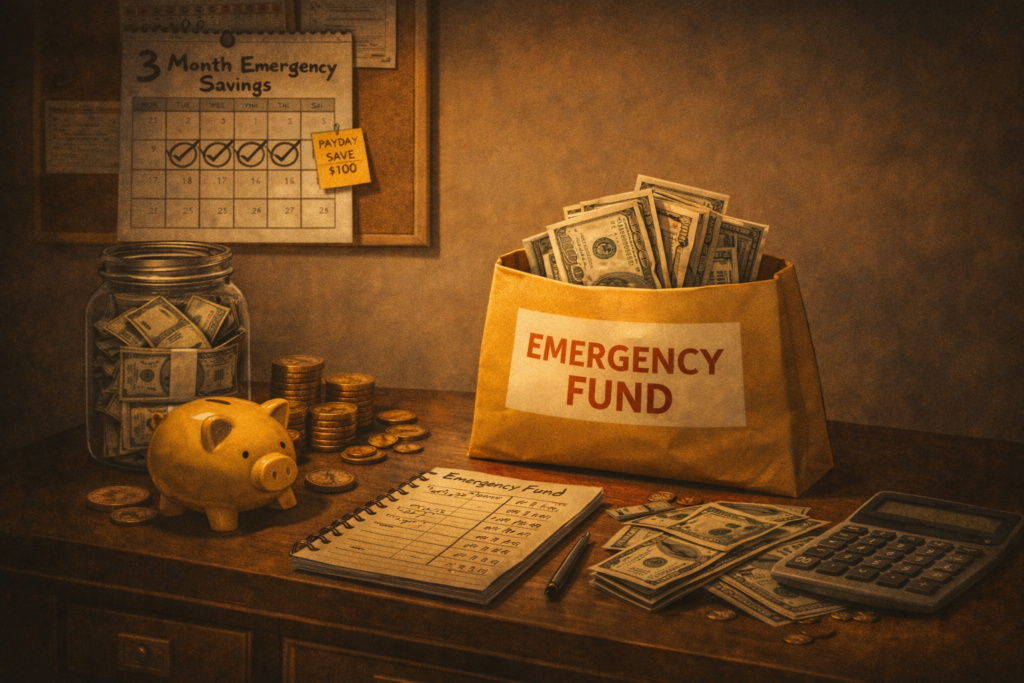
#EmergencyFund #RainyDayMoney #FinancialSecurity #BlackWealth #GenerationalWealth #MoneyBasics #WealthBuilding #BDandC
Focus Keyphrase: how to start an emergency fund
Slug: how-to-start-an-emergency-fund
Meta Description: Learn how to start an emergency fund step by step. A beginner-friendly guide to building financial security, avoiding debt, and protecting your future.
They never told us that peace of mind has a price — and it’s usually saved a little at a time. An emergency fund is more than money; it’s dignity, choice, and the power to say “we’ll be okay.” Start yours today, build it brick by brick, and watch how differently you walk through the world tomorrow. Read more and take control at Black Dollar & Culture.