Most people know Black Wall Street because of its tragic ending.
Far fewer understand why it became so successful in the first place.
The story of the Greenwood District in Tulsa, Oklahoma, is often told through the lens of destruction. Newspapers, documentaries, and history books frequently focus on the violence of 1921, when one of America’s most prosperous Black communities was devastated. While that chapter deserves remembrance, it should not overshadow the remarkable economic principles that built Greenwood into one of the wealthiest Black business districts in American history.
If we only study how Black Wall Street was destroyed, we miss perhaps its greatest lesson: how it was created.
The true legacy of Black Wall Street is not simply one of tragedy. It is a blueprint for community wealth, entrepreneurship, ownership, and economic cooperation.
Wealth Begins With Ownership
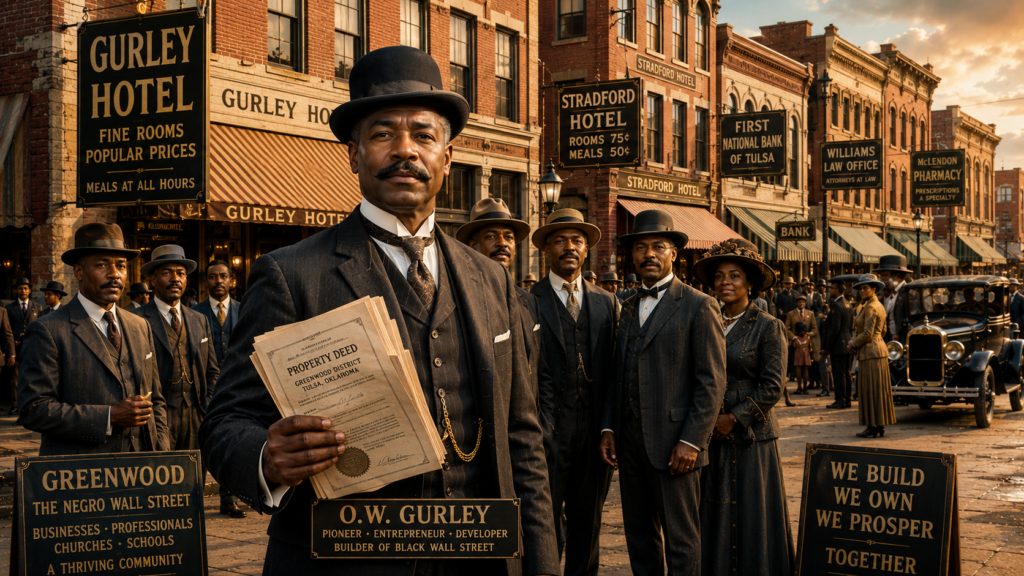
One of the most overlooked lessons from Greenwood is that ownership was at the center of nearly everything.
Residents did not simply work in the community—they owned it.
Black entrepreneurs established grocery stores, hotels, restaurants, pharmacies, movie theaters, insurance agencies, newspapers, doctor’s offices, law firms, banks, beauty salons, tailor shops, and countless other businesses. Families purchased homes, commercial buildings, and land whenever possible.
Ownership created stability.
When businesses own the buildings they occupy, profits remain within the business instead of flowing outward through rent. When families own homes, they build equity rather than simply paying for shelter. Ownership transforms monthly expenses into long-term assets.
Greenwood demonstrated that communities become stronger when ownership becomes the norm rather than the exception.
The Dollar Circulated Before It Left
Another defining characteristic of Black Wall Street was the circulation of money within the community.
Residents intentionally supported neighborhood businesses because those businesses employed local workers, purchased services from neighboring entrepreneurs, and reinvested earnings into additional enterprises.
Every purchase had a multiplier effect.
A barber might spend his income at the local grocery store. The grocer might purchase supplies from another Black-owned wholesaler. That supplier might hire local craftsmen or accountants. Those workers then became customers of other neighborhood businesses.
This continuous circulation of capital strengthened the local economy.
The lesson is straightforward: communities often become more resilient when money supports local businesses before leaving the area.
Businesses Solved Everyday Problems
Many Greenwood entrepreneurs did not begin with revolutionary inventions.
Instead, they identified practical needs.
People needed food.
They needed medical care.
They needed legal representation.
They needed transportation, clothing, education, financial services, and entertainment.
Entrepreneurs built businesses around these everyday necessities.
Economic history repeatedly shows that successful enterprises often emerge by solving common problems consistently rather than pursuing novelty alone.
Education Produced Entrepreneurs
Schools in Greenwood did more than provide academic instruction.
Education helped develop skilled professionals, teachers, physicians, attorneys, accountants, and business owners who became the backbone of the community.
Knowledge translated into economic opportunity.
Professional expertise increased household incomes while creating essential services that benefited everyone.
Investment in education was also an investment in local economic development.
Multiple Income Sources Strengthened Families
Many Greenwood families did not depend upon a single paycheck.
A household might own rental property while operating a small business.
Others combined farming income, professional services, retail stores, or skilled trades.
Diversification reduced financial vulnerability.
If one source of income slowed, another could continue supporting the family.
This principle remains relevant today across many successful households.
Community Institutions Matter
Black Wall Street was supported by more than businesses.
Churches provided leadership.
Schools developed future professionals.
Fraternal organizations created business relationships.
Social clubs fostered trust.
Newspapers circulated information.
Financial institutions expanded access to capital.
These institutions created networks that encouraged cooperation rather than isolation.
Economic ecosystems rarely develop through individual effort alone.
Strong institutions often provide the foundation upon which successful businesses can grow.
Wealth Was Built Across Generations
The entrepreneurs of Greenwood were not simply seeking immediate profits.
Many were building assets intended to benefit future generations.
Property ownership allowed families to transfer wealth.
Businesses created opportunities for children to inherit experience, customer relationships, and commercial assets.
Generational thinking influenced daily decisions.
Rather than asking, “How much can I earn this year?” many successful families asked, “What can I leave behind?”
This long-term perspective distinguished wealth building from income earning.
Adversity Did Not Eliminate Ambition
Black Wall Street emerged during a period of widespread discrimination, segregation, and limited access to financial institutions.
These obstacles were substantial.
Yet entrepreneurs continued creating businesses, acquiring property, and developing professional careers despite legal and economic barriers.
Recognizing this perseverance should not minimize the injustices they faced. Rather, it highlights the determination required to build prosperity under extraordinarily difficult circumstances.
Networks Created Opportunity
Business owners knew one another.
Professionals referred clients.
Experienced entrepreneurs mentored younger business owners.
Relationships accelerated economic growth.
Trust reduced barriers to commerce.
Networking has long been a critical component of successful business communities, and Greenwood demonstrated the importance of professional collaboration.
The Greatest Lesson
The hidden lesson of Black Wall Street is not simply that wealth can be accumulated.
It is that wealth is often the result of systems rather than isolated achievements.
Ownership.
Education.
Entrepreneurship.
Professional excellence.
Community cooperation.
Institution building.
Long-term thinking.
These principles reinforced one another.
No single business created Black Wall Street.
Thousands of disciplined financial decisions, repeated over many years, produced one of the most remarkable examples of community-based economic development in American history.
Conclusion
The destruction of Black Wall Street remains one of the darkest chapters in American history, but its creation offers enduring lessons about how communities build prosperity.
Greenwood reminds us that sustainable wealth rarely appears overnight. It grows through ownership, investment, education, cooperation, and patience.
History is valuable not only because it records what happened, but because it reveals principles that continue to matter.
The true legacy of Black Wall Street is not only what was lost.
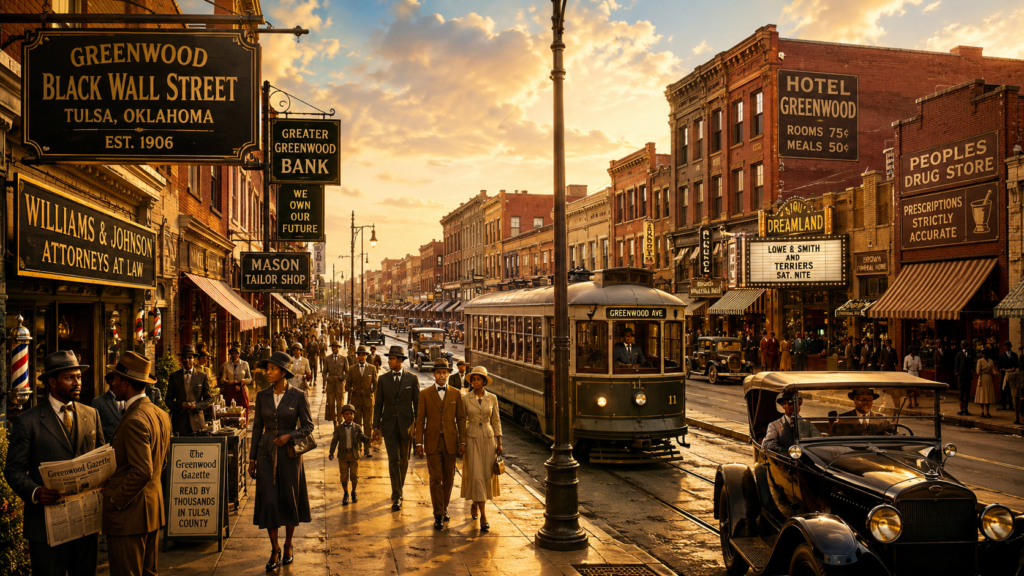
It is what was built—and the timeless lessons that building still offers today.
SEO Title:
The Hidden Lessons of Black Wall Street: What History Still Teaches About Building Wealth
URL Slug:
hidden-lessons-of-black-wall-street
Meta Description (155–160 characters):
Discover the hidden lessons of Black Wall Street and learn how ownership, entrepreneurship, community investment, and generational wealth built a thriving economy.
Focus Keyphrase:
Hidden Lessons of Black Wall Street