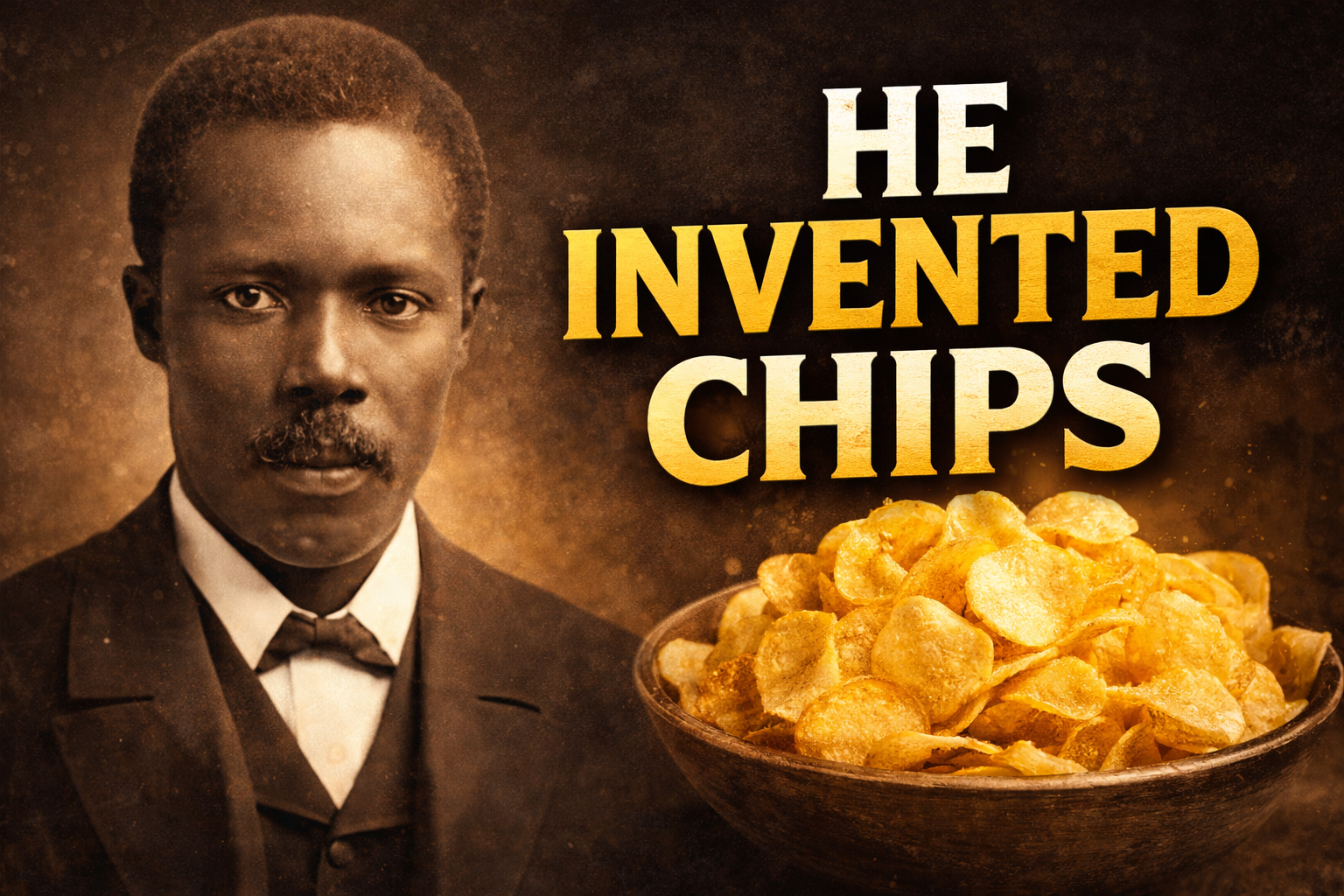
In 1853, inside a busy restaurant in Saratoga Springs, New York, a chef stood over a hot stove preparing a meal that would unknowingly change the way the world eats forever. His name was George Crum, a skilled chef of African American and Native American heritage whose talent had already earned him a reputation as one of the finest cooks in the region. Wealthy travelers and businessmen came to the Moon’s Lake House restaurant not just for food, but for the experience of dining under the care of a chef who understood flavor, texture, and precision better than most cooks of his time.
One evening, a customer sent back a plate of fried potatoes, complaining that they were too thick and too soggy. In an era when chefs took great pride in their craft, the complaint struck a nerve. Determined to make a point, George Crum sliced the next batch of potatoes as thin as he possibly could, fried them until they were crisp, and added a heavy pinch of salt before sending them back to the table. What was meant as a sharp response to a picky customer became one of the most important culinary accidents in American history.
The customer loved them.
Soon, other diners began requesting the same thin, crispy potatoes. Word spread quickly among visitors to Saratoga Springs, a popular resort destination at the time. Before long, the dish became known as “Saratoga Chips,” and people came specifically to taste the new creation that only George Crum seemed able to perfect. The thin slices, golden color, and satisfying crunch created a completely new kind of food experience. It was simple, but it was addictive.
Without realizing it, George Crum had created the foundation for what would become one of the largest snack food industries in the world.
At the time, there were no factories producing chips and no plastic bags lining grocery store shelves. Every chip had to be made by hand, sliced carefully and fried in small batches. The idea belonged to the kitchen, and George Crum was its master.
As his reputation grew, Crum eventually opened his own restaurant, known as Crum’s Place, where Saratoga Chips became the main attraction. Customers traveled long distances just to taste the famous chips prepared by the man who invented them. Bowls of chips were placed on every table, a tradition that would later become standard in restaurants across America.
But while George Crum enjoyed local fame and success, the future of his invention would move beyond his control. The concept of thin fried potato slices spread from restaurant kitchens into homes and eventually into small commercial operations. Years later, entrepreneurs began packaging potato chips for sale, transforming a handmade specialty into a mass-produced product.
George Crum never patented his invention. In the 1800s, many cooks and craftsmen rarely considered protecting their ideas legally, and the patent system was difficult to navigate even for established businessmen. Without legal ownership of the idea, the invention passed freely into the hands of companies that would eventually build billion-dollar empires around it.
Factories replaced kitchens. Machines replaced hand slicing. National brands replaced local chefs.
Today, potato chips are sold in nearly every country on Earth. Grocery stores stock entire aisles filled with chips of every flavor imaginable. The global potato chip industry generates tens of billions of dollars every year, making it one of the most profitable snack markets in the world.
Yet the name George Crum remains largely unknown to the millions of people who open a bag of chips each day.
His story reflects a pattern seen throughout American history — innovators whose contributions shaped entire industries but whose names faded as corporations grew larger and wealth concentrated elsewhere. George Crum did not become a snack food tycoon, and he did not build a manufacturing empire, but his idea changed food culture forever.
Every crunchy bite traces back to a single moment in a Saratoga Springs kitchen, when a determined chef decided to slice potatoes thinner than anyone had before.
The brands became famous.
The invention became global.
But it all started with George Crum.
Even today, few people realize that one of America’s most beloved snacks began with a Black chef working in a small 19th-century kitchen, turning a simple potato into a permanent part of everyday life.
History remembers the companies.
Black Dollar & Culture remembers the creator.
This story reminds us that innovation does not always come from corporations or laboratories. Sometimes it comes from a single person with skill, pride in their craft, and the determination to do something better than it had been done before.
The next time you open a bag of potato chips, remember that behind that familiar sound of the bag tearing open is a story that began more than 170 years ago with a chef who never imagined that his invention would feed the world.
Stories like George Crum’s remind us that everyday things often have extraordinary origins. Share this story so more people learn the name behind one of America’s most famous foods — and explore more untold innovations at Black Dollar & Culture.
Focus Keyphrase
George Crum potato chip inventor
Meta Description
Discover the true story of George Crum, the Black chef who invented potato chips in 1853 and changed the global snack industry forever.
Slug
george-crum-potato-chip-inventor