
Everybody credits Levi Strauss with inventing blue jeans — but the truth is the foundation of denim was built by Black hands, Black science, and Black craftsmanship long before Levi ever filed a patent.
❤️ Support Independent Black Media
Black Dollar & Culture is 100% reader-powered — no corporate sponsors, just truth, history, and the pursuit of generational wealth.
Every article you read helps keep these stories alive — stories they tried to erase and lessons they never wanted us to learn.
1. The Myth We Were Taught: “Levi Strauss Invented Blue Jeans”
That’s the version found in textbooks and brand marketing.
But inventions don’t happen in a vacuum — they have a foundation.
And the foundation of blue jeans wasn’t stitched in San Francisco.
It was stitched on plantations.
Before Levi ever touched denim, Black people had already created every major element that makes jeans what they are today.
2. Indigo Dye — A Science Mastered by Africans, Not America
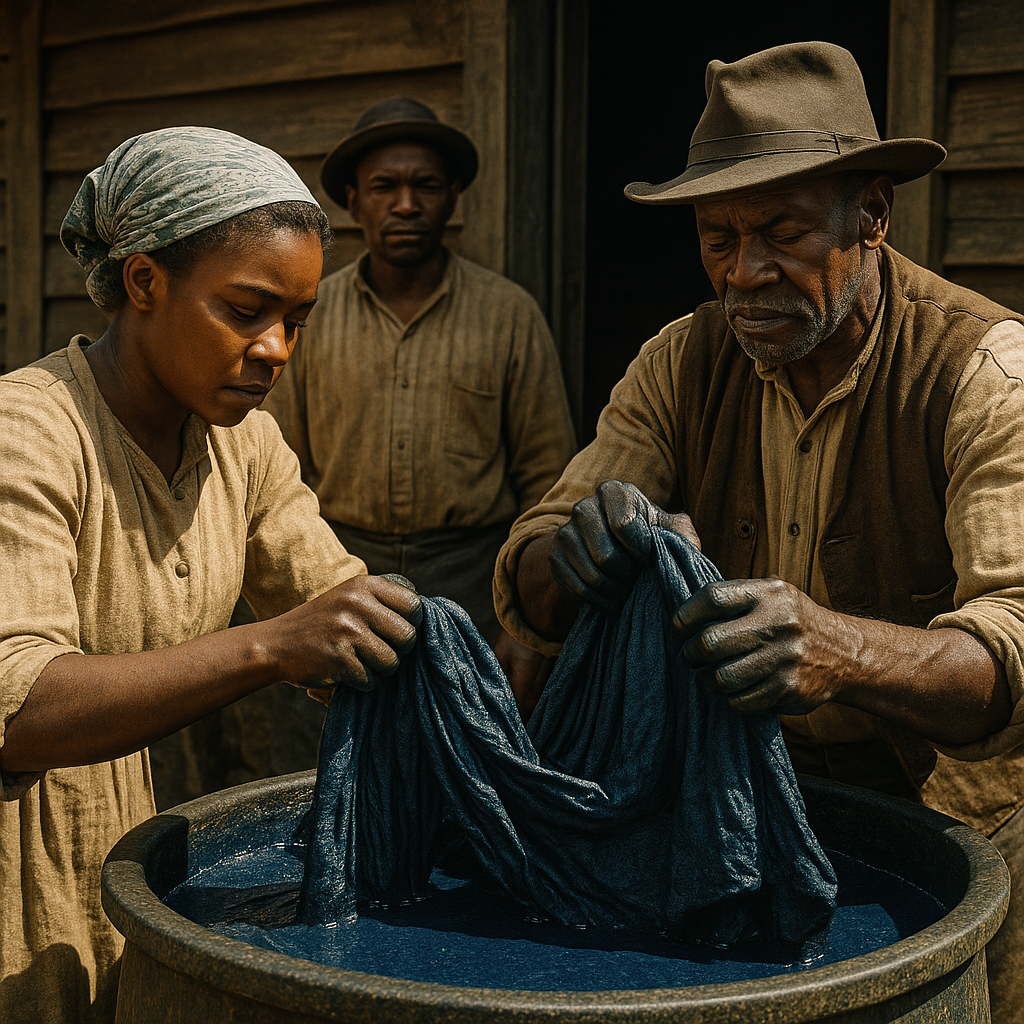
The famous “blue” in blue jeans came from indigo, a dye science Africans perfected centuries before the U.S. existed.
People from:
- Senegal
- Gambia
- Sierra Leone
were known globally for their mastery of indigo cultivation and dyeing techniques.
When enslaved Africans were brought to the Carolinas and the Deep South, plantation owners relied heavily on their expertise to build America’s early indigo industry — one of the country’s first major cash crops.
This dye, this color, this chemistry — it was Black genius.
3. The First Workwear Pants Were Crafted by Enslaved Africans
Long before factories and sewing machines:
- Black seamstresses wove durable cloth
- Black dyers perfected indigo shades
- Black tailors stitched sturdy work trousers for brutal labor
- Black artisans shaped early reinforced seams and workwear construction
These garments were the ancestors of modern denim jeans — rugged, durable, built to withstand the worst conditions imaginable.
Jeans were born out of Black labor, not Levi’s imagination.
4. So What Did Levi Strauss Actually Do?
Levi Strauss didn’t invent:
❌ the pants
❌ the dye
❌ the style
❌ the craftsmanship
❌ the tradition of workwear
His key contribution was one patent:
👉 metal rivets to reinforce pockets and seams.
That patent helped him mass-produce a garment Black people had been creating for years — and it launched a billion-dollar industry.
But the blueprint wasn’t his.
5. A Billion-Dollar Global Industry Built on Erased Black Foundations
Today, denim is a $90+ billion global industry.
Yet the people who:
- knew the science
- perfected the dye
- stitched the fabric
- built the tradition
- designed the first workwear
were never given recognition, credit, or generational wealth from it.
This isn’t just fashion history.
It’s economic history.
It’s Black history.
And it deserves to be restored to the center of the narrative.
📌 Final Word
Blue jeans are as American as apple pie — but their origin is African.
Before Levi Strauss became a household name, Black hands had already:
- invented the techniques
- crafted the garments
- mastered the dye
- shaped the culture
This is yet another example of how Black brilliance built industries that the world profits from today.
Black history is world history — and it deserves to be told truthfully.
#BlueJeansHistory #BlackHistory #IndigoDye #UntoldStories #BlackExcellence #BlackDollarAndCulture




This article really sheds light on an important aspect of history that’s often overlooked. It’s fascinating to think about how much of the denim we wear today can be traced back to the skills and expertise of enslaved Africans. The connection between indigo dyeing and its African origins adds a whole new layer to the story of blue jeans.
What stood out to me is how deeply the history of indigo shows that blue jeans were never just an American invention, but the result of African expertise that shaped an entire industry. It’s powerful to see the connection between West African dye science and what later became a global fashion staple. Posts like this really help reframe how we think about the origins of everyday items and who actually built their foundation.