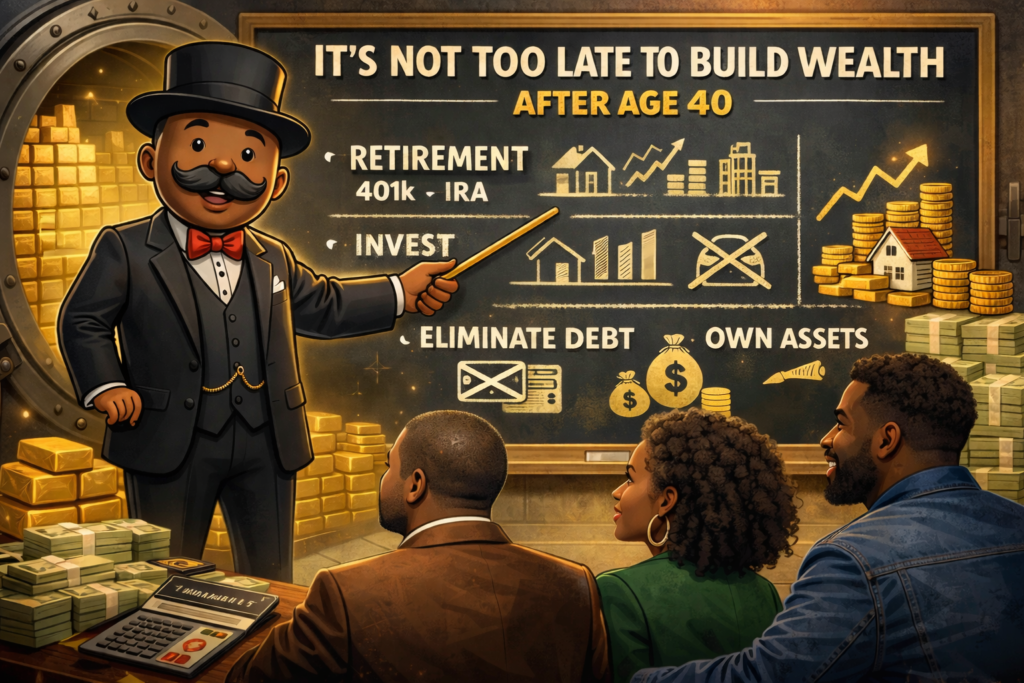
How to Build Wealth Once You Hit 40

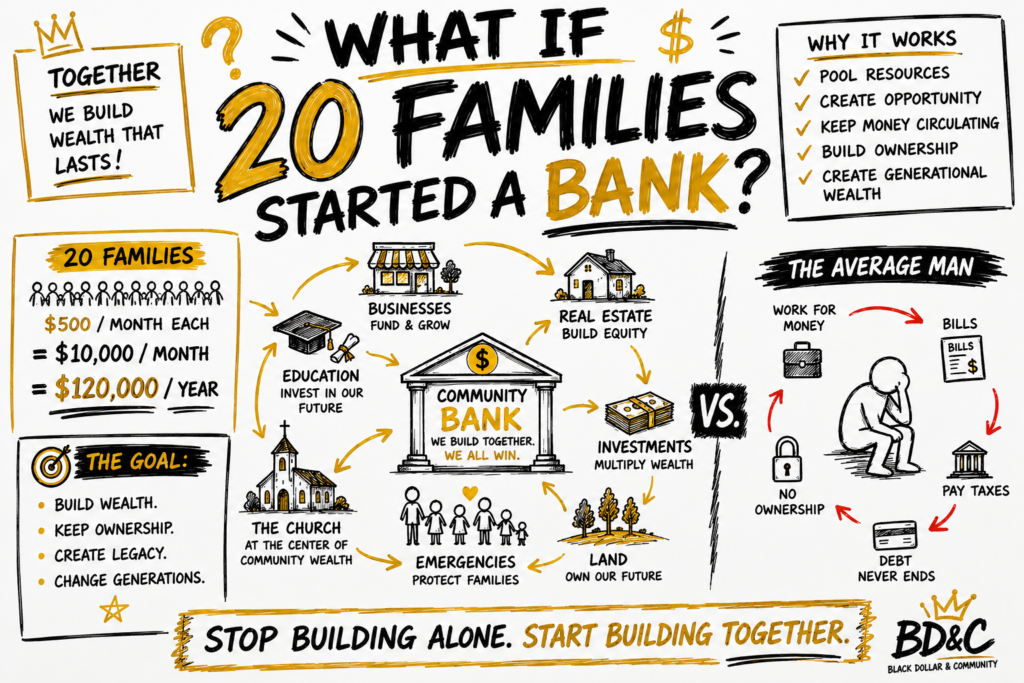
(Black Dollar & Culture Wealth Series) For many people, turning 40 feels like a financial wake-up call. You start realizing retirement isn’t some distant idea anymore. Kids may be getting older. Your career might be established — or you might feel like time is moving faster than expected. But here’s the truth most financial institutions never tell people: Your 40s can be one of the most powerful wealth-building decades of your life. Why? Because by this stage you likely have more income, more experience, and better decision-making ability than you did in your 20s. The key is shifting from earning money to building systems that produce wealth. Let’s break down the moves that matter most. 7 Wealth Moves You Must Make After Age 40 1. Maximize Your Retirement Accounts Your 40s are the time to aggressively fund retirement accounts. The power of compounding is still working in your favor, but you no longer have time to be passive. Focus on: • 401(k) contributions (especially if your employer offers a match)• Roth IRA or Traditional IRA• SEP IRA or Solo 401(k) if you’re self-employed Many wealthy individuals increase their contributions significantly in their 40s to make up for earlier years. Even an extra $500 per month invested for 20 years can grow into six figures. 2. Eliminate High-Interest Debt One of the biggest wealth killers after 40 is consumer debt. Credit cards charging 18%–30% interest quietly drain your future wealth. Every dollar spent on interest is a dollar not invested in assets. Focus on eliminating: • Credit card balances• Personal loans• High-interest car loans The goal is simple: Free up cash flow so your money can start working for you. 3. Invest Consistently in Assets Wealth is not built from income alone. It is built through ownership. By 40, your financial focus should shift toward accumulating assets like: • Dividend stocks• Index funds (S&P 500, ETFs)• Real estate• Private businesses• Ownership in companies Historically, the S&P 500 has averaged about 10% annually over the long term. Consistent investing over the next 20–25 years can transform your financial future. 4. Build a Family Bank System One strategy wealthy families have used for generations is circulating money within the family instead of constantly borrowing from banks. Instead of relying on outside lenders for every financial need, families can pool resources and create their own internal lending system. This allows families to: • Finance businesses• Help relatives purchase homes• Fund education• Keep interest circulating inside the family Learning how to structure this correctly can dramatically change how wealth flows through generations. 👉 Learn how to build your own system here:https://stan.store/blackdollarandculture/p/the-family-bank-starter-system 5. Protect Your Wealth With Proper Structures Building wealth is only half the equation. The other half is protecting it from taxes, lawsuits, and probate. Many wealthy families use legal structures such as trusts and insurance strategies to protect their assets. One powerful strategy is the Irrevocable Life Insurance Trust (ILIT), which allows families to transfer wealth to the next generation while reducing estate taxes and protecting assets. 👉 Learn how wealthy families use this strategy:https://stan.store/blackdollarandculture/p/get-your-family-wealth-trust-blueprint-now Support Independent Black Media ❤️ Support Independent Black Media Black Dollar & Culture is 100% reader-powered — no corporate sponsors, just truth, history, and the pursuit of generational wealth. Every article you read helps keep these stories alive — stories they tried to erase and lessons they never wanted us to learn. 6. Increase Your Income Streams By 40, relying on a single income source becomes risky. Many wealthy individuals focus on building multiple streams of income, such as: • Dividend income• Rental properties• Online businesses• Digital products• Consulting or coaching Even building two or three additional income streams can create financial security that a job alone cannot provide. 7. Start Thinking Generationally True wealth isn’t just about your retirement. It’s about what happens after you’re gone. At this stage in life, it’s important to start thinking about: • Estate planning• Teaching financial literacy to your children• Passing down assets instead of liabilities The goal is not simply to retire comfortably. The goal is to build something that lasts beyond your lifetime. Final Thoughts Your 40s are not too late. In fact, many successful entrepreneurs, investors, and business owners didn’t hit their financial stride until their 40s or even 50s. What matters now is intentional action. Reduce debt. Increase investments. Build ownership. Create systems that allow money to grow whether you’re working or not. Because the real goal isn’t just making money. It’s building a legacy. #BlackDollarCulture #GenerationalWealth #BlackWealth #FamilyBank #FinancialFreedom #WealthBuilding #InvestingForBeginners #OwnershipEconomy #BlackEntrepreneurs #BuildWealth Focus Keyphrase: How to Build Wealth Once You Hit 40 Slug: build-wealth-after-40 Meta Description:Learn how to build wealth after 40 with proven strategies including investing, eliminating debt, building a family bank system, and protecting assets for generational wealth.

How to Stop Living Paycheck to Paycheck

For millions of people, life follows the same exhausting cycle. Work.Wait for payday.Pay bills.Start over again. Two weeks later… the cycle repeats. For many families, especially in historically marginalized communities, this pattern didn’t start because of poor financial decisions. It started because wealth-building opportunities were limited for generations. Policies like redlining, employment discrimination, and unequal access to capital meant many families had to rely almost entirely on wages rather than ownership. And wages alone rarely build wealth. They build survival. Breaking the paycheck-to-paycheck cycle requires more than budgeting. It requires a shift in how money is viewed and used. Not just earning money. Directing where it flows. Because money behaves like water. If you don’t guide it intentionally, it will always flow somewhere else — usually into someone else’s pocket. The First Step: Understand the Real Problem Many people assume living paycheck to paycheck is simply caused by low income. Sometimes that’s true. But often the deeper issue is lack of ownership. When your entire financial life depends on a job, every expense becomes a risk. Rent.Car payments.Utilities.Groceries.Insurance. If the paycheck stops, everything becomes unstable. That’s because most people operate with only one financial engine — their labor. But wealth builders rely on multiple financial engines. The Second Step: Shift From Income to Cash Flow Employees are taught to focus on income. Owners focus on cash flow. Income requires time. Cash flow continues even when you’re not actively working. Examples of cash-flow assets include: • Dividend-paying stocks• Rental real estate• Businesses• Royalties from books or digital products• Ownership in companies When assets produce income, financial pressure begins to decrease. Instead of trading hours for money forever, money begins working on your behalf. The Third Step: Eliminate Financial Leakage One of the biggest hidden reasons people stay stuck financially is money leakage. These are small but constant expenses that quietly drain income. Examples include: • High-interest credit cards• Large car payments• Frequent convenience spending• Subscription services rarely used• Lifestyle purchases that produce no return Individually these expenses may seem harmless. But together they can consume thousands of dollars each year. Money that could have been used to build assets. The goal isn’t to remove joy from life. The goal is to make sure your money builds something before it disappears. The Fourth Step: Pay Yourself First Most households follow the same pattern. They pay everyone else first. The landlord.The bank.Credit card companies.Utility companies.Subscription services. By the time they think about saving or investing, the paycheck is already gone. Wealth builders reverse this order. They allocate money toward assets before anything else. Even if it starts small. Consistency matters more than size. Over time, those consistent investments compound into powerful financial growth. The Fifth Step: Build Internal Financial Systems Traditional banks make billions every year from interest payments. Every time a family borrows money, wealth flows out of that household and into the financial system. But some families operate differently. Instead of constantly borrowing from banks, they create internal lending systems within the family. Money circulates between relatives for: • Starting businesses• Purchasing homes• Funding education• Emergency needs• Investments Interest stays within the family rather than leaving it. This concept is known as family banking, and many wealthy families have quietly used versions of this strategy for generations. The Real Goal: Ownership Escaping the paycheck-to-paycheck cycle is not just about controlling spending. It is about building ownership. Ownership of businesses. Ownership of investments. Ownership of assets that generate income. Once assets begin producing money, something powerful happens. Bills are no longer paid only through labor. They begin to be paid through ownership income. And that is when financial stress finally begins to fade. Because your money is working for you. Not the other way around. Build Real Generational Wealth If you’re serious about breaking financial cycles and building lasting wealth for your family, these two resources can help you take the next step. The Family Bank Starter SystemLearn how families create their own internal banking system to keep money circulating inside the household instead of flowing to traditional banks.👉 https://stan.store/blackdollarandculture/p/the-family-bank-starter-system Family Wealth Trust Blueprint (ILIT Guide)Discover how wealthy families protect and transfer wealth using life insurance trusts and strategic estate planning.👉 https://stan.store/blackdollarandculture/p/get-your-family-wealth-trust-blueprint-now ❤️ Support Independent Black Media Black Dollar & Culture is 100% reader-powered — no corporate sponsors, just truth, history, and the pursuit of generational wealth. Every article you read helps keep these stories alive — stories they tried to erase and lessons they never wanted us to learn. FAQ Why do so many people live paycheck to paycheck?Many households depend on wages as their only income source while expenses continue rising. What is the fastest way to escape the paycheck-to-paycheck cycle?Increasing income while simultaneously investing in assets and reducing financial leakage. What is the biggest difference between wealthy families and struggling families?Wealthy families prioritize ownership and asset accumulation, while most households rely primarily on wages. #BlackDollarCulture #BlackWealth #GroupEconomics #FinancialLiteracy #GenerationalWealth #FamilyBank #OwnershipEconomy #WealthBuilding #EconomicEmpowerment #BlackFinance Focus Keyphrase: stop living paycheck to paycheckSlug: stop-living-paycheck-to-paycheckMeta Description: Learn how to stop living paycheck to paycheck by shifting from wage dependence to asset ownership, family banking strategies, and long-term wealth building.

What the Supreme Court’s Tariff Decision Means for Your Money

When the Supreme Court of the United States ruled against key tariffs put in place during the administration of Donald Trump, it wasn’t just political news. It was economic news. And whether you realize it or not — decisions like this directly affect: • Your grocery bill• The price of electronics• Small business profit margins• The stock market• Your investment portfolio Let’s break this down clearly. First: What Are Tariffs? A tariff is essentially a tax placed on imported goods. When tariffs go up: When tariffs are reduced or invalidated: This Supreme Court decision signals a shift in how trade policy may be handled going forward. What This Means for Consumer Prices In theory: If tariffs are removed → imported goods become cheaper → retail prices can ease. But here’s the reality: Prices don’t drop overnight. Retailers may: So while this could relieve pressure on inflation, don’t expect instant price cuts. What This Means for Small Businesses This is where it gets serious. Small businesses that rely on: Could see cost relief. For example:If you run an apparel brand (like many Shopify businesses), lower import duties = better profit margins. But… Domestic manufacturers who benefited from protectionist tariffs may face more competition now. What This Means for the Stock Market Markets hate uncertainty — but they love clarity. If trade tensions cool: Watch sectors like: This could be a quiet shift that investors pay attention to before the headlines catch up. What This Means for Investors If you’re investing: Pay attention to: Lower trade friction can improve earnings. But remember — markets move on expectations, not just policy. The Bigger Question Who controls trade power in America? The executive branch?Or the courts? This ruling reminds everyone that economic power isn’t unlimited — and the balance of power can directly affect markets. That’s why ownership matters. When you understand policy, you understand positioning. Final Thought Tariffs are political.But money is practical. Instead of reacting emotionally to headlines, smart investors ask: • Who benefits?• Who loses?• Where is capital flowing next? That’s how you stay ahead. Focus Keyphrase Supreme Court tariff decision impact on prices and small business Meta Description The Supreme Court invalidated most Trump-era tariffs. Here’s what the ruling means for consumer prices, small businesses, investors, and the stock market. Slug supreme-court-tariff-decision-impact-on-prices-and-small-business

How to Think Like a Wealthy Person (Even Before You Have Money)

Most people think wealth starts in the bank account. It doesn’t. It starts in the mind. Before the portfolio.Before the business.Before the real estate. Wealth begins with a shift in how you see the world — and more importantly, how you see yourself inside it. Because poor thinking chases money. Wealthy thinking builds systems. And the difference between the two determines everything. 1. Wealthy People Think in Ownership, Not Income The average person asks: “How can I make more money?” The wealthy person asks: “How can I own something that makes money without me?” That shift alone separates employees from empires. A job is income.A system is leverage.Ownership is power. Look at figures like Warren Buffett. He didn’t become wealthy because of a salary. He became wealthy because he owned pieces of businesses. Ownership compounds.Income disappears. If you want to think wealthy, start asking daily: 2. Wealthy Thinking Is Long-Term Thinking Poor mindset: “I need it now.”Wealth mindset: “Where will this put me in 15 years?” Wealthy people think in decades, not days. They understand: They don’t panic when the economy dips.They position themselves. That’s why during downturns, some people lose everything — while others quietly accumulate. Patience is a wealth strategy. 3. Wealthy People Control Emotion Emotion is expensive. Impulse buying.Panic selling.Flexing to impress.Spending to feel validated. Wealthy people detach emotion from money decisions. They ask: Discipline beats hype. Every time. 4. They See Assets Where Others See Objects The average person sees: A wealthy thinker sees: It’s not about what something is. It’s about what something can produce. That’s the Family Bank mindset. Turn consumption into creation.Turn access into ownership.Turn platforms into pipelines. 5. Wealthy People Move Quietly Real wealth is quiet. It doesn’t scream.It doesn’t compete.It doesn’t explain itself. It studies.It accumulates.It protects. While some chase attention, others build infrastructure. That quiet separation is uncomfortable — but it’s necessary. Growth requires separation. 6. They Think in Systems, Not Hustles Hustle burns out. Systems scale. A wealthy thinker asks: Subscription businesses.Automated investing.Digital products.Trust structures.Content libraries. Build once.Collect repeatedly. That’s the difference between working hard and working strategically. 7. They Protect Capital Aggressively Building wealth is only half the game. Keeping it is the real discipline. Wealthy thinkers care about: They understand money must be defended. Capital is oxygen. Without it, nothing else matters. The Core Shift To think like a wealthy person, ask yourself daily: This isn’t about pretending to be rich. It’s about training your brain to operate at a higher level. Wealth is not an amount. It’s a perspective. And once your thinking shifts — your strategy follows. Then your behavior. Then your outcomes. ❤️ Support Independent Black Media Black Dollar & Culture is 100% reader-powered — no corporate sponsors, just truth, history, and the pursuit of generational wealth. Every article you read helps keep these stories alive — stories they tried to erase and lessons they never wanted us to learn. In a world drowning in debt, distraction, and dependence, wealthy thinking is an act of rebellion. Ownership is power. Discipline is protection. Systems are freedom. If this shifted your mindset, share it with someone building in silence — and step deeper into the BD&C movement. Focus Keyphrase: How to think like a wealthy personSlug: how-to-think-like-a-wealthy-personMeta Description: Learn how to think like a wealthy person by shifting from income to ownership, building systems, controlling emotion, and focusing on long-term asset growth.

Robert Reed Church: The Black Man Who Became the South’s First Millionaire After Slavery

They don’t teach this story in schools because it disrupts a lie that America has spent centuries protecting—the lie that Black people never built wealth on their own, never mastered systems, never owned power before it was taken from them. Robert Reed Church did all three. Born enslaved in Mississippi in 1839, Robert Reed Church entered the world as property. His mother was enslaved. His father was a white steamboat captain who never publicly claimed him but quietly ensured that Church learned something most enslaved people were denied—how money moved. By the time emancipation arrived, Church was no longer just free. He was prepared. While many newly freed Black Americans were pushed into sharecropping—a system designed to trap them in permanent debt—Church made a different decision. He went where money flowed: the Mississippi River. As a young man, he worked on steamboats, not just as labor but as a businessman. He learned routes. He learned trade. He learned leverage. And most importantly, he learned land. After the Civil War, Memphis was chaos. Disease, political instability, and racial violence made white property owners panic. During the yellow fever epidemics of the 1870s, thousands fled the city. Property values collapsed. White landowners sold prime real estate for pennies just to escape. Robert Reed Church saw opportunity where others saw collapse. With cash saved from years of disciplined work and investing, Church bought land—lots of it. Downtown Memphis. Beale Street. Commercial corridors. Not farmland. Not scraps. Prime urban real estate. While others speculated, he owned. By the 1880s, Church was the largest Black landowner in the South. By the 1890s, he was worth over one million dollars—making him the first Black millionaire in the South after slavery, at a time when lynchings were public entertainment and Jim Crow was tightening its grip. But Church didn’t just build wealth for himself. He understood something most wealthy people do: money without community is fragile. He invested heavily in Black Memphis. He built Church Park and Auditorium, one of the largest Black-owned entertainment venues in the country. It hosted concerts, political meetings, conventions, and speeches by leaders like Booker T. Washington. When Black people were locked out of public spaces, Church created their own. He financed Black businesses when banks refused. He backed schools when the state neglected them. He used his influence to protect Black institutions during periods of racial terror—not with speeches, but with ownership and political pressure. And then came 1892. That year, Memphis exploded with racial violence after the lynching of three successful Black businessmen. Many Black residents fled the city, fearing massacre. Again, white landowners sold. Again, Robert Reed Church bought. His wealth grew not from exploitation—but from discipline, timing, and understanding systems. Church also understood legacy. His son, Robert Reed Church Jr., became one of the most powerful Black political figures in America, helping found the NAACP and turning Memphis into a center of Black political organization. This was not accidental. This was design. Robert Reed Church died in 1912, but his blueprint remains painfully relevant today. He proved that Black wealth was never impossible—only interrupted. He proved that land ownership is power. He proved that economic independence is louder than protest. And he proved that when Black people are allowed—even briefly—to operate without sabotage, they build cities. They erased his name because his existence is evidence. Evidence that Black Wall Streets didn’t appear by accident.Evidence that wealth can be built even in hostile systems.Evidence that the problem was never Black ability—but white interference. Robert Reed Church didn’t beg for inclusion. He bought the ground beneath the system—and stood on it. SEO Elements Slug:robert-reed-church-first-black-millionaire-south Meta Description:The untold story of Robert Reed Church, the first Black millionaire in the South after slavery, who built wealth through land ownership, discipline, and economic independence in Memphis.

How Black Americans Can Build Generational Wealth by Buying Assets During Economic Downturns

When the economy falls, most people freeze. The wealthy move. Every major fortune in American history was built during moments of fear—recessions, crashes, and downturns when prices were low and competition was scared. Economic downturns don’t destroy wealth. They transfer it. The question isn’t whether opportunity exists. The question is who is positioned to act. Assets don’t disappear in downturns. They get discounted. When markets fall: This is why the wealthy say, “Buy when there’s blood in the streets.” Not because they celebrate pain—but because pricing reflects emotion, not value. 2. The Assets That Matter Most During Downturns Not everything is worth buying just because it’s cheaper. Focus on assets that recover and compound. High-Priority Assets: Wealth is built by acquiring productive assets, not collectibles. 3. Cash Positioning Is the Real Advantage Downturns reward liquidity. Wealthy buyers prepare before crashes by: This allows them to act without panic. Cash doesn’t make you rich—but it lets you buy things that do. 4. Why Credit Access Separates Buyers From Spectators In downturns, banks tighten lending for most people— but extend favorable terms to strong borrowers. That’s why credit preparation matters: Credit is leverage. And leverage, used correctly, multiplies opportunity. 5. The Historical Pattern Black Families Must Understand History is clear: From land after the Civil War… to housing after 2008… to stocks after 2020… The tragedy wasn’t lack of opportunity. It was lack of access, preparation, and education. That’s changing now. 6. Ownership Beats Income Every Time Jobs pay bills. Ownership builds balance sheets. During downturns: This is why wealthy families prioritize what they own, not just what they earn. 7. What Stops Most People From Buying When It Matters The barriers are rarely financial. They’re psychological. Common blockers: The market doesn’t reward confidence. It rewards preparation. 8. A Simple Wealth-Building Playbook for Downturns You don’t need perfection. You need structure. Repeat this cycle across generations—not quarters. 9. Why This Moment Matters More Than Most America has entered a period of: These windows don’t stay open long. Those who move now build foundations. Those who hesitate pay premiums later. Final Thought The wealthy don’t wait for certainty. They wait for value. Economic downturns don’t signal the end of opportunity. They announce its arrival—quietly, briefly, and without warning. Those who understand this build legacies. Those who don’t fund them. ❤️ Support Independent Black Media Black Dollar & Culture is 100% reader-powered — no corporate sponsors, just truth, history, and the pursuit of generational wealth. Every article you read helps keep these lessons alive — lessons they never wanted us to learn. Focus Keyphrase: Black Americans build generational wealth during economic downturns Slug: how-black-americans-build-generational-wealth-economic-downturns Meta Description: Learn how Black Americans can build generational wealth by buying assets during economic downturns, when prices are lower and long-term opportunities are greatest.

What Is an ILIT (Irrevocable Life Insurance Trust) — And Why the Wealthy Never Skip This Step

Most people think life insurance is about death. The wealthy know it’s about control. An ILIT — Irrevocable Life Insurance Trust — is one of the most powerful wealth-preservation tools in existence, yet most families never hear about it until it’s too late… usually at a funeral, right before the government shows up with its hand out. This isn’t theory.This is how dynasties protect money, avoid estate taxes, and pass wealth cleanly — without begging the system for permission. 🎥 Watch This First (This short video explains why ILITs are one of the most misunderstood — and most powerful — tools for generational wealth.) Go Deeper:This article explains what an ILIT is.My ILIT Blueprint eBook walks you through how to structure one, avoid costly mistakes, and use life insurance as a private family bank.👉 Get the ILIT Blueprint here https://stan.store/blackdollarandculture/p/get-your-family-wealth-trust-blueprint-now 1. What an ILIT Actually Is (Plain English) An ILIT is a legal trust that owns your life insurance policy instead of you. That one shift changes everything. When the trust owns the policy: Translation:The money skips the government’s toll booth and goes straight to your family. 2. Why the Wealthy Use ILITs (And Most People Don’t) Here’s the quiet truth no one explains clearly: Life insurance payouts can become taxable if you own the policy yourself. When you do: When an ILIT owns the policy: This is why wealthy families don’t “hope things work out.” They design outcomes. If you want the exact structure wealthy families use, the full breakdown is inside my ILIT Blueprint eBook.👉 Access the ILIT Blueprint https://stan.store/blackdollarandculture/p/get-your-family-wealth-trust-blueprint-now 3. How an ILIT Works (Step-by-Step) Here’s the clean breakdown: No probate.No estate tax exposure.No chaos. Important: Most ILIT failures happen during setup.The ILIT Blueprint eBook explains trustee selection, funding rules, and the three-year lookback, so you don’t accidentally destroy the benefits.👉 Download the ILIT Blueprint https://stan.store/blackdollarandculture/p/get-your-family-wealth-trust-blueprint-now 4. Why “Irrevocable” Is the Price of Power “Irrevocable” scares people because it means: But that’s exactly why it works. The IRS only respects separation when it’s real.No loophole cosplay. No fake distancing. You trade flexibility for protection — and wealthy families make that trade gladly. 5. ILIT vs Naming a Beneficiary (This Is Where People Lose Wealth) Naming a beneficiary feels responsible. Using an ILIT is strategic. With only a beneficiary: With an ILIT: One is convenient.The other is built to last generations. 6. How ILITs Create Generational Wealth (Not Just a Payout) An ILIT isn’t just about receiving money — it’s about how money is released. You can design rules like: That prevents wealth from disappearing the moment emotions run high. Wealth without structure disappears.Wealth with structure multiplies. 7. Why ILITs Matter Especially for Black Families Let’s be honest. More Black wealth is lost to: …than to bad investments. An ILIT does something radical:It turns life insurance into a private family bank, not a public transaction. No courtrooms.No GoFundMe funerals.No confusion about “who gets what.” Just execution. This is why I created the ILIT Blueprint — to help families stop reacting and start building financial infrastructure.👉 Get the ILIT Blueprint here https://stan.store/blackdollarandculture/p/get-your-family-wealth-trust-blueprint-now 8. Who Should Seriously Consider an ILIT You should consider an ILIT if: This isn’t just for the wealthy. It’s for the intentional. 9. Common ILIT Mistakes to Avoid Avoid these at all costs: An ILIT done wrong is expensive paperwork. An ILIT done right is a fortress. Final Thought (Read This Twice) The wealthy don’t ask:“How much life insurance do I need?” They ask:“Who controls the money when I’m gone?” An ILIT answers that question before emotions, courts, or taxes get involved. That’s not insurance. That’s power. Want the playbook?If this article changed how you think about life insurance, the ILIT Blueprint eBook shows you how to turn knowledge into action.👉 Secure the ILIT Blueprint https://stan.store/blackdollarandculture/p/get-your-family-wealth-trust-blueprint-now ❤️ Support Independent Black Media Black Dollar & Culture is 100% reader-powered — no corporate sponsors, just truth, history, and the pursuit of generational wealth. Every article you read helps keep these lessons alive — lessons they never wanted us to learn. Focus Keyphrase: ILIT Irrevocable Life Insurance TrustSlug: what-is-an-ilit-irrevocable-life-insurance-trustMeta Description: Learn what an ILIT (Irrevocable Life Insurance Trust) is, how it works, and why wealthy families use it to avoid estate taxes, protect assets, and build generational wealth.

Mansa Musa: The Wealthiest Man in the World

Mansa Musa: The Wealthiest Man in the World

Who Was Mansa Musa? Mansa Musa, often regarded as the wealthiest individual in history, was the ninth emperor of the Mali Empire, reigning from 1312 to 1337. His ascendancy to power came during a period characterized by the economic and cultural flourishing of West Africa, particularly due to the region’s substantial involvement in the trans-Saharan trade. Born into a royal family, Musa initially served as a deputy to his predecessor, Abu Bakr II, who notably embarked on an expedition that sought to explore the limits of the Atlantic Ocean. Musa’s rise to power was marked by his extraordinary leadership and strategic prowess, which enabled him to solidify the Mali Empire as a dominant force in West Africa. The context of the Mali Empire during Mansa Musa’s tenure was one of vast wealth and cultural vibrancy. The empire, enriched by trade in gold, salt, and other valuable commodities, witnessed significant expansion under his rule. Mansa Musa not only capitalized on the thriving trade routes connecting the region to Europe and the Middle East but also fostered relationships that enhanced the empire’s wealth and cultural influence. His reign was distinguished by infrastructure development, including the construction of schools, mosques, and other public buildings, most notably the iconic Djinguereber Mosque in Timbuktu. Significant events during Mansa Musa’s reign included his legendary pilgrimage to Mecca in 1324, which showcased his extraordinary wealth and resulted in a profound impact on the regions he traversed. The lavishness of his caravan, consisting of thousands of attendants and camels laden with gold, left an indelible mark on cities such as Cairo, inflating gold prices for years to come. This pilgrimage not only solidified his status as a leader of immense wealth but also highlighted the cultural interconnections between Africa and the broader Islamic world. Through these actions, Mansa Musa crafted a legacy that remains influential in discussions of economic history and African empires. Mansa Musa’s Vast Wealth Mansa Musa, the emperor of the Mali Empire, is often considered the wealthiest person to have ever lived, with estimates of his fortune reaching incomprehensible levels. His immense wealth was primarily derived from the abundant natural resources of his kingdom, particularly gold and salt. The Mali Empire, during his reign in the 14th century, had vast reserves of gold, making it one of the largest producers in the world. This precious metal was invaluable, as it was highly sought after both for trade and as a symbol of status and power. Salt also played a critical role in Mansa Musa’s wealth accumulation. The Trans-Saharan trade routes, which traversed his empire, facilitated the exchange of salt – an essential commodity for preserving food and for dietary needs. Control over these routes allowed the Mali Empire to become a central hub for trade, further enhancing its economic standing. Mansa Musa ensured that these routes remained secure, boosting trade with neighboring states and connecting Mali to distant markets, such as those in North Africa and beyond. Numerous historical accounts illustrate the opulence of Mansa Musa’s wealth. During his famous pilgrimage to Mecca in 1324, he traveled with a caravan that included thousands of followers, camels carrying vast quantities of gold, and an entourage of lavish gifts. His extravagant spending during the journey reportedly destabilized local economies, as he distributed gold to the poor and traded at exorbitant rates, leading to inflation in the regions he visited. This pilgrimage not only demonstrated Mansa Musa’s wealth but also solidified his reputation as a generous and influential leader, elevating the Mali Empire’s status on the global stage. The Legendary Pilgrimage to Mecca In 1324, Mansa Musa embarked on a historic pilgrimage (Hajj) to Mecca, a journey that would resonate throughout history and redefine the understanding of wealth in the medieval world. His pilgrimage was not merely a spiritual undertaking; it was a grand display of economic power and an opportunity to reinforce Mali’s status as a formidable entity within the Islamic world. Mansa Musa organized a caravan that reportedly included thousands of attendants, soldiers, and a vast assortment of camels carrying immeasurable quantities of gold and other precious goods. The lavishness of this pilgrimage became legendary. As Mansa Musa traveled through the Sahara Desert and various regions, he generously distributed gold to the poor and engaged in trade with local merchants. The sheer volume of gold dispensed caused inflation in many areas, as the sudden influx of wealth altered the local economies significantly. Many historians point to this event as a pivotal moment that introduced the riches of Africa to the broader world, particularly to the Middle East and Europe, reshaping perceptions and encouraging trade with the continent. Culturally and religiously, Mansa Musa’s journey had profound implications. His pilgrimage not only solidified Mali’s commitment to Islam but also led to cultural exchanges that enriched both the religious landscape and the art of the regions affected. Significant architectural advancements, such as the construction of mosques and educational institutions in Mali upon his return, illustrated the influence of this pilgrimage. The legacy of Mansa Musa’s pilgrimage extends beyond mere economics; it represented a historical moment where Africa’s wealth and cultural prominence were asserted on a global stage, altering narratives and perceptions for future generations. Mansa Musa’s Legacy and Impact Mansa Musa, the 14th-century emperor of the Mali Empire, is often celebrated as one of the wealthiest individuals in history. His reign not only transformed Mali into a powerful West African empire but also left an indelible mark on education, architecture, and religious practices that resonate to this day. One of the most significant contributions of Mansa Musa was his promotion of education and literacy through the establishment of numerous schools and colleges. Particularly noteworthy was the creation of the University of Sankore in Timbuktu, which became an intellectual center attracting scholars from various regions. This emphasis on education reinforced the importance of learning and elevated the status of Timbuktu as a hub of knowledge and culture in the medieval world. Furthermore, Mansa Musa’s contributions to architecture are epitomized

Homer Plessy: The Wealthy Creole Businessman Who Changed American History

Homer Plessy: The Wealthy Creole Businessman Who Changed American History

Early Life of Homer Plessy Homer Plessy was born in 1862 in New Orleans, Louisiana, into a wealthy Creole family, which significantly influenced his upbringing and worldview. The Creole culture was characterized by a complex identity that blended French, Spanish, African, and Native American heritages. This rich cultural background provided Plessy with an education and social standing that distinguished him within the racially stratified society of 19th-century America. His family was part of a relatively prosperous class of free people of color, many of whom owned businesses, property, and had access to better educational opportunities compared to their enslaved counterparts. This socio-economic advantage played a crucial role in shaping Plessy’s perspectives on civil rights and social justice. Plessy received a solid education, which was rare for African Americans during that era. He attended the prestigious Primary School of the Society of Saint Augustine, a school recognized for educating children from Creole families. His educational background afforded him not only academic knowledge but also an understanding of advanced societal structures. Plessy’s early life experiences cultivated a strong sense of identity and an appreciation for his Creole heritage, where family values and community ties were held in high regard. As he grew older, Plessy became increasingly aware of the injustices faced by African Americans, including the discriminatory laws that sought to segregate and marginalize people of color. This awareness ignited a desire within him to advocate for civil rights, reflecting the values ingrained in him from his family background. The legacy of his upbringing within the affluent Creole class positioned him uniquely to challenge the status quo. This combination of socio-economic privilege and a deep-rooted sense of justice would later manifest in his pivotal role in the landmark legal case that would redefine civil rights in America. Plessy’s Business Ventures Homer Plessy was not only a prominent figure in the civil rights movement but also a successful businessman in post-Reconstruction America. His entrepreneurial spirit propelled him into various industries, allowing him to navigate the complex economic landscape of the late 19th century Louisiana. Plessy’s ventures primarily revolved around property management and real estate, wherein he recognized the potential for profit amidst the growing urbanization of New Orleans. One of Plessy’s notable achievements was his involvement in a mixed-color cooperative association that aimed to empower Creole and African American residents. This association provided critical support in terms of resources and infrastructure, aiding local entrepreneurs in establishing businesses that could compete with those owned by white citizens. Through this initiative, Plessy fostered a sense of community and mutual aid, reflecting his commitment to supporting those who shared similar racial backgrounds. Moreover, Plessy’s economic pursuits operated within a unique context, as the local economy was marked by significant racial barriers and discrimination in commerce. His successes offered him a vantage point from which he could directly confront the inequities faced by marginalized communities. The wealth accumulated through his business ventures afforded him a level of social capital, enabling him to challenge the prevailing social norms and engage more actively in the fight against segregation and injustice. As a wealthy Creole businessman, Plessy was acutely aware of the race relations that shaped the environment around him. The intersection of his wealth, status, and profound understanding of the systemic issues in society prompted him to leverage his resources towards advocating for social change. This combination of business acumen and commitment to activism ultimately led Plessy to become a key figure in the landmark case, Plessy v. Ferguson, which would have a lasting impact on American history. The Landmark Case: Plessy v. Ferguson The landmark Supreme Court case, Plessy v. Ferguson, emerged from an incident that took place in 1896, involving Homer Plessy, a wealthy Creole businessman. The case was a rebellion against the entrenched system of racial segregation that was prevalent in the United States, particularly in the Southern states. Plessy, who was of mixed race and identified as Black, deliberately violated Louisiana’s segregation laws by sitting in a “whites-only” railway car. This act of defiance led to his arrest and set the stage for a pivotal legal challenge. Plessy’s legal team argued that the segregation enforced by the law violated the Thirteenth and Fourteenth Amendments of the U.S. Constitution, which abolish slavery and guarantee equal protection under the law, respectively. The defense posited that the law enforced a social stigma that perpetuated the discrimination against people of color. In stark contrast, the state argued that segregation was constitutional as it maintained public order and reflected societal norms regarding race. The case was pivotal as it delved into the complexities surrounding racial identity, questioning the legal definitions and implications of being classified as Black or white in America. The Supreme Court ultimately ruled against Plessy in a 7-1 decision, establishing the doctrine of “separate but equal.” This ruling legitimized state-sponsored racial discrimination and laid the groundwork for decades of systemic segregation. The decision had far-reaching implications for the Civil Rights Movement, galvanizing activists to challenge the legal underpinnings of racial inequality. Plessy’s role as a plaintiff was crucial in this historical context, presenting a vivid illustration of the contradictions inherent in a society that claimed to uphold the principles of freedom and equality while simultaneously enforcing discriminatory laws. Legacy of Homer Plessy Homer Plessy, a wealthy Creole businessman, played a crucial role in reshaping the landscape of civil rights in the United States, and his legacy continues to resonate to this day. His courageous act of defiance against racial segregation on public transportation culminated in the landmark Supreme Court case of Plessy v. Ferguson in 1896. Though the court ruled in favor of the “separate but equal” doctrine, which upheld state-sanctioned segregation, Plessy’s actions sparked a wave of activism that would challenge this unjust status quo over the ensuing decades. Plessy’s legacy is not solely defined by the court ruling; rather, it serves as a potent symbol of the ongoing struggle for civil rights and social justice. After his case, activists who followed in his footsteps

Best Side Hustles for Beginners (No Skills Required)

By Black Dollar & Culture Most people think side hustles require talent, training, or some hidden superpower.Nope.Some of the BEST money-makers in 2025 require zero skills, just consistency and a willingness to start. Here’s your BD&C breakdown of the easiest, low-barrier side hustles ANY beginner can start today. 1. Product Flipping (The Fastest Beginner Hustle) Flipping is simple:Buy low → Sell higher. Places to find deals: Sell on: Low risk. Fast cash. No skills. 2. Delivery & Drop-Off Services If you can drive, walk, or breathe… you qualify. Options include: You set hours.You decide your pace.Money hits the same day. 3. Content Repurposing for Creators You don’t need to be a creator — you just help them. Simple tasks like: Apps do most of the work now.Creators pay because they don’t have time. 2025 secret: You can earn $15–$50 per clip. 4. Selling Digital Planners & Templates No design skills needed — platforms provide templates: Create once → Sell forever. Popular sellers: Passive income made simple. 5. Amazon KDP (Beginner-Friendly Publishing) You don’t need to write a book.You can upload: People buy them every day.Amazon prints and ships — you collect royalties. 6. Renting Out Items You Already Own Instead of selling your stuff… rent it. Rent out: Platforms make it safe and trackable. You’re sitting on money without knowing it. 7. Dog Walking & Pet Sitting Zero skills.High demand.Easy cash. Apps: People love their pets.They PAY for peace of mind. 8. House Sitting & Room Rentals Watching a house is a hustle by itself. Apps: If you have an extra room → Airbnb, FurnishedFinder. Minimal effort, maximum reward. 9. Remote Micro-Tasks Earn quick money doing tiny online tasks: Sites include: No experience required. 10. Trash & Recycling Pick-Up Don’t sleep on this.HOAs and apartments pay $150–$400/month for someone to: Low competition.High return. 📌 Final Word The biggest mistake beginners make is waiting until they “feel ready.”Side hustles reward action, not perfection.Pick ONE hustle from this list, start it this week, and let momentum do the rest. In 2025, low income isn’t a roadblock — it’s a launchpad. #SideHustles #BeginnerHustles #MakeMoneyOnline #PassiveIncome #BlackDollarAndCulture