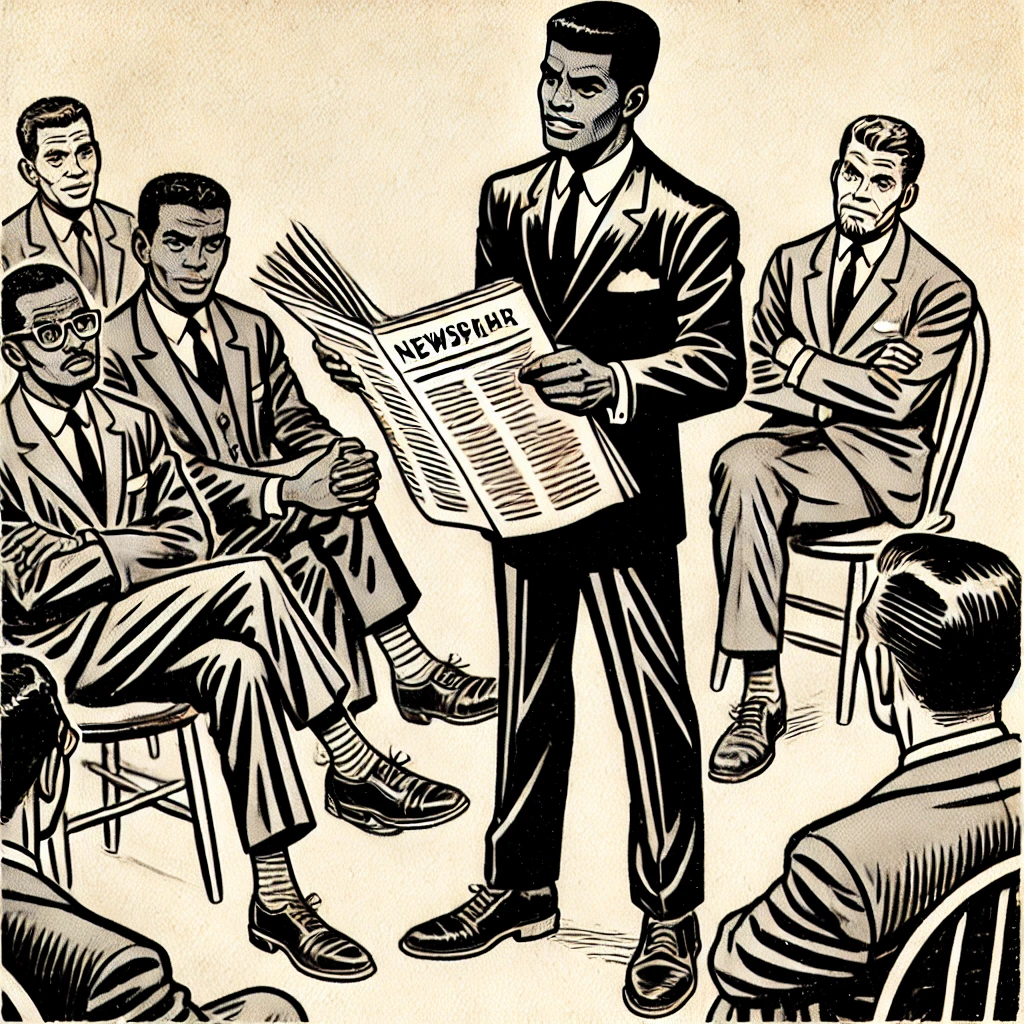
Homer Plessy: The Wealthy Creole Businessman Who Changed American History

Early Life of Homer Plessy Homer Plessy was born in 1862 in New Orleans, Louisiana, into a wealthy Creole family, which significantly influenced his upbringing and worldview. The Creole culture was characterized by a complex identity that blended French, Spanish, African, and Native American heritages. This rich cultural background provided Plessy with an education and social standing that distinguished him within the racially stratified society of 19th-century America. His family was part of a relatively prosperous class of free people of color, many of whom owned businesses, property, and had access to better educational opportunities compared to their enslaved counterparts. This socio-economic advantage played a crucial role in shaping Plessy’s perspectives on civil rights and social justice. Plessy received a solid education, which was rare for African Americans during that era. He attended the prestigious Primary School of the Society of Saint Augustine, a school recognized for educating children from Creole families. His educational background afforded him not only academic knowledge but also an understanding of advanced societal structures. Plessy’s early life experiences cultivated a strong sense of identity and an appreciation for his Creole heritage, where family values and community ties were held in high regard. As he grew older, Plessy became increasingly aware of the injustices faced by African Americans, including the discriminatory laws that sought to segregate and marginalize people of color. This awareness ignited a desire within him to advocate for civil rights, reflecting the values ingrained in him from his family background. The legacy of his upbringing within the affluent Creole class positioned him uniquely to challenge the status quo. This combination of socio-economic privilege and a deep-rooted sense of justice would later manifest in his pivotal role in the landmark legal case that would redefine civil rights in America. Plessy’s Business Ventures Homer Plessy was not only a prominent figure in the civil rights movement but also a successful businessman in post-Reconstruction America. His entrepreneurial spirit propelled him into various industries, allowing him to navigate the complex economic landscape of the late 19th century Louisiana. Plessy’s ventures primarily revolved around property management and real estate, wherein he recognized the potential for profit amidst the growing urbanization of New Orleans. One of Plessy’s notable achievements was his involvement in a mixed-color cooperative association that aimed to empower Creole and African American residents. This association provided critical support in terms of resources and infrastructure, aiding local entrepreneurs in establishing businesses that could compete with those owned by white citizens. Through this initiative, Plessy fostered a sense of community and mutual aid, reflecting his commitment to supporting those who shared similar racial backgrounds. Moreover, Plessy’s economic pursuits operated within a unique context, as the local economy was marked by significant racial barriers and discrimination in commerce. His successes offered him a vantage point from which he could directly confront the inequities faced by marginalized communities. The wealth accumulated through his business ventures afforded him a level of social capital, enabling him to challenge the prevailing social norms and engage more actively in the fight against segregation and injustice. As a wealthy Creole businessman, Plessy was acutely aware of the race relations that shaped the environment around him. The intersection of his wealth, status, and profound understanding of the systemic issues in society prompted him to leverage his resources towards advocating for social change. This combination of business acumen and commitment to activism ultimately led Plessy to become a key figure in the landmark case, Plessy v. Ferguson, which would have a lasting impact on American history. The Landmark Case: Plessy v. Ferguson The landmark Supreme Court case, Plessy v. Ferguson, emerged from an incident that took place in 1896, involving Homer Plessy, a wealthy Creole businessman. The case was a rebellion against the entrenched system of racial segregation that was prevalent in the United States, particularly in the Southern states. Plessy, who was of mixed race and identified as Black, deliberately violated Louisiana’s segregation laws by sitting in a “whites-only” railway car. This act of defiance led to his arrest and set the stage for a pivotal legal challenge. Plessy’s legal team argued that the segregation enforced by the law violated the Thirteenth and Fourteenth Amendments of the U.S. Constitution, which abolish slavery and guarantee equal protection under the law, respectively. The defense posited that the law enforced a social stigma that perpetuated the discrimination against people of color. In stark contrast, the state argued that segregation was constitutional as it maintained public order and reflected societal norms regarding race. The case was pivotal as it delved into the complexities surrounding racial identity, questioning the legal definitions and implications of being classified as Black or white in America. The Supreme Court ultimately ruled against Plessy in a 7-1 decision, establishing the doctrine of “separate but equal.” This ruling legitimized state-sponsored racial discrimination and laid the groundwork for decades of systemic segregation. The decision had far-reaching implications for the Civil Rights Movement, galvanizing activists to challenge the legal underpinnings of racial inequality. Plessy’s role as a plaintiff was crucial in this historical context, presenting a vivid illustration of the contradictions inherent in a society that claimed to uphold the principles of freedom and equality while simultaneously enforcing discriminatory laws. Legacy of Homer Plessy Homer Plessy, a wealthy Creole businessman, played a crucial role in reshaping the landscape of civil rights in the United States, and his legacy continues to resonate to this day. His courageous act of defiance against racial segregation on public transportation culminated in the landmark Supreme Court case of Plessy v. Ferguson in 1896. Though the court ruled in favor of the “separate but equal” doctrine, which upheld state-sanctioned segregation, Plessy’s actions sparked a wave of activism that would challenge this unjust status quo over the ensuing decades. Plessy’s legacy is not solely defined by the court ruling; rather, it serves as a potent symbol of the ongoing struggle for civil rights and social justice. After his case, activists who followed in his footsteps
Best Side Hustles for Beginners (No Skills Required)

By Black Dollar & Culture Most people think side hustles require talent, training, or some hidden superpower.Nope.Some of the BEST money-makers in 2025 require zero skills, just consistency and a willingness to start. Here’s your BD&C breakdown of the easiest, low-barrier side hustles ANY beginner can start today. 1. Product Flipping (The Fastest Beginner Hustle) Flipping is simple:Buy low → Sell higher. Places to find deals: Sell on: Low risk. Fast cash. No skills. 2. Delivery & Drop-Off Services If you can drive, walk, or breathe… you qualify. Options include: You set hours.You decide your pace.Money hits the same day. 3. Content Repurposing for Creators You don’t need to be a creator — you just help them. Simple tasks like: Apps do most of the work now.Creators pay because they don’t have time. 2025 secret: You can earn $15–$50 per clip. 4. Selling Digital Planners & Templates No design skills needed — platforms provide templates: Create once → Sell forever. Popular sellers: Passive income made simple. 5. Amazon KDP (Beginner-Friendly Publishing) You don’t need to write a book.You can upload: People buy them every day.Amazon prints and ships — you collect royalties. 6. Renting Out Items You Already Own Instead of selling your stuff… rent it. Rent out: Platforms make it safe and trackable. You’re sitting on money without knowing it. 7. Dog Walking & Pet Sitting Zero skills.High demand.Easy cash. Apps: People love their pets.They PAY for peace of mind. 8. House Sitting & Room Rentals Watching a house is a hustle by itself. Apps: If you have an extra room → Airbnb, FurnishedFinder. Minimal effort, maximum reward. 9. Remote Micro-Tasks Earn quick money doing tiny online tasks: Sites include: No experience required. 10. Trash & Recycling Pick-Up Don’t sleep on this.HOAs and apartments pay $150–$400/month for someone to: Low competition.High return. 📌 Final Word The biggest mistake beginners make is waiting until they “feel ready.”Side hustles reward action, not perfection.Pick ONE hustle from this list, start it this week, and let momentum do the rest. In 2025, low income isn’t a roadblock — it’s a launchpad. #SideHustles #BeginnerHustles #MakeMoneyOnline #PassiveIncome #BlackDollarAndCulture
How to Build Wealth on a Low Income (2025 Guide)

By Black Dollar & Culture Building wealth when you’re not making much money feels like trying to fill a swimming pool with a teaspoon.But here’s the truth 99% of people never hear: Wealth isn’t about income — it’s about strategy.And in 2025, the tools, tech, and opportunities available mean ANYONE can build wealth, even starting small. Let’s break it down BD&C style. 1. Lower Income = Higher Discipline (That’s Your Advantage) High earners waste money because they can.Low earners build wealth because they must. When money is tight, you learn: Those habits are EXACTLY what wealthy people use to stay wealthy. You’re not behind — you’re being trained. 2. Master the “Big 3” Bills First If you want real change, attack the bills that eat 70% of your income: Housing Transportation Food Small savings don’t change your life.Big savings do. 3. Turn a Skill Into a Side Income (Even a Tiny One) Most people skip this step because they underestimate themselves. But even low-income earners can turn skills like: …into $100–$400/month. That little extra becomes your wealth seed. 4. Automate Wealth With Tiny Numbers You don’t need $500/month to invest. In 2025, you can grow with: Wealth requires direction — not drama. 5. Build a $500 Emergency Fund FIRST Not $5,000.Not $10,000. Just $500. Why? Because a $500 emergency fund stops: It puts you back in control.And CONTROL is the foundation of wealth. 6. Avoid “Broke People Taxes” These are penalties charged for being poor: Avoiding ONE overdraft fee per month = $420/year saved.Avoiding BNPL traps keeps you from owing half a paycheck before payday. 7. Build Wealth With Time, Not Money If income is low, use time: You may not have money — but you have hours.Hours become skills.Skills become income.Income becomes wealth. 8. Join the $27 Rule (The Wealth Hack for Low Income) Here’s the 2025 BD&C secret: Every time you get paid, invest $27 before you spend a dime.$27 is small enough to ignore, but powerful enough to build momentum. Let’s say you get paid 50 times a year:$27 × 50 = $1,350 invested yearlyAt 8% for 15 years = $33,000+ from JUST $27. That’s wealth built quietly. 9. Your Income Can Be Low — Your Mindset Cannot People with low incomes often think: The wealthy mindset says: You don’t need big money.You need a beginning. 📌 Final Word Building wealth on a low income requires creativity, discipline, and patience — but it’s 100% possible. Low income is a circumstance.Wealth is a strategy.And you can start today with $5 if that’s all you have. Your income doesn’t define your future.Your decisions do. #BlackWealth #FinancialLiteracy #LowIncomeWealth #BlackDollarAndCulture Most people think you need big money to build wealth — but the truth is, low-income earners have an advantage the wealthy can’t buy.
November Side Hustles That Can Make You Extra Cash Before the Year Ends

Word Count: ~1,250 The holidays are coming fast — and so are the bills.But November isn’t just about turkey, football, and Black Friday deals. It’s also the perfect month to stack a little extra cash before the year closes out. So if you’ve been side-eyeing your wallet and wondering how to get your bag up before 2026 hits — here are November side hustles that don’t require a degree, a boss, or a miracle. 1. Sell Digital Products for Holiday Shoppers This is the season for printables, planners, eBooks, and digital gifts. Use platforms like Etsy, Stan Store, or Shopify to sell simple products like: People are spending — but they also want instant downloads.Create once. Sell forever. Digital products are the modern version of owning a vending machine online. 2. AI-Powered Freelancing AI isn’t replacing you — it’s supercharging you. Use tools like ChatGPT, Canva, and Jasper to offer: You can easily find clients on Upwork, Fiverr, or Facebook groups. AI helps you deliver faster, and clients pay for speed + quality. Don’t just scroll AI — sell with it. 3. Airbnb or Turo for the Holidays November is travel season.If you’ve got a spare room, car, or vacation space — this is the month to rent it out. List your ride on Turo or your home on Airbnb.Even renting for two weekends could cover a bill or fund your holiday shopping. Pro tip: Offer “holiday packages” — like car add-ons, snacks, or gift baskets to increase reviews (and income). 4. Seasonal Pop-Up or Craft Booths The holiday markets are packed with shoppers looking for gifts.Set up a booth for: November through December is gift season gold — and local pop-ups often cost less than $100 to join. You’re not just selling products — you’re building visibility for your brand. 5. Social Media Affiliate Marketing Turn your phone into a paycheck. Join affiliate programs through Amazon, ShareASale, or Impact — and promote products you already use.If your content gets consistent views, those clicks add up. Focus on trending products like: Affiliate marketing is the definition of “get paid while you sleep.” 6. Start a YouTube Shorts or TikTok Page Short-form content is dominating — and monetization is at an all-time high. Pick a niche you love (finance, food, motivation, or reviews) and post daily for 30 days.Use trending sounds, consistent captions, and AI tools for editing. By January, you could have 10k+ followers and new income streams from brand deals or digital products. Your phone isn’t just entertainment — it’s equity. 7. Resell Black Friday Finds Black Friday + Cyber Monday = your flipping season. Buy discounted electronics, fashion, or collectibles — then resell them on eBay, Facebook Marketplace, or StockX.You’d be shocked how many people miss deals and buy later at full price. It’s not luck — it’s timing. 8. Teach What You Know Your knowledge is a currency. Teach online through: Whether it’s fitness, finance, or photography — someone’s willing to pay for your wisdom. And November is prime time for “new year, new skill” buyers. 9. Virtual Assistant Work With holiday chaos, businesses are begging for help managing their emails, DMs, and schedules. Offer VA services remotely: Charge $25–$50 an hour, and work from your laptop.By December, you’ll have consistent clients — and a clearer path into entrepreneurship. 10. Bundle Your Hustles The ultimate wealth trick: don’t just do one.Combine two or three and create synergy. Example: Each hustle feeds the other. That’s compound income. Final Word: November’s the Month to Build Momentum Don’t wait for January 1st to start fresh — start now.One small hustle can become your full-time income if you’re consistent. Because every big brand started as a side hustle that someone refused to quit. You don’t need more time — just more intention. So, this November, don’t just spend money.Multiply it. #SideHustles #FinancialFreedom #BlackDollarAndCulture #Entrepreneurship #WealthBuilding
How to Get Out of Debt & Build Assets

Word Count: ~1,250 Let’s be real — debt feels like quicksand.You work, you grind, you pay… and somehow, it’s still there. But what if I told you that debt isn’t the end of your wealth story — it’s the beginning of your financial power? Because once you learn how to master debt and flip that same energy into asset building, you stop surviving and start stacking. So let’s talk about how to get out of debt and build assets — step by step, the Black Dollar & Culture way. 1. Face the Numbers, Don’t Fear Them You can’t fix what you won’t face. Grab every bill, statement, and credit report — yes, even the ones hiding in your inbox like bad memories.Add up your total debt.Now separate it: This is your financial x-ray.You can’t treat the illness if you don’t know where it hurts. Clarity is power. Avoidance is debt’s best friend. 2. Attack the High Interest First Credit cards are like vampires — they suck your money dry while you sleep. Start with the highest-interest balances first using the avalanche method.Pay minimums on everything else, and throw every extra dollar at the worst offender. Once that’s gone, roll that same payment to the next debt.That’s called momentum money — and it works faster than you think. Every debt you destroy is a raise you gave yourself. 3. Create a Freedom Budget Your budget isn’t a punishment — it’s your permission slip to build freedom. Split your income into three buckets: Even while paying off debt, never stop investing.Because if you wait until “everything’s paid off,” you’ll lose years of compounding. You can walk out of debt and build wealth at the same time — just with balance. 4. Build an Emergency Fund First Before you pay off another dollar, save at least $1,000.That’s your buffer between progress and panic. After that, aim for 3–6 months of expenses.Because the moment life hits — car trouble, layoff, medical bill — your debt plan will crumble without it. An emergency fund keeps you from using credit to survive. 5. Automate Your Progress If you have to rely on discipline every month, you’ll lose. Set up automation: Systems beat willpower every time. When your money moves automatically toward your goals, you start building wealth in your sleep. 6. Replace Liabilities With Assets Here’s where we flip the script. Once you free up cash from paying off debt, redirect it into assets — things that grow or pay you back: Every time you pay off a debt, buy an asset.That’s how you turn struggle into strategy. 7. Build Credit While You Build Wealth Getting out of debt doesn’t mean avoiding credit — it means mastering it. Keep old accounts open, pay on time, and keep your utilization under 30%.Once your score climbs, use it strategically: Good credit isn’t wealth — it’s access to wealth. 8. Protect What You Build Once you start stacking, protect your progress. That means: Because the goal isn’t just to be debt-free — it’s to be free, period. 9. Learn to Use Debt Like the Wealthy Do Here’s the twist: wealthy people don’t avoid debt — they leverage it. The difference is purpose.They use debt to buy assets that make money — not things that lose value. Bad debt buys comfort.Good debt buys control. When you understand that difference, you’ll never look at credit the same way again. 10. Celebrate Your Financial Freedom When that last payment clears, don’t just breathe — build.Take that same “debt payment” money and invest it. If you were paying $300/month in debt and invest it for 10 years at 8% — that’s $55,000+ waiting for you. That’s the power of redirection. Final Word: From Debt to Dynasty Debt is a season — not a sentence. Once you face it, fix it, and flip it into ownership, your financial story changes forever. You don’t have to be rich to start building assets — you just have to start where you are.Because the real flex isn’t being debt-free — it’s being asset-rich. Freedom doesn’t start when you pay off debt.It starts when you realize you were never meant to stay in it. #DebtFreeJourney #BlackWealth #FinancialFreedom #BlackDollarAndCulture #WealthBuilding
How to Turn $100 into a Wealth Machine (Actionable Finance for Beginners)
Most people think you need thousands to start building wealth — but what if I told you $100 is all it takes to start your journey toward financial freedom? The difference between staying broke and building wealth isn’t luck — it’s strategy. In this post, we’ll walk you through actionable ways to turn a single $100 bill into a long-term wealth machine that grows quietly in the background while you sleep. 🧠 1. Shift Your Mindset from Spending to Investing The first step to wealth isn’t about money — it’s about mindset. Most people see $100 as something to spend. Wealth builders see it as something to plant.When you start viewing every dollar as a worker that should be earning more dollars, you’ve already separated yourself from 90% of the population. Try this: instead of spending your next $100 on clothes or takeout, ask, “How can this $100 make me $5 every month?” That small shift creates a ripple effect that leads to long-term change. 📈 2. Choose Your Wealth Vehicle Wisely You don’t need a fancy degree or thousands in capital to start investing — you just need direction. Here are three proven ways to start with $100: The key is to get your money working. The earlier you start, the more time compound growth has to multiply your effort. 🔁 3. Use the “Flip & Reinvest” Cycle Here’s how to make small money turn into big money: This method allows your wealth to snowball safely while you still keep some profits. Consistency is the true secret weapon of wealth. 🏦 4. Automate Your Financial Growth Automation is the hidden power move the wealthy use every day. Set your apps or bank account to automatically move $10–$25 weekly into investments.By removing emotion from the process, you’ll build wealth even on days you forget to think about it. Automation + Consistency = Financial Freedom. 🔒 5. Protect and Multiply Once you’ve built a habit, focus on protection. Then, use your growing profits to fund new opportunities — from stocks and crypto to digital businesses or even family trust systems. That’s how small money becomes generational power. ✊🏾 Final Thoughts: It’s Not the Amount — It’s the System Wealth doesn’t start with a million dollars. It starts with $100 — and the discipline to repeat smart moves over time. When you control your habits, your money follows. Start today, not tomorrow. Because the $100 you save now could become the $10,000 your kids thank you for later. WealthMachine #BlackDollarAndCulture #GenerationalWealth #FinancialFreedom #InvestingForBeginners #CompoundInterest #SmartMoneyMoves #FinancialLiteracy #WealthBuilding #ActionableFinance
How to Start a Family Bank in 2025: Turning Your Last Name into a Legacy
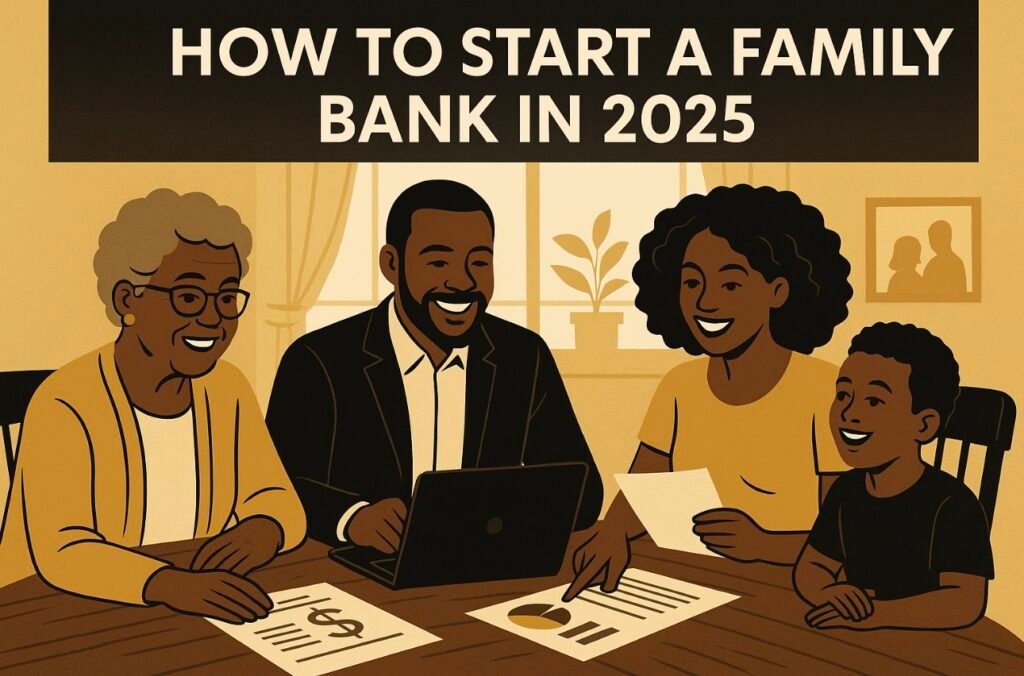
Picture this: It’s Sunday dinner. The smell of baked macaroni and cornbread fills the air. But instead of talking about who brought the potato salad, your family is discussing interest rates, dividends, and how the Jones Family Bank just funded your cousin’s first food truck. Sounds wild, right? But this is exactly what building a Family Bank looks like in 2025 — taking control of your financial future one generation at a time. Forget begging banks that never understood your story; it’s time your last name became the loan officer. What Exactly Is a Family Bank? No, it’s not a vault in your grandma’s basement (though she probably guards her savings tighter than Fort Knox). A Family Bank is a trust-based financial system that your family owns and controls. It’s where family members pool money, use life insurance as leverage, and invest collectively — whether in real estate, businesses, or education — all while earning interest from each other, not the bank down the street. It’s how wealthy families like the Rockefellers, Carnegies, and modern moguls keep wealth circulating within their bloodline. Step 1: Set the Vision — Not Just the Vault Before you dive into spreadsheets, gather your tribe. Sit down as a family and define what wealth really means to you. Is it freedom from debt? Owning property? Funding each generation’s education without Sallie Mae breathing down their neck? This step isn’t about money yet — it’s about mission. A Family Bank without purpose is like a vault with no key. Pro Tip: Create a “Family Constitution.” Write down your values, goals, and rules. It keeps everyone accountable and aligned when the zeros start stacking. Step 2: Choose the Right Structure — It’s Bigger Than a Savings Account The modern Family Bank in 2025 runs on legal protection and smart tax strategy. You’ll need a few key ingredients: Wealthy families aren’t lucky; they’re organized. Step 3: Fund It Like a Boss Here’s where the magic begins. Every Family Bank starts with seed money — and no, it doesn’t have to be a fortune. 💰 Funding Options: Before long, you’ll realize something powerful — the family becomes its own lender. Your niece’s college fund, your uncle’s food truck, or your sister’s salon expansion — all financed internally. No denials. No high interest. Just legacy. Step 4: Become Your Own Bank This is where 2025’s digital world makes it all easier than ever. You can use platforms like Trust & Will, LegalZoom, or Wealth.com to set up trusts. Pair that with Fintech tools like Monarch Money, Tiller, or even Notion dashboards for tracking the Family Bank. Automate deposits. Document everything. And treat it like a real institution — because it is. When someone borrows, they sign a promissory note. Interest gets paid back into the family pot. Your money keeps working — not just sitting. Step 5: Teach the Game — Pass the Playbook If only one person understands the system, you’ve created dependence, not dynasty. So schedule Family Wealth Meetings every month.Discuss goals, investments, and who’s up next to manage the ledger. Teach the kids how interest works and show them the family’s assets. Because wealth that isn’t taught eventually gets lost. “If you don’t teach your children how money works, someone else will — and it won’t be in their favor.” Step 6: Invest Like a Community The Family Bank’s money doesn’t just sit idle — it grows through collective investment. In 2025, you can invest together in: Every dollar circulating among you is a vote for your legacy. Step 7: Protect the Empire Once the system is rolling, you’ll want to make sure it lasts. ✅ Set up an estate plan so assets transition smoothly.✅ Make sure the trust has a successor trustee for leadership continuity.✅ Keep insurance policies updated to fund the bank long-term.✅ And remember: legacy is a relay race — not a sprint. The Family Bank in Action: A Quick Story Meet the Johnsons. In 2015, they started pooling $200 each month into a joint account. By 2025, that account evolved into a trust-funded Family Bank worth over $400,000. They’ve since financed two homes, a bakery, and a trucking business — all within their family. And here’s the kicker — the interest paid back made the next generation’s college fund even bigger. Now that’s how you flip the system. Final Word: From Survival to Ownership Starting a Family Bank isn’t just about stacking cash — it’s about rewriting history.It’s about saying, “We won’t wait for opportunity — we’ll fund it ourselves.” 2025 is the year families stop begging and start building.You don’t need a billion dollars, just a billion-dollar mindset — and a plan that keeps your name in circulation long after you’re gone. So next Sunday, when everyone’s passing the cornbread, pass around this blog too.Because the real revolution? It starts at your dinner table. #FamilyBank #GenerationalWealth #BlackDollarAndCulture #FinancialFreedom #LegacyBuilding