4 Ways to Pay Yourself First (And Build Real Wealth Before Bills Touch Your Money)

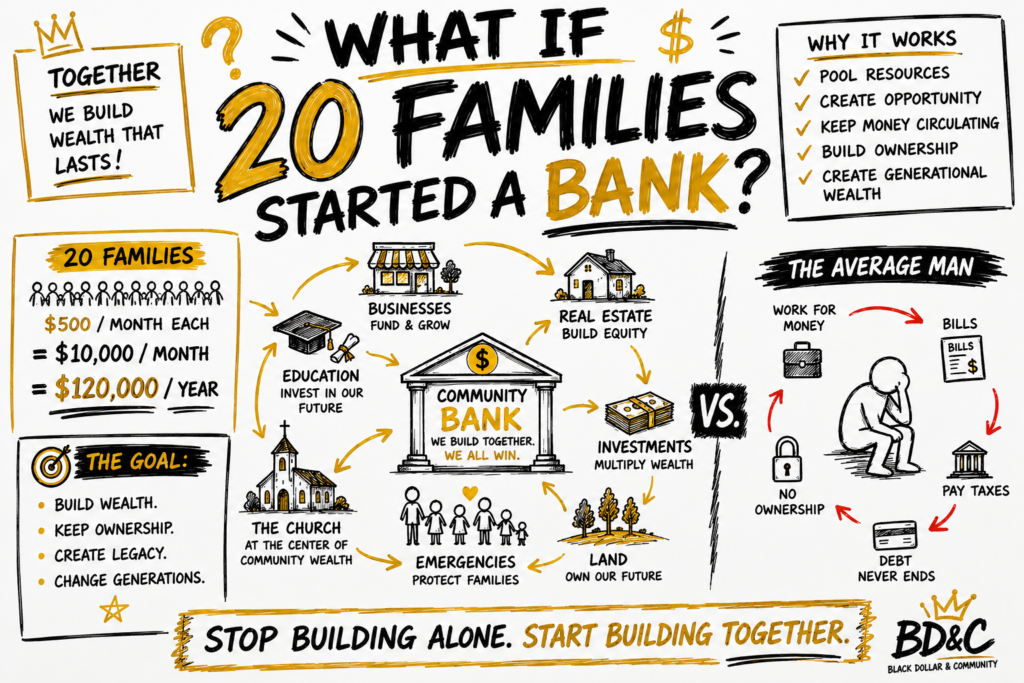
Most people get paid… and immediately start paying everyone else. Rent.Car note.Subscriptions.Debt. By the time they look up—there’s nothing left. That’s not an accident. That’s a system designed to keep you circulating money… instead of keeping it. Wealthy individuals don’t operate like that. They follow one simple rule: Pay yourself first. Before the world gets a dollar—you do. Here are 4 powerful ways to start doing that immediately. 1. Automatic Wealth Transfer (Before You See the Money) The easiest way to build wealth… is to remove emotion from the process. Set up an automatic transfer from your checking account to: The key is simple:You should never even see the money you’re saving. Because if you see it… you’ll spend it. Start with: This turns saving into a system—not a decision. 2. Pay Your Future Self Through Investments Saving money is good. But investing is what builds real wealth. Every time you get paid, allocate a portion to: This is how you move from:Working for money → Money working for you Even small amounts compound. Consistency beats intensity. 3. Build Your Family Bank First Most families:Go to the bank when they need money. Wealthy families:Are the bank. Instead of sending interest to outside institutions… You can: That means:Car loans, emergencies, business funding… All stay inside the family ecosystem. This is how wealth stops leaking. 4. Eliminate “Leftover Thinking” Most people save what’s left. Wealth builders invest first… and live on the rest. That mindset shift alone changes everything. Instead of saying:“I’ll save what I don’t spend…” Say:“I’ll spend what’s left after I build wealth.” That forces: The Real Shift Paying yourself first isn’t just about money. It’s about control. Control over: Because if you don’t prioritize yourself… The system will always prioritize itself. 💡 Final Thought You don’t build wealth by working harder. You build wealth by keeping more of what you earn—and putting it to work. 🚀 Call to Action If you’re serious about building something that lasts beyond you… 👉 Start your own financial system with my book:The Family Bank Starter Systemhttps://stan.store/blackdollarandculture/p/the-family-bank-starter-system 👉 And take it even further with asset protection and generational wealth strategy:Get Your Family Wealth Trust Blueprint Now – ILIThttps://stan.store/blackdollarandculture/p/get-your-family-wealth-trust-blueprint-now Focus Keyphrase Pay Yourself First Wealth Strategy Slug pay-yourself-first-wealth-strategy Meta Description Learn 4 powerful ways to pay yourself first and build real wealth before bills take your money. Discover strategies used by wealthy individuals to grow financial freedom.

The Black Inventor Who Created Dry Cleaning

Before dry cleaners existed on every corner of America… there was a Black tailor experimenting with stained fabric by candlelight. His name was Thomas Jennings. In the early 1800s, Jennings operated a tailoring business in New York City. His customers often brought him expensive coats, dresses, and garments made from delicate fabrics like wool and silk. But there was a problem. Once those clothes became stained, washing them with water often ruined the fabric. The garments would shrink, fade, or lose their shape. For many tailors, that would have been the end of the story. But Jennings refused to accept the problem as permanent. Late at night, after finishing his work for the day, he began experimenting with different cleaning techniques. He tested combinations of solutions, fabrics, and methods, trying to find a way to remove stains without damaging the clothing. After years of trial and error, he finally developed a process he called “dry scouring.” Instead of soaking clothes in water, his method used special cleaning agents that removed dirt and grease while protecting the fabric. It was revolutionary. In 1821, Thomas Jennings received a U.S. patent for his invention, becoming the first Black American in history to hold a patent in the United States. At a time when many Black Americans were still enslaved and denied basic rights, Jennings had legally secured ownership of his invention. His discovery laid the foundation for what we now know today as modern dry cleaning — an industry that exists in nearly every city around the world. But Jennings didn’t just build a successful business. He used the money from his invention to support the abolitionist movement, helping fund efforts that fought against slavery and pushed for freedom and civil rights. His success became more than personal wealth. It became a tool for progress and liberation. Thomas Jennings proved something powerful long before the modern era: Black innovation didn’t begin yesterday. Black entrepreneurship didn’t begin yesterday. Black excellence has always existed — even in the face of laws and systems designed to hold it back. His story is a reminder that many of the everyday things we use today were built on the ideas, courage, and determination of people whose names were rarely taught in school. And Thomas Jennings is one of those names. Call To Action Most people were never taught stories like this. Not in school.Not in textbooks.Not in the mainstream narrative. But the truth is… Black history is filled with inventors, innovators, and civilizations that shaped the modern world. If you want to explore more of these powerful stories, dive deeper with these two books from Black Dollar & Culture. 📚 Black BrillianceDiscover powerful stories of Black inventors, innovators, and pioneers who changed the course of history. 👉 https://stan.store/blackdollarandculture/p/get-my-black-brilliance-ebook-now 🌍 The First World: Before ErasureA deep exploration into ancient civilizations and global history that existed long before colonization rewrote the narrative. 👉 https://stan.store/blackdollarandculture/p/the-first-world-before-erasure Because when we understand the truth about our past… we unlock the power to build a stronger future. ✊🏾 Focus Keyphrase Thomas Jennings dry cleaning inventor Slug thomas-jennings-dry-cleaning-inventor Meta Description Thomas Jennings became the first Black American to receive a U.S. patent in 1821 after inventing the dry-cleaning process known as dry scouring. Discover the powerful story behind the invention that transformed clothing care.

How to Build Wealth Once You Hit 40

(Black Dollar & Culture Wealth Series) For many people, turning 40 feels like a financial wake-up call. You start realizing retirement isn’t some distant idea anymore. Kids may be getting older. Your career might be established — or you might feel like time is moving faster than expected. But here’s the truth most financial institutions never tell people: Your 40s can be one of the most powerful wealth-building decades of your life. Why? Because by this stage you likely have more income, more experience, and better decision-making ability than you did in your 20s. The key is shifting from earning money to building systems that produce wealth. Let’s break down the moves that matter most. 7 Wealth Moves You Must Make After Age 40 1. Maximize Your Retirement Accounts Your 40s are the time to aggressively fund retirement accounts. The power of compounding is still working in your favor, but you no longer have time to be passive. Focus on: • 401(k) contributions (especially if your employer offers a match)• Roth IRA or Traditional IRA• SEP IRA or Solo 401(k) if you’re self-employed Many wealthy individuals increase their contributions significantly in their 40s to make up for earlier years. Even an extra $500 per month invested for 20 years can grow into six figures. 2. Eliminate High-Interest Debt One of the biggest wealth killers after 40 is consumer debt. Credit cards charging 18%–30% interest quietly drain your future wealth. Every dollar spent on interest is a dollar not invested in assets. Focus on eliminating: • Credit card balances• Personal loans• High-interest car loans The goal is simple: Free up cash flow so your money can start working for you. 3. Invest Consistently in Assets Wealth is not built from income alone. It is built through ownership. By 40, your financial focus should shift toward accumulating assets like: • Dividend stocks• Index funds (S&P 500, ETFs)• Real estate• Private businesses• Ownership in companies Historically, the S&P 500 has averaged about 10% annually over the long term. Consistent investing over the next 20–25 years can transform your financial future. 4. Build a Family Bank System One strategy wealthy families have used for generations is circulating money within the family instead of constantly borrowing from banks. Instead of relying on outside lenders for every financial need, families can pool resources and create their own internal lending system. This allows families to: • Finance businesses• Help relatives purchase homes• Fund education• Keep interest circulating inside the family Learning how to structure this correctly can dramatically change how wealth flows through generations. 👉 Learn how to build your own system here:https://stan.store/blackdollarandculture/p/the-family-bank-starter-system 5. Protect Your Wealth With Proper Structures Building wealth is only half the equation. The other half is protecting it from taxes, lawsuits, and probate. Many wealthy families use legal structures such as trusts and insurance strategies to protect their assets. One powerful strategy is the Irrevocable Life Insurance Trust (ILIT), which allows families to transfer wealth to the next generation while reducing estate taxes and protecting assets. 👉 Learn how wealthy families use this strategy:https://stan.store/blackdollarandculture/p/get-your-family-wealth-trust-blueprint-now Support Independent Black Media ❤️ Support Independent Black Media Black Dollar & Culture is 100% reader-powered — no corporate sponsors, just truth, history, and the pursuit of generational wealth. Every article you read helps keep these stories alive — stories they tried to erase and lessons they never wanted us to learn. 6. Increase Your Income Streams By 40, relying on a single income source becomes risky. Many wealthy individuals focus on building multiple streams of income, such as: • Dividend income• Rental properties• Online businesses• Digital products• Consulting or coaching Even building two or three additional income streams can create financial security that a job alone cannot provide. 7. Start Thinking Generationally True wealth isn’t just about your retirement. It’s about what happens after you’re gone. At this stage in life, it’s important to start thinking about: • Estate planning• Teaching financial literacy to your children• Passing down assets instead of liabilities The goal is not simply to retire comfortably. The goal is to build something that lasts beyond your lifetime. Final Thoughts Your 40s are not too late. In fact, many successful entrepreneurs, investors, and business owners didn’t hit their financial stride until their 40s or even 50s. What matters now is intentional action. Reduce debt. Increase investments. Build ownership. Create systems that allow money to grow whether you’re working or not. Because the real goal isn’t just making money. It’s building a legacy. #BlackDollarCulture #GenerationalWealth #BlackWealth #FamilyBank #FinancialFreedom #WealthBuilding #InvestingForBeginners #OwnershipEconomy #BlackEntrepreneurs #BuildWealth Focus Keyphrase: How to Build Wealth Once You Hit 40 Slug: build-wealth-after-40 Meta Description:Learn how to build wealth after 40 with proven strategies including investing, eliminating debt, building a family bank system, and protecting assets for generational wealth.

How to Stop Living Paycheck to Paycheck

For millions of people, life follows the same exhausting cycle. Work.Wait for payday.Pay bills.Start over again. Two weeks later… the cycle repeats. For many families, especially in historically marginalized communities, this pattern didn’t start because of poor financial decisions. It started because wealth-building opportunities were limited for generations. Policies like redlining, employment discrimination, and unequal access to capital meant many families had to rely almost entirely on wages rather than ownership. And wages alone rarely build wealth. They build survival. Breaking the paycheck-to-paycheck cycle requires more than budgeting. It requires a shift in how money is viewed and used. Not just earning money. Directing where it flows. Because money behaves like water. If you don’t guide it intentionally, it will always flow somewhere else — usually into someone else’s pocket. The First Step: Understand the Real Problem Many people assume living paycheck to paycheck is simply caused by low income. Sometimes that’s true. But often the deeper issue is lack of ownership. When your entire financial life depends on a job, every expense becomes a risk. Rent.Car payments.Utilities.Groceries.Insurance. If the paycheck stops, everything becomes unstable. That’s because most people operate with only one financial engine — their labor. But wealth builders rely on multiple financial engines. The Second Step: Shift From Income to Cash Flow Employees are taught to focus on income. Owners focus on cash flow. Income requires time. Cash flow continues even when you’re not actively working. Examples of cash-flow assets include: • Dividend-paying stocks• Rental real estate• Businesses• Royalties from books or digital products• Ownership in companies When assets produce income, financial pressure begins to decrease. Instead of trading hours for money forever, money begins working on your behalf. The Third Step: Eliminate Financial Leakage One of the biggest hidden reasons people stay stuck financially is money leakage. These are small but constant expenses that quietly drain income. Examples include: • High-interest credit cards• Large car payments• Frequent convenience spending• Subscription services rarely used• Lifestyle purchases that produce no return Individually these expenses may seem harmless. But together they can consume thousands of dollars each year. Money that could have been used to build assets. The goal isn’t to remove joy from life. The goal is to make sure your money builds something before it disappears. The Fourth Step: Pay Yourself First Most households follow the same pattern. They pay everyone else first. The landlord.The bank.Credit card companies.Utility companies.Subscription services. By the time they think about saving or investing, the paycheck is already gone. Wealth builders reverse this order. They allocate money toward assets before anything else. Even if it starts small. Consistency matters more than size. Over time, those consistent investments compound into powerful financial growth. The Fifth Step: Build Internal Financial Systems Traditional banks make billions every year from interest payments. Every time a family borrows money, wealth flows out of that household and into the financial system. But some families operate differently. Instead of constantly borrowing from banks, they create internal lending systems within the family. Money circulates between relatives for: • Starting businesses• Purchasing homes• Funding education• Emergency needs• Investments Interest stays within the family rather than leaving it. This concept is known as family banking, and many wealthy families have quietly used versions of this strategy for generations. The Real Goal: Ownership Escaping the paycheck-to-paycheck cycle is not just about controlling spending. It is about building ownership. Ownership of businesses. Ownership of investments. Ownership of assets that generate income. Once assets begin producing money, something powerful happens. Bills are no longer paid only through labor. They begin to be paid through ownership income. And that is when financial stress finally begins to fade. Because your money is working for you. Not the other way around. Build Real Generational Wealth If you’re serious about breaking financial cycles and building lasting wealth for your family, these two resources can help you take the next step. The Family Bank Starter SystemLearn how families create their own internal banking system to keep money circulating inside the household instead of flowing to traditional banks.👉 https://stan.store/blackdollarandculture/p/the-family-bank-starter-system Family Wealth Trust Blueprint (ILIT Guide)Discover how wealthy families protect and transfer wealth using life insurance trusts and strategic estate planning.👉 https://stan.store/blackdollarandculture/p/get-your-family-wealth-trust-blueprint-now ❤️ Support Independent Black Media Black Dollar & Culture is 100% reader-powered — no corporate sponsors, just truth, history, and the pursuit of generational wealth. Every article you read helps keep these stories alive — stories they tried to erase and lessons they never wanted us to learn. FAQ Why do so many people live paycheck to paycheck?Many households depend on wages as their only income source while expenses continue rising. What is the fastest way to escape the paycheck-to-paycheck cycle?Increasing income while simultaneously investing in assets and reducing financial leakage. What is the biggest difference between wealthy families and struggling families?Wealthy families prioritize ownership and asset accumulation, while most households rely primarily on wages. #BlackDollarCulture #BlackWealth #GroupEconomics #FinancialLiteracy #GenerationalWealth #FamilyBank #OwnershipEconomy #WealthBuilding #EconomicEmpowerment #BlackFinance Focus Keyphrase: stop living paycheck to paycheckSlug: stop-living-paycheck-to-paycheckMeta Description: Learn how to stop living paycheck to paycheck by shifting from wage dependence to asset ownership, family banking strategies, and long-term wealth building.

Joseph Bologne, Chevalier de Saint-Georges: The Revolutionary Virtuoso Europe Tried to Erase

In 1745, on the Caribbean island of Guadeloupe, a child was born into contradiction. His father was a wealthy French plantation owner. His mother, Nanon, was an enslaved African woman. The child’s name was Joseph Bologne. History would later know him as the Chevalier de Saint-Georges. From the beginning, his existence challenged the rigid hierarchies of the 18th century. He was taken to France as a boy and raised within elite circles. At a time when most men of African descent were denied status, education, and recognition, Joseph was trained like nobility. He studied literature. He studied music. And he trained in fencing with a discipline that bordered on obsession. By his teenage years, he had become one of the finest swordsmen in Europe. Crowds gathered to watch him duel. Newspapers praised his speed, his elegance, his precision. He defeated seasoned masters. His skill was so extraordinary that it forced even the prejudiced to acknowledge him. Steel could not be debated. Skill could not be denied. But the blade was only one part of his genius. Music was where he transcended. Joseph Bologne became a master violinist, not merely competent, not merely talented, but exceptional. He performed across France. He composed symphonies and violin concertos that displayed complexity, innovation, and emotional depth. He directed orchestras with authority and grace. He was not an outsider peering into Europe’s cultural elite. He was inside it. Paris embraced him — cautiously at first, then enthusiastically. He led one of the most prestigious orchestras in Europe, Le Concert des Amateurs. His compositions rivaled the most celebrated works of the era. His presence in royal circles was undeniable. And yet, even at the height of his brilliance, the boundaries of race lingered. When he was considered for a directorship at the Paris Opéra, several prominent singers petitioned the queen. They refused to be directed by a man of mixed heritage. Talent was not enough to shield him from prejudice. But Joseph did not retreat. Then the French Revolution erupted. While many artists remained safely within salons and theaters, Joseph stepped onto the battlefield. He became a colonel and led one of the first all-Black regiments in European history — the Légion Saint-Georges. These soldiers fought for revolutionary ideals of liberty and equality in a nation still struggling to practice both. He carried a sword not for sport now, but for principle. Yet revolutions are rarely clean. Political chaos consumed France. Joseph himself was imprisoned during the Reign of Terror, despite his service. Suspicion was indiscriminate. Loyalty meant little in an age of paranoia. He survived. But after his death in 1799, something quieter happened. Silence. His compositions gradually disappeared from concert halls. His name faded from textbooks. His legacy, once undeniable, was minimized. Europe remembered many of its great composers — but not him. History did not erase him in one dramatic act. It simply neglected him. And neglect can be just as powerful. For generations, his music gathered dust. His story was reduced to footnotes. His existence complicated the narrative many preferred — that genius in classical Europe had a singular image. But truth has endurance. In recent decades, historians and musicians have revived his work. His symphonies are performed again. Scholars study his life not as novelty, but as significance. Films and biographies have brought his name back into public consciousness. Joseph Bologne was not a side character in someone else’s era. He was a master fencer.A virtuoso violinist.A respected composer.A military colonel.A revolutionary. He embodied excellence in spaces that were not designed for him to thrive. And perhaps that is why his story matters so deeply now. Because legacy is not always destroyed by force. Sometimes it is buried by omission. Joseph Bologne, Chevalier de Saint-Georges, does not need comparison to stand tall. He stands on his own — blade in one hand, violin in the other — a reminder that brilliance has never been confined to the boundaries history tried to draw. He was not ahead of his time. He was greater than the limits placed upon it. ❤️ Support Independent Black Media Black Dollar & Culture is 100% reader-powered — no corporate sponsors, just truth, history, and the pursuit of generational wealth. Every article you read helps keep these stories alive — stories they tried to erase and lessons they never wanted us to learn. Focus Keyphrase Joseph Bologne Chevalier de Saint-Georges Meta Description Explore the extraordinary life of Joseph Bologne, Chevalier de Saint-Georges — master violinist, elite fencer, and revolutionary colonel whose brilliance in 18th-century France was nearly erased from history. Slug joseph-bologne-chevalier-de-saint-georges-revolutionary-virtuoso

The Black Man Who Invented Potato Chips

In 1853, inside a busy restaurant in Saratoga Springs, New York, a chef stood over a hot stove preparing a meal that would unknowingly change the way the world eats forever. His name was George Crum, a skilled chef of African American and Native American heritage whose talent had already earned him a reputation as one of the finest cooks in the region. Wealthy travelers and businessmen came to the Moon’s Lake House restaurant not just for food, but for the experience of dining under the care of a chef who understood flavor, texture, and precision better than most cooks of his time. One evening, a customer sent back a plate of fried potatoes, complaining that they were too thick and too soggy. In an era when chefs took great pride in their craft, the complaint struck a nerve. Determined to make a point, George Crum sliced the next batch of potatoes as thin as he possibly could, fried them until they were crisp, and added a heavy pinch of salt before sending them back to the table. What was meant as a sharp response to a picky customer became one of the most important culinary accidents in American history. The customer loved them. Soon, other diners began requesting the same thin, crispy potatoes. Word spread quickly among visitors to Saratoga Springs, a popular resort destination at the time. Before long, the dish became known as “Saratoga Chips,” and people came specifically to taste the new creation that only George Crum seemed able to perfect. The thin slices, golden color, and satisfying crunch created a completely new kind of food experience. It was simple, but it was addictive. Without realizing it, George Crum had created the foundation for what would become one of the largest snack food industries in the world. At the time, there were no factories producing chips and no plastic bags lining grocery store shelves. Every chip had to be made by hand, sliced carefully and fried in small batches. The idea belonged to the kitchen, and George Crum was its master. As his reputation grew, Crum eventually opened his own restaurant, known as Crum’s Place, where Saratoga Chips became the main attraction. Customers traveled long distances just to taste the famous chips prepared by the man who invented them. Bowls of chips were placed on every table, a tradition that would later become standard in restaurants across America. But while George Crum enjoyed local fame and success, the future of his invention would move beyond his control. The concept of thin fried potato slices spread from restaurant kitchens into homes and eventually into small commercial operations. Years later, entrepreneurs began packaging potato chips for sale, transforming a handmade specialty into a mass-produced product. George Crum never patented his invention. In the 1800s, many cooks and craftsmen rarely considered protecting their ideas legally, and the patent system was difficult to navigate even for established businessmen. Without legal ownership of the idea, the invention passed freely into the hands of companies that would eventually build billion-dollar empires around it. Factories replaced kitchens. Machines replaced hand slicing. National brands replaced local chefs. Today, potato chips are sold in nearly every country on Earth. Grocery stores stock entire aisles filled with chips of every flavor imaginable. The global potato chip industry generates tens of billions of dollars every year, making it one of the most profitable snack markets in the world. Yet the name George Crum remains largely unknown to the millions of people who open a bag of chips each day. His story reflects a pattern seen throughout American history — innovators whose contributions shaped entire industries but whose names faded as corporations grew larger and wealth concentrated elsewhere. George Crum did not become a snack food tycoon, and he did not build a manufacturing empire, but his idea changed food culture forever. Every crunchy bite traces back to a single moment in a Saratoga Springs kitchen, when a determined chef decided to slice potatoes thinner than anyone had before. The brands became famous. The invention became global. But it all started with George Crum. Even today, few people realize that one of America’s most beloved snacks began with a Black chef working in a small 19th-century kitchen, turning a simple potato into a permanent part of everyday life. History remembers the companies. Black Dollar & Culture remembers the creator. This story reminds us that innovation does not always come from corporations or laboratories. Sometimes it comes from a single person with skill, pride in their craft, and the determination to do something better than it had been done before. The next time you open a bag of potato chips, remember that behind that familiar sound of the bag tearing open is a story that began more than 170 years ago with a chef who never imagined that his invention would feed the world. Stories like George Crum’s remind us that everyday things often have extraordinary origins. Share this story so more people learn the name behind one of America’s most famous foods — and explore more untold innovations at Black Dollar & Culture. Focus Keyphrase George Crum potato chip inventor Meta Description Discover the true story of George Crum, the Black chef who invented potato chips in 1853 and changed the global snack industry forever. Slug george-crum-potato-chip-inventor

How to Think Like a Wealthy Person (Even Before You Have Money)

Most people think wealth starts in the bank account. It doesn’t. It starts in the mind. Before the portfolio.Before the business.Before the real estate. Wealth begins with a shift in how you see the world — and more importantly, how you see yourself inside it. Because poor thinking chases money. Wealthy thinking builds systems. And the difference between the two determines everything. 1. Wealthy People Think in Ownership, Not Income The average person asks: “How can I make more money?” The wealthy person asks: “How can I own something that makes money without me?” That shift alone separates employees from empires. A job is income.A system is leverage.Ownership is power. Look at figures like Warren Buffett. He didn’t become wealthy because of a salary. He became wealthy because he owned pieces of businesses. Ownership compounds.Income disappears. If you want to think wealthy, start asking daily: 2. Wealthy Thinking Is Long-Term Thinking Poor mindset: “I need it now.”Wealth mindset: “Where will this put me in 15 years?” Wealthy people think in decades, not days. They understand: They don’t panic when the economy dips.They position themselves. That’s why during downturns, some people lose everything — while others quietly accumulate. Patience is a wealth strategy. 3. Wealthy People Control Emotion Emotion is expensive. Impulse buying.Panic selling.Flexing to impress.Spending to feel validated. Wealthy people detach emotion from money decisions. They ask: Discipline beats hype. Every time. 4. They See Assets Where Others See Objects The average person sees: A wealthy thinker sees: It’s not about what something is. It’s about what something can produce. That’s the Family Bank mindset. Turn consumption into creation.Turn access into ownership.Turn platforms into pipelines. 5. Wealthy People Move Quietly Real wealth is quiet. It doesn’t scream.It doesn’t compete.It doesn’t explain itself. It studies.It accumulates.It protects. While some chase attention, others build infrastructure. That quiet separation is uncomfortable — but it’s necessary. Growth requires separation. 6. They Think in Systems, Not Hustles Hustle burns out. Systems scale. A wealthy thinker asks: Subscription businesses.Automated investing.Digital products.Trust structures.Content libraries. Build once.Collect repeatedly. That’s the difference between working hard and working strategically. 7. They Protect Capital Aggressively Building wealth is only half the game. Keeping it is the real discipline. Wealthy thinkers care about: They understand money must be defended. Capital is oxygen. Without it, nothing else matters. The Core Shift To think like a wealthy person, ask yourself daily: This isn’t about pretending to be rich. It’s about training your brain to operate at a higher level. Wealth is not an amount. It’s a perspective. And once your thinking shifts — your strategy follows. Then your behavior. Then your outcomes. ❤️ Support Independent Black Media Black Dollar & Culture is 100% reader-powered — no corporate sponsors, just truth, history, and the pursuit of generational wealth. Every article you read helps keep these stories alive — stories they tried to erase and lessons they never wanted us to learn. In a world drowning in debt, distraction, and dependence, wealthy thinking is an act of rebellion. Ownership is power. Discipline is protection. Systems are freedom. If this shifted your mindset, share it with someone building in silence — and step deeper into the BD&C movement. Focus Keyphrase: How to think like a wealthy personSlug: how-to-think-like-a-wealthy-personMeta Description: Learn how to think like a wealthy person by shifting from income to ownership, building systems, controlling emotion, and focusing on long-term asset growth.

The Safest Place to Keep Your Money During a Crisis

When a crisis hits — recession, banking panic, market crash, political chaos — the first instinct people have is to move fast. Pull money out. Hide cash. Chase whatever feels “safe” at the moment. That instinct has ruined more wealth than the crisis itself. The truth is uncomfortable, but powerful:There is no single “safe place” for money during a crisis. There is only a safe strategy. And the people who come out stronger aren’t the ones who panic — they’re the ones who prepared before the storm. Let’s walk through where money actually survives, grows, and stays accessible when systems get stressed. What “Safe” Really Means in a Crisis Before we talk locations, we need to define safety properly. During a crisis, “safe” does not mean: Safe means three things: Any place your money lives should satisfy at least two of the three. The strongest setups hit all three. 1. Insured High-Yield Cash (Your First Line of Defense) Despite the noise, cash is still king during uncertainty — when it’s parked correctly. Money held in FDIC-insured institutions remains one of the most reliable anchors during turmoil. Federal Deposit Insurance Corporation Why this works Where people mess up BD&C rule:Cash is not for growth — it’s for control. 2. U.S. Treasury Assets (Quiet, Boring, Powerful) When fear hits global markets, institutions don’t panic — they run to U.S. Treasuries. U.S. Department of the Treasury Treasury bills, notes, and money-market funds backed by Treasuries are considered some of the safest financial instruments in the world. Why this works What this isn’t This is storm shelter money — not party money. 3. Diversified Brokerage Accounts (Not Just Savings) Many people think crisis safety means “pull everything out.” Wealthy families do the opposite — they spread exposure. A well-structured brokerage account holding: creates controlled risk, not chaos. Why this works The danger isn’t investing during a crisis —it’s being forced to sell because you didn’t plan liquidity. 4. Hard Assets That Don’t Depend on Banks When trust in systems drops, tangible value matters. That includes: Gold isn’t magic — but it has survived: Why this works BD&C reminder:Hard assets protect wealth between generations — not just between paychecks. 5. The Most Overlooked “Safe Place”: Structure Here’s the part most people skip — and pay for later. The safest money isn’t just where it’s kept.It’s how it’s owned. Families that survive crises often use: Why? Because structure protects against: Money without structure is fragile — no matter where it sits. What Not to Do During a Crisis Let’s be clear. ❌ Don’t pull everything into physical cash❌ Don’t chase “guaranteed” returns❌ Don’t move money based on fear headlines❌ Don’t trust platforms you don’t understand Crises punish speed without strategy. The Real Answer No One Wants to Hear The safest place to keep your money during a crisis isn’t a bank, vault, or asset. It’s a system: That’s how wealth survives storms — and why some families quietly come out richer every time. ❤️ Support Independent Black Media Black Dollar & Culture is 100% reader-powered — no corporate sponsors, just truth, history, and the pursuit of generational wealth. Every article you read helps keep these lessons alive — lessons they never taught us, but always used. If this helped you think differently about safety, share it with someone who’s still being told to “just save more.”We don’t need fear.We need frameworks. Ownership over panic.Structure over noise.Strategy over luck. Focus Keyphrase: safest place to keep your money during a crisisSlug: safest-place-to-keep-your-money-during-a-crisisMeta Description: Learn where to safely keep your money during a financial crisis using a proven wealth strategy that prioritizes protection, liquidity, and long-term stability.

Benjamin Banneker: The Man Who Measured the Stars and Helped Build America

Benjamin Banneker was born in 1731 in rural Maryland, at a time when knowledge was tightly controlled and opportunity was rationed by class, race, and access. He was born free, yet freedom in colonial America did not include schools, institutions, or formal pathways into science or public life. What Banneker possessed instead was an uncommon discipline of mind, a relentless curiosity, and the ability to teach himself in a world designed to exclude him. From an early age, Banneker demonstrated a deep attentiveness to patterns. He observed the movement of shadows, the rhythm of seasons, the cycles of the moon, and the quiet logic underlying numbers. These observations were not passive. They became the foundation of a rigorous self-education in mathematics, astronomy, mechanics, and natural philosophy. Without classrooms or instructors, he relied on borrowed books, correspondence, and repeated experimentation. Knowledge, for Banneker, was not inherited or granted — it was earned through persistence. One of his earliest achievements revealed the breadth of his mechanical intelligence. After examining a pocket watch, Banneker constructed a fully functional wooden clock entirely by hand. At a time when precision timekeeping was rare and highly specialized, his clock reportedly kept accurate time for decades. This was not novelty craftsmanship. It was applied engineering — a synthesis of measurement, geometry, and mechanical reasoning executed with remarkable precision. Banneker’s attention soon turned upward to the night sky. Astronomy in the eighteenth century demanded advanced mathematical ability, extended observation, and exact calculations. Without formal training, Banneker mastered celestial mechanics well enough to calculate planetary positions, track lunar cycles, and accurately predict eclipses. These were not theoretical exercises. They became published data used by others. Between 1791 and 1796, Banneker authored and published a series of almanacs containing astronomical calculations, weather forecasts, tide tables, and practical information essential for farmers, navigators, and merchants. Almanacs were critical tools in early American life, shaping agricultural planning and commerce. Banneker’s editions were valued for their accuracy and circulated widely throughout the Mid-Atlantic region. His work entered daily life quietly, efficiently, and without spectacle. It was this reputation for precision that brought Banneker into one of the most consequential projects of the young nation: the surveying of the federal district that would become Washington, D.C. In 1791, he was appointed as an assistant to the survey team responsible for mapping the boundaries of the future capital. Using astronomical observations and mathematical calculations, Banneker helped establish the layout of the city. According to historical accounts, when the original design plans were lost following the departure of the chief planner, Banneker reproduced the layout from memory — an extraordinary demonstration of spatial reasoning and intellectual command. At the same time, Banneker understood that knowledge carried moral responsibility. In 1791, he wrote a carefully reasoned letter to Thomas Jefferson, then Secretary of State, addressing the contradiction between Jefferson’s stated belief in liberty and his participation in slavery. Banneker did not rely on rhetoric alone. He appealed to logic, evidence, and shared Enlightenment principles. Enclosed with the letter was a copy of his almanac — not as a plea for validation, but as proof of intellectual equality grounded in demonstrable work. Jefferson responded respectfully and forwarded Banneker’s almanac to intellectual circles in Europe. Yet the system itself remained intact. Still, the exchange endures as one of the most direct intellectual challenges to slavery issued during the early republic — a reminder that resistance did not always take the form of protest, but often appeared as clarity, data, and moral precision. Banneker lived the remainder of his life quietly. He never married, never accumulated wealth, and never sought public acclaim. In 1806, after his death, much of his work was lost in a fire that consumed his home. What survived did so unevenly — scattered across letters, publications, and partial historical records. Over time, his role in the nation’s formation was minimized, simplified, or omitted altogether. Yet Benjamin Banneker cannot be reduced to a symbol or an exception. He was a builder of systems, a producer of usable knowledge, and a contributor to the physical and intellectual infrastructure of the United States. His life stands as evidence that disciplined thought does not require permission, and that nation-building has always depended on minds history later chose not to emphasize. To study Benjamin Banneker is to confront a deeper truth about America’s origins: that progress was shaped not only by those whose names dominate monuments, but by thinkers whose work spoke for itself long before recognition followed. His legacy is not confined to clocks, almanacs, or survey lines. It is the enduring reminder that knowledge, once proven, cannot be erased — only delayed. Focus Keyphrase:Benjamin Banneker Washington DC Slug:benjamin-banneker-washington-dc Meta Description:Discover the true story of Benjamin Banneker, the self-taught polymath whose astronomical calculations and surveying work helped shape Washington, D.C., and challenged the contradictions of America’s founding ideals.

Why One Missed Payment Changes How Banks See You (Most People Don’t Know This)

Most people think a missed payment is a small mistake. An accident. Something you can “catch up on next month.” But inside the financial system, a missed payment is not treated as an accident at all. It is treated as a signal. Not a loud signal. A quiet one. And quiet signals are often the most dangerous, because you don’t feel the damage immediately — but institutions adjust their behavior toward you long before you realize anything has changed. When a payment is missed, banks don’t ask why. Credit bureaus don’t care about context. Algorithms don’t measure intent. They measure behavior. One late payment tells the system something very specific: reliability has shifted. That shift doesn’t always show up as an immediate credit score collapse. In fact, that’s what makes it deceptive. Many people check their score after a missed payment and feel relieved. “It didn’t drop that much,” they say. But scores are only the surface layer. Beneath that number is a behavioral profile that lenders study far more closely than most people realize. Banks track patterns, not apologies. A missed payment introduces friction into your financial reputation. It changes how future decisions are made about you. Credit limits. Approval speed. Interest rates. Even which offers you’re allowed to see. You may never receive a rejection letter that says, “We noticed that one time you slipped.” Instead, you’ll experience something subtler: higher costs, slower approvals, fewer second chances. This is where people misunderstand the system. They believe recovery is immediate once the balance is paid. But trust, once dented, doesn’t snap back into place. It rebuilds slowly, over time, through consistency — not explanations. Financial institutions are not emotional. They are statistical. A single missed payment tells the system you are capable of disruption. And from a lender’s perspective, risk is not about how often something happens. It’s about whether it can happen again. That’s why two people with the same credit score can be treated very differently. One may have a clean behavioral record. The other may have a single late mark buried in their history. On paper, they look equal. In practice, they are not. This is also why missed payments matter more during certain windows. Early in a credit relationship, a missed payment weighs heavier. During periods of economic tightening, it weighs heavier. When interest rates are high and capital is cautious, lenders become less forgiving — not more. Timing amplifies consequences. The most dangerous part is that missed payments often happen during stress — illness, job changes, emergencies. Exactly when people are least equipped to absorb additional financial pressure. The system doesn’t pause during hardship. It documents it. That documentation follows you quietly. And while most people focus on “fixing” the missed payment, the more important move is preventing the next one. Systems reward predictability above all else. Autopay, buffers, conservative limits — these aren’t convenience tools. They’re defensive strategies. Wealthy households don’t rely on memory. They rely on systems. They assume life will interrupt. They assume distractions will happen. And they build financial structures that protect their reputation even when attention slips. Because they understand something most people are never taught: your financial reputation is more valuable than your money. Money can be replaced. Trust takes time. This is why a missed payment is not just a late fee. It’s not just interest. It’s a data point that lives in places you don’t see, influencing decisions you didn’t know were being made. The warning isn’t dramatic. It’s quiet. But it’s major. Understanding this changes how you move. It changes how you set up accounts. It changes how seriously you treat “small” delays. Because once you understand how the system thinks, you stop treating missed payments as minor mistakes — and start treating them as avoidable signals. Signals that decide how expensive your future becomes. Focus Keyphrase: missed payment financial warningSlug: missed-payment-major-warningMeta Description: A missed payment is more than a mistake—it’s a signal to banks and lenders. Learn how one late payment quietly changes your financial reputation and future costs.