Benjamin Banneker: The Man Who Measured the Stars and Helped Build America
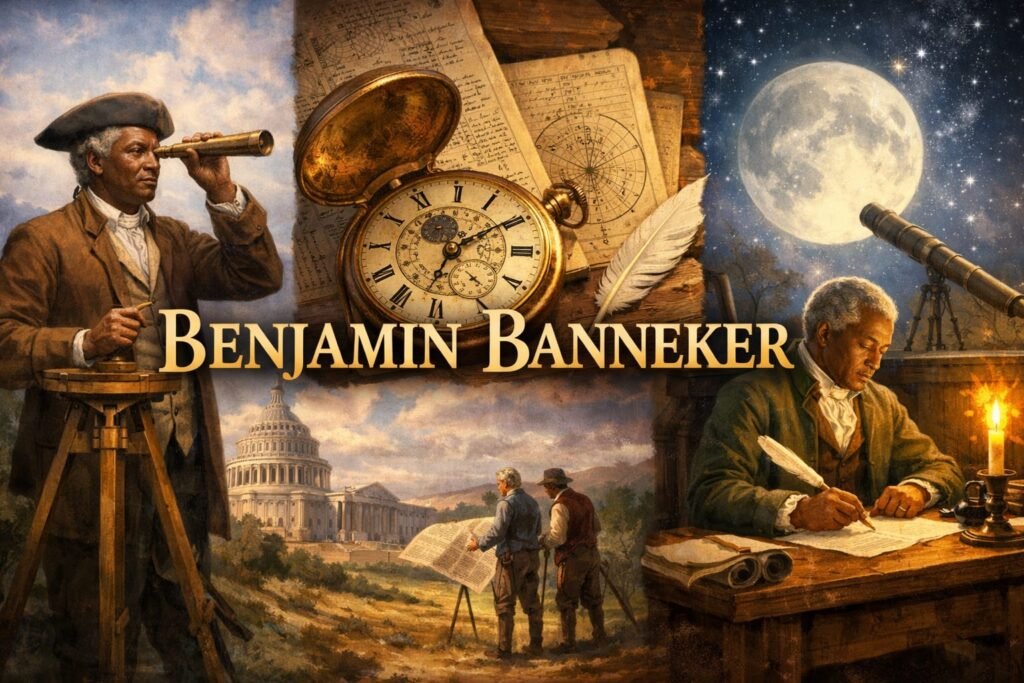
Benjamin Banneker was born in 1731 in rural Maryland, at a time when knowledge was tightly controlled and opportunity was rationed by class, race, and access. He was born free, yet freedom in colonial America did not include schools, institutions, or formal pathways into science or public life. What Banneker possessed instead was an uncommon discipline of mind, a relentless curiosity, and the ability to teach himself in a world designed to exclude him. From an early age, Banneker demonstrated a deep attentiveness to patterns. He observed the movement of shadows, the rhythm of seasons, the cycles of the moon, and the quiet logic underlying numbers. These observations were not passive. They became the foundation of a rigorous self-education in mathematics, astronomy, mechanics, and natural philosophy. Without classrooms or instructors, he relied on borrowed books, correspondence, and repeated experimentation. Knowledge, for Banneker, was not inherited or granted — it was earned through persistence. One of his earliest achievements revealed the breadth of his mechanical intelligence. After examining a pocket watch, Banneker constructed a fully functional wooden clock entirely by hand. At a time when precision timekeeping was rare and highly specialized, his clock reportedly kept accurate time for decades. This was not novelty craftsmanship. It was applied engineering — a synthesis of measurement, geometry, and mechanical reasoning executed with remarkable precision. Banneker’s attention soon turned upward to the night sky. Astronomy in the eighteenth century demanded advanced mathematical ability, extended observation, and exact calculations. Without formal training, Banneker mastered celestial mechanics well enough to calculate planetary positions, track lunar cycles, and accurately predict eclipses. These were not theoretical exercises. They became published data used by others. Between 1791 and 1796, Banneker authored and published a series of almanacs containing astronomical calculations, weather forecasts, tide tables, and practical information essential for farmers, navigators, and merchants. Almanacs were critical tools in early American life, shaping agricultural planning and commerce. Banneker’s editions were valued for their accuracy and circulated widely throughout the Mid-Atlantic region. His work entered daily life quietly, efficiently, and without spectacle. It was this reputation for precision that brought Banneker into one of the most consequential projects of the young nation: the surveying of the federal district that would become Washington, D.C. In 1791, he was appointed as an assistant to the survey team responsible for mapping the boundaries of the future capital. Using astronomical observations and mathematical calculations, Banneker helped establish the layout of the city. According to historical accounts, when the original design plans were lost following the departure of the chief planner, Banneker reproduced the layout from memory — an extraordinary demonstration of spatial reasoning and intellectual command. At the same time, Banneker understood that knowledge carried moral responsibility. In 1791, he wrote a carefully reasoned letter to Thomas Jefferson, then Secretary of State, addressing the contradiction between Jefferson’s stated belief in liberty and his participation in slavery. Banneker did not rely on rhetoric alone. He appealed to logic, evidence, and shared Enlightenment principles. Enclosed with the letter was a copy of his almanac — not as a plea for validation, but as proof of intellectual equality grounded in demonstrable work. Jefferson responded respectfully and forwarded Banneker’s almanac to intellectual circles in Europe. Yet the system itself remained intact. Still, the exchange endures as one of the most direct intellectual challenges to slavery issued during the early republic — a reminder that resistance did not always take the form of protest, but often appeared as clarity, data, and moral precision. Banneker lived the remainder of his life quietly. He never married, never accumulated wealth, and never sought public acclaim. In 1806, after his death, much of his work was lost in a fire that consumed his home. What survived did so unevenly — scattered across letters, publications, and partial historical records. Over time, his role in the nation’s formation was minimized, simplified, or omitted altogether. Yet Benjamin Banneker cannot be reduced to a symbol or an exception. He was a builder of systems, a producer of usable knowledge, and a contributor to the physical and intellectual infrastructure of the United States. His life stands as evidence that disciplined thought does not require permission, and that nation-building has always depended on minds history later chose not to emphasize. To study Benjamin Banneker is to confront a deeper truth about America’s origins: that progress was shaped not only by those whose names dominate monuments, but by thinkers whose work spoke for itself long before recognition followed. His legacy is not confined to clocks, almanacs, or survey lines. It is the enduring reminder that knowledge, once proven, cannot be erased — only delayed. Focus Keyphrase:Benjamin Banneker Washington DC Slug:benjamin-banneker-washington-dc Meta Description:Discover the true story of Benjamin Banneker, the self-taught polymath whose astronomical calculations and surveying work helped shape Washington, D.C., and challenged the contradictions of America’s founding ideals.
Why One Missed Payment Changes How Banks See You (Most People Don’t Know This)

Most people think a missed payment is a small mistake. An accident. Something you can “catch up on next month.” But inside the financial system, a missed payment is not treated as an accident at all. It is treated as a signal. Not a loud signal. A quiet one. And quiet signals are often the most dangerous, because you don’t feel the damage immediately — but institutions adjust their behavior toward you long before you realize anything has changed. When a payment is missed, banks don’t ask why. Credit bureaus don’t care about context. Algorithms don’t measure intent. They measure behavior. One late payment tells the system something very specific: reliability has shifted. That shift doesn’t always show up as an immediate credit score collapse. In fact, that’s what makes it deceptive. Many people check their score after a missed payment and feel relieved. “It didn’t drop that much,” they say. But scores are only the surface layer. Beneath that number is a behavioral profile that lenders study far more closely than most people realize. Banks track patterns, not apologies. A missed payment introduces friction into your financial reputation. It changes how future decisions are made about you. Credit limits. Approval speed. Interest rates. Even which offers you’re allowed to see. You may never receive a rejection letter that says, “We noticed that one time you slipped.” Instead, you’ll experience something subtler: higher costs, slower approvals, fewer second chances. This is where people misunderstand the system. They believe recovery is immediate once the balance is paid. But trust, once dented, doesn’t snap back into place. It rebuilds slowly, over time, through consistency — not explanations. Financial institutions are not emotional. They are statistical. A single missed payment tells the system you are capable of disruption. And from a lender’s perspective, risk is not about how often something happens. It’s about whether it can happen again. That’s why two people with the same credit score can be treated very differently. One may have a clean behavioral record. The other may have a single late mark buried in their history. On paper, they look equal. In practice, they are not. This is also why missed payments matter more during certain windows. Early in a credit relationship, a missed payment weighs heavier. During periods of economic tightening, it weighs heavier. When interest rates are high and capital is cautious, lenders become less forgiving — not more. Timing amplifies consequences. The most dangerous part is that missed payments often happen during stress — illness, job changes, emergencies. Exactly when people are least equipped to absorb additional financial pressure. The system doesn’t pause during hardship. It documents it. That documentation follows you quietly. And while most people focus on “fixing” the missed payment, the more important move is preventing the next one. Systems reward predictability above all else. Autopay, buffers, conservative limits — these aren’t convenience tools. They’re defensive strategies. Wealthy households don’t rely on memory. They rely on systems. They assume life will interrupt. They assume distractions will happen. And they build financial structures that protect their reputation even when attention slips. Because they understand something most people are never taught: your financial reputation is more valuable than your money. Money can be replaced. Trust takes time. This is why a missed payment is not just a late fee. It’s not just interest. It’s a data point that lives in places you don’t see, influencing decisions you didn’t know were being made. The warning isn’t dramatic. It’s quiet. But it’s major. Understanding this changes how you move. It changes how you set up accounts. It changes how seriously you treat “small” delays. Because once you understand how the system thinks, you stop treating missed payments as minor mistakes — and start treating them as avoidable signals. Signals that decide how expensive your future becomes. Focus Keyphrase: missed payment financial warningSlug: missed-payment-major-warningMeta Description: A missed payment is more than a mistake—it’s a signal to banks and lenders. Learn how one late payment quietly changes your financial reputation and future costs.
Money Rules the Rich Teach Their Kids (But Never Say Out Loud)

In certain households, money is never treated as a mystery. It’s not emotional, not dramatic, and not taboo. It’s discussed quietly, observed daily, and understood long before adulthood. Wealthy families rarely sit their children down and announce that they are about to teach them “the secrets of money.” Instead, they teach through behavior, structure, and repetition. By the time their children grow up, they don’t just earn money — they control it. One of the first unspoken lessons is that money is not the goal. In wealthy homes, money is framed as a tool. It exists to buy time, flexibility, and options. Children raised in these environments don’t chase money for validation. They learn that money is useful, but never emotional. This alone changes decision-making for life. When money loses its emotional charge, logic replaces impulse. Another quiet rule is that assets come before lifestyle. Wealthy parents do not rush to upgrade their lives every time income increases. Children grow up watching adults acquire businesses, equity, or income-producing assets before buying luxuries. The message isn’t spoken — it’s demonstrated. Lifestyle is something assets pay for, not something income is sacrificed to maintain. This creates patience and discipline that most people never develop. Jobs are also framed differently. In many households, a job is treated as the ultimate achievement. In wealthy families, a job is simply seed capital. Children hear conversations about using income to fund investments or ownership. Work is never positioned as identity. It’s positioned as leverage. As a result, wealthy children don’t grow up asking how to climb the ladder — they ask how to exit it. Ownership is the core principle behind everything. Cash is seen as temporary, while assets are permanent. Wealthy children grow up around deeds, shares, businesses, and partnerships. They understand early that ownership creates control, stability, and power. Saving money is respected, but hoarding cash is not glorified. Cash that isn’t deployed is seen as idle potential. Debt is another concept that’s handled with precision. In many families, debt is feared or misunderstood. In wealthy households, debt is treated like a tool that can either build or destroy depending on how it’s used. Children see debt used to acquire income-producing assets, never depreciating purchases meant for status. This distinction becomes second nature. Taxes are never framed emotionally either. Wealthy families don’t complain about taxes — they plan around them. Children overhear conversations about structure, strategy, and legal optimization. They learn early that taxes are not a punishment for success, but a penalty for ignorance. This understanding alone saves wealthy families millions over generations. One of the most powerful lessons is rarely spoken aloud: never sell an appreciating asset if you can borrow against it. Wealthy families hold onto assets and use loans for liquidity. This keeps ownership intact while allowing access to cash. Children raised with this mindset understand that selling stops compounding, while borrowing preserves it. Time is emphasized more than timing. Wealthy families teach patience by example. Children watch compounding happen slowly, then suddenly. They learn that starting early matters more than being perfect. Fast money loses its appeal when long-term growth proves unstoppable. Risk is not avoided — it’s managed. Wealthy parents don’t raise fearful children. They raise informed ones. Through diversification, insurance, and long-term planning, risk is reduced to something measurable rather than something terrifying. Children learn that avoiding risk entirely guarantees stagnation. Lifestyle inflation is quietly resisted. As income rises, expenses remain controlled. Children see adults live below their means while assets expand behind the scenes. This discipline protects future freedom and prevents wealth from leaking away unnoticed. Network is treated as an asset as well. Wealthy children grow up in environments where opportunity feels normal. Rooms matter. Conversations matter. Access changes outcomes faster than effort alone. This exposure shapes expectations for life. Perhaps the most important lesson is that wealth is taught at home. Schools are never relied upon to teach money. Children learn through participation, observation, and real-world involvement. Family discussions replace financial secrecy. Transparency replaces confusion. Finally, wealthy families value privacy. Quiet wealth is protected wealth. Flash is avoided. Attention is unnecessary. Power moves silently. Children learn that true wealth doesn’t need applause. By the time wealthy children become adults, the rules are already embedded. They don’t chase money. They deploy it. They don’t fear it. They control it. And that is the difference no one ever says out loud. Focus Keyphrase: money rules the rich teach their kids Meta Description: Explore the unspoken money rules wealthy families teach their children—covering assets, ownership, debt, taxes, discipline, and legacy thinking schools never explain. Slug: money-rules-the-rich-teach-their-kids
Frederick McKinley Jones: The Black Inventor Who Revolutionized Refrigeration and Global Food Supply
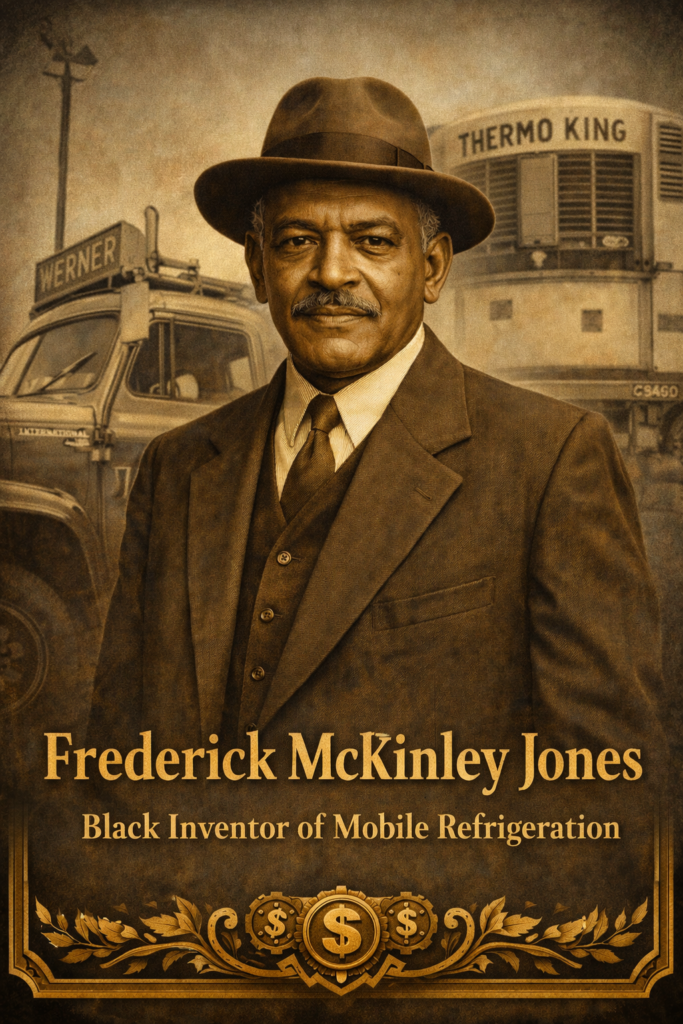
Before refrigerated trucks, the world ate locally, lived seasonally, and lost enormous amounts of food to spoilage. Fresh meat rarely traveled far. Produce rotted before reaching cities. Vaccines and blood plasma often expired before arriving where they were needed most. Entire regions were constrained not by demand, but by distance. Modern life as we know it simply wasn’t possible yet. That reality changed because of Frederick McKinley Jones. Born in 1893, Jones did not grow up with access to elite schools, laboratories, or wealthy patrons. He was largely self-taught, learning mechanics, engineering, and electronics through curiosity and necessity rather than formal education. In an America that routinely dismissed Black intelligence, Jones quietly mastered complex systems that others struggled to understand. He fixed machines. He improved them. And eventually, he redesigned an entire industry from the ground up. Jones recognized a problem most people had accepted as unavoidable: perishable goods could not survive long journeys. The solution wasn’t simply ice or insulation. It required a compact, reliable, mobile system capable of maintaining controlled temperatures while in motion. At the time, that idea bordered on impossible. Vehicles vibrated. Engines overheated. Roads were rough. Power sources were inconsistent. Yet Jones engineered a self-contained refrigeration unit strong enough to withstand travel and precise enough to preserve food and medicine. His invention of mobile refrigeration systems transformed transportation forever. Trucks, trains, and ships could now carry fresh goods across long distances without loss. Farms were no longer limited to nearby markets. Cities could grow larger without risking food shortages. Seasonal eating gave way to year-round availability. Grocery stores evolved. Supply chains expanded. Entire industries were born almost overnight. The impact reached far beyond food. During World War II, Jones’s refrigeration technology was used to transport blood plasma and medical supplies to soldiers overseas. Lives were saved not by battlefield heroics, but by temperature control. Quiet engineering became silent survival. Jones went on to earn more than sixty patents across refrigeration, engines, and electronics. He co-founded what would later become Thermo King, a company that still dominates global refrigeration transport today. Billions of dollars move through systems built on his ideas. Every refrigerated truck on the highway traces its lineage back to his work. And yet, for decades, his name was absent from classrooms, textbooks, and mainstream discussions of American innovation. This pattern is not accidental. Black inventors have repeatedly solved foundational problems only to watch their contributions be absorbed, rebranded, and monetized by others. The wealth generated often never returned to the communities that produced the ideas. Recognition arrived late, if at all. Frederick McKinley Jones was eventually awarded the National Medal of Technology, becoming the first Black American to receive the honor. It was deserved, but overdue. By then, the world had already been built on his inventions. At Black Dollar & Culture, these stories matter because they reveal something deeper than history. They show how wealth is created at the systems level. Jones didn’t invent a product. He invented infrastructure. He didn’t chase trends. He solved a permanent problem. That is where real leverage lives. Understanding his legacy is not about admiration alone. It is about strategy. Ownership. Protection. Continuity. When we study figures like Jones, we see a blueprint for how generational wealth is actually built — not through visibility, but through necessity and control of essential systems. Every cold chain, every vaccine shipment, every refrigerated aisle is proof that Black innovation has always powered the modern world, even when the world refused to acknowledge it. The work was never invisible. Only the credit was. ❤️ Support Independent Black Media Black Dollar & Culture is 100% reader-powered — no corporate sponsors, just truth, history, and the pursuit of generational wealth. Every article you read helps keep these stories alive — stories they tried to erase and lessons they never wanted us to learn. Slug: frederick-mckinley-jones-black-inventor-refrigerationMeta Description: Frederick McKinley Jones was a Black inventor whose mobile refrigeration technology transformed food distribution, medicine, and global trade.entor whose mobile refrigeration technology transformed food, medicine, and global trade. Learn the story they don’t teach.Slug: frederick-mckinley-jones-black-inventor-refrigeration
Why Millions of American Children Are Reading Below Grade Level — and How the System Failed Them

America is facing a crisis it doesn’t like to talk about because it exposes something deeper than test scores. Millions of children across the country are reading below grade level, and this is not a coincidence, a fluke, or the fault of parents who “didn’t try hard enough.” It is the predictable outcome of a system that stopped prioritizing literacy, accountability, and long-term outcomes—and replaced them with bureaucracy, shortcuts, and political comfort. Reading is not just another subject. Reading is the gateway skill. When children can’t read, they can’t fully access math, science, history, or even basic instructions. A child who struggles to read by third grade is statistically more likely to struggle for the rest of their academic life. By middle school, the gap widens. By high school, it calcifies. And by adulthood, it becomes an economic disadvantage that quietly follows them everywhere. This didn’t happen overnight. And it didn’t happen by accident. 1. The Alarming Reality No One Can Spin Away Across the United States, standardized assessments and independent studies show a staggering number of children reading below grade level. In some districts, the majority of students are behind. In others, the numbers are so normalized that failure has become expected instead of urgent. What’s worse is that many students are being promoted to the next grade without mastering basic reading skills. This practice—often justified as protecting self-esteem or avoiding stigma—does the opposite. It guarantees long-term struggle by delaying intervention until it’s too late to be easy. Social promotion doesn’t solve literacy gaps. It hides them. 2. How the Education System Let This Happen The modern American education system is overloaded with initiatives but underloaded with fundamentals. Over the past few decades, reading instruction shifted away from proven, structured phonics-based methods toward experimental approaches that assumed children would “naturally” pick up reading through exposure. That assumption was wrong. Many schools deprioritized explicit reading instruction, reduced time spent on foundational literacy, and failed to train teachers adequately in evidence-based methods. Add overcrowded classrooms, underpaid educators, and inconsistent curriculum standards across states, and the result is predictable: uneven outcomes and widespread reading failure. The system optimized for graduation rates and optics—not mastery. 3. Who This Failure Hurts the Most Systemic failure never lands evenly. Children from working-class families, low-income households, and historically marginalized communities are hit the hardest. When schools fail to teach reading well, families with resources compensate with tutors, private programs, and supplemental learning. Families without those resources are told to “trust the system.” That trust is expensive. Black children, in particular, are disproportionately affected—not because of ability, but because of access. When literacy instruction fails early, it limits academic tracking, reduces confidence, and narrows future opportunities. The result is a pipeline from poor literacy to limited career options that has nothing to do with intelligence and everything to do with neglect. 4. Technology Didn’t Save Reading — It Distracted From It Tablets, apps, and digital learning tools were sold as solutions. In reality, they often replaced direct instruction instead of supporting it. Screens do not teach children how to decode words, build vocabulary, or comprehend complex text without guidance. Reading is a human skill learned through repetition, feedback, and structure. No app replaces an adult who knows how to teach it correctly. The system mistook convenience for progress. 5. Why Waiting on Reform Is a Risk Families Can’t Afford Educational reform moves slowly. Children grow quickly. Every year a child remains behind in reading is a year that compounds difficulty across all subjects. Hoping the system “fixes itself” before your child reaches critical academic milestones is a gamble with long odds. Families who understand this are no longer waiting. 6. What Parents Must Do Now (Even If the System Doesn’t) This is the hard truth: literacy has become a family responsibility, not just a school one. That doesn’t mean parents failed. It means parents must adapt. Families can: Reading is the foundation of independence. A child who reads well can teach themselves anything else. Final Thought America doesn’t have a child intelligence problem. It has a systems problem. When millions of children can’t read at grade level, the issue isn’t effort—it’s design. Systems produce exactly the outcomes they are built for. And right now, this system is producing underprepared readers at scale. Families who recognize this early have an advantage. Not because they are better—but because they refuse to outsource their children’s future to a system that already showed its limits. Literacy is power.And power can’t be postponed. ❤️ Support Independent Black Media Black Dollar & Culture is 100% reader-powered — no corporate sponsors, just truth, history, and the pursuit of generational wealth. Every article you read helps keep these stories alive — stories they tried to erase and lessons they never wanted us to learn. Focus Keyphrase: children reading below grade level in AmericaSlug: why-american-children-reading-below-grade-levelMeta Description: Millions of American children are reading below grade level. This article explains how the education system failed them and what families must understand now.
Cleopatra VII: The Wealthiest Queen Rome Ever Feared
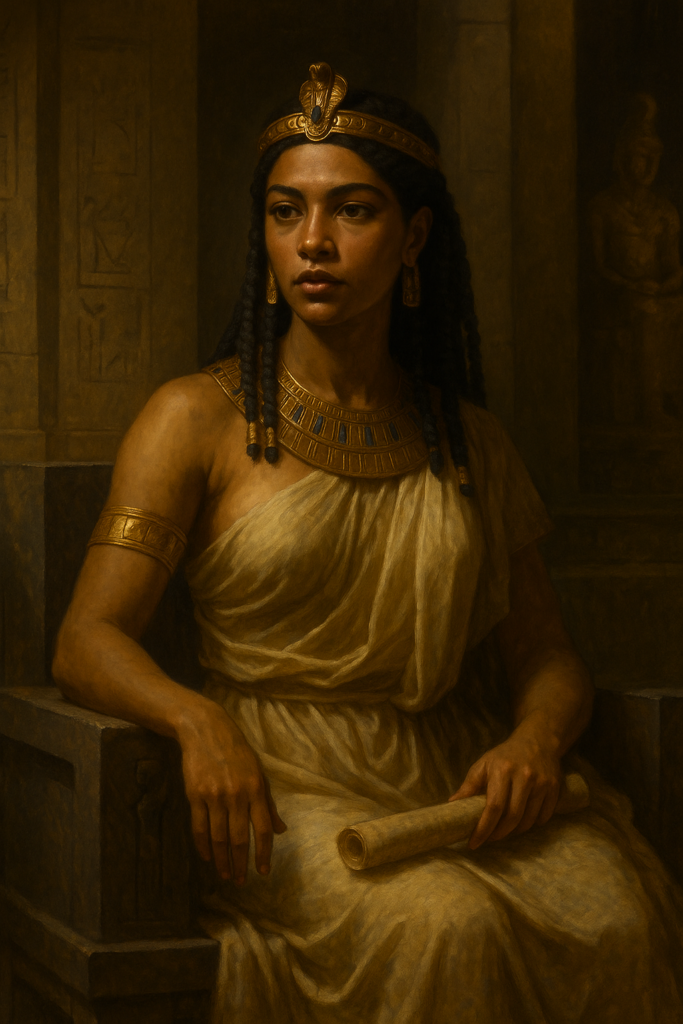
History remembers Cleopatra VII as a lover, a seductress, a woman whose power supposedly came from beauty and manipulation. That version of her story is convenient. It’s also a lie. Cleopatra VII was not dangerous because of romance. She was dangerous because she controlled one of the richest economies on Earth at the exact moment Rome was starving for resources, legitimacy, and money. Empires do not smear women they consider harmless. They rewrite the stories of rulers who threaten them. When Cleopatra took the throne of Egypt in 51 BCE, she inherited more than a crown. She inherited an economic machine that had fed civilizations for centuries. Egypt was not simply a kingdom; it was the financial backbone of the Mediterranean world. Its grain fields along the Nile supplied food to Rome’s swelling population. Its ports controlled trade routes between Africa, the Middle East, and Europe. Its treasuries held gold, silver, and state reserves accumulated over generations. Cleopatra did not stumble into power. She was trained from childhood to manage it. Unlike many rulers of her era, Cleopatra spoke multiple languages fluently, including Egyptian, Greek, and Latin. This was not a cultural flex; it was a strategic weapon. She could negotiate directly with merchants, diplomats, and military leaders without translators who diluted meaning or leaked information. She understood trade, taxation, logistics, and statecraft. Cleopatra ruled Egypt not as a figurehead but as a chief executive of a sovereign economic power. Rome, by contrast, was drowning in ambition and debt. Its military campaigns were expensive. Its political elite fought constantly for dominance. Its population depended heavily on Egyptian grain to avoid famine and unrest. Cleopatra knew this. She understood leverage better than most men who sat in the Roman Senate. Control the food, and you control the empire that eats it. When Julius Caesar entered her story, it was not romance that drew Cleopatra to him; it was survival and strategy. Egypt faced internal power struggles and Roman interference. Aligning with Caesar stabilized her throne and protected Egypt’s autonomy. In return, Rome gained access to Egypt’s resources under negotiated terms rather than outright conquest. Cleopatra used diplomacy to buy time, preserve sovereignty, and keep Egypt independent in a world where Rome swallowed kingdoms whole. After Caesar’s assassination, Cleopatra aligned with Mark Antony, not as a love-struck queen but as a ruler securing military protection and political balance. Together they controlled enormous territory, trade routes, and naval power. At their height, Cleopatra and Antony governed lands that rivaled Rome’s influence. This was not scandal; it was geopolitics. Rome did not panic because Cleopatra was charming. Rome panicked because she was effective. What followed was not merely a military conflict but a propaganda war. Octavian, later known as Augustus, understood that Rome could not admit it feared a foreign Black queen who commanded wealth, loyalty, and economic leverage. So he reframed the narrative. Cleopatra became painted as immoral, manipulative, and decadent. Antony was portrayed as weak and corrupted by foreign influence. This narrative justified Rome’s aggression and masked the truth: Rome crushed Egypt not to save morality, but to seize resources. After Cleopatra’s death, Egypt was absorbed into the Roman Empire. Its treasuries were looted. Its grain supply was nationalized for Rome’s benefit. The wealth Cleopatra once controlled now fed Roman dominance for generations. And just like that, history shifted its tone. Cleopatra’s intelligence was erased. Her financial mastery was ignored. Her leadership was reduced to gossip. But facts do not disappear simply because empires prefer myths. Cleopatra VII ruled one of the richest states in human history. She controlled food, trade, gold, language, and diplomacy with precision. She understood that power is not loud; it is organized. And that is why Rome destroyed her image after destroying her kingdom. They could defeat her militarily, but they could not allow future generations to understand what she truly represented: a sovereign ruler who proved that wealth, intelligence, and strategy are far more threatening than swords. Cleopatra’s legacy is not romance. It is a lesson. Those who control resources shape the world, and those who challenge empires rarely get fair biographies. History often belongs to the victors, but wealth always leaves a trail. And if you follow the money, the grain, and the power, you find Cleopatra VII exactly where Rome feared her most — at the center of the economic world. ❤️ Support Independent Black Media Black Dollar & Culture is 100% reader-powered — no corporate sponsors, just truth, history, and the pursuit of generational wealth. Every article you read helps keep these stories alive — stories they tried to erase and lessons they never wanted us to learn. Focus Keyphrase: Cleopatra VII wealth and power Slug: cleopatra-vii-wealth-power-rome Meta Description: Cleopatra VII was not just a queen but a powerful economic strategist who controlled Egypt’s wealth, trade, and grain supply—making her one of the most feared rulers Rome ever faced.
How to Fix Your Credit Score Fast (Step by Step)

By Black Dollar & Culture Most people don’t have bad credit because they’re irresponsible.They have bad credit because life happened — job loss, medical bills, divorce, late payments, trying to survive with high-interest cards and not enough income. The good news?Your credit score is not a life sentence. It’s a report card — and report cards can be changed. Let’s walk through, step by step, how to fix your credit score as fast as possible, the right way. ❤️ Support Independent Black MediaBlack Dollar & Culture is 100% reader-powered — no corporate sponsors, just truth, history, and the pursuit of generational wealth.Every article you read helps keep these stories alive — stories they tried to erase and lessons they never wanted us to learn. 1. Pull All Three Credit Reports (Face the Numbers) You can’t fix what you won’t look at.Your credit score is built from three major bureaus: They don’t always match, and each lender might use a different one. What to do: It might feel uncomfortable, but this is your starting line — not your identity. 2. Clean Up the Easy Errors First (Fastest Score Wins) You’d be surprised how many credit reports have mistakes: These are quick wins. Step by step: When an error is corrected, your score can jump quickly — sometimes in 30 days or less. 3. Stop the Bleeding: No More Late Payments From this point forward, your mission is simple:Nothing else goes late. Payment history is the biggest chunk of your score. Even one 30-day late payment can drop it hard. What to do: You can’t change the past, but you can start building a flawless payment streak today. 4. Attack Your Credit Utilization (The Fastest Legal Cheat Code) One of the quickest ways to raise your score is to lower how much of your available credit you’re using. This is called credit utilization. Example:If you have a $1,000 limit and your balance is $800, your utilization is 80% — and that’s hurting you badly. Your goal: Fast ways to do this: Sometimes just paying a card down before the statement date can give you a noticeable score bump. 5. Negotiate With Debt Collectors (But Do It Strategically) If you have accounts in collections, they’re dragging your score down. You have options: Some will agree to remove negative reporting entirely (often called “pay for delete”). Not all will, but it doesn’t hurt to ask — in writing. Never: Handle it like business, not emotion. 6. Add Positive Credit History on Purpose Fixing credit isn’t just deleting negatives — it’s adding positives. Beginner-friendly options: You’re building a new track record: reliable, consistent, responsible. 7. Avoid “Credit Repair” Scams — You Can Do This Yourself Any company promising to: …is playing games with your future. You don’t need a magic company to do what the law already gives you the right to do: If you do choose help, work with a legit non-profit credit counselor — not someone selling miracles. 8. Build a 90-Day Plan, Not a One-Day Fantasy You CAN make progress fast, but you won’t go from 480 to 800 overnight. A realistic 90-day action plan looks like: Every on-time payment and every dollar paid down is a brick in your new financial foundation. 9. Protect Your New Progress Like It’s Gold Once your score starts rising, protect it: Do: Boring is beautiful when it comes to your credit score. 📌 Final Word Your credit score is not a reflection of your worth — it’s a reflection of your habits, circumstances, and information on file.All three of those can change. Fixing your credit fast isn’t about hacks or loopholes.It’s about facing the reality, cleaning up errors, lowering your utilization, rebuilding positive history, and refusing to let the system use your past against your future. You deserve access.You deserve better rates.You deserve approval letters instead of denials. And step by step, you can get there. #CreditRepair #FinancialFreedom #BlackWealth #MoneyMindset #BlackDollarAndCulture
The Vision of Fred Hampton — December 4 Reflection
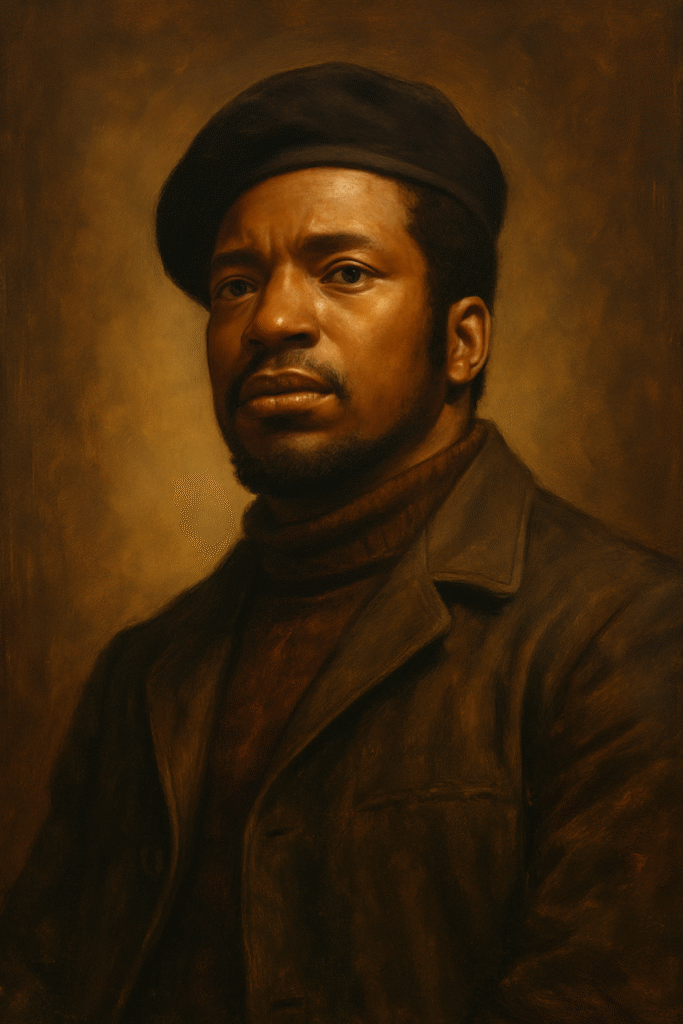
On December 4th, we pause to honor a man whose clarity, conviction, and courage made him one of the most important voices of the 20th century. Fred Hampton did not lead with fear; he led with vision — a vision so bold and so rooted in community power that even at twenty-one, he was shaping movements far bigger than himself. When Fred Hampton spoke, he didn’t just speak to Black people — he spoke to the poor, the working class, the overlooked, and the underserved. He had the unique ability to cut through race and status and remind everyone that they shared a common struggle: the fight for dignity. Hampton believed in unity at a level America was not ready to accept. He formed the Rainbow Coalition, bringing together Black, Latino, and poor white organizations under one mission: economic justice and political empowerment. He understood that racism and poverty were tools — tools used to divide people who, if united, could shift the balance of power forever. His message was dangerous only to those who depended on division to maintain control. But Fred Hampton’s brilliance wasn’t limited to speeches or ideology. He turned vision into action. Under his leadership, the Chicago Black Panther Party fed thousands of children through free breakfast programs, offered free healthcare, created community education centers, and built systems of support the city itself failed to provide. These weren’t charity efforts — they were acts of empowerment. They taught people that they deserved better, and that they had the power to build it themselves. And maybe that was the most radical thing about Fred Hampton: he made people believe again. Believe in themselves, believe in each other, believe in their communities, and believe that a new world was not just possible, but necessary. Hampton’s ability to inspire wasn’t built on fear, hate, or anger. It was built on love — revolutionary love. A love that demanded dignity. A love that expected accountability. A love that told Black people, “You are worth more than the world has ever allowed you to believe.” December 4th is not only a reminder of the day he was taken from us — it is a reminder of the vision he left behind. A vision that stretched beyond politics and protests into the everyday lives of ordinary people. A vision that continues to ripple through modern movements, community programs, and grassroots organizing. A vision built on unity, compassion, and collective strength. Fred Hampton’s life teaches us that real leadership doesn’t wait for permission. It rises when the people need it. It sacrifices when the community calls. And though his time was short, his impact is eternal. His voice still echoes in our conversations about justice. His ideas still guide our understanding of community power. His legacy still challenges us to imagine more, build more, and unify more. On this December 4th, as we reflect on Fred Hampton’s life, we honor not just the tragedy of his passing but the brilliance of his vision — a vision still alive, still urgent, and still calling us higher. #BlackHistory #FredHampton #PantherLegacy #RevolutionaryLove #BlackDollarAndCulture Fred Hampton wasn’t just a leader — he was a vision in motion. And on December 4, we honor the ideas that shook America and continue to inspire generations.
Today in History: Marcus Garvey’s “Redemption Day”
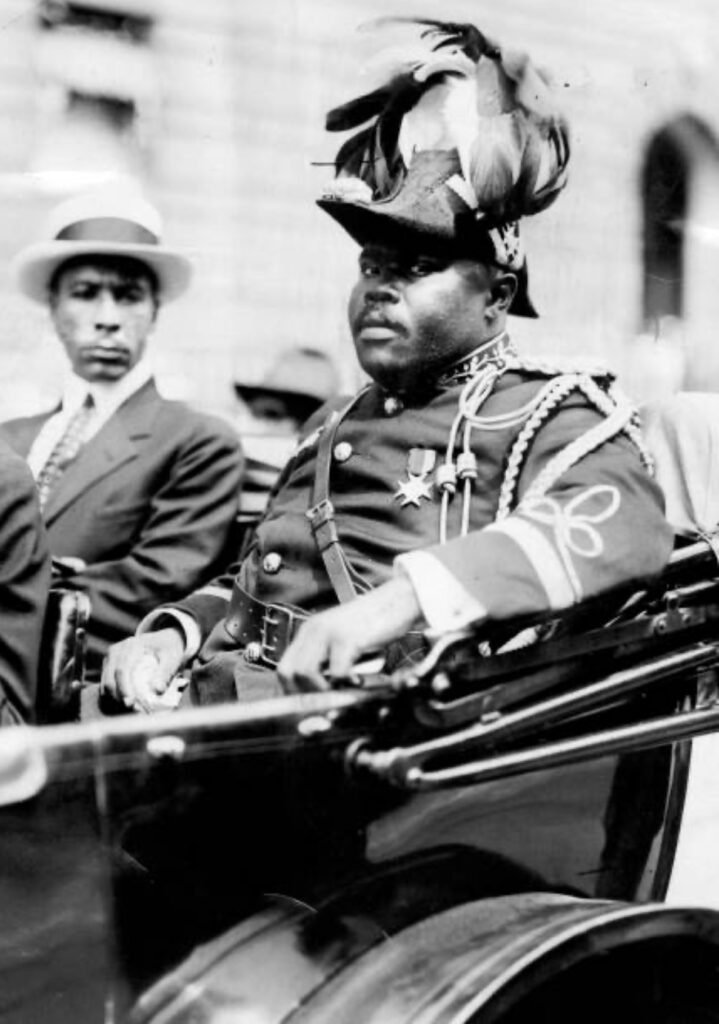
Before the world had microphones, viral videos, or social media movements, there was a single Black man standing on a wooden platform in Harlem, speaking with a voice so powerful it traveled across oceans. On this day, Marcus Mosiah Garvey delivered what the world would come to know as his “Redemption” message — a fiery call for Black people everywhere to reclaim their identity, their unity, and their global destiny. It wasn’t just a speech. For millions across the African diaspora, it was the sound of awakening. Garvey spoke at a time when Black people were told to shrink, to remain invisible, to believe they were powerless. Yet here he was — a man from Jamaica, standing in the heart of America, declaring boldly that Black people were heirs of empires, not the ruins left behind. His voice carried the weight of ancestors, and his words lifted the heads of people taught never to look themselves in the mirror with pride. “Redemption,” he said, “means rising from the ruins. It means rebuilding the greatness that was taken from us.” And when he said it, it was as if he was speaking not to one crowd, but to every Black person scattered across continents and time zones. In those days, Harlem overflowed with Garvey supporters — men, women, children, workers fresh from the docks, West Indian immigrants, African-Americans weary from Jim Crow, and Africans watching colonial nations carve up their homeland. They gathered in streets, halls, and balconies just to hear this man who dared to speak of liberation. Garvey’s Redemption message wasn’t about politics; it was about possibility. He told Black people to see themselves not as victims of history but as authors of the next chapter. He reminded them that the blood of kings, queens, scholars, farmers, builders, and warriors didn’t disappear when the ships crossed the Atlantic — it survived inside every one of them. Redemption, to Garvey, meant rebuilding what was stolen: dignity, unity, purpose, nationhood. It meant understanding that Africa wasn’t a place to pity, but a homeland to restore. It meant seeing the Black diaspora — from Jamaica to Chicago to Ghana — as one people with one destiny. And that idea alone terrified governments. Because once a people stop believing the lies told about them, their power becomes limitless. Garvey’s Redemption movement grew everywhere: in Caribbean ports, in West African cities, across South America, in London, and throughout Black America. His message was simple: You are somebody. You come from greatness. Stand tall and reclaim it. And for many Black families, these were words they had never heard before. For the first time, generations beaten down by racism and colonialism felt their spirits lifted by a leader who didn’t ask for permission to be Black and proud — he demanded it. A century later, his voice still echoes. Every time we build Black businesses, teach Black history, support Black media, invest in our families, protect our culture, and refuse to shrink ourselves to fit someone else’s comfort, we honor Redemption Day. Every time a Black entrepreneur steps into ownership, every time a child learns where they truly come from, every time a family chooses legacy over survival, Garvey’s prophecy unfolds a little more. Marcus Garvey’s Redemption message wasn’t meant for a moment — it was meant for a people. A people rising. A people rebuilding. A people remembering who they are. On this day in history, Garvey didn’t ask the world for permission. He told Black people everywhere: the time to reclaim your destiny is now. And today, as new generations rediscover his words, Redemption is no longer a speech — it is a movement that lives on through us. #MarcusGarvey #RedemptionDay #BlackHistory #PanAfricanism #BlackExcellence #BlackDollarAndCulture
Jeremiah Hamilton: The Forgotten Black King of Wall Street
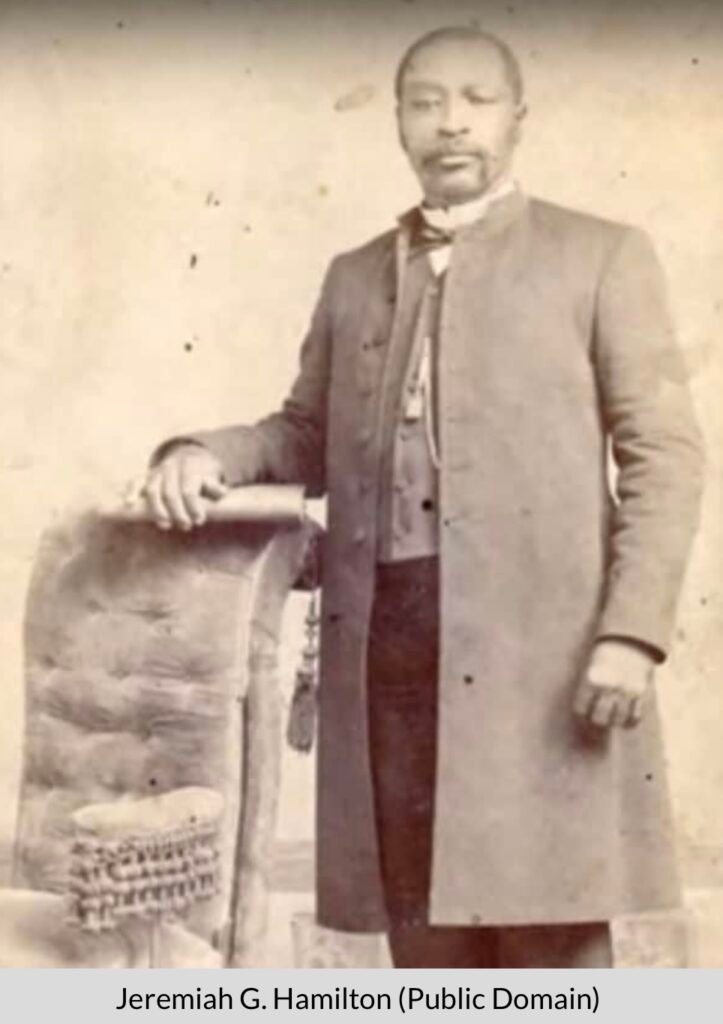
Long before Wall Street was a canyon of steel towers and billion-dollar firms, when lower Manhattan still smelled of seawater, coal smoke, and horse iron, a lone Black man walked its narrow, uneven streets with the confidence of someone who knew he didn’t belong there—yet refused to leave. His name was Jeremiah Hamilton, and during the mid-1800s, in the era of slavery, segregation, and violent racism, he did what no one believed possible: he became New York’s first Black millionaire, dominating a financial system that was never meant to include him. His story isn’t just rare.It is revolutionary.And it was nearly erased. Hamilton didn’t inherit generational wealth. He wasn’t protected by a powerful white family or backed by elite institutions. He built his empire inside a society structured to crush Black ambition at its roots. He played a game where the rules were written by his enemies—and still beat them at it. Even those who hated him confessed he was brilliant, fearless, calculating, and dangerous in the way only a man breaking racial boundaries can be. Born around 1806 in the Caribbean, Hamilton arrived in New York as a teenager. The city at the time was a paradox: a booming economic hub powered by global trade, yet still deeply entangled in slavery. Free Black people existed in a fragile, uncertain space—free, but not equal; present, but unwelcome. It was here that Hamilton carved out his identity. While most Black people were trapped in labor jobs or shut out of opportunities altogether, Hamilton pushed himself into commerce, international trade, and high-level negotiation—worlds dominated exclusively by wealthy white men. By his mid-20s, Hamilton had already developed a reputation for extraordinary intelligence and unbreakable nerve. Newspapers described him as “bold,” “audacious,” “daring,” and “dangerous.” These weren’t compliments—they were warnings. In a society where Black obedience was expected, Hamilton’s sharp mind and refusal to be intimidated were viewed as threats. His early rise came through an operation involving counterfeit coins, insurance loopholes, and trade violations. If a white merchant had done it, it would’ve been called “creative business tactics.” But Hamilton, as a Black man with ambition, was hunted. He was chased by mobs, nearly murdered, and forced to flee. Most men would have disappeared into the shadows. Hamilton came back stronger. When he returned to New York, he didn’t hide or play small. He stepped further into the belly of New York’s financial system—Wall Street—a place where no one wanted him and almost everyone wished he dead. Instead of breaking under the pressure, he studied the system, mastered it, and began beating men at their own game. He became so strategic, so calculating, that many wealthy businessmen had no choice but to partner with him or be destroyed by him. By the 1830s, Jeremiah Hamilton was a giant in the world of real estate speculation. He bought distressed properties, underwater mortgages, and land in neighborhoods where Black ownership was unheard of. He purchased parcels in Manhattan, Harlem, modern-day Tribeca, and beyond. He played chess while the city played checkers. Then came the Great Fire of 1835, one of the most devastating disasters in New York history. Flames consumed warehouses, docks, businesses, and some of the wealthiest commercial blocks in the country. While most businessmen wept over their losses, Hamilton saw opportunity. He used his cash reserves to buy fire-damaged properties at a fraction of their value. He loaned money at high interest to desperate merchants. He rebuilt, resold, and reinvested while the city was still smoking. That fire made him a multimillionaire in today’s money. By the 1840s, Hamilton controlled a financial network that stretched across real estate, insurance, trading, and lending. White elites despised him because they couldn’t control him. They couldn’t intimidate him. They couldn’t outsmart him. Newspapers, angry traders, and political enemies gave him the name meant to be an insult: “The Black Napoleon of Wall Street.” But the title exposed something else:Jeremiah Hamilton wasn’t just a wealthy Black man.He was a powerful one. Hamilton intimidated men who had never feared a Black person in their lives. He sued white businessmen and won. He walked into boardrooms where no Black person had ever stepped and left with deals sealed. He overcame racist laws, exclusionary banks, corrupt officials, and violent mobs—and still built an empire. Even his personal life defied the era’s norms. Hamilton lived in a wealthy white neighborhood, married a white woman, and raised mixed-race children during a time when interracial marriage was not only taboo, but often illegal. He owned a large mansion in New Jersey, complete with servants, groundskeepers, and luxuries unheard of for Black Americans at that time. Every day of his life was an act of rebellion. And yet, Hamilton was not someone who sought community approval. He didn’t involve himself in Black organizations, abolitionist circles, or social movements. Some say he avoided them because association made him a bigger target. Others say he didn’t trust the Black elite—he saw how quickly they distanced themselves from controversy, and Hamilton thrived in chaos. He chose to survive alone, on his own terms, in a world determined to destroy him. When he died in 1875, his estate was worth millions in today’s dollars. He left behind land, buildings, securities, and financial records that showed just how deep he’d carved his influence into New York’s economic landscape. Yet not a single Black newspaper published an obituary. Not a single major Black historian of the era claimed him. White newspapers only mentioned him to mock him or erase his accomplishments. His story faded from textbooks, archives, and public memory. For over a century, Jeremiah Hamilton became a ghost. But today, he rises again. Hamilton’s legacy is powerful not only because he was wealthy, but because of how he became wealthy—through intelligence, courage, and relentless determination in the face of racism so violent it’s hard to imagine today. His life proves that Black brilliance has always existed at the highest level of American finance, even when the world pretended