
❤️ Support Independent Black Media
Black Dollar & Culture is 100% reader-powered — no corporate sponsors, just truth, history, and the pursuit of generational wealth.
Every article you read helps keep these stories alive — stories they tried to erase and lessons they never wanted us to learn.
A seven-decade journey of love, faith, and legacy that shaped a movement and inspired generations.
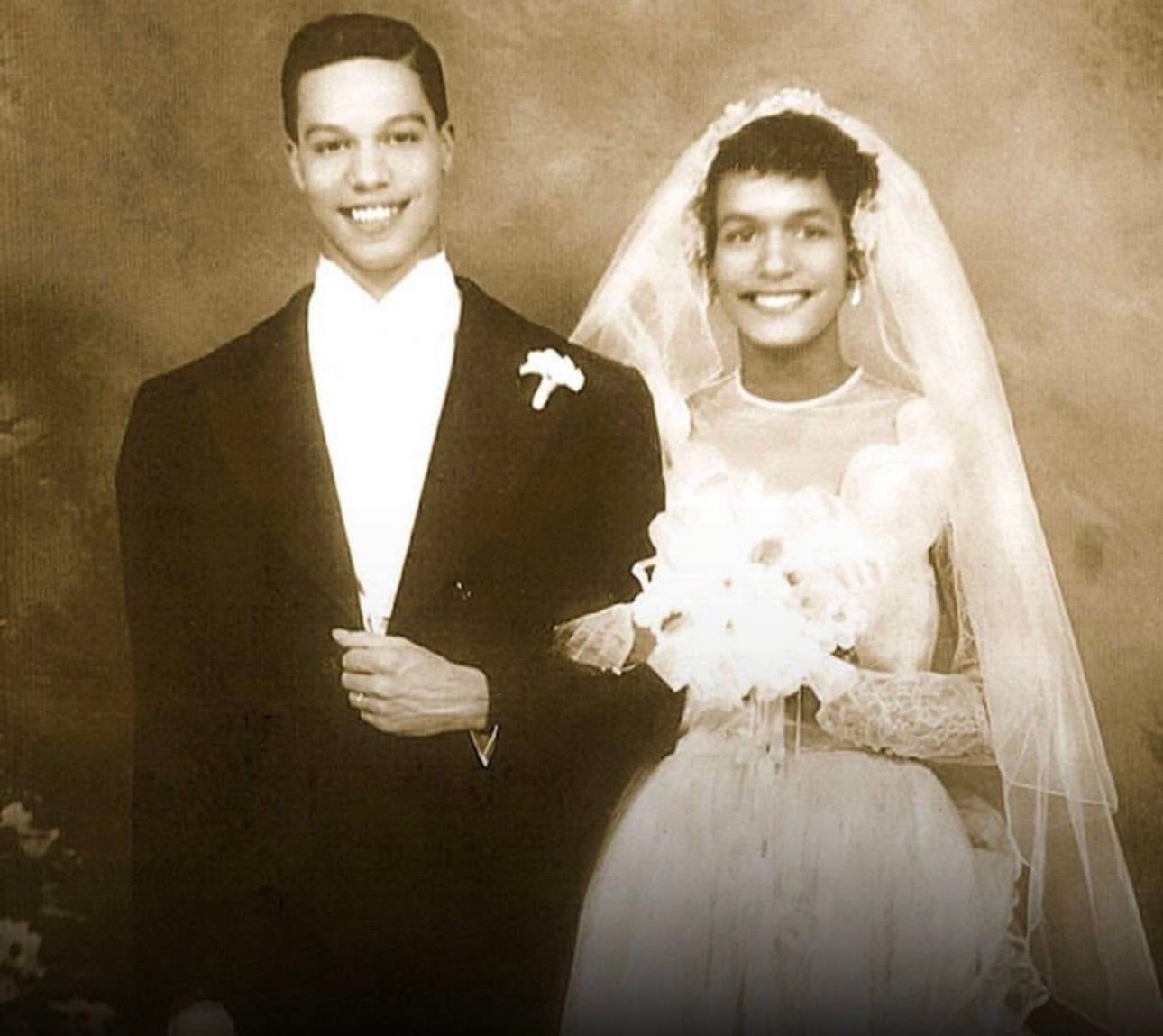
Louis Farrakhan and Khadijah Farrakhan share one of the longest, most remarkable, and least-discussed love stories in modern Black history — a story that stretches across seven decades, multiple eras of American transformation, political upheavals, spiritual revolutions, and a legacy that touches millions. Their journey begins long before the speeches, before the headlines, before the controversies, and long before Louis Farrakhan became a national figure. It begins in the early 1950s, when America was still openly segregated, when Jim Crow was law, when Black ambition was suppressed, and when Black families faced constant pressure to break apart. Against this backdrop, a young violinist named Louis Eugene Walcott met a young woman named Betsy Ross, who would later become Khadijah Farrakhan — his partner, his anchor, his mirror, and his lifelong companion. They married in 1953, a time when interracial buses were still divided by law, when voting was still a fight, when the idea of a strong, public Black marriage surviving decades of pressure was almost unheard of. Yet from the beginning, their relationship was not built on convenience or romance alone — it was built on mission, faith, discipline, and destiny.
Before Louis Farrakhan ever became a minister, he was an artist. A prodigy on the violin, a talented calypso singer, and a performer with dreams of national success. Khadijah wasn’t just by his side — she believed in him. She supported the young musician who was trying to rise in a country determined to limit Black possibility. But in 1955, everything changed. Louis attended a meeting where he first heard the teachings of the Honorable Elijah Muhammad. Something in the message shook him deeply. It wasn’t simply religion; it was identity, worth, nation-building, and a call to Black independence. Many men who experience spiritual transformation face a divide with their families. But when Farrakhan walked toward Islam, Khadijah walked with him. She didn’t follow reluctantly; she stepped into the calling with full conviction. She embraced modesty, service, community work, and the Nation of Islam’s mission to rebuild the Black family. It was the first of many moments where their unity would be tested — but never broken.
As Farrakhan rose within the Nation of Islam, becoming one of Elijah Muhammad’s most gifted speakers, Khadijah played a role far more significant than the public ever saw. She held their home together while Farrakhan traveled tirelessly across the country. She raised their nine children with discipline, structure, and deep cultural pride. She became a mother figure to countless women in the Nation, helping build programs, organizing training, and shaping the culture of Muslim womanhood. Her influence wasn’t loud. It was foundational. While Farrakhan stood before thousands, Khadijah was the quiet force behind the mission — steady, focused, and unshakeable.
Their marriage survived moments that would have destroyed most families. When Malcolm X was assassinated — a tragedy that tore the Black nation apart — the pressure on the Nation of Islam was immense. Internally, loyalties shifted, emotions flared, and relationships fractured. Khadijah became a stabilizer, ensuring that their household did not collapse under the weight of national grief and political tension. Later, when Elijah Muhammad died in 1975 and the Nation of Islam splintered and nearly dissolved, Farrakhan made the monumental decision to rebuild it from scratch. Many left him. Many doubted. Many attacked. Yet Khadijah stayed unwavering. She supported him during the long years of rebuilding — years filled with financial struggle, organizational chaos, and the emotional weight of resurrecting an entire movement. Her faith in him became one of the engines of the Nation’s rebirth.
But their challenges did not end there. Throughout the 1980s, 1990s, and 2000s, Farrakhan became one of the most controversial men in America. His speeches were dissected nightly on television. His name triggered outrage in political debates. He received death threats. He was monitored by federal agencies. He was targeted by media outlets determined to silence him. And through all of this, Khadijah remained his sanctuary. She stayed beside him not as a passive supporter, but as a partner who understood the difference between a man and his mission. She absorbed the stress the world tried to place on him. She protected his peace. She strengthened his resolve. She stood firm when pressure came from every direction. Not once did she waver.
That is why her presence is so essential to understanding the man. Louis Farrakhan is often portrayed as a singular figure, but nothing about his life or leadership was ever singular. His accomplishments — the speeches, the rallies, the rebuilding of the Nation of Islam, the historic Million Man March — all occurred while Khadijah kept their family intact, their foundation strong, and their environment safe enough for him to operate at a national level. She is the kind of woman history rarely writes about but always depends on. Without her, the Farrakhan we know would not exist.
As time moved forward, their bond only deepened. When Farrakhan experienced serious health issues, Khadijah was there as caregiver, counselor, comforter, and spiritual companion. When he stepped further into elder leadership, she stepped further into quiet wisdom. Their marriage was not built on fleeting emotion; it was built on endurance. It was a partnership rooted in purpose and fortified by faith. And in a world where Black families have been targeted, destabilized, and fragmented for centuries, the longevity of their marriage is nothing short of miraculous.
Seventy-two years of marriage means surviving several versions of America. Together they lived through segregation, the Civil Rights Movement, the Vietnam era, the crack epidemic, mass incarceration, political assassinations, Black renaissance movements, and multiple technological revolutions. Their marriage survived public pressure, internal pressure, family pressure, and spiritual pressure. It survived the rise and fall of movements. It survived cultural shifts and generational divides. Few couples in modern history — Black or otherwise — have endured as much while influencing as much.
Their legacy is not simply the Nation of Islam. It is the example of a Black couple who refused to allow the world to dictate the outcome of their union. They built a family with nine children and dozens of grandchildren. They built institutions. They built community programs. They built agricultural, educational, and economic initiatives. They built a blueprint for discipline, faith, and self-reliance. And most importantly, they built a marriage that stands as a quiet monument to what Black unity, loyalty, and faith can look like when rooted in divine purpose.
Today, Louis and Khadijah Farrakhan represent a rare example in the modern world — a Black marriage that did not just survive, but shaped history. Their partnership remains one of the longest-standing love stories in Black America, a love forged in mission, tempered by storms, strengthened by faith, and carried through the decades by an unbreakable commitment to one another. Whether people agree with Farrakhan’s politics or not, the endurance and power of this marriage is undeniable. It stands as proof that some unions are written not just for a lifetime, but for generations. A love story that began in the 1950s and continues to this day — a living testament to Black love, Black strength, and Black loyalty in its highest form.








One Response
What strikes me the most is how their love story began in a time when segregation was so deeply embedded in society. They must have faced so many challenges, yet together they built something much bigger—an entire movement that transcended their personal journey.