Alonzo “Lonnie” Clayton: The Youngest Kentucky Derby Winner in History
March 27 marks the birth of Alonzo “Lonnie” Clayton in 1876, a name that should be celebrated in the annals of horse racing and Black history. At just 15 years old, Clayton made history by becoming the youngest jockey to win the Kentucky Derby—a record that still stands today. His victory was not just a personal triumph but a testament to the dominance of Black jockeys in the early days of American horse racing. A Rising Star in Horse Racing Born in Kansas City, Missouri, Clayton moved with his family to Arkansas at a young age. He was drawn to the world of horse racing early on, inspired by his older brother Albertus, who was also a jockey. By the time he was a teenager, Clayton had developed a reputation as a skilled and fearless rider, catching the attention of top trainers and owners. In 1892, Clayton rode Azra to victory in the 18th running of the Kentucky Derby at Churchill Downs. Competing against seasoned jockeys, his poise and skill led him to an unforgettable win, securing his place in history. The Golden Era of Black Jockeys During the late 19th century, Black jockeys dominated the sport. The very first Kentucky Derby in 1875 was won by Oliver Lewis, a Black rider, and 15 of the first 28 Derby winners were Black. However, racial discrimination and segregation later pushed Black jockeys out of the sport, erasing their contributions from mainstream history. Despite his early success, Clayton’s career was short-lived due to increasing racism in horse racing, which eventually led to the exclusion of Black riders from major races. Legacy and Impact Though his time in the spotlight was brief, Lonnie Clayton’s record as the youngest Derby winner remains unbroken. His victory serves as a reminder of the immense contributions Black athletes made to horse racing before being systematically pushed out. As we honor his legacy, it’s important to continue sharing the stories of Black pioneers whose achievements have been overlooked. Clayton’s success paved the way for future generations of Black jockeys, reminding us that talent and determination can break barriers—no matter the odds. #LonnieClayton #BlackJockeys #KentuckyDerbyHistory #BlackHistory #HorseRacingLegends
The Chicago Defender: How Robert Sengstacke Abbott Used Journalism to Empower Black America
The Legacy of Robert Sengstacke Abbott and The Chicago Defender On this day, March 27, 1915, history was made with the founding of The Chicago Defender, one of the most influential Black newspapers in American history. Established by Robert Sengstacke Abbott, The Chicago Defender was more than just a newspaper—it was a catalyst for social change, a voice for the voiceless, and a driving force behind the Great Migration. The Vision of Robert Sengstacke Abbott Born in 1870 to formerly enslaved parents, Abbott understood firsthand the challenges that African Americans faced in the post-Reconstruction South. After earning a law degree from Kent College of Law in Chicago, he struggled to find work due to racial discrimination. Instead of accepting defeat, Abbott turned to journalism, believing that a Black-owned newspaper could empower African Americans and challenge systemic racism. The Birth of The Chicago Defender With just 25 cents and a dream, Abbott launched The Chicago Defender in his landlady’s kitchen. The newspaper initially had a limited reach, but through relentless effort, it grew into a national powerhouse. By the 1920s, it had a circulation of over 100,000, making it one of the most widely read Black newspapers in the country. A Catalyst for the Great Migration One of The Chicago Defender’s most significant contributions was its role in the Great Migration. The newspaper published firsthand accounts of racial violence in the South and highlighted opportunities for African Americans in northern cities. It even provided practical advice on moving north, such as train schedules and job listings. This coverage directly influenced thousands of Black families to leave the oppressive conditions of the South in search of better opportunities in cities like Chicago, Detroit, and New York. Fighting for Civil Rights Beyond the Great Migration, The Chicago Defender played a crucial role in advocating for civil rights. It campaigned against lynching, promoted voter registration, and called for the desegregation of the U.S. military and public spaces. The newspaper also challenged racist portrayals of African Americans in mainstream media and uplifted stories of Black excellence. The Lasting Impact Even after Abbott’s passing in 1940, The Chicago Defender continued to thrive, shaping the careers of influential Black journalists and activists. Today, it remains a powerful symbol of Black press and the fight for justice. Robert Sengstacke Abbott’s vision of using media as a tool for empowerment remains relevant today. His legacy lives on in the continued work of Black journalists, media outlets, and activists striving for equality and truth. Conclusion March 27 marks an important date in Black history, reminding us of the power of the press in shaping social movements. Abbott’s work through The Chicago Defender not only informed but transformed the lives of millions, proving that words have the power to change the world. #BlackHistory #TheChicagoDefender #GreatMigration #CivilRights #BlackPress
William Still: The Father of the Underground Railroad
William Still was a hero of the abolitionist movement, yet his name isn’t as widely recognized as it should be. Born free in 1821 to formerly enslaved parents in New Jersey, he dedicated his life to fighting for the freedom and dignity of Black people. As an Underground Railroad conductor, author, and historian, Still’s contributions helped free hundreds of enslaved individuals and preserved the stories of their courageous escapes. A Lifelong Commitment to Freedom Still’s abolitionist work began when he moved to Philadelphia and secured a job with the Pennsylvania Anti-Slavery Society. In this role, he became a key figure in the Underground Railroad, assisting freedom seekers who made their way north. Unlike many abolitionists, Still was not just an organizer—he provided direct assistance, including shelter, resources, and connections to safe routes. Reuniting Families Torn by Slavery One of Still’s most remarkable contributions was documenting the stories of those he helped. He kept detailed records of escapees, hoping to reunite families separated by slavery. This meticulous record-keeping led to an emotional reunion with his own long-lost brother, Peter, who had been sold into slavery as a child. The Underground Railroad’s Historian After the Civil War, Still compiled his notes into a groundbreaking book, The Underground Railroad Records (1872). This work remains one of the most detailed firsthand accounts of the Underground Railroad, preserving the voices and experiences of those who risked everything for freedom. A Legacy of Resistance William Still’s legacy extends beyond his Underground Railroad efforts. He was also an advocate for Black civil rights, fought against segregation in public transportation, and helped establish schools for Black children. His dedication laid the foundation for future generations in the fight for equality. Despite the dangers he faced, Still remained committed to justice, proving that everyday people could make an extraordinary impact in the battle against oppression. His story is one of resilience, strategy, and an unyielding belief in the power of freedom. #BlackHistory #WilliamStill #UndergroundRailroad #Abolitionist #FreedomFighter
Hennessy: From French Origins to a Cultural Icon in Black America
Hennessy is more than just a luxury cognac—it’s a brand deeply woven into history, culture, and global influence. From its origins in 18th-century France to its enduring popularity in hip-hop and Black culture, Hennessy has stood the test of time. Origins: The Birth of Hennessy Cognac Hennessy was founded in 1765 by Richard Hennessy, an Irish military officer who settled in Cognac, France. With a vision for producing premium spirits, Hennessy established what would become the world’s most famous cognac house. By the 19th century, the brand had expanded internationally, becoming a favorite in Europe and beyond. Hennessy’s Growth and Global Reach By the early 20th century, Hennessy was a leader in the cognac industry. The brand innovated with its grading system, introducing labels like VS (Very Special), VSOP (Very Superior Old Pale), and XO (Extra Old), setting the standard for aged cognacs worldwide. Hennessy and Black America: A Unique Relationship Unlike many alcohol brands that overlooked Black consumers, Hennessy recognized their value early on. In the 1950s, Hennessy became one of the first liquor brands to feature Black people in advertisements, supporting Black excellence and progress. After World War II, Black American soldiers stationed in France were introduced to cognac, developing a taste for the refined spirit. This exposure, combined with Hennessy’s inclusive marketing, made it a preferred brand in the Black community. The Rise of Hennessy in Hip-Hop Culture In the 1990s and 2000s, Hennessy became synonymous with hip-hop. Artists like 2Pac, Nas, and Busta Rhymes frequently mentioned the brand in their lyrics, elevating its status as a symbol of success, wealth, and celebration. The brand embraced this connection, partnering with artists, athletes, and entrepreneurs to solidify its presence in pop culture. Hennessy Today: A Legacy of Luxury and Influence Today, Hennessy is the world’s top-selling cognac, known for its smooth taste and premium quality. It continues to invest in Black culture, sponsoring events, supporting Black entrepreneurs, and maintaining its strong ties with the community. Conclusion Hennessy’s journey from a French cognac house to a global cultural icon is a testament to its quality, smart marketing, and deep-rooted connections. Whether enjoyed in a classic cocktail or straight from the bottle, Hennessy remains a timeless favorite for many around the world. #Hennessy #Cognac #HipHopCulture #LuxurySpirits #BlackExcellence
Did You Know Cornrows were used to help enslaved Africans or enslaved people escape slavery?
Cornrows: The Hidden Road to Freedom For many, cornrows are just a stylish and cultural expression, but their history runs much deeper than fashion. They were once a powerful tool of survival, communication, and resistance for enslaved Africans, serving as maps to freedom and even a way to carry the very seeds of their future. Braids as a Secret Escape Map During slavery, Africans were stripped of their names, traditions, and even the freedom to express themselves. But one thing they managed to keep was the art of braiding. Cornrows weren’t just a means of grooming—they became a secret code. Enslaved Africans would braid intricate patterns into their hair that served as maps to guide those seeking freedom. Certain styles indicated paths through the wilderness, hidden routes leading to maroon communities, or even the safest way to reach the Underground Railroad. These messages were undetectable to enslavers, allowing people to pass along escape plans without raising suspicion. Cornrows as a Storage System for Survival Freedom wasn’t just about escaping—it was about surviving once you were free. Knowing they might have to travel for days or even weeks without food, some enslaved Africans would braid rice, seeds, or small grains into their hair before making their journey. These hidden resources ensured that, if they reached a safe settlement, they could start anew by planting crops for sustenance. There are even stories of some braiding gold dust into their hair, ensuring they had something of value once they reached safety. These small yet ingenious acts of defiance were critical to survival and self-sufficiency. Cornrows as a Cultural Legacy Despite the brutal attempts to erase African identity, the tradition of braiding remained. Even today, cornrows represent strength, resistance, and heritage. Every twist and pattern carries echoes of the past—of a people who refused to be broken, who wove their history, their knowledge, and their future into their very hair. So the next time you see someone rocking cornrows, remember: it’s not just a style. It’s a symbol of survival, a hidden road to freedom, and a legacy of strength that still thrives today.
Ghosts of the Everglades: The Black Seminoles’ Fight for Freedom
Yasuke: The African Samurai Who Defied History
When we think of the legendary samurai of Japan, images of noble warriors in gleaming armor, skilled in the art of the katana, come to mind. But among them, there was one who stood apart—not just in skill, but in origin. Yasuke, an African warrior who arrived in Japan in the late 16th century, carved his name into history as the first and only foreign samurai of African descent. His journey from an unknown African land to the war-torn battlefields of Japan is a testament to resilience, destiny, and the breaking of racial and cultural barriers. The Origins of Yasuke: Where Did He Come From? Though there is no definitive record of Yasuke’s birthplace, scholars suggest he may have come from the Swahili coast of East Africa—possibly Mozambique, Sudan, or Ethiopia. Some accounts link him to the Makua people of Mozambique, while others speculate he may have been a Dinka warrior from Sudan, known for their impressive height and strength. Yasuke likely came to Japan in 1579 as an attendant to an Italian Jesuit missionary, Alessandro Valignano, who had traveled through Africa and India before arriving in Japan. At the time, Japan was in the midst of the Sengoku period, a time of civil war and shifting alliances. The arrival of foreign traders and missionaries from Portugal, Spain, and Italy was transforming the country, bringing not just goods but also new ideas—and, in Yasuke’s case, an unexpected warrior. A Black Giant in Japan When Yasuke set foot in Japan, he immediately drew attention. He was taller than the average Japanese man, standing at an estimated 6 feet 2 inches or more—an imposing figure in a land where most men were significantly shorter. His dark skin, likely unfamiliar to many Japanese people of the time, became a subject of great curiosity. Historical accounts suggest that when Yasuke first arrived in Kyoto, massive crowds gathered just to see him. Some Japanese even believed his skin was covered in black ink or soot, refusing to believe it was his natural complexion. According to Jesuit records, he had to wash his skin in front of the crowd to prove he was indeed a Black man. His presence soon caught the attention of Oda Nobunaga, one of Japan’s most powerful warlords, who was engaged in a campaign to unify the fractured country. Yasuke and Oda Nobunaga: From Retainer to Samurai Nobunaga was known for his open-mindedness toward foreigners, a rarity in Japan at the time. He was intrigued by Yasuke’s appearance, physical strength, and intelligence. Unlike others who viewed Yasuke as a mere curiosity, Nobunaga saw potential. Yasuke was invited into Nobunaga’s service and quickly became one of his most trusted retainers. Nobunaga treated him with respect and dignity, giving him the honor of samurai status—a title unheard of for a foreigner. Yasuke was given a household, a katana (samurai sword), and the privilege of riding a horse, symbols of high status in feudal Japan. As a samurai, Yasuke fought alongside Nobunaga’s forces in battles, proving his skill and loyalty. He learned Japanese, adapted to the ways of the samurai, and earned the respect of his peers. In a short time, he went from being a foreign servant to standing shoulder to shoulder with Japan’s elite warriors. The Betrayal of Nobunaga and Yasuke’s Final Battle In 1582, Yasuke’s fate took a tragic turn. Nobunaga was betrayed by his own general, Akechi Mitsuhide, who led a coup against him. Yasuke was present at Honnō-ji Temple, where Nobunaga was attacked. Facing certain defeat, Nobunaga committed seppuku (ritual suicide), rather than be captured by his enemies. Yasuke, however, did not take his own life. Instead, he fought fiercely against Mitsuhide’s forces before ultimately being captured. Unlike other samurai retainers, who were executed or forced into ritual suicide, Yasuke was spared. Some historians believe that because he was a foreigner, Mitsuhide did not consider him a “true samurai” and instead handed him back to the Jesuit missionaries. What Happened to Yasuke? After this battle, Yasuke disappears from historical records. His ultimate fate remains a mystery. Some theories suggest he may have returned to the Jesuits and continued his life as a bodyguard or servant. Others speculate he may have traveled back to Africa or served under another Japanese lord. While Yasuke’s story ends in mystery, his brief but extraordinary time in Japan secured his place in history. Yasuke’s Legacy: The African Samurai Lives On Yasuke’s story is more than just a historical anomaly—it is a testament to the power of resilience, strength, and breaking barriers. In a time when the world was deeply divided by race and class, Yasuke’s rise to samurai status challenged the norms of feudal Japan. His legacy has inspired numerous works of fiction, including books, movies, and anime. In recent years, Yasuke’s story has gained global recognition, appearing in Netflix anime, historical novels, and even upcoming Hollywood films. His legend serves as a powerful reminder that Black warriors have existed throughout history, often in places where mainstream narratives overlook them. Yasuke was not just a samurai—he was a symbol of what is possible when skill, honor, and destiny come together. What do you think about Yasuke’s story? Let me know in the comments below! #BlackSamurai #Yasuke #AfricanWarriors #SamuraiHistory #HiddenHistory #FeudalJapan #AfricanHeroes
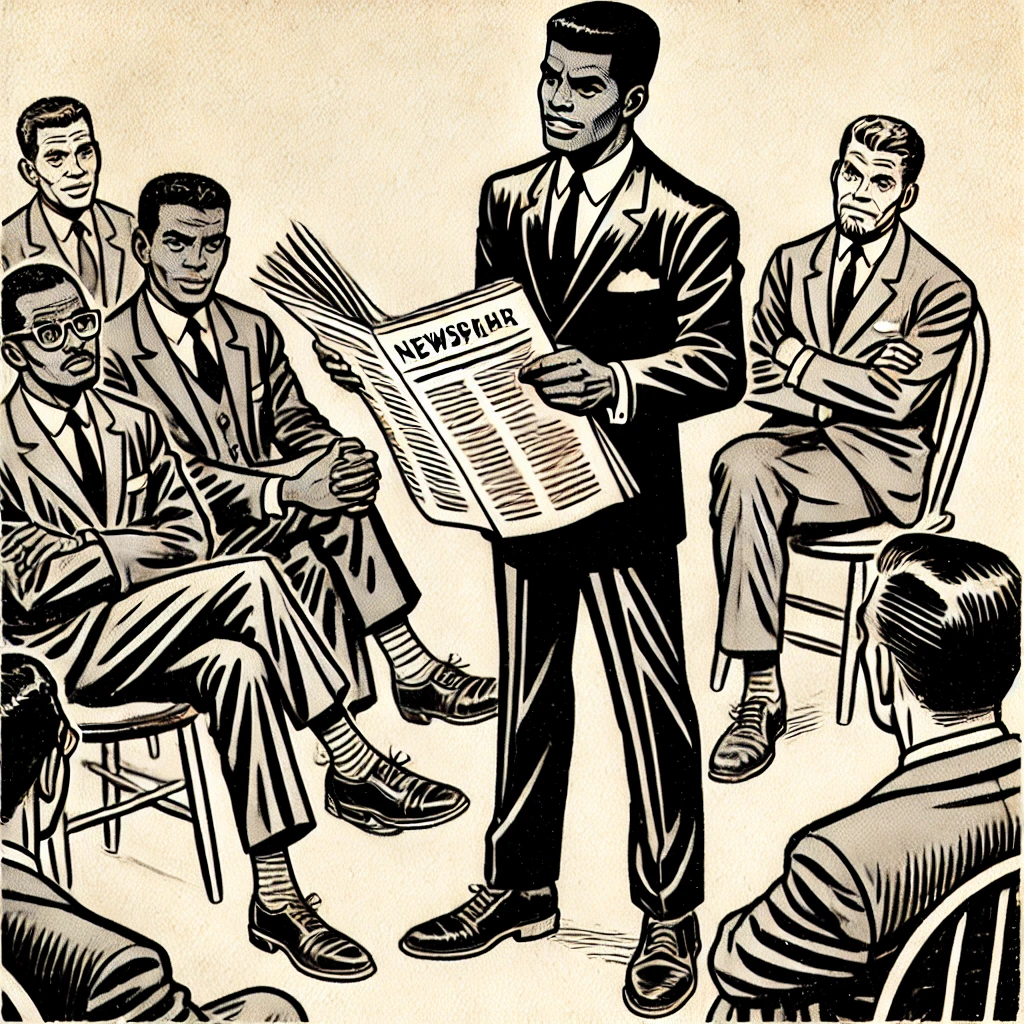
The Relationship between Black Men and White Women (Full Interview 1973)
Ann Lowe: The Hidden Genius Behind America’s Most Iconic Dresses
Ann Lowe, an unsung hero of American fashion history, was a trailblazing Black designer who overcame racial barriers to create some of the most iconic dresses in history. Though her name may not be as widely recognized as other designers, her impact on haute couture is undeniable. A Passion for FashionBorn in 1898 in Clayton, Alabama, Ann Lowe was introduced to sewing at an early age by her mother and grandmother, both accomplished seamstresses. Her talent was evident from the start, and she quickly mastered the art of creating elegant, hand-crafted gowns. Despite the racial limitations of the early 20th century, Lowe pursued her passion by enrolling in the S.T. Taylor Design School in New York. As the only Black student, she faced discrimination but persevered, excelling in her studies. Designing for the EliteLowe’s exceptional skills led her to design for America’s elite families, including the Rockefellers, Roosevelts, and du Ponts. However, her most famous creation was the wedding dress of Jacqueline Kennedy (then Jacqueline Bouvier) when she married John F. Kennedy in 1953. The stunning ivory silk gown, featuring intricate pleating and floral appliqués, remains one of the most iconic wedding dresses in history. Unfortunately, Ann Lowe received little credit for her work at the time, as the Kennedys referred to the designer only as “a colored dressmaker.” Overcoming HardshipsDespite her success, Lowe faced financial struggles due to racial discrimination and undervaluation of her work. She often undercharged for her meticulously crafted gowns, believing in the importance of beauty over profit. In 1961, she opened her own boutique on Madison Avenue, becoming one of the first Black designers with a store in New York’s high-end fashion district. Yet, financial hardships continued, and she eventually closed her business. A Lasting LegacyAnn Lowe’s influence on American fashion is now gaining long-overdue recognition. Her exquisite designs are preserved in institutions such as the Smithsonian National Museum of African American History and Culture and the Metropolitan Museum of Art. As a pioneer who broke racial barriers in the fashion industry, she paved the way for future Black designers. Her story is one of resilience, artistry, and excellence—an inspiration for all who dare to dream beyond societal constraints. Today, Ann Lowe’s name stands as a symbol of Black creativity and perseverance in the world of fashion.
Creoles in America: A Rich Legacy of Culture, Identity, and Influence
When people hear the word “Creole,” they often think of Louisiana, spicy gumbo, and jazz-filled streets of New Orleans. But the story of Creoles in America is much deeper, spanning centuries, continents, and cultures. It’s a tale of resilience, adaptation, and undeniable influence on American society. Who Are the Creoles? Creoles are people of mixed European, African, and sometimes Native American descent, primarily found in Louisiana but also in parts of Texas, Alabama, Mississippi, and even South Carolina. The term originally referred to people born in the New World from European parents, but over time, it evolved to include those of mixed heritage. Unlike other racial or ethnic groups in America, Creole identity is not just about race—it’s about culture. Creoles developed their own language (Louisiana Creole), unique cuisine, and vibrant traditions that blended French, Spanish, African, and Caribbean influences. The French & Spanish Roots During the colonial period, Louisiana was under French and Spanish rule, which played a crucial role in shaping Creole identity. Enslaved Africans brought over to work on plantations mixed with French and Spanish settlers, creating a distinct culture that set Creoles apart from both white European settlers and newly arrived African Americans. One of the most fascinating aspects of Creole history is the existence of “gens de couleur libres” or “free people of color.” Before the Louisiana Purchase in 1803, many Creoles of color owned businesses, land, and even slaves. They were highly educated, spoke French fluently, and were deeply involved in politics and trade. Creole Cuisine: A Taste of History If there’s one way to experience Creole culture, it’s through the food. Creole cuisine is a fusion of West African, French, Spanish, and Caribbean flavors, creating world-famous dishes like: Each dish tells a story of migration, adaptation, and survival, making Creole food one of the most beloved aspects of American culinary heritage. The Creole Impact on Music & Language Creoles played a massive role in the birth of jazz, zydeco, and blues. Legends like Jelly Roll Morton and Sidney Bechet helped shape the early sounds of jazz, which later became America’s most influential musical genre. Language is another defining feature of Creole culture. While French was the dominant language for many Creoles, Louisiana Creole (a mix of French, West African, and Spanish words) developed among enslaved people and their descendants. Though it is now endangered, efforts are being made to preserve and revive the language. Creole Identity Today In modern America, Creole identity is complex. Many Creoles of African descent were absorbed into the broader Black community during the Jim Crow era, while others fought to preserve their distinct cultural identity. Today, Creole pride remains strong, especially in Louisiana, where festivals, music, and cuisine continue to celebrate this vibrant heritage. Conclusion Creoles in America are a testament to the beauty of cultural fusion. They have shaped the nation’s food, music, language, and history in ways that continue to inspire. Whether through a bowl of gumbo, a jazz tune, or a historic French Quarter tour, the spirit of Creole culture lives on, reminding us that diversity is America’s greatest strength. #CreoleCulture #LouisianaHistory #GumboAndJazz #CreoleHeritage #AmericanHistory