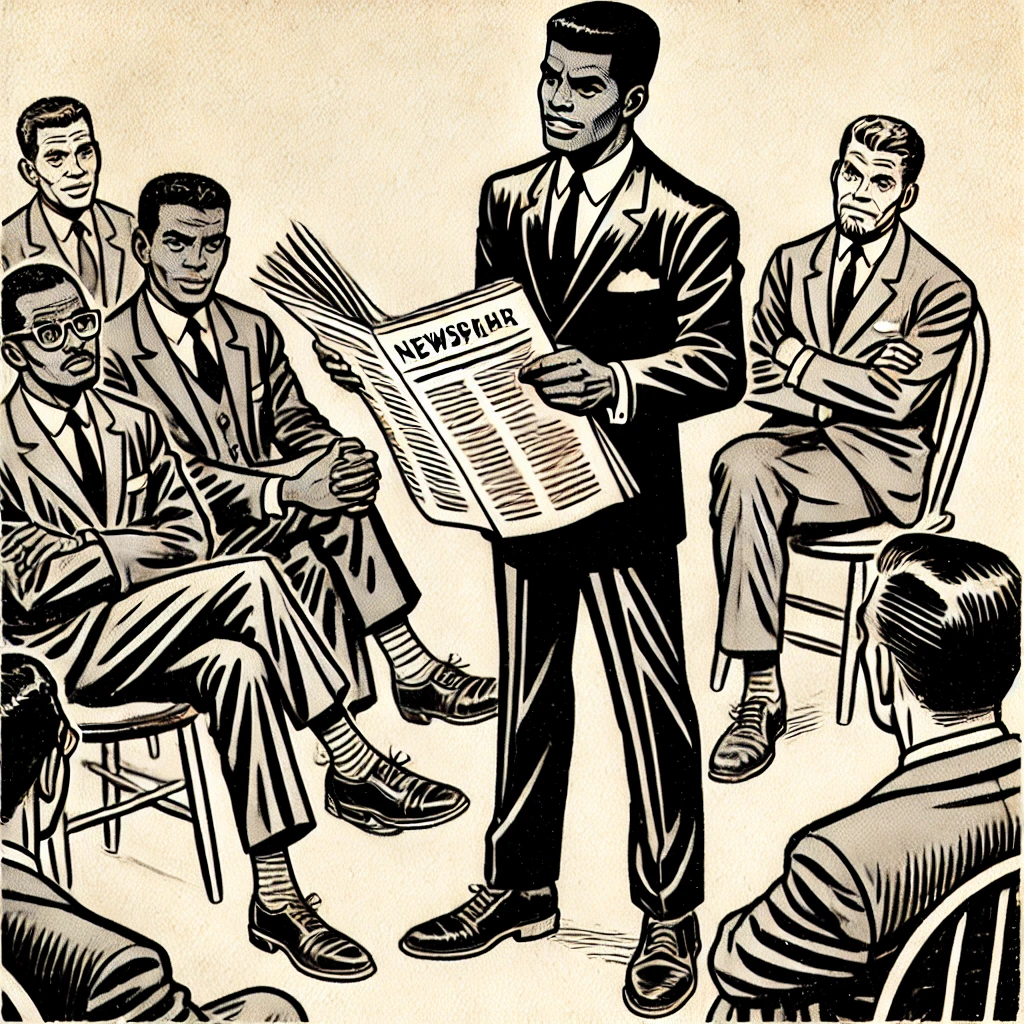
Joseph Bologne, Chevalier de Saint-Georges: The Revolutionary Virtuoso Europe Tried to Erase
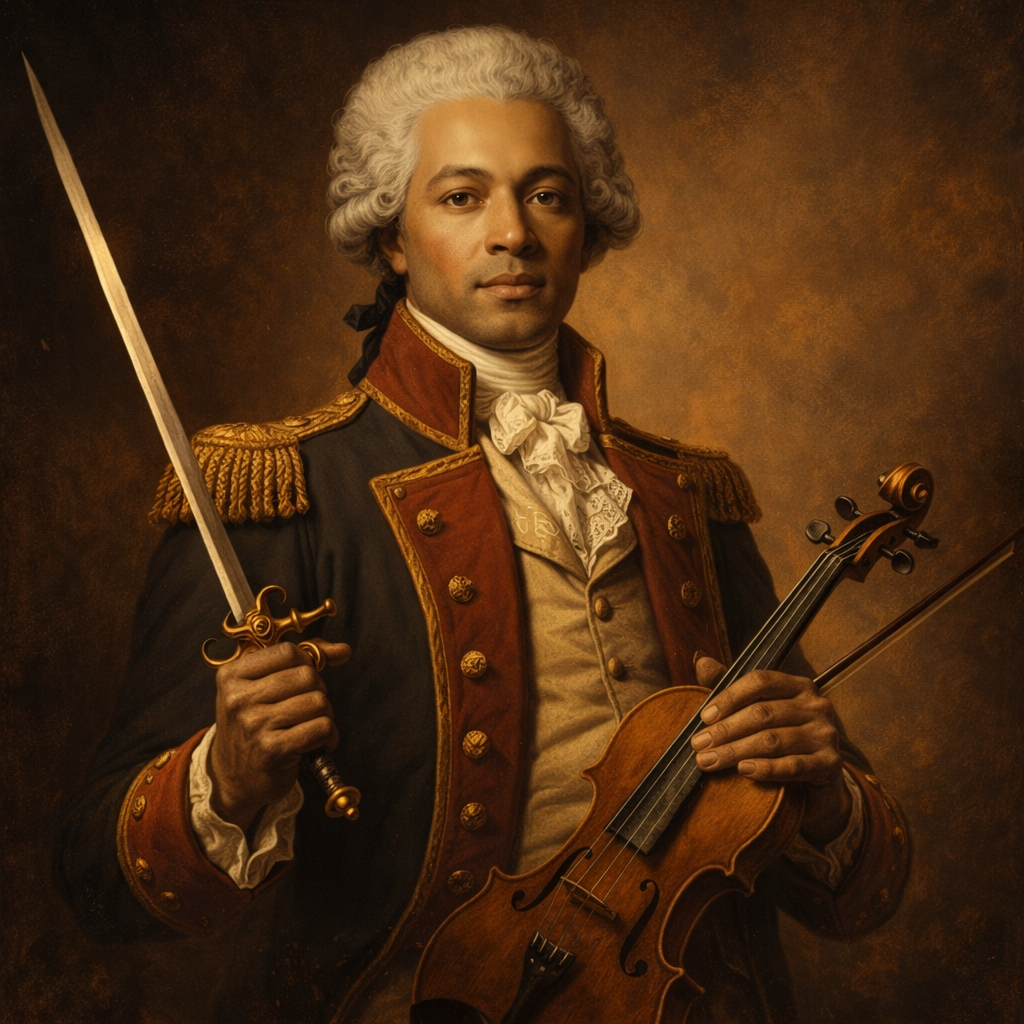
In 1745, on the Caribbean island of Guadeloupe, a child was born into contradiction. His father was a wealthy French plantation owner. His mother, Nanon, was an enslaved African woman. The child’s name was Joseph Bologne. History would later know him as the Chevalier de Saint-Georges. From the beginning, his existence challenged the rigid hierarchies of the 18th century. He was taken to France as a boy and raised within elite circles. At a time when most men of African descent were denied status, education, and recognition, Joseph was trained like nobility. He studied literature. He studied music. And he trained in fencing with a discipline that bordered on obsession. By his teenage years, he had become one of the finest swordsmen in Europe. Crowds gathered to watch him duel. Newspapers praised his speed, his elegance, his precision. He defeated seasoned masters. His skill was so extraordinary that it forced even the prejudiced to acknowledge him. Steel could not be debated. Skill could not be denied. But the blade was only one part of his genius. Music was where he transcended. Joseph Bologne became a master violinist, not merely competent, not merely talented, but exceptional. He performed across France. He composed symphonies and violin concertos that displayed complexity, innovation, and emotional depth. He directed orchestras with authority and grace. He was not an outsider peering into Europe’s cultural elite. He was inside it. Paris embraced him — cautiously at first, then enthusiastically. He led one of the most prestigious orchestras in Europe, Le Concert des Amateurs. His compositions rivaled the most celebrated works of the era. His presence in royal circles was undeniable. And yet, even at the height of his brilliance, the boundaries of race lingered. When he was considered for a directorship at the Paris Opéra, several prominent singers petitioned the queen. They refused to be directed by a man of mixed heritage. Talent was not enough to shield him from prejudice. But Joseph did not retreat. Then the French Revolution erupted. While many artists remained safely within salons and theaters, Joseph stepped onto the battlefield. He became a colonel and led one of the first all-Black regiments in European history — the Légion Saint-Georges. These soldiers fought for revolutionary ideals of liberty and equality in a nation still struggling to practice both. He carried a sword not for sport now, but for principle. Yet revolutions are rarely clean. Political chaos consumed France. Joseph himself was imprisoned during the Reign of Terror, despite his service. Suspicion was indiscriminate. Loyalty meant little in an age of paranoia. He survived. But after his death in 1799, something quieter happened. Silence. His compositions gradually disappeared from concert halls. His name faded from textbooks. His legacy, once undeniable, was minimized. Europe remembered many of its great composers — but not him. History did not erase him in one dramatic act. It simply neglected him. And neglect can be just as powerful. For generations, his music gathered dust. His story was reduced to footnotes. His existence complicated the narrative many preferred — that genius in classical Europe had a singular image. But truth has endurance. In recent decades, historians and musicians have revived his work. His symphonies are performed again. Scholars study his life not as novelty, but as significance. Films and biographies have brought his name back into public consciousness. Joseph Bologne was not a side character in someone else’s era. He was a master fencer.A virtuoso violinist.A respected composer.A military colonel.A revolutionary. He embodied excellence in spaces that were not designed for him to thrive. And perhaps that is why his story matters so deeply now. Because legacy is not always destroyed by force. Sometimes it is buried by omission. Joseph Bologne, Chevalier de Saint-Georges, does not need comparison to stand tall. He stands on his own — blade in one hand, violin in the other — a reminder that brilliance has never been confined to the boundaries history tried to draw. He was not ahead of his time. He was greater than the limits placed upon it. ❤️ Support Independent Black Media Black Dollar & Culture is 100% reader-powered — no corporate sponsors, just truth, history, and the pursuit of generational wealth. Every article you read helps keep these stories alive — stories they tried to erase and lessons they never wanted us to learn. Focus Keyphrase Joseph Bologne Chevalier de Saint-Georges Meta Description Explore the extraordinary life of Joseph Bologne, Chevalier de Saint-Georges — master violinist, elite fencer, and revolutionary colonel whose brilliance in 18th-century France was nearly erased from history. Slug joseph-bologne-chevalier-de-saint-georges-revolutionary-virtuoso
The Black Man Who Invented Potato Chips

In 1853, inside a busy restaurant in Saratoga Springs, New York, a chef stood over a hot stove preparing a meal that would unknowingly change the way the world eats forever. His name was George Crum, a skilled chef of African American and Native American heritage whose talent had already earned him a reputation as one of the finest cooks in the region. Wealthy travelers and businessmen came to the Moon’s Lake House restaurant not just for food, but for the experience of dining under the care of a chef who understood flavor, texture, and precision better than most cooks of his time. One evening, a customer sent back a plate of fried potatoes, complaining that they were too thick and too soggy. In an era when chefs took great pride in their craft, the complaint struck a nerve. Determined to make a point, George Crum sliced the next batch of potatoes as thin as he possibly could, fried them until they were crisp, and added a heavy pinch of salt before sending them back to the table. What was meant as a sharp response to a picky customer became one of the most important culinary accidents in American history. The customer loved them. Soon, other diners began requesting the same thin, crispy potatoes. Word spread quickly among visitors to Saratoga Springs, a popular resort destination at the time. Before long, the dish became known as “Saratoga Chips,” and people came specifically to taste the new creation that only George Crum seemed able to perfect. The thin slices, golden color, and satisfying crunch created a completely new kind of food experience. It was simple, but it was addictive. Without realizing it, George Crum had created the foundation for what would become one of the largest snack food industries in the world. At the time, there were no factories producing chips and no plastic bags lining grocery store shelves. Every chip had to be made by hand, sliced carefully and fried in small batches. The idea belonged to the kitchen, and George Crum was its master. As his reputation grew, Crum eventually opened his own restaurant, known as Crum’s Place, where Saratoga Chips became the main attraction. Customers traveled long distances just to taste the famous chips prepared by the man who invented them. Bowls of chips were placed on every table, a tradition that would later become standard in restaurants across America. But while George Crum enjoyed local fame and success, the future of his invention would move beyond his control. The concept of thin fried potato slices spread from restaurant kitchens into homes and eventually into small commercial operations. Years later, entrepreneurs began packaging potato chips for sale, transforming a handmade specialty into a mass-produced product. George Crum never patented his invention. In the 1800s, many cooks and craftsmen rarely considered protecting their ideas legally, and the patent system was difficult to navigate even for established businessmen. Without legal ownership of the idea, the invention passed freely into the hands of companies that would eventually build billion-dollar empires around it. Factories replaced kitchens. Machines replaced hand slicing. National brands replaced local chefs. Today, potato chips are sold in nearly every country on Earth. Grocery stores stock entire aisles filled with chips of every flavor imaginable. The global potato chip industry generates tens of billions of dollars every year, making it one of the most profitable snack markets in the world. Yet the name George Crum remains largely unknown to the millions of people who open a bag of chips each day. His story reflects a pattern seen throughout American history — innovators whose contributions shaped entire industries but whose names faded as corporations grew larger and wealth concentrated elsewhere. George Crum did not become a snack food tycoon, and he did not build a manufacturing empire, but his idea changed food culture forever. Every crunchy bite traces back to a single moment in a Saratoga Springs kitchen, when a determined chef decided to slice potatoes thinner than anyone had before. The brands became famous. The invention became global. But it all started with George Crum. Even today, few people realize that one of America’s most beloved snacks began with a Black chef working in a small 19th-century kitchen, turning a simple potato into a permanent part of everyday life. History remembers the companies. Black Dollar & Culture remembers the creator. This story reminds us that innovation does not always come from corporations or laboratories. Sometimes it comes from a single person with skill, pride in their craft, and the determination to do something better than it had been done before. The next time you open a bag of potato chips, remember that behind that familiar sound of the bag tearing open is a story that began more than 170 years ago with a chef who never imagined that his invention would feed the world. Stories like George Crum’s remind us that everyday things often have extraordinary origins. Share this story so more people learn the name behind one of America’s most famous foods — and explore more untold innovations at Black Dollar & Culture. Focus Keyphrase George Crum potato chip inventor Meta Description Discover the true story of George Crum, the Black chef who invented potato chips in 1853 and changed the global snack industry forever. Slug george-crum-potato-chip-inventor
What the Supreme Court’s Tariff Decision Means for Your Money

When the Supreme Court of the United States ruled against key tariffs put in place during the administration of Donald Trump, it wasn’t just political news. It was economic news. And whether you realize it or not — decisions like this directly affect: • Your grocery bill• The price of electronics• Small business profit margins• The stock market• Your investment portfolio Let’s break this down clearly. First: What Are Tariffs? A tariff is essentially a tax placed on imported goods. When tariffs go up: When tariffs are reduced or invalidated: This Supreme Court decision signals a shift in how trade policy may be handled going forward. What This Means for Consumer Prices In theory: If tariffs are removed → imported goods become cheaper → retail prices can ease. But here’s the reality: Prices don’t drop overnight. Retailers may: So while this could relieve pressure on inflation, don’t expect instant price cuts. What This Means for Small Businesses This is where it gets serious. Small businesses that rely on: Could see cost relief. For example:If you run an apparel brand (like many Shopify businesses), lower import duties = better profit margins. But… Domestic manufacturers who benefited from protectionist tariffs may face more competition now. What This Means for the Stock Market Markets hate uncertainty — but they love clarity. If trade tensions cool: Watch sectors like: This could be a quiet shift that investors pay attention to before the headlines catch up. What This Means for Investors If you’re investing: Pay attention to: Lower trade friction can improve earnings. But remember — markets move on expectations, not just policy. The Bigger Question Who controls trade power in America? The executive branch?Or the courts? This ruling reminds everyone that economic power isn’t unlimited — and the balance of power can directly affect markets. That’s why ownership matters. When you understand policy, you understand positioning. Final Thought Tariffs are political.But money is practical. Instead of reacting emotionally to headlines, smart investors ask: • Who benefits?• Who loses?• Where is capital flowing next? That’s how you stay ahead. Focus Keyphrase Supreme Court tariff decision impact on prices and small business Meta Description The Supreme Court invalidated most Trump-era tariffs. Here’s what the ruling means for consumer prices, small businesses, investors, and the stock market. Slug supreme-court-tariff-decision-impact-on-prices-and-small-business
How to Think Like a Wealthy Person (Even Before You Have Money)
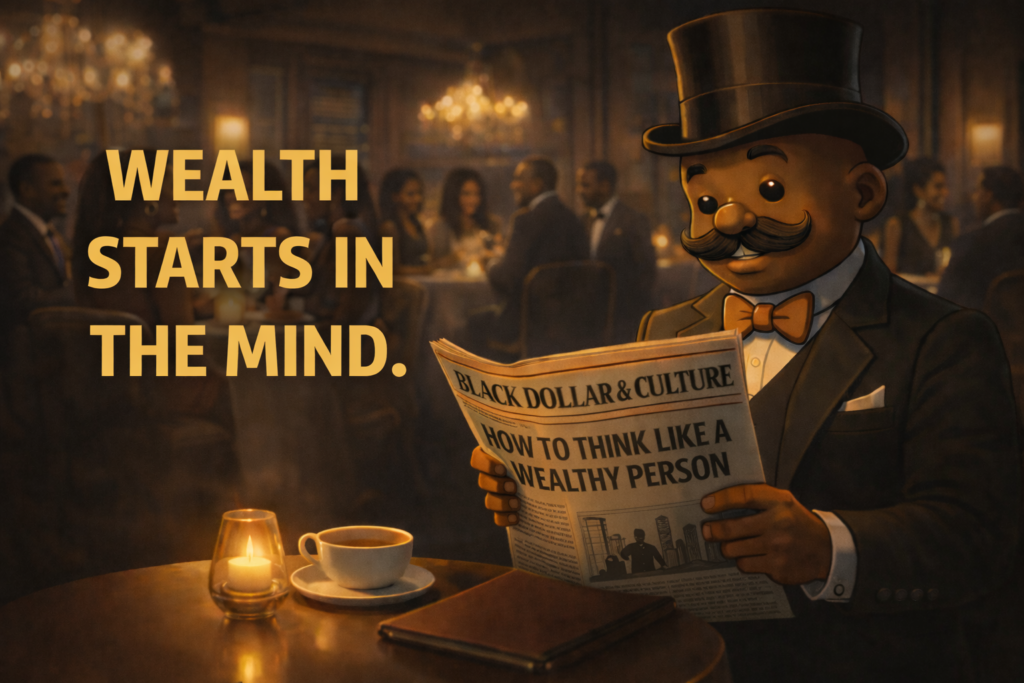
Most people think wealth starts in the bank account. It doesn’t. It starts in the mind. Before the portfolio.Before the business.Before the real estate. Wealth begins with a shift in how you see the world — and more importantly, how you see yourself inside it. Because poor thinking chases money. Wealthy thinking builds systems. And the difference between the two determines everything. 1. Wealthy People Think in Ownership, Not Income The average person asks: “How can I make more money?” The wealthy person asks: “How can I own something that makes money without me?” That shift alone separates employees from empires. A job is income.A system is leverage.Ownership is power. Look at figures like Warren Buffett. He didn’t become wealthy because of a salary. He became wealthy because he owned pieces of businesses. Ownership compounds.Income disappears. If you want to think wealthy, start asking daily: 2. Wealthy Thinking Is Long-Term Thinking Poor mindset: “I need it now.”Wealth mindset: “Where will this put me in 15 years?” Wealthy people think in decades, not days. They understand: They don’t panic when the economy dips.They position themselves. That’s why during downturns, some people lose everything — while others quietly accumulate. Patience is a wealth strategy. 3. Wealthy People Control Emotion Emotion is expensive. Impulse buying.Panic selling.Flexing to impress.Spending to feel validated. Wealthy people detach emotion from money decisions. They ask: Discipline beats hype. Every time. 4. They See Assets Where Others See Objects The average person sees: A wealthy thinker sees: It’s not about what something is. It’s about what something can produce. That’s the Family Bank mindset. Turn consumption into creation.Turn access into ownership.Turn platforms into pipelines. 5. Wealthy People Move Quietly Real wealth is quiet. It doesn’t scream.It doesn’t compete.It doesn’t explain itself. It studies.It accumulates.It protects. While some chase attention, others build infrastructure. That quiet separation is uncomfortable — but it’s necessary. Growth requires separation. 6. They Think in Systems, Not Hustles Hustle burns out. Systems scale. A wealthy thinker asks: Subscription businesses.Automated investing.Digital products.Trust structures.Content libraries. Build once.Collect repeatedly. That’s the difference between working hard and working strategically. 7. They Protect Capital Aggressively Building wealth is only half the game. Keeping it is the real discipline. Wealthy thinkers care about: They understand money must be defended. Capital is oxygen. Without it, nothing else matters. The Core Shift To think like a wealthy person, ask yourself daily: This isn’t about pretending to be rich. It’s about training your brain to operate at a higher level. Wealth is not an amount. It’s a perspective. And once your thinking shifts — your strategy follows. Then your behavior. Then your outcomes. ❤️ Support Independent Black Media Black Dollar & Culture is 100% reader-powered — no corporate sponsors, just truth, history, and the pursuit of generational wealth. Every article you read helps keep these stories alive — stories they tried to erase and lessons they never wanted us to learn. In a world drowning in debt, distraction, and dependence, wealthy thinking is an act of rebellion. Ownership is power. Discipline is protection. Systems are freedom. If this shifted your mindset, share it with someone building in silence — and step deeper into the BD&C movement. Focus Keyphrase: How to think like a wealthy personSlug: how-to-think-like-a-wealthy-personMeta Description: Learn how to think like a wealthy person by shifting from income to ownership, building systems, controlling emotion, and focusing on long-term asset growth.
Before Greece, There Was Kemet: Did Black Civilizations Teach Ancient Greece?
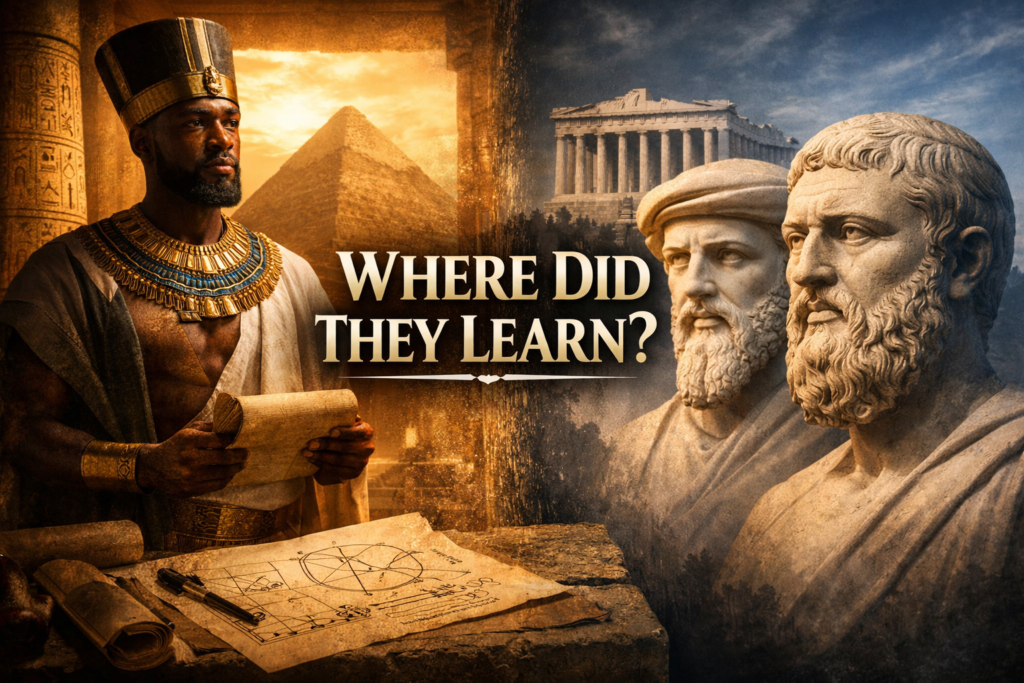
There was a time before marble statues. Before Athens debated democracy. Before the names Plato and Pythagoras echoed through lecture halls. Before the Parthenon crowned the Acropolis. There was Kemet. Along the Nile River, thousands of years before classical Greece reached its height, an advanced civilization flourished. The people of Kemet — what we now call ancient Egypt — developed complex systems of mathematics, astronomy, architecture, medicine, governance, and spiritual philosophy. The pyramids were already ancient when Greece was still forming its identity. Massive temple complexes stood as living universities carved in stone. Knowledge was preserved in priestly schools, inscribed on papyrus, and structured around Ma’at — the principle of truth, balance, order, and justice. The question that echoes through history is powerful and layered: Did ancient Greece learn from Kemet? This is not about mythology. It is about contact, documentation, intellectual exchange, and historical testimony. Several Greek thinkers wrote about Egypt with deep respect. Pythagoras is widely said in classical sources to have studied in Egypt for years before developing the mathematical theories that bear his name. Plato referenced Egyptian priests and their ancient wisdom in his dialogues, describing Egypt as a civilization of deep antiquity and preserved knowledge. Herodotus, often called the “Father of History,” openly stated that many Greek customs were derived from Egypt and expressed admiration for Egyptian institutions and religious traditions. Cultural exchange across the Mediterranean is historically documented. Trade routes connected North Africa, the Levant, and Southern Europe. Sailors, scholars, merchants, and initiates traveled between civilizations. Knowledge traveled with them. Consider architecture. Monumental Egyptian columns lined temple complexes centuries before Greece developed its Doric, Ionic, and Corinthian styles. Consider geometry. The Nile’s annual flooding required land measurement techniques long before Greece formalized geometric proof. Consider medicine. Egyptian medical papyri documented surgical procedures and diagnoses that predate many classical Greek texts. None of this diminishes Greek achievement. Greece made extraordinary contributions to philosophy, governance, drama, art, and science. But history becomes more complete when we acknowledge that civilizations do not rise in isolation. They build upon what came before. They absorb, refine, reinterpret, and transmit knowledge. And before Greece, there was Kemet. In the 20th century, scholarly debate intensified around the depth of African influence on Greek civilization. Some historians argue Greece developed largely independently, influenced by multiple regions including Mesopotamia and the Near East. Others argue that Egypt played a foundational intellectual role. What remains undeniable is that Greek writers themselves acknowledged Egypt’s antiquity and described journeys there for study. Why does this matter? Because narratives shape identity. For generations, Western education often presented Greece as the beginning of “civilization” — the birthplace of philosophy, democracy, science, and reason. Rarely did textbooks explore what influenced Greece. Rarely did they present Africa as a center of early intellectual life. But the Nile does not disappear because a chapter was shortened. When we study Kemet, we see advanced statecraft, massive engineering, sacred cosmology, ethical philosophy, mathematical precision, and astronomical alignment. We see a civilization that endured for more than 3,000 years. We see Black civilization shaping the ancient world long before colonialism distorted global perceptions of Africa. This conversation is not about superiority. It is about restoration. Restoration of historical complexity. Restoration of interconnectedness. Restoration of intellectual dignity. Civilizations borrow. Civilizations trade. Civilizations learn. The Mediterranean world was a crossroads, not a vacuum. Imagine a young Greek scholar standing inside a towering Egyptian temple, surrounded by hieroglyphs describing cosmic law and divine order. Imagine witnessing engineering feats requiring mathematical mastery centuries ahead of their time. Imagine returning home inspired — not copying, but translating knowledge into a new cultural framework. That is how civilizations evolve. Knowledge moves. Ideas migrate. Truth survives. When we explore whether Black civilizations taught ancient Greece, the answer is not a simple yes or no. The answer is layered. There was exchange. There was admiration. There was study. There was influence. Greece, in turn, became a transmitter of ideas to Rome and eventually to Europe. The story of civilization is not linear. It is braided. Africa is not a footnote in that braid. It is one of its earliest strands. Reclaiming that understanding is not about rewriting history recklessly. It is about widening the lens. It is about acknowledging Africa’s role in shaping global intellectual development. It is about recognizing that long before colonial narratives diminished the continent, Africa stood as a beacon of scholarship and statecraft. Before Athens debated justice, Kemet spoke of Ma’at. Before marble columns crowned Greece, sandstone pillars lined the Nile. Before philosophy had a Greek name, wisdom had already been practiced for millennia. History is deeper than we were taught. And when we dig, we do not divide — we discover. Because truth does not weaken civilization. It strengthens it. ❤️ Support Independent Black Media Black Dollar & Culture is 100% reader-powered — no corporate sponsors, just truth, history, and the pursuit of generational wealth. Every article you read helps keep these stories alive — stories they tried to erase and lessons they never wanted us to learn. Focus Keyphrase: Did Black Civilizations Teach Ancient GreeceSlug: did-black-civilizations-teach-ancient-greeceMeta Description: Explore the historical debate about whether ancient Kemet (Egypt) influenced Greek civilization. Discover the documented cultural exchange and intellectual connections between Africa and ancient Greece.
Why So Many People Feel Financially Stuck (And Don’t Know Why)
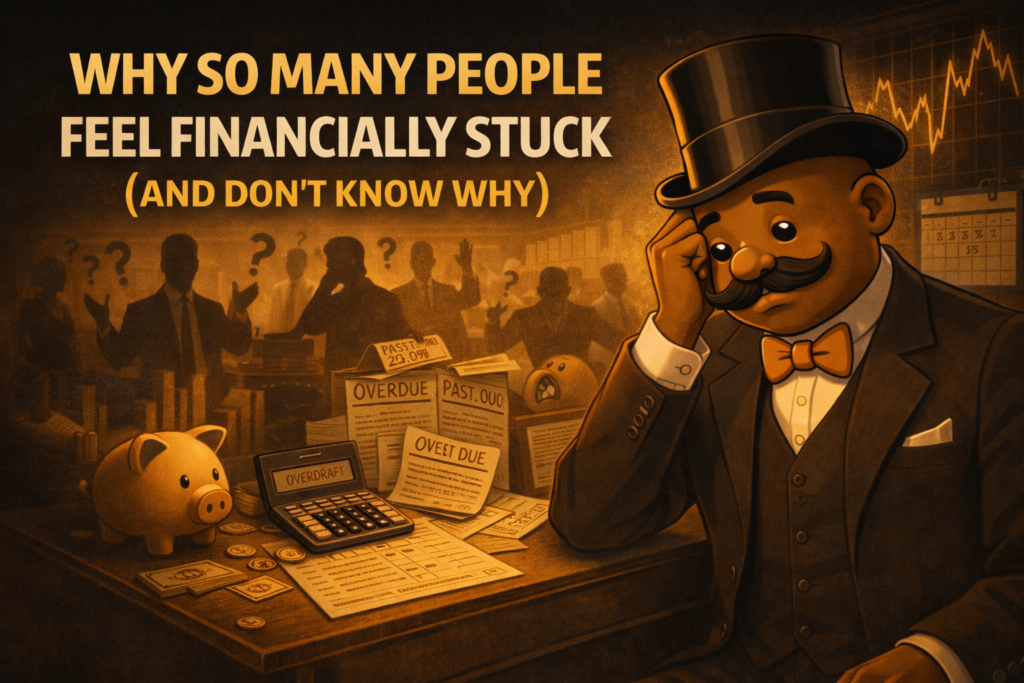
There’s a quiet frustration millions of people carry. You work.You earn.You pay bills.You repeat. And yet… nothing moves. No real wealth.No real leverage.No real freedom. You’re not lazy.You’re not irresponsible. You’re stuck inside a design you were never taught to question. Let’s break it down. 1. You Were Trained For Income — Not Ownership School teaches: Nobody teaches: Income feeds survival. Ownership builds freedom. If your money stops when you stop working, you’re in survival mode — even if your salary looks good. That gap is why many feel stuck. 2. Your Expenses Rise With Your Identity You don’t upgrade your wealth. You upgrade your lifestyle. Every raise becomes a new bill. So even when income increases, freedom doesn’t. That creates the illusion of progress — without actual progress. 3. You Were Never Shown How Money Actually Works Most people think wealth comes from: Wealth actually comes from: Nobody explained the difference between:Income vs AssetsCash flow vs Net worthConsumption vs Investment So people grind harder… inside the same cage. 4. You’re Surrounded By Other People in Survival Mode Environment shapes expectations. If everyone around you: Then “normal” becomes limitation. Growth requires separation. Not arrogance — alignment. 5. You Confuse Activity With Progress Being busy feels productive. But: If you’re building someone else’s system 40+ hours a week and not building your own at all… the math will always keep you stuck. 6. You Don’t Have a Wealth System — Only a Budget A budget controls spending. A wealth system multiplies money. Do you have: If not, you’re relying on hope. Hope doesn’t compound. Systems do. 7. You Think Freedom Requires Millions This one is psychological. People think:“I need to be rich to feel free.” No. You need: Optionality is power. Even modest leverage reduces that trapped feeling. 8. You’re Playing Defense — Not Offense Most people focus on: Wealth builders focus on: Different game. Different outcome. The Real Reason You Feel Stuck You were taught how to survive inside the system. You were never taught how to build above it. That tension — between effort and lack of ownership — creates the trapped feeling. And the scary part? Many people don’t even realize that’s what they’re experiencing. They think it’s inflation. Or bad luck. Or the economy. Sometimes it is. But most of the time? It’s structure. The Shift If you feel financially stuck, start here: You don’t escape financially by working harder. You escape by owning differently. Because the goal isn’t to look rich. It’s to stay free. ❤️ Support Independent Black Media Black Dollar & Culture is 100% reader-powered — no corporate sponsors, just truth, history, and the pursuit of generational wealth. Every article you read helps keep these lessons alive — lessons they never built the system to teach. Focus Keyphrase: Why So Many People Feel Financially StuckSlug: why-so-many-people-feel-financially-stuckMeta Description: Discover the real reasons why so many people feel financially stuck. Learn how income, lifestyle creep, and lack of ownership keep people trapped — and how to break free with a wealth system.
Income Is What You Earn. Net Worth Is What You Own.

Income Is What You Earn. Net Worth Is What You Own. Income is money that flows to you. Net worth is what stays with you. Your net worth equals: Assets – Liabilities Assets = things that put money or value in your life.Liabilities = things that take money away. If your lifestyle grows as fast as your paycheck, your net worth can stay stuck for decades. This is why many high earners still live paycheck to paycheck. Why People Confuse the Two Because income is visible. It shows in: Net worth is quiet. It hides in: One makes noise. The other builds freedom. The Psychological Trap When income rises, spending often rises. Better car.Better neighborhood.More subscriptions.Private school.Vacations. Nothing wrong with enjoying life. But if assets are not growing faster than expenses, the person is simply upgrading their bills. Not their future. What Wealthy Families Focus On Instead They ask different questions. Instead of:“How much do you make?” They ask:“How much do you keep?”“What do you own?”“What produces income without you?” Because ownership builds leverage. Income requires labor. Example Time Person A: Net worth → low or even negative. Person B: Net worth → climbing every year. Guess who becomes financially independent first? Income Stops When You Stop If you cannot work tomorrow, income pauses. But assets can continue. They can pay: This is the bridge between surviving and being secure. Net Worth Changes Family Trees Income feeds today. Net worth feeds generations. It becomes: This is why wealthy households obsess over balance sheets, not paychecks. How to Start Thinking in Net Worth Shift your focus from earning to building. Each month ask: Small improvements compound. The first $10,000 becomes $50,000. Then $100,000. Then momentum takes over. The BD&C Perspective A community that only chases income will always be starting over. A community that builds net worth creates permanence. Businesses stay.Property stays.Capital stays. And future children start from strength instead of survival. The Real Flex A big salary can disappear. Ownership is harder to take away. One looks rich. The other is free. ❤️ Support Independent Black Media Black Dollar & Culture is 100% reader-powered — no corporate sponsors, just truth, history, and the pursuit of generational wealth. Every article you read helps keep these stories alive — stories they tried to erase and lessons they never wanted us to learn. Focus Keyphrase Net worth vs income Slug net-worth-vs-income Meta Description Learn the real difference between net worth and income and why wealthy families focus on ownership, assets, and long-term financial freedom instead of just earning more money.
How to Start an Emergency Fund (Beginner Guide)
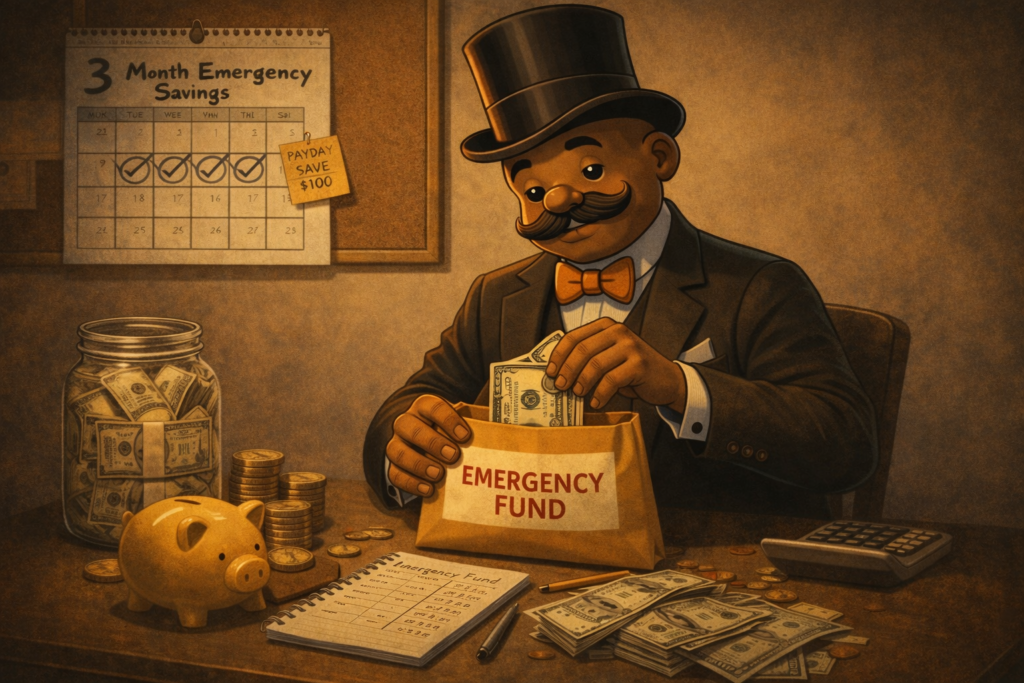
Most people don’t fall into financial trouble because they’re reckless.They fall because life happens. A tire blows out on the highway.Hours get cut at work.A child gets sick.Rent goes up.The car refuses to start on Monday morning. And suddenly a small inconvenience becomes a financial emergency. Here’s the truth many households discover too late: The problem isn’t the emergency.The problem is being unprepared for it. That’s where an emergency fund changes everything. It turns panic into inconvenience.It turns stress into strategy.It gives you breathing room while everyone else is gasping for air. Let’s build yours step by step. What Is An Emergency Fund? An emergency fund is money set aside ONLY for unexpected, necessary expenses. Not vacations.Not shoes.Not a concert. We’re talking about: If it’s not urgent and unexpected, it doesn’t qualify. This money is your financial shock absorber. Why Beginners Must Start Here First Before investing.Before flipping houses.Before crypto.Before options. You need stability. Without a cushion, every surprise gets put on a credit card…and debt quietly becomes the thief of your future wealth. An emergency fund protects your:✔ Credit score✔ Investments✔ Peace of mind✔ Ability to make calm decisions No drama. No desperation. Step 1: Your First Goal → $1,000 Forget six months of expenses for now. Your first mission is simple:stack your first $1,000 as fast as possible. Why? Because most small emergencies fall under that number. And once you hit it, something powerful happens… You start moving different.You feel in control.You breathe easier. Confidence is built through wins. Step 2: Where Should You Keep It? Your emergency money should be: ✅ Safe✅ Easy to access✅ Separate from daily spending Good places include: Not under the mattress.Not invested in stocks.Not tied up where it can lose value. This is protection money, not growth money. Step 3: How Much Do You Eventually Need? After you reach $1,000, level up to: 👉 3–6 months of living expenses. If your monthly bills are $3,000, your target becomes: This is the number that protects families from layoffs, illness, or major life disruptions. Step 4: How To Build It Faster Most people think they can’t save. But usually, money is leaking quietly. Try this: Speed matters. The faster you build it, the faster stress leaves your life. Step 5: Automate Your Discipline Willpower fades. Systems win. Set up automatic transfers every payday — even if it’s only $25 or $50. You’re not trying to be impressive.You’re trying to be protected. Small deposits create big security over time. What Happens When You Finally Have One Something amazing changes. You stop fearing the mail.You stop dreading unknown numbers calling.You stop living on edge. You gain power. Because emergencies no longer control you. You control them. The BD&C Truth About Wealth Most people chase visible wealth. Nice cars.Designer clothes.Status. But real wealth often starts invisibly. In quiet accounts.In boring savings.In preparation. Because when storms hit, the prepared keep moving forward while others start over. If nobody ever taught you this, now you know. Start small.Stay consistent.Protect your household. Your future self will thank you. #EmergencyFund #RainyDayMoney #FinancialSecurity #BlackWealth #GenerationalWealth #MoneyBasics #WealthBuilding #BDandC Focus Keyphrase: how to start an emergency fundSlug: how-to-start-an-emergency-fundMeta Description: Learn how to start an emergency fund step by step. A beginner-friendly guide to building financial security, avoiding debt, and protecting your future. They never told us that peace of mind has a price — and it’s usually saved a little at a time. An emergency fund is more than money; it’s dignity, choice, and the power to say “we’ll be okay.” Start yours today, build it brick by brick, and watch how differently you walk through the world tomorrow. Read more and take control at Black Dollar & Culture.
When America Is in Debt, Ownership Is the Escape Plan
When a nation owes more than it owns, history begins to whisper. There is a moment in every empire’s life when the numbers stop being numbers and start becoming signals. Signals of strain. Signals of fragility. Signals that the ground beneath everyday people is slowly, quietly shifting. The screens still glow. The markets still open. Politicians still promise. But beneath the performance, the ledger is bleeding. And for families without ownership, that bleeding eventually reaches the doorstep. Because when governments drown in debt, they rarely sink alone. They inflate.They tax.They cut.They print.They postpone. But they do not protect you. This is the part they never teach in school, never advertise in campaign speeches, never explain during the evening news. Debt at the top changes life at the bottom. The question is never whether a reckoning comes. The question is who is prepared when it arrives. In times like these, there are always two kinds of people. The dependent and the positioned. The dependent wait. They hope the job holds. They pray prices settle. They assume retirement accounts will recover. They trust systems designed by people who already moved their money. The positioned study patterns. They understand that currency weakens when printing strengthens. They recognize that assets behave differently than wages. They know that ownership absorbs shock while dependency multiplies it. And they move early. Long before panic becomes policy. If you listen carefully, history has run this lesson before. When Rome stretched itself beyond sustainability, elites secured land while citizens received promises.When currencies faltered in Latin America, those with businesses survived while savers were erased.When inflation burned through the 1970s, hard assets outran paychecks. Different centuries.Same story. When the system is stressed, ownership becomes oxygen. Everything else becomes hope. But here is where this becomes personal. For generations, many families were kept from acquiring the very tools that provide insulation during unstable times. Access denied. Loans rejected. Districts redlined. Knowledge hidden behind walls of jargon. The result was predictable. When turbulence comes, those without assets feel it first and longest. So what do you do when the largest economy in the world keeps adding zeros to a bill nobody can realistically repay? You stop playing defense. You start building position. You convert fragile income into durable assets. You prioritize businesses that can raise prices with inflation.You learn how real estate transfers cost to tenants.You understand why equity in productive companies historically survives currency cycles.You build private systems of lending inside families.You turn consumers into shareholders. You become harder to shake. Because the uncomfortable truth is this: Governments respond to debt with policies.Owners respond to debt with strategy. And strategy travels through bloodlines. Some people will read headlines and freeze. Others will read balance sheets and prepare. This is not about fear. Fear paralyzes. This is about awareness. Awareness sharpens. A country carrying enormous debt will make decisions to maintain stability. Some of those decisions help markets. Some hurt workers. Some protect banks. Some dilute savers. But almost all reward ownership. That pattern is as old as finance itself. The people who understand it quietly rearrange their lives. They buy instead of rent.They invest instead of store cash.They create income streams instead of relying on one.They study policy the way farmers study weather. Because storms are inevitable. Preparation is optional. And once you see the pattern, you cannot unsee it. You begin to recognize why the wealthy rush into assets during uncertainty.Why institutions accumulate land.Why smart money prefers control over promises. They are not guessing. They are positioning. So the real conversation is not “Is America in debt?” The real conversation is, “Are we building protection faster than the system is building pressure?” That answer determines comfort or crisis for the next generation. Families who move early will look calm later. Families who wait will wonder what happened. And somewhere in the future, children will ask what decisions were made when the warning signs were visible. They will live inside the answer. History is generous with clues. It is ruthless with excuses. The debt may be national. But preparation is personal. Move accordingly. Focus Keyphrase: America in debt wealth strategyMeta Description: America’s rising national debt is a warning signal. Learn how families can protect themselves through ownership, assets, and generational wealth positioning.Slug: america-in-debt-wealth-strategy
The Safest Place to Keep Your Money During a Crisis
When a crisis hits — recession, banking panic, market crash, political chaos — the first instinct people have is to move fast. Pull money out. Hide cash. Chase whatever feels “safe” at the moment. That instinct has ruined more wealth than the crisis itself. The truth is uncomfortable, but powerful:There is no single “safe place” for money during a crisis. There is only a safe strategy. And the people who come out stronger aren’t the ones who panic — they’re the ones who prepared before the storm. Let’s walk through where money actually survives, grows, and stays accessible when systems get stressed. What “Safe” Really Means in a Crisis Before we talk locations, we need to define safety properly. During a crisis, “safe” does not mean: Safe means three things: Any place your money lives should satisfy at least two of the three. The strongest setups hit all three. 1. Insured High-Yield Cash (Your First Line of Defense) Despite the noise, cash is still king during uncertainty — when it’s parked correctly. Money held in FDIC-insured institutions remains one of the most reliable anchors during turmoil. Federal Deposit Insurance Corporation Why this works Where people mess up BD&C rule:Cash is not for growth — it’s for control. 2. U.S. Treasury Assets (Quiet, Boring, Powerful) When fear hits global markets, institutions don’t panic — they run to U.S. Treasuries. U.S. Department of the Treasury Treasury bills, notes, and money-market funds backed by Treasuries are considered some of the safest financial instruments in the world. Why this works What this isn’t This is storm shelter money — not party money. 3. Diversified Brokerage Accounts (Not Just Savings) Many people think crisis safety means “pull everything out.” Wealthy families do the opposite — they spread exposure. A well-structured brokerage account holding: creates controlled risk, not chaos. Why this works The danger isn’t investing during a crisis —it’s being forced to sell because you didn’t plan liquidity. 4. Hard Assets That Don’t Depend on Banks When trust in systems drops, tangible value matters. That includes: Gold isn’t magic — but it has survived: Why this works BD&C reminder:Hard assets protect wealth between generations — not just between paychecks. 5. The Most Overlooked “Safe Place”: Structure Here’s the part most people skip — and pay for later. The safest money isn’t just where it’s kept.It’s how it’s owned. Families that survive crises often use: Why? Because structure protects against: Money without structure is fragile — no matter where it sits. What Not to Do During a Crisis Let’s be clear. ❌ Don’t pull everything into physical cash❌ Don’t chase “guaranteed” returns❌ Don’t move money based on fear headlines❌ Don’t trust platforms you don’t understand Crises punish speed without strategy. The Real Answer No One Wants to Hear The safest place to keep your money during a crisis isn’t a bank, vault, or asset. It’s a system: That’s how wealth survives storms — and why some families quietly come out richer every time. ❤️ Support Independent Black Media Black Dollar & Culture is 100% reader-powered — no corporate sponsors, just truth, history, and the pursuit of generational wealth. Every article you read helps keep these lessons alive — lessons they never taught us, but always used. If this helped you think differently about safety, share it with someone who’s still being told to “just save more.”We don’t need fear.We need frameworks. Ownership over panic.Structure over noise.Strategy over luck. Focus Keyphrase: safest place to keep your money during a crisisSlug: safest-place-to-keep-your-money-during-a-crisisMeta Description: Learn where to safely keep your money during a financial crisis using a proven wealth strategy that prioritizes protection, liquidity, and long-term stability.