Before Silicon Valley. Before hedge funds. Before Wall Street started pretending it understood “self-made.”
There was Madam C. J. Walker—a Black woman born into the ashes of slavery who built an empire so powerful it terrified the systems designed to keep her small.
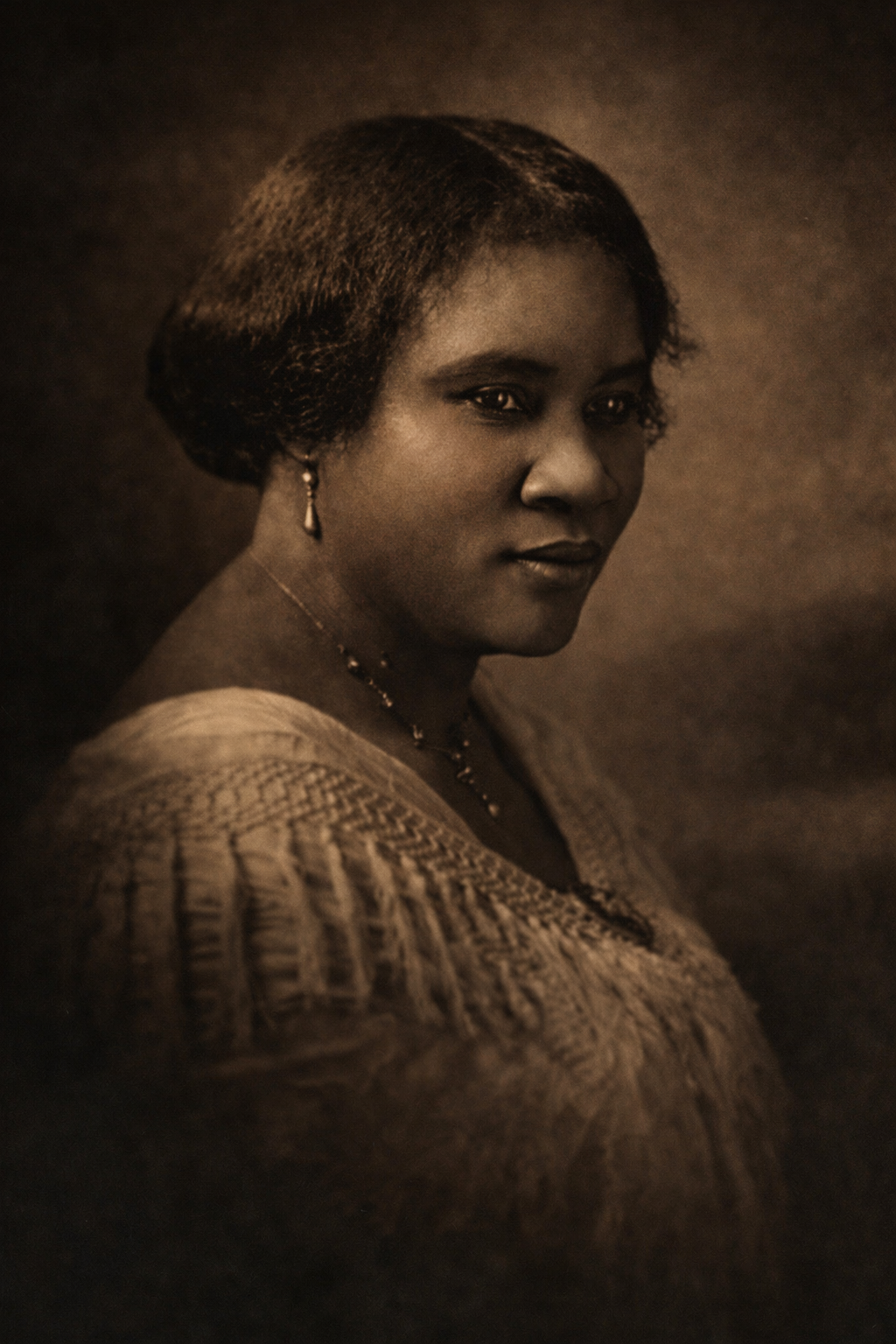
She was not handed opportunity.
She was not invited into rooms.
She was not protected by laws, banks, or sympathy.
She built anyway.
Born in 1867, just two years after the end of slavery, Sarah Breedlove entered a country that had legally ended bondage but economically perfected it. Her parents had been enslaved. Her childhood was marked by loss. Orphaned by seven, married by fourteen, widowed by twenty, and raising a daughter alone, she lived the kind of life America usually erases—not because it’s rare, but because it exposes the lie.
The lie that success is granted fairly.
The lie that hard work is enough—unless you own the system.
Sarah worked as a washerwoman, scrubbing clothes for pennies while breathing in steam and chemicals that damaged her scalp so badly her hair began to fall out. But what others saw as humiliation, she treated like research. She listened. She observed. She experimented.
And then she made a decision that would echo across generations:
She stopped asking for permission.
She studied hair care the same way financiers study markets. She learned chemistry, formulation, branding, and sales—without a degree, without capital, without protection. When she created her first successful hair product, she didn’t sell it quietly. She sold it boldly, face-to-face, door-to-door, Black woman to Black woman.
She renamed herself Madam C.J. Walker—not to impress white America, but to signal authority to her own people. In an era where Black women were called “girl” well into old age, she crowned herself Madam and dared anyone to object.
They didn’t know what to do with her.
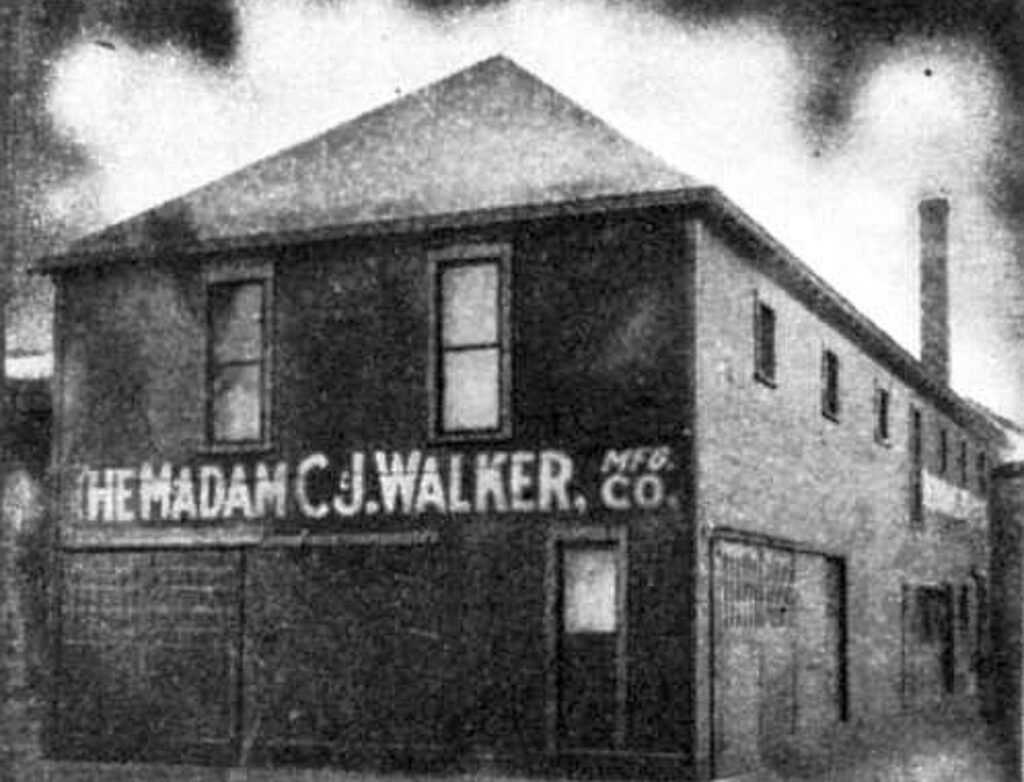
Walker didn’t just sell products—she built infrastructure. She opened factories. She purchased real estate. She trained thousands of Black women as sales agents, not as servants but as entrepreneurs, teaching them financial literacy, confidence, and independence in a society that wanted them invisible.
Her agents—called “Walker Agents”—earned commissions, owned businesses, traveled the country, and sent their children to school. At a time when Black labor was exploited and controlled, she created ownership.
And that was the real threat.
By the early 1900s, Walker had built a national brand. She employed thousands. She reinvested heavily into Black institutions—schools, churches, newspapers, and civil rights causes. She donated to anti-lynching campaigns when silence was safer. She funded Black education when the state refused to.
She understood something America still struggles to admit:
Wealth is not about money.
It’s about leverage.
When she built her mansion, Villa Lewaro, in New York, it wasn’t indulgence—it was strategy. A visible declaration that Black excellence could not be hidden, that success did not need white approval to be legitimate.
The backlash was predictable.
White media minimized her. Historians downplayed her. The phrase “self-made” was twisted to exclude her, even though she built from literal nothing. For decades, her story was softened, diluted, reduced to “hair care” instead of what it truly was:
A masterclass in Black capitalism.
Madam C.J. Walker didn’t just get rich—she redistributed power.
She created a blueprint modern America still refuses to teach:
• Control production
• Own distribution
• Train your people
• Reinvest into the community
• Use wealth as a weapon against injustice
When she died in 1919, she was one of the wealthiest women in the country—Black or white. But more importantly, she left behind a network of educated, financially independent Black women who knew their value and refused to shrink.
That was her real inheritance.
Today, her name is finally resurfacing, often stripped of its sharpest edges, packaged as inspiration without instruction. But Madam Walker was not a motivational quote. She was a warning.
A warning of what happens when Black people are left alone long enough to build.
Her life answers a question America still avoids:
What would this country look like if Black builders had never been sabotaged?
The answer is uncomfortable.
So they buried the evidence.
But history has a habit of resurfacing when the moment demands it.
And right now—when ownership is once again the dividing line between survival and struggle—Madam C.J. Walker’s story isn’t just history.
It’s instruction.
❤️ Support Independent Black Media
Black Dollar & Culture is 100% reader-powered — no corporate sponsors, just truth, history, and the pursuit of generational wealth.
Every article you read helps keep these stories alive — stories they tried to erase and lessons they never wanted us to learn.
Slug:
madam-cj-walker-first-self-made-black-woman-millionaire
Meta Description:
Madam C.J. Walker was the first self-made Black woman millionaire, building a business empire from nothing while empowering thousands of Black women and reshaping American economic history.