
How to Invest in ETFs for Beginners (Step-by-Step)
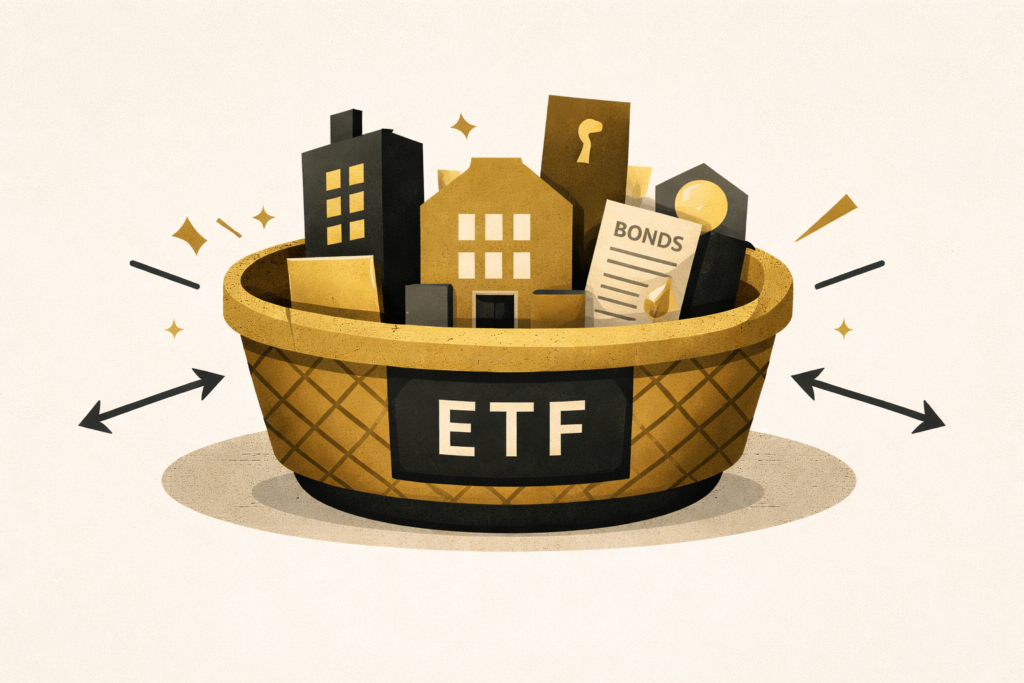
Most people don’t avoid investing because they’re lazy.They avoid it because Wall Street made it sound complicated on purpose. Charts, jargon, talking heads, and fear — all designed to make everyday people feel like investing is something other people do. People with suits, connections, or insider knowledge. The truth is much simpler. Exchange-traded funds — ETFs — were created so regular people could build wealth without needing to guess the next hot stock, time the market perfectly, or sit in front of screens all day. If you understand the basics and stay consistent, ETFs can quietly do the heavy lifting for you. This guide walks you through exactly how to invest in ETFs as a beginner, step by step. 1. What an ETF Actually Is (Plain English) An ETF (exchange-traded fund) is a collection of investments bundled together into one product that trades on the stock market. Instead of buying one company at a time, an ETF lets you buy small pieces of many companies at once. For example: When you buy an ETF, you’re not betting on one company — you’re betting on entire markets. That’s why ETFs are beginner-friendly: they reduce risk through diversification. 2. Why ETFs Are Ideal for Beginners ETFs solve many of the problems that stop people from investing in the first place. Low CostMost ETFs charge extremely low fees compared to traditional mutual funds. Over time, lower fees mean more money stays in your pocket. Instant DiversificationOne purchase can spread your money across dozens, hundreds, or even thousands of assets. Simple to UnderstandYou don’t need to analyze earnings reports or follow daily stock news. FlexibleETFs can be bought and sold just like stocks during market hours. For beginners, ETFs remove complexity without sacrificing growth. 3. Before You Invest: Set the Foundation Before buying any ETF, handle three basics first. Emergency CushionHave some cash set aside. Even $500–$1,000 helps prevent you from pulling investments out at the wrong time. High-Interest DebtCredit cards charging 20% interest will erase investment gains faster than the market can grow them. Clear GoalKnow why you’re investing. Retirement. Long-term wealth. Financial freedom. The goal determines how aggressive or conservative you should be. Investing works best when it supports your life — not when it creates stress. 4. Choose the Right Type of Account You don’t buy ETFs directly — you buy them through an account. The two main options: Taxable Brokerage AccountBest for flexibility. You can invest, withdraw, and add money anytime. You’ll pay taxes on gains. Retirement Accounts (IRA / Roth IRA / 401k)Designed for long-term wealth. Tax advantages make these powerful if you don’t need the money soon. If you’re unsure, many beginners start with a taxable brokerage and later add retirement accounts as income grows. 5. Understand Risk Without Fear Risk isn’t the enemy — misunderstanding it is. Stocks go up and down. That’s normal. ETFs smooth this volatility by spreading risk across many assets. As a beginner, your biggest risk is not investing at all. General rule: Time reduces risk. Panic increases it. 6. Beginner-Friendly ETF Categories You don’t need dozens of ETFs. Most beginners do well starting with just a few types. Total Market ETFsTrack the entire U.S. stock market. Broad, simple, effective. S&P 500 ETFsFocus on America’s largest companies. Historically strong long-term growth. International ETFsExpose you to markets outside the U.S. for global diversification. Bond ETFsProvide stability and income. Useful as your portfolio grows. Dividend ETFsFocus on companies that pay consistent dividends, offering income alongside growth. You don’t need everything — just balance. 7. How Much Money Do You Need to Start? There is no minimum “wealth level” to begin. Many ETFs allow: What matters is consistency, not size. A small amount invested regularly beats a large amount invested once and forgotten. 8. The Power of Dollar-Cost Averaging Dollar-cost averaging means investing the same amount on a schedule — regardless of market conditions. This approach: Markets reward patience, not prediction. 9. How to Place Your First ETF Trade The mechanics are simple. Once purchased, the real work is doing nothing. Overtrading hurts beginners more than market downturns. 10. How Often Should You Check Your Investments? Not often. Checking daily leads to emotional reactions. Long-term investing doesn’t require constant attention. A healthy rhythm: Wealth grows quietly — not through constant movement. 11. Common Beginner Mistakes to Avoid Chasing hypeIf everyone is talking about it, the opportunity is often already priced in. OvercomplicatingMore ETFs doesn’t mean better results. Selling during downturnsMarket drops are normal. Selling locks in losses. Ignoring feesSmall percentages compound over time — in either direction. Simplicity wins. 12. The Long View: Why ETFs Build Quiet Wealth ETFs don’t promise overnight riches. They promise something better: ownership, participation, and compounding over time. Many everyday investors built wealth not by brilliance, but by staying invested through recessions, booms, crashes, and recoveries. The market rewarded discipline, not drama. This is how wealth is built when no one is watching. Final Thought: Start Small, Stay Consistent You don’t need permission to invest.You don’t need perfect timing.You don’t need expert predictions. You need a plan, patience, and consistency. ETFs allow everyday people to participate in systems once reserved for institutions. Used correctly, they become quiet tools of freedom — growing in the background while you live your life. The best time to start was yesterday.The second best time is today. Focus Keyphrase how to invest in ETFs for beginners Slug how-to-invest-in-etfs-for-beginners Meta Description Learn how to invest in ETFs for beginners with this step-by-step guide from Black Dollar & Culture. Understand ETFs, reduce risk, and build long-term wealth with confidence.
From Black Wall Street to Wall Street — The Wealth Journey They Tried to Hide

Word Count: ~1,250** America has always had two financial stories:One written in New York’s skyscrapers…And one written in the dust roads of Tulsa’s Greenwood District. But what most people don’t realize is this:The mindset, brilliance, and structure of Black Wall Street didn’t die in 1921 — it lives inside today’s Black entrepreneurs, investors, and wealth-builders. This is the journey nobody talks about:How we went from owning our own economy to learning the rules of their economy — and how we’re reclaiming both. 1. Black Wall Street Was America’s First Financial Blueprint Long before analysts, hedge funds, and market forecasts, Black Wall Street operated on principles Wall Street would later celebrate: Doctors, lawyers, tailors, pilots, barbers, real estate developers — all within walking distance.Greenwood wasn’t just rich.It was organized. And that’s the secret America never wanted us to know. 2. The Fall Was Violent — But the Model Was Brilliant The Tulsa Massacre burned buildings, businesses, and dreams.But it never burned the blueprint. Families who fled Greenwood carried their knowledge, discipline, and structure into cities like Chicago, Detroit, Oakland, and New York. And slowly, the mindset of Black ownership made its way into Wall Street itself — not through acceptance, but through relentless determination. 3. Cracking the Code: How Black America Entered Wall Street Entry wasn’t given.It was fought for. From the first Black stockbrokers on Wall Street to the rise of: We didn’t just “join” Wall Street — we forced the doors open and built new ones. Today, more Black investors are entering the market than ever before, proving that once the knowledge gap closes, the wealth gap follows. 4. The Same Principles Still Win Today The same formulas that made Greenwood powerful are the ones that build wealth in today’s markets: ✔ Ownership over labor Greenwood built businesses; Wall Street buys them. ✔ Community investing Greenwood circulated the dollar; today we invest in Black-owned funds and enterprises. ✔ Family wealth structure Greenwood families passed businesses down; today we pass down trusts, stocks, and insurance-backed assets. ✔ Economic collaboration Greenwood had co-ops and community lenders; today we build investment groups, business circles, and mastermind networks. Nothing changed about what works — only the environment changed. 5. From Main Street to Markets: How You Build the Bridge If Black Wall Street taught us ownership, Wall Street teaches us leverage. To build wealth in the modern world, you need both. Here’s how to combine them: 1. Start with Ownership (Black Wall Street mindset) Ownership is the foundation. 2. Multiply with Markets (Wall Street strategy) The markets are the multiplier. 3. Protect It (Legacy strategy) This is how you preserve what you build. 6. History Didn’t End When the Fire Started — and Neither Did We They burned the buildings.They didn’t burn the brilliance. Today’s Black financial movement — from YouTube creators to fintech innovators, investors, entrepreneurs, and educators — is the modern continuation of the spirit of Greenwood. We’re not rebuilding one district.We’re creating a nationwide ecosystem of Black wealth-builders. Final Word: From One Wall Street to Another Black Wall Street showed us the power of ownership.Wall Street shows us the power of leverage. When we combine the two, we don’t just build wealth —we build an economic legacy that no system, no fire, no barrier can erase. Don’t just learn the markets — master the mindset.That’s how we rise from surviving their system to building our own. #BlackWallStreet #BlackWealth #StockMarket #GenerationalWealth #BlackDollarAndCulture
Stock Market News: Dow Futures Slump After Trump’s Tariff Announcement
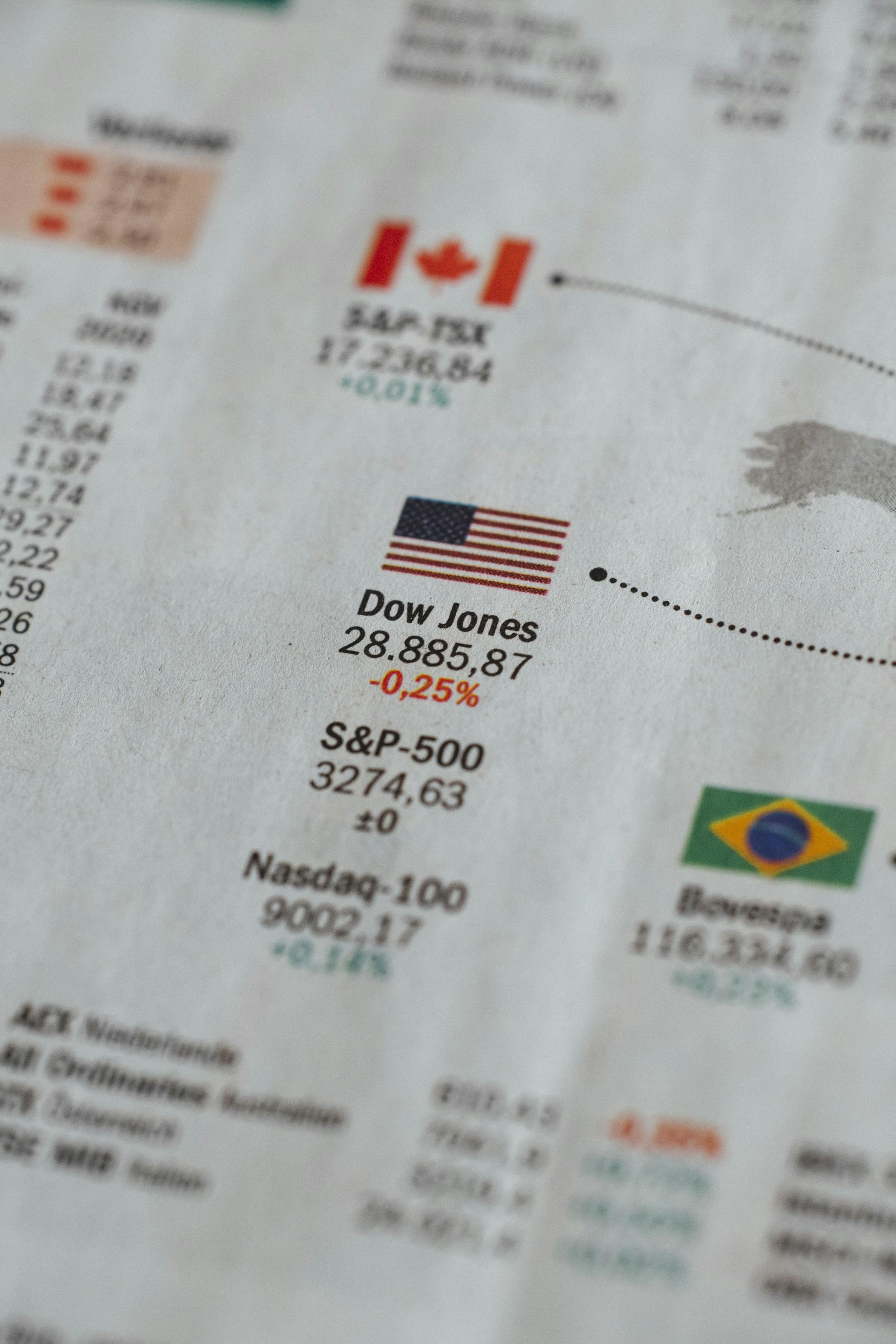
Overview of Trump’s Tariff Announcement On [insert date of announcement], President Donald Trump unveiled a significant change in economic policy regarding tariffs, which is poised to reshape various sectors within the finance landscape. The administration proposed new tariffs aimed at a broad spectrum of imported goods, with particular emphasis on products originating from [specific countries or regions]. This decision is underpinned by the administration’s ongoing effort to bolster American manufacturing and protect domestic industries from what it perceives as unfair trade practices by foreign competitors. According to the details made public, the proposed tariffs, which are set to apply to a range of goods, will primarily impact industries such as steel, aluminum, and technology. The rationale behind these tariffs is rooted in the desire to enhance domestic production capabilities, foster job creation, and improve the overall trade balance. Proponents of the measure argue that these tariffs will curb the influx of cheaper foreign goods that undermine American manufacturers, thereby stimulating local economic growth. However, the announcement of these tariffs has sparked considerable debate about their broader implications for global trade relations. Critics warn that implementing such measures could lead to retaliatory actions from affected countries, potentially inciting a trade war that may disrupt established networks. Financial analysts are closely monitoring the market reaction, as shifts in trade policies can reverberate across industries and ultimately influence consumer prices. The news of Trump’s tariff announcement has led many investors to reassess their strategies, as they navigate the uncertain waters of international commerce in light of such sweeping economic measures. Market Reaction to the Announcement The announcement made by President Donald Trump on April 2, 2025, regarding the imposition of new tariffs, elicited a notable reaction in the stock market. Following the news, U.S. stock index futures experienced a significant downturn. Notably, the Dow futures, which stood at a promising 235-point advance earlier in the day, swiftly succumbed to investor apprehension, plunging sharply after the tariff revelations. This immediate reaction serves as a critical indicator of market sentiment, reflecting broader concerns within the financial sector regarding the implications of the proposed trade measures. Investors swiftly reevaluated their positions, leading to increased selling pressure across various sectors. The tariff announcement starkly highlighted the volatility that often accompanies government policy changes, particularly those related to international trade. Many market participants feared that the tariffs could exacerbate existing trade tensions, creating uncertainty that may hinder economic growth. Consequently, the value of stocks began to tumble, indicating a widespread lack of confidence among investors navigating the unpredictable landscape of tariffs and trade relations. Incorporating real-time market data, it became evident that sectors most vulnerable to tariff impacts, such as manufacturing and technology, experienced pronounced declines. Graphical representations of market trends during this period reveal the sharp divergence in stock prices, amplifying concerns regarding future economic conditions. The lasting sway of Trump’s tariff policy continues to shape the stock market dynamics, prompting investors to stay alert to subsequent developments that may influence finance and trade relations. As the news unfolded, analysts began reassessing their projections, determining how such tariff implementations could impact corporate earnings and market valuations in the coming months. This ongoing narrative around tariffs and their effects not only influences stock behavior but also shapes the overall economic climate moving forward. Economic Implications of Tariffs President Donald Trump’s tariff announcements have far-reaching economic implications that resonate across various sectors of the economy. Tariffs are essentially taxes imposed on imported goods, which can lead to an increase in prices for consumers. The rationale behind these tariffs often centers around protecting domestic industries from foreign competition. However, while they may benefit specific sectors, the ripple effects can be detrimental to the broader economy. One immediate impact of tariffs is the potential increase in consumer prices. When import costs rise, companies typically pass on these expenses to consumers, resulting in higher prices for goods. This inflationary pressure can erode purchasing power and shift consumer behavior, leading to reduced spending in other sectors. As prices rise, consumers may opt for cheaper alternatives or cut back on discretionary spending, which can ultimately undermine economic growth. Further complicating matters is the likelihood of retaliatory actions from trading partners affected by these tariffs. When the U.S. imposes tariffs, countries impacted may respond with their own tariffs on American goods, which can hurt exporters and threaten jobs in those sectors. For instance, industries that predominantly rely on exports may face declining demand overseas, stifling their growth and potentially resulting in layoffs. The uncertainty surrounding tariffs can also influence overall business investments. Companies may hesitate to invest in expansion when faced with unpredictable trade policies. Additionally, the labor market may feel the strain as some industries contract, leading to higher unemployment rates. As the tariffs drive inflation, the Federal Reserve may find it challenging to navigate monetary policy, further compounding the economic uncertainties. In conclusion, while tariffs may be designed to safeguard certain U.S. industries, their broader economic implications can include increased consumer prices, potential job losses, and decreased economic growth. The interplay of these factors reflects the complexity of international trade policies and their profound impact on the U.S. economy. Looking Ahead: What This Means for Investors The recent announcement of tariffs by President Donald Trump has sent ripples through the stock market, prompting investors to reassess their strategies moving forward. As finance experts weigh in, it is clear that the implications of these announcements could reverberate across multiple sectors, potentially influencing investor sentiment and market stability. The immediate effects of tariffs can lead to heightened volatility as stocks react to changing trade dynamics; however, understanding the longer-term impacts is crucial for effective investing. In the realm of finance, sectors such as manufacturing, technology, and agriculture are poised to experience differing levels of impact from tariff changes. For instance, manufacturing could face increased costs due to changes in imported materials, whereas certain agricultural sectors may find new export opportunities as markets adjust to the tariffs imposed. Investors are advised to closely monitor these