
George Bridgetower: The Inspiring Connection with Beethoven
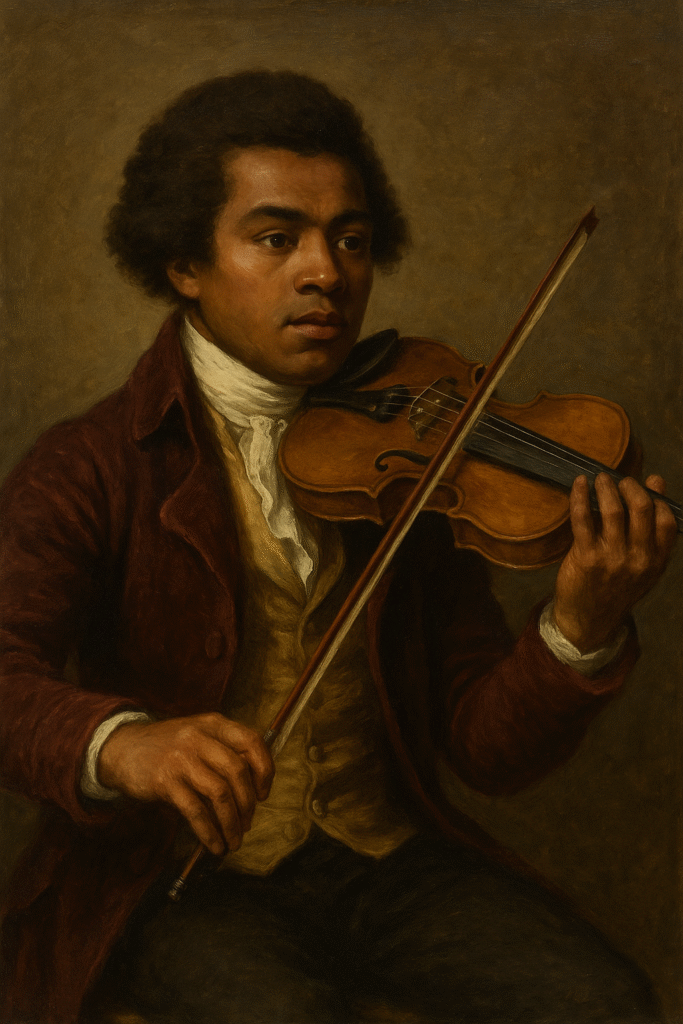
The Life and Legacy of George Bridgetower George Bridgetower, born in 1780, emerged as one of the noteworthy child prodigies of his time, captivating audiences with his exceptional talent as a violinist. His multicultural heritage played a pivotal role in shaping his artistic identity. The son of a Barbadian father and a Polish mother, Bridgetower’s unique background not only influenced his musical style but also allowed him to navigate diverse cultural landscapes in his career. From an early age, he demonstrated remarkable proficiency on the violin, which led to a swift rise in the musical circles of Europe. Bridgetower’s early years were spent in the vibrant cosmopolitan atmosphere of London, where he was exposed to various musical influences. His talent was recognized at a young age, and he received tutelage from prominent figures that honed his skills. By the late 18th century, he was not only performing in prestigious venues but also composing music that showcased his innovative spirit. His contributions significantly enriched the classical genre, as he seamlessly blended different musical elements that reflected his multicultural upbringing. As a performer, Bridgetower was known for his charismatic stage presence and technical prowess. He captured the attention of music patrons and was a prominent figure in the concerts of his era. It was this acclaim that paved the way for his notable collaboration with Ludwig van Beethoven. Their connection is often highlighted as a prime example of artistic synergy in classical music history. Bridgetower’s rise as a violinist not only set a precedent for future multicultural musicians but also left an enduring legacy that celebrates the intersection of diverse influences in classical music. The Meeting of Musical Minds: Bridgetower and Beethoven The remarkable relationship between George Bridgetower and Ludwig van Beethoven provides a fascinating insight into a pivotal moment in the evolution of classical music. The two first met in 1803 in Vienna, a city that was experiencing a cultural renaissance. Bridgetower, a prodigious violinist of mixed heritage, was already gaining recognition for his virtuosic performances. Beethoven, at that time, was solidifying his reputation as a revolutionary composer, and the convergence of these two talents would lead to a significant artistic collaboration. This serendipitous meeting occurred during a private concert that Beethoven hosted. Intrigued by Bridgetower’s artistic prowess and technical skills on the violin, he invited the young musician to perform some of his works. This was the catalyst for a friendship that allowed both artists to explore new creative horizons. Their partnership culminated in the composition of the “Sonata for Piano and Violin in A Major, Op. 47,” more famously known as the Kreutzer Sonata. This piece would ultimately redefine the violin repertoire and highlight the artistic synergy between them. The Kreutzer Sonata not only showcases Beethoven’s innovative spirit but also encapsulates Bridgetower’s virtuosity, with its demanding passages and intricate dialogues between the violin and piano. The premiere of the work in 1803 was a testament to their collaborative efforts, characterized by an exhilarating performance that resonated deeply with audiences. Anecdotes from that era suggest that Bridgetower’s interpretations of Beethoven’s complex compositions inspired the maestro, encouraging him to push the boundaries of conventional music. The mutual respect and admiration between the two musicians were evident both in their performances and in their personal interactions, as they forged a bond that transcended mere collaboration, embodying a meeting of like-minded geniuses. The Kreutzer Sonata: A Milestone in Classical Music The Kreutzer Sonata, officially known as Violin Sonata No. 9 in A major, Op. 47, represents a critical juncture within the landscape of classical music, highlighting the exceptional collaboration between George Bridgetower and Ludwig van Beethoven. Composed in 1803, this sonata not only showcases the technical prowess of the violin but also embodies a deep emotional resonance, establishing its significance beyond mere notes and rhythms. The technical challenges presented by the Kreutzer Sonata are formidable. The piece demands extraordinary skill from the violinist, including rapid passages, complex fingerings, and intricate bowing techniques. These elements push the boundaries of the instrument and challenge musicians to transcend their capabilities. Additionally, the sonata’s structure, consisting of three contrasting movements, enables performers to explore a vast emotional spectrum, from the vigorous and spirited Allegro to the Intimate Andante con Variazioni, culminating in a dynamic Presto. Such diversity not only showcases Beethoven’s compositional ingenuity but also reflects the rich interpretative possibilities available to those who have taken on the sonata’s mantle over the years. The significance of the Kreutzer Sonata is further amplified by its historical context and the bond it represents between Bridgetower and Beethoven. While the original performance was celebrated, the sonata has undergone various interpretations that have continued to enrich its legacy. Notably, following an initial falling-out between the composer and the performer, Beethoven famously dedicated the piece to Rodolphe Kreutzer, another violinist. This shift in dedication did not diminish the impact of the sonata but rather expanded its reach to a broader audience of musicians and enthusiasts. Throughout its history, the Kreutzer Sonata has been interpreted by numerous renowned artists, affirming its status as a pillar of the violin repertoire and a testament to the enduring creativity and collaborative spirit between Bridgetower and Beethoven. Celebrating the Contributions of George Bridgetower Today In recent years, there has been a notable resurgence of interest in the life and work of George Bridgetower within contemporary music circles. This renewed focus highlights the significance of Bridgetower’s contributions to classical music and serves as a reminder of the rich diversity present within the history of the genre. Initiatives across various platforms have aimed to honor his legacy, including performances, recordings, and educational programs that feature his compositions and story. Several music festivals and concert series have consciously included works by George Bridgetower in their repertoires, bringing his music to new audiences. Furthermore, recent recordings have sought to shed light on his creations, ensuring that they are not merely footnotes in the annals of music history but are celebrated as integral components of the classical canon. These efforts reflect