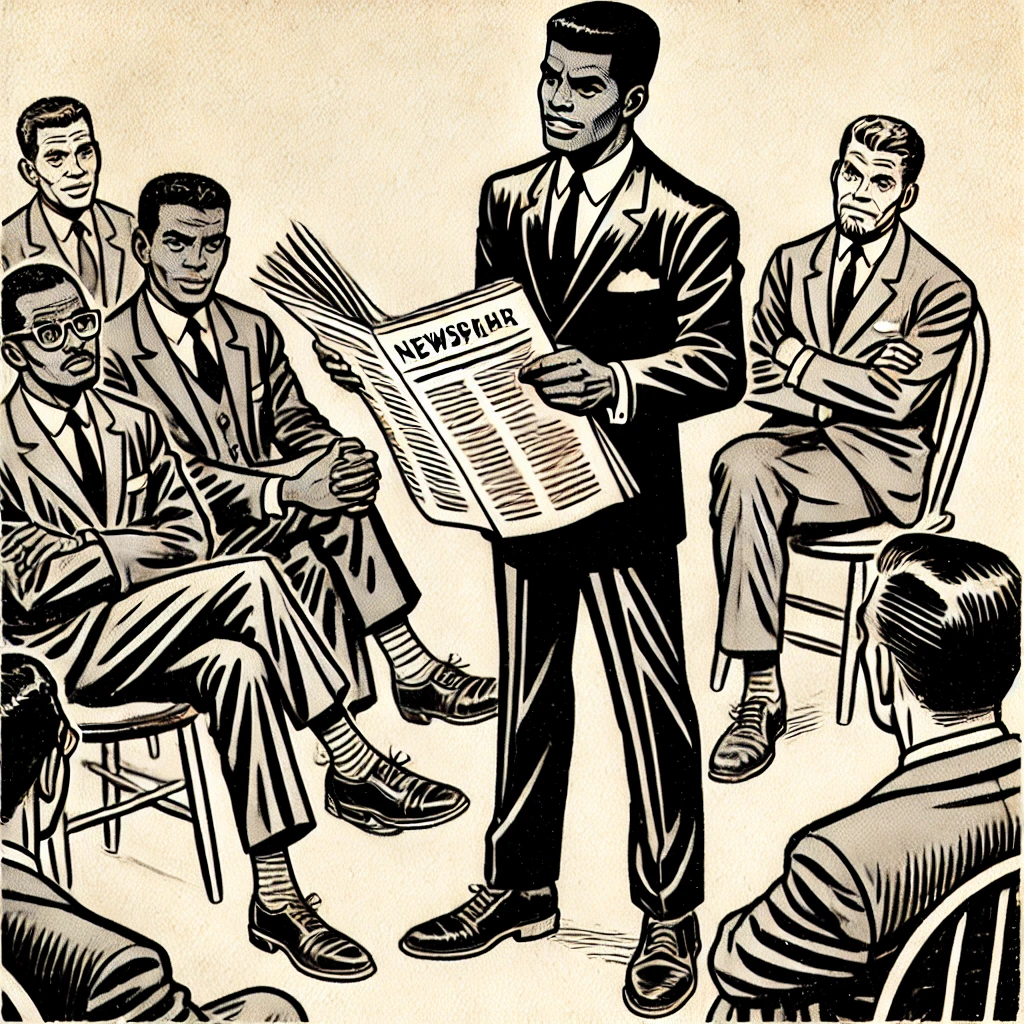
Bessie Coleman: The Woman Who Refused to Stay Grounded

Bessie Coleman was born on January 26, 1892, in Atlanta, Texas, at the intersection of poverty, racism, and rigid limitation. She was the tenth of thirteen children born to George and Susan Coleman, a family of sharecroppers whose lives were shaped by the unforgiving realities of post-Reconstruction America. Cotton fields, long days, and scarce opportunity defined her early years. Education existed, but barely—one-room schoolhouses, worn textbooks, and interrupted learning whenever farm labor demanded it. Yet even in those conditions, Bessie showed an early hunger for knowledge, discipline, and something beyond the horizon. Her father eventually left the family, returning to Indian Territory in Oklahoma in search of a better life, while Bessie remained with her mother, helping raise her siblings and working the fields. Poverty was not an abstract concept to her; it was lived daily. But so was resilience. She excelled in school when she could attend, eventually saving enough money to enroll at Langston University in Oklahoma. Her time there was short—financial hardship forced her to withdraw—but the seed of ambition had already taken root. She would not accept a life dictated by circumstance. In her early twenties, Bessie moved to Chicago, joining the Great Migration of Black Americans seeking opportunity beyond the South. There, she worked as a manicurist, a job that placed her in close proximity to conversation, news, and stories from beyond her world. It was in a barbershop that her life took its decisive turn. She listened as Black men returned from World War I spoke of flying in Europe. They talked about airplanes, freedom, and skies that did not feel segregated. Her brothers, particularly one who had served in France, taunted her—telling her that French women could fly planes while American Black women could not. Instead of discouraging her, the insult ignited something irreversible. Bessie Coleman decided she would fly. The problem was America had no intention of letting her do so. Every aviation school she applied to rejected her. The rejections were absolute—no appeals, no alternatives. She was dismissed not for lack of intelligence or ability, but because she was both Black and a woman. In the early 20th century, flight was considered the domain of white men only. Rather than accept the denial, Bessie made a decision that defined her legacy: if America would not teach her, she would leave America. She enrolled in French language classes, saved her earnings meticulously, and gained sponsorship from influential Black newspapers, including the Chicago Defender. In 1920, she sailed to France. This alone was radical—an unmarried Black woman traveling abroad for professional training at a time when many Americans never left their home counties. In France, she trained at the Caudron Brothers’ School of Aviation, one of the most respected flight schools in the world. Flying in the 1920s was not glamorous. Planes were unstable, cockpits open to the elements, and crashes common. Training involved risk at every step. Bessie endured crashes, injuries, and intense discipline. But she persisted. On June 15, 1921, she earned her international pilot’s license from the Fédération Aéronautique Internationale, becoming the first Black woman in the world to do so—and one of the first Americans of any race to hold that distinction. When Bessie returned to the United States, her achievement should have made her a national hero. Instead, she encountered the same walls she had left behind. Airlines would not hire her. Commercial aviation opportunities were closed. Once again, racism tried to ground her ambitions. This time, she refused to stop moving forward. Bessie turned to barnstorming—performing aerial stunts at airshows across the country. Loop-the-loops, dives, figure-eights—she mastered them all. But her performances were not about spectacle alone. They were statements. Every time she climbed into a cockpit, she challenged the idea that Black people belonged only on the ground. She attracted massive crowds, especially in Black communities, where many had never seen an airplane up close, let alone one piloted by a Black woman. She was also uncompromising in her principles. Bessie refused to perform at venues that enforced segregated seating. If Black spectators were forced to enter through back gates or sit separately, she would not fly. This stance cost her income and opportunities, but she would not trade dignity for exposure. To her, flight symbolized freedom, and freedom could not exist alongside humiliation. Her vision extended far beyond stunt flying. Bessie dreamed of opening a flight school for Black aviators—men and women—so future generations would not have to leave the country to learn what she had fought to access. She spoke publicly about this goal, emphasizing education, discipline, and ownership of the skies. She wanted Black pilots, Black mechanics, Black instructors—an aviation ecosystem independent of exclusionary systems. Tragically, that dream was cut short. On April 30, 1926, in Jacksonville, Florida, Bessie Coleman boarded a plane for a practice flight ahead of an upcoming airshow. The aircraft was piloted by her mechanic, William Wills. Bessie was not wearing a seatbelt because she was scouting the terrain below, preparing for a parachute jump she planned to perform later. Mid-flight, the plane experienced a mechanical failure—later determined to be caused by a loose wrench lodged in the engine. The aircraft went into a sudden nosedive. Bessie was thrown from the plane at 2,000 feet and died instantly. She was 34 years old. Moments later, the plane crashed, killing Wills as well. Her death sent shockwaves through Black communities across the country. Thousands attended her funeral in Chicago. Leaders, activists, and ordinary people mourned not just the loss of a woman, but the loss of a future she represented. She died without ever opening the flight school she envisioned, without seeing the aviation doors she cracked open fully swing wide. Yet her impact did not end with her life. Bessie Coleman became a symbol—of courage without permission, of ambition without apology. Her legacy inspired future generations of Black aviators, including the Tuskegee Airmen during World War II. Pilots flew in her honor. Schools, clubs, and scholarships were named
The Rubber That Bled Africa: How the Congo Funded Europe’s Rise

Europe’s modern rise did not begin in factories, parliaments, or banks. It began in the forests of Central Africa, where rubber vines wrapped around trees and human suffering wrapped around an entire civilization. Long before automobiles rolled across paved streets and before electricity lit European cities, the Congo was being drained—slowly, violently, and deliberately—to fuel an empire that the world would later call “progress.” In the late 1800s, as Europe raced into the Industrial Age, rubber became one of the most valuable resources on Earth. It powered bicycle tires, automobile wheels, electrical insulation, machinery belts, and military equipment. Demand exploded almost overnight, and with it came a question that Europe was determined to answer at any cost: where would the rubber come from? The answer was the Congo. What made the Congo especially vulnerable was not just its natural abundance, but its political erasure. At the Berlin Conference of 1884–85, European powers carved Africa into territories without African consent or presence. In one of history’s most grotesque land grabs, the Congo did not even become a Belgian colony at first—it became the personal property of King Leopold II of Belgium. A single man claimed control over a landmass nearly the size of Western Europe and renamed it the Congo Free State, though nothing about it was free. Leopold never set foot in the Congo. He did not need to. He ruled through violence, quotas, and terror, building a system that turned African lives into units of production. Villages were ordered to meet rubber quotas extracted from wild vines deep in the jungle. Failure was punished brutally. Hands were severed to prove bullets had not been wasted. Families were taken hostage. Entire communities were burned. Fear became policy. Violence became management. The rubber that arrived in Europe carried no visible bloodstains, but it was soaked in them. Each shipment represented countless hours of forced labor, starvation, mutilation, and death. Historians estimate that between 10 and 15 million Congolese people perished during Leopold’s rule—through execution, exhaustion, famine, and disease. This was not accidental. It was the cost of doing business. Meanwhile, Europe flourished. Belgium transformed. Infrastructure expanded. Wealth accumulated. Banks grew stronger. Industries advanced. Rubber profits poured into European development while Congo villages collapsed into silence. Roads and railways were built, not to connect African communities, but to remove resources faster. The Congo was never meant to be developed—only emptied. What made the system especially insidious was how it was marketed. Leopold presented himself to the world as a humanitarian, claiming to bring civilization, Christianity, and order to Africa. European newspapers repeated the lie. Investors believed it. Governments tolerated it. The suffering of African people was buried beneath propaganda and distance, hidden behind the language of “trade” and “progress.” But the truth could not stay hidden forever. Missionaries, journalists, and whistleblowers began documenting the atrocities. Photographs of mutilated Congolese men, women, and children leaked into the global consciousness. Testimonies described villages erased for missing quotas. International outrage grew. Eventually, pressure mounted enough that Belgium stripped Leopold of his personal control in 1908, officially turning the Congo into a Belgian colony. Yet the system did not disappear—it evolved. Forced labor continued under different names. Resource extraction persisted. Wealth still flowed outward, never inward. The rubber economy faded only when Southeast Asia began producing rubber more cheaply, not because African lives had suddenly gained value, but because exploitation found a more efficient location. Europe’s industrial foundations, however, were already laid. The bicycles, cars, machines, and infrastructure that symbolized modernity were built on African suffering that history textbooks rarely emphasize. Rubber was not just a material—it was a transfer of wealth, power, and future. The Congo lost generations. Europe gained centuries. Today, when people speak of Africa’s “underdevelopment,” they rarely mention how development was removed. They ask why nations struggle without acknowledging that their wealth was exported at gunpoint. The Congo was not poor—it was plundered. Its people were not unproductive—they were enslaved. Its land was not empty—it was emptied. And rubber was only the beginning. The same patterns would repeat with minerals, oil, gold, diamonds, and now the materials powering modern technology. The Congo continues to supply the world while remaining among the poorest nations on Earth, trapped in cycles designed long before independence. To understand Europe’s rise without understanding Congo’s suffering is to accept a lie. Progress did not happen in isolation. It happened through extraction, violence, and silence. The rubber that cushioned Europe’s journey into modernity crushed African lives beneath it. History remembers the factories. It remembers the kings. It remembers the empires. But it must also remember the blood-soaked vines in the Congo forests—where Africa bled so the modern world could move.
Robert Reed Church: The Black Man Who Became the South’s First Millionaire After Slavery
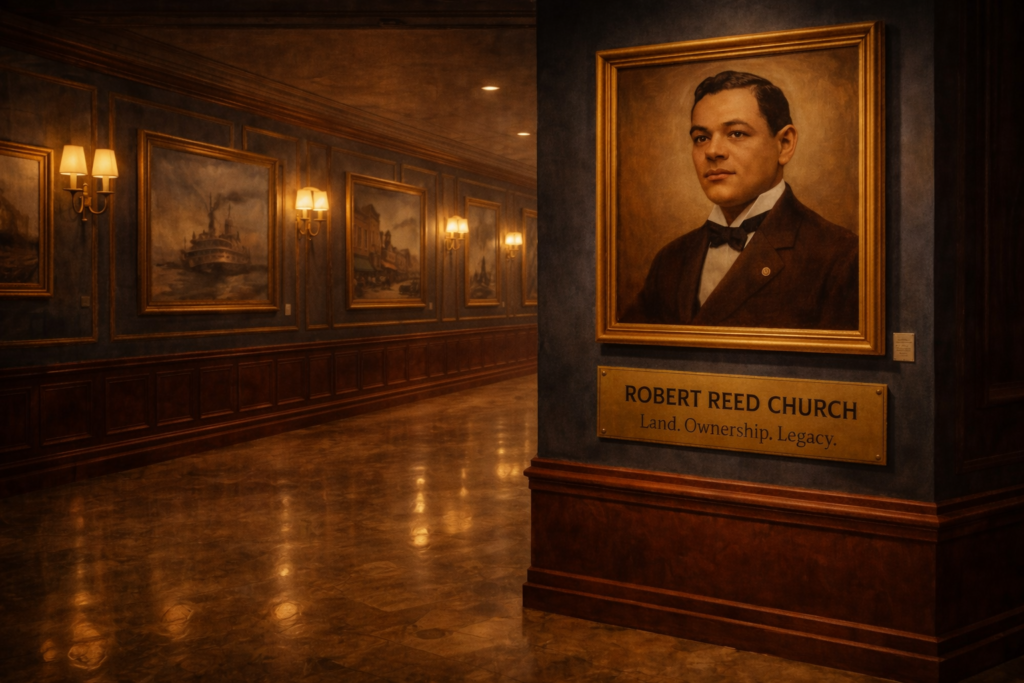
They don’t teach this story in schools because it disrupts a lie that America has spent centuries protecting—the lie that Black people never built wealth on their own, never mastered systems, never owned power before it was taken from them. Robert Reed Church did all three. Born enslaved in Mississippi in 1839, Robert Reed Church entered the world as property. His mother was enslaved. His father was a white steamboat captain who never publicly claimed him but quietly ensured that Church learned something most enslaved people were denied—how money moved. By the time emancipation arrived, Church was no longer just free. He was prepared. While many newly freed Black Americans were pushed into sharecropping—a system designed to trap them in permanent debt—Church made a different decision. He went where money flowed: the Mississippi River. As a young man, he worked on steamboats, not just as labor but as a businessman. He learned routes. He learned trade. He learned leverage. And most importantly, he learned land. After the Civil War, Memphis was chaos. Disease, political instability, and racial violence made white property owners panic. During the yellow fever epidemics of the 1870s, thousands fled the city. Property values collapsed. White landowners sold prime real estate for pennies just to escape. Robert Reed Church saw opportunity where others saw collapse. With cash saved from years of disciplined work and investing, Church bought land—lots of it. Downtown Memphis. Beale Street. Commercial corridors. Not farmland. Not scraps. Prime urban real estate. While others speculated, he owned. By the 1880s, Church was the largest Black landowner in the South. By the 1890s, he was worth over one million dollars—making him the first Black millionaire in the South after slavery, at a time when lynchings were public entertainment and Jim Crow was tightening its grip. But Church didn’t just build wealth for himself. He understood something most wealthy people do: money without community is fragile. He invested heavily in Black Memphis. He built Church Park and Auditorium, one of the largest Black-owned entertainment venues in the country. It hosted concerts, political meetings, conventions, and speeches by leaders like Booker T. Washington. When Black people were locked out of public spaces, Church created their own. He financed Black businesses when banks refused. He backed schools when the state neglected them. He used his influence to protect Black institutions during periods of racial terror—not with speeches, but with ownership and political pressure. And then came 1892. That year, Memphis exploded with racial violence after the lynching of three successful Black businessmen. Many Black residents fled the city, fearing massacre. Again, white landowners sold. Again, Robert Reed Church bought. His wealth grew not from exploitation—but from discipline, timing, and understanding systems. Church also understood legacy. His son, Robert Reed Church Jr., became one of the most powerful Black political figures in America, helping found the NAACP and turning Memphis into a center of Black political organization. This was not accidental. This was design. Robert Reed Church died in 1912, but his blueprint remains painfully relevant today. He proved that Black wealth was never impossible—only interrupted. He proved that land ownership is power. He proved that economic independence is louder than protest. And he proved that when Black people are allowed—even briefly—to operate without sabotage, they build cities. They erased his name because his existence is evidence. Evidence that Black Wall Streets didn’t appear by accident.Evidence that wealth can be built even in hostile systems.Evidence that the problem was never Black ability—but white interference. Robert Reed Church didn’t beg for inclusion. He bought the ground beneath the system—and stood on it. SEO Elements Slug:robert-reed-church-first-black-millionaire-south Meta Description:The untold story of Robert Reed Church, the first Black millionaire in the South after slavery, who built wealth through land ownership, discipline, and economic independence in Memphis.
How “White” Was Invented — And How Black People Were Branded in the Process
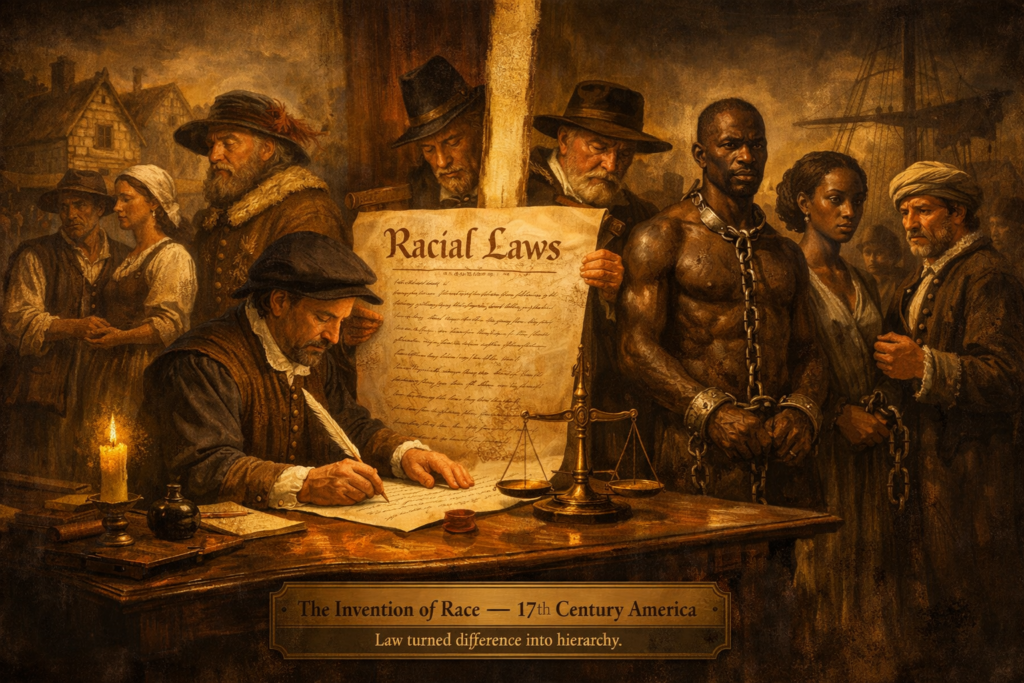
Before America existed, before plantations, before racial laws, and before the word “white” ever carried meaning, Europe was already brutal—but not divided by skin color. It was divided by power. In medieval Europe, no one woke up calling themselves white. That identity did not exist. A poor English farmer had nothing in common with a wealthy English lord, and no amount of shared skin tone could bridge that gap. Identity came from land, lineage, loyalty, and religion. You were Saxon or Norman, Irish or Frank, Catholic or Protestant, noble or peasant. Those labels determined your fate far more than complexion ever did. Most Europeans lived under a rigid system of hierarchy where kings and nobles owned land and everyone else existed to serve it. Serfs were bound to estates they would never own, working fields they could never profit from, paying taxes they could never escape. Their lives were short, their labor exploited, and their bodies disposable. Poverty was inherited. Wealth was protected. Freedom was rare. A peasant in England was closer in social status to an enslaved laborer than to a noble of his own nation. Religion sharpened these divisions even further. In Europe, belief defined belonging. Christian versus Muslim. Catholic versus Protestant. Christian versus Jewish. During the centuries when Africans and Arabs ruled much of Spain under Al-Andalus, darker-skinned people governed some of the most advanced cities in Europe. Cordoba and Granada had paved streets, libraries, and universities while much of northern Europe remained illiterate and rural. But when Christian kingdoms reclaimed Iberia during the Reconquista, they did more than seize land. They introduced a dangerous idea that would later shape the modern world: purity of blood. Spain’s “limpieza de sangre” system judged people not just by belief, but by ancestry. Converted Christians with African or Jewish lineage were still considered tainted. This was not yet whiteness, but it was the blueprint. Bloodlines were being ranked. Worth was becoming inherited. Humanity was being filtered through ancestry rather than character or faith. At the same time, Europeans themselves were being enslaved. Long before the transatlantic slave trade, bondage in Europe was common. Vikings captured and sold other Europeans across trade routes. Slavic peoples were enslaved so frequently that their name became the root of the word “slave.” Along the North African coast, thousands of Europeans were taken during raids and forced into labor within the Ottoman world. Enslavement was not racial—it was about power. Whoever controlled land, weapons, and law decided who was free. Everything changed when Europe reached the Americas. Colonial elites quickly learned a dangerous lesson: poor Europeans and Africans working together were a threat. Uprisings like Bacon’s Rebellion revealed that class solidarity could destabilize colonial power. The response was not justice, but invention. A new identity was created—one that had never existed before. “White.” Whiteness was not culture. It was not heritage. It was law. Colonial governments passed statutes that granted poor Europeans small privileges—access to land, lighter punishments, legal protections—while Africans were stripped of humanity permanently. Slavery became lifelong. Slavery became inherited. Freedom became tied to skin color. The racial categories of “white” and “black” were born together, serving opposite purposes within the same system. This invention worked exactly as intended. It divided laborers who might have united. It redirected anger away from elites and toward the enslaved. It gave poor Europeans a psychological wage in place of real economic power. They were no longer peasants or servants—they were white. And that label carried just enough status to protect the system that continued to exploit them. This is why understanding history matters. Because race was never about biology. It was about control. Whiteness was created to protect wealth, not people. Blackness was imposed to justify extraction, exploitation, and permanent subjugation. Once you understand this, the modern world begins to make sense—from wealth gaps to policing, from labor inequality to global power structures. The story we were taught was incomplete by design. But when you trace it back far enough, the truth becomes unavoidable. Race didn’t create hierarchy.Hierarchy created race. ❤️ Support Independent Black Media Black Dollar & Culture is 100% reader-powered — no corporate sponsors, just truth, history, and the pursuit of generational wealth. Every article you read helps keep these stories alive — stories they tried to erase and lessons they never wanted us to learn. Hashtags#BlackHistory #HiddenHistory #RaceWasInvented #Whiteness #BlackDollarAndCulture #Colonialism #PowerStructures #EconomicHistory #TruthOverMyths #GlobalHistory Slug:how-whiteness-was-invented-and-how-black-people-were-branded Meta Description:Discover how race was invented to protect power—how Europeans became “white,” how Black people were branded, and how hierarchy shaped the modern world.
Amenhotep III: The African Pharaoh Who Ruled Egypt at Its Absolute Peak
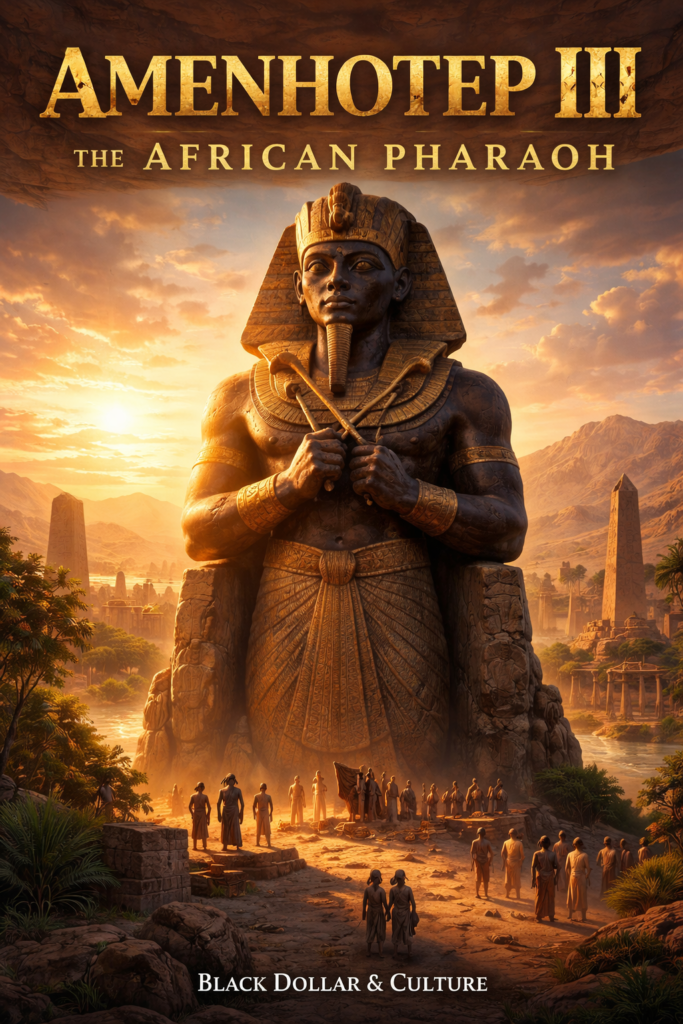
Long before decline, invasion, and distortion crept into the historical record, there was a moment when Egypt stood uncontested—politically, economically, culturally, and spiritually. That moment belonged to Amenhotep III. His reign was not built on constant warfare or desperate expansion, but on something far rarer in the ancient world: total dominance so complete that peace itself became a symbol of power. Under Amenhotep III, Egypt did not merely survive history—it defined it. He ascended the throne in the 14th century BCE, inheriting a kingdom already strong, but what he transformed it into was unprecedented. Egypt became the axis of the known world. Gold flowed through its cities like blood through arteries. Foreign kings did not challenge Egypt—they courted it. They sent tribute, daughters, luxury goods, and diplomatic letters not as equals, but as petitioners seeking favor from the African superpower seated along the Nile. This was not accidental. Amenhotep III ruled during a time when Nubian gold mines were fully operational, giving Egypt control over the most valuable resource of the Bronze Age. Gold was not symbolic—it was structural. It funded architecture on a scale never seen before, paid craftsmen whose skills bordered on divine, and allowed Egypt to project power without raising a sword. Where other empires conquered through fear, Egypt under Amenhotep III conquered through gravity. Everything was pulled toward it. The monuments tell the story even when the texts are ignored. Colossal statues rose from the earth not as propaganda, but as statements of reality. Temples were not hurried structures of defense but carefully planned expressions of eternity. The Colossi of Memnon—towering figures seated in silence—were not meant to intimidate enemies. They were meant to remind the world that Egypt, and its king, were permanent. These were not the works of a kingdom bracing for collapse, but of one utterly confident in its place atop human civilization. Amenhotep III did something few rulers in history ever achieved: he ruled so well that war became unnecessary. His foreign policy was built on diplomacy, marriage alliances, and economic leverage. The Amarna Letters—diplomatic correspondence between Egypt and other great powers—reveal foreign rulers openly begging for gold, addressing the pharaoh as a brother while knowing full well the imbalance between them. Babylon, Mitanni, Assyria—names that loom large in ancient history—all acknowledged Egypt’s supremacy during his reign. Inside Egypt, life reflected that stability. Art flourished, not as rigid symbolism but with softness, realism, and confidence. Faces gained individuality. Bodies showed movement and ease. This was the aesthetic of a society at peace with itself. Religion expanded as well, with Amenhotep III increasingly associated with divine attributes during his lifetime. He was not merely a king chosen by the gods—he was a living manifestation of cosmic order, Ma’at itself embodied in human form. It is no coincidence that his reign is remembered as the golden age. This was the apex—the point at which wealth, culture, spirituality, and global influence aligned perfectly. Everything before led to it. Everything after struggled to live up to it. Even his successors ruled in the long shadow he cast. His son, Akhenaten, would attempt to reshape religion entirely, not from weakness, but from the confidence inherited from a world already conquered by his father. Tutankhamun, whose name eclipsed Amenhotep III in modern popular culture, ruled a diminished echo of that greatness, remembered largely because the artifacts of his burial survived untouched. History, however, has a habit of obscuring African power when it becomes inconvenient. Amenhotep III is often reduced to a prelude, a name mentioned quickly before the so-called “interesting” period begins. But this framing is backwards. There is no later drama without his stability. There is no religious revolution without his wealth. There is no global Egypt without his diplomacy. He is not a footnote—he is the foundation. What makes Amenhotep III truly remarkable is not just what he built, but what he proved. He demonstrated that African civilization could dominate the world without perpetual violence. That wealth could be institutional, not extractive. That culture could be both sacred and luxurious. That leadership rooted in balance, not chaos, could sustain an empire at its absolute height. When Egypt is discussed as a mystery, as a marvel detached from Africa, Amenhotep III stands as a correction. His reign was unmistakably African in origin, power, and identity. The Nile was not a backdrop—it was the engine. The people were not passive laborers—they were participants in a civilization conscious of its greatness. This was not borrowed glory. It was built, refined, and ruled by Africans at the highest level humanity had yet seen. Amenhotep III did not rule during Egypt’s rise, nor its decline. He ruled at the peak—the summit where everything worked. And history has been trying to climb back there ever since. Slug: amenhotep-iii-african-pharaoh-egypt-absolute-peakMeta Description: Amenhotep III was the African pharaoh who ruled Egypt at its absolute peak of wealth, peace, diplomacy, and global power—an unmatched golden age in human history.
Madam C.J. Walker: The First Self-Made Black Woman Millionaire America Tried to Forget
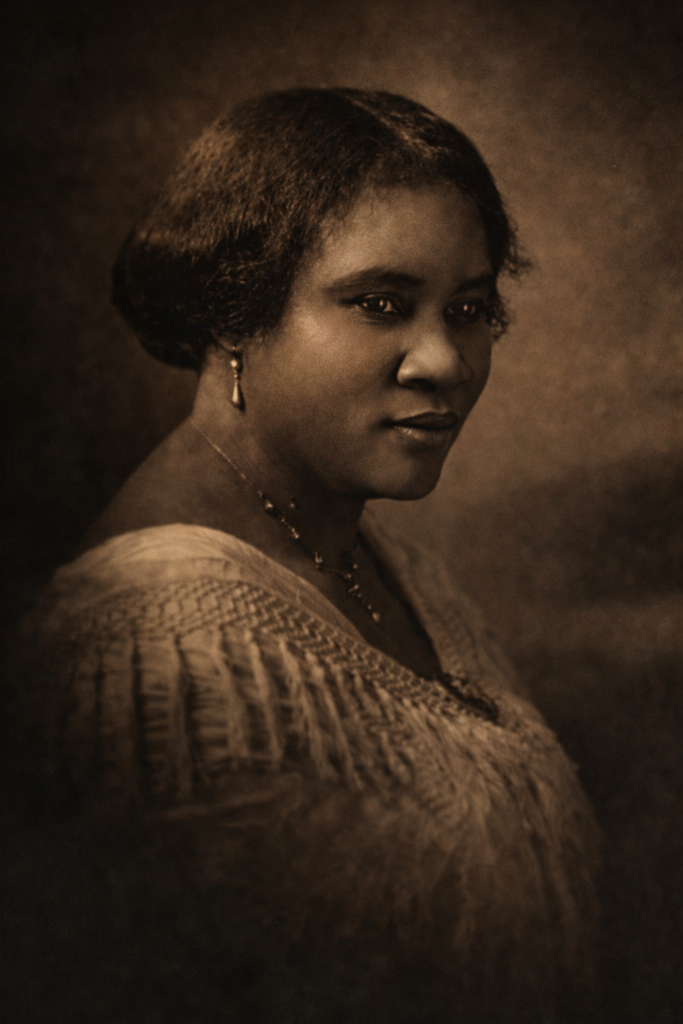
Before Silicon Valley. Before hedge funds. Before Wall Street started pretending it understood “self-made.”There was Madam C. J. Walker—a Black woman born into the ashes of slavery who built an empire so powerful it terrified the systems designed to keep her small. She was not handed opportunity.She was not invited into rooms.She was not protected by laws, banks, or sympathy. She built anyway. Born in 1867, just two years after the end of slavery, Sarah Breedlove entered a country that had legally ended bondage but economically perfected it. Her parents had been enslaved. Her childhood was marked by loss. Orphaned by seven, married by fourteen, widowed by twenty, and raising a daughter alone, she lived the kind of life America usually erases—not because it’s rare, but because it exposes the lie. The lie that success is granted fairly.The lie that hard work is enough—unless you own the system. Sarah worked as a washerwoman, scrubbing clothes for pennies while breathing in steam and chemicals that damaged her scalp so badly her hair began to fall out. But what others saw as humiliation, she treated like research. She listened. She observed. She experimented. And then she made a decision that would echo across generations: She stopped asking for permission. She studied hair care the same way financiers study markets. She learned chemistry, formulation, branding, and sales—without a degree, without capital, without protection. When she created her first successful hair product, she didn’t sell it quietly. She sold it boldly, face-to-face, door-to-door, Black woman to Black woman. She renamed herself Madam C.J. Walker—not to impress white America, but to signal authority to her own people. In an era where Black women were called “girl” well into old age, she crowned herself Madam and dared anyone to object. They didn’t know what to do with her. Walker didn’t just sell products—she built infrastructure. She opened factories. She purchased real estate. She trained thousands of Black women as sales agents, not as servants but as entrepreneurs, teaching them financial literacy, confidence, and independence in a society that wanted them invisible. Her agents—called “Walker Agents”—earned commissions, owned businesses, traveled the country, and sent their children to school. At a time when Black labor was exploited and controlled, she created ownership. And that was the real threat. By the early 1900s, Walker had built a national brand. She employed thousands. She reinvested heavily into Black institutions—schools, churches, newspapers, and civil rights causes. She donated to anti-lynching campaigns when silence was safer. She funded Black education when the state refused to. She understood something America still struggles to admit: Wealth is not about money.It’s about leverage. When she built her mansion, Villa Lewaro, in New York, it wasn’t indulgence—it was strategy. A visible declaration that Black excellence could not be hidden, that success did not need white approval to be legitimate. The backlash was predictable. White media minimized her. Historians downplayed her. The phrase “self-made” was twisted to exclude her, even though she built from literal nothing. For decades, her story was softened, diluted, reduced to “hair care” instead of what it truly was: A masterclass in Black capitalism. Madam C.J. Walker didn’t just get rich—she redistributed power. She created a blueprint modern America still refuses to teach: • Control production• Own distribution• Train your people• Reinvest into the community• Use wealth as a weapon against injustice When she died in 1919, she was one of the wealthiest women in the country—Black or white. But more importantly, she left behind a network of educated, financially independent Black women who knew their value and refused to shrink. That was her real inheritance. Today, her name is finally resurfacing, often stripped of its sharpest edges, packaged as inspiration without instruction. But Madam Walker was not a motivational quote. She was a warning. A warning of what happens when Black people are left alone long enough to build. Her life answers a question America still avoids: What would this country look like if Black builders had never been sabotaged? The answer is uncomfortable.So they buried the evidence. But history has a habit of resurfacing when the moment demands it. And right now—when ownership is once again the dividing line between survival and struggle—Madam C.J. Walker’s story isn’t just history. It’s instruction. ❤️ Support Independent Black Media Black Dollar & Culture is 100% reader-powered — no corporate sponsors, just truth, history, and the pursuit of generational wealth. Every article you read helps keep these stories alive — stories they tried to erase and lessons they never wanted us to learn. Slug:madam-cj-walker-first-self-made-black-woman-millionaire Meta Description:Madam C.J. Walker was the first self-made Black woman millionaire, building a business empire from nothing while empowering thousands of Black women and reshaping American economic history.
The Significance of December 19, 1865: A Pivotal Moment in Black History
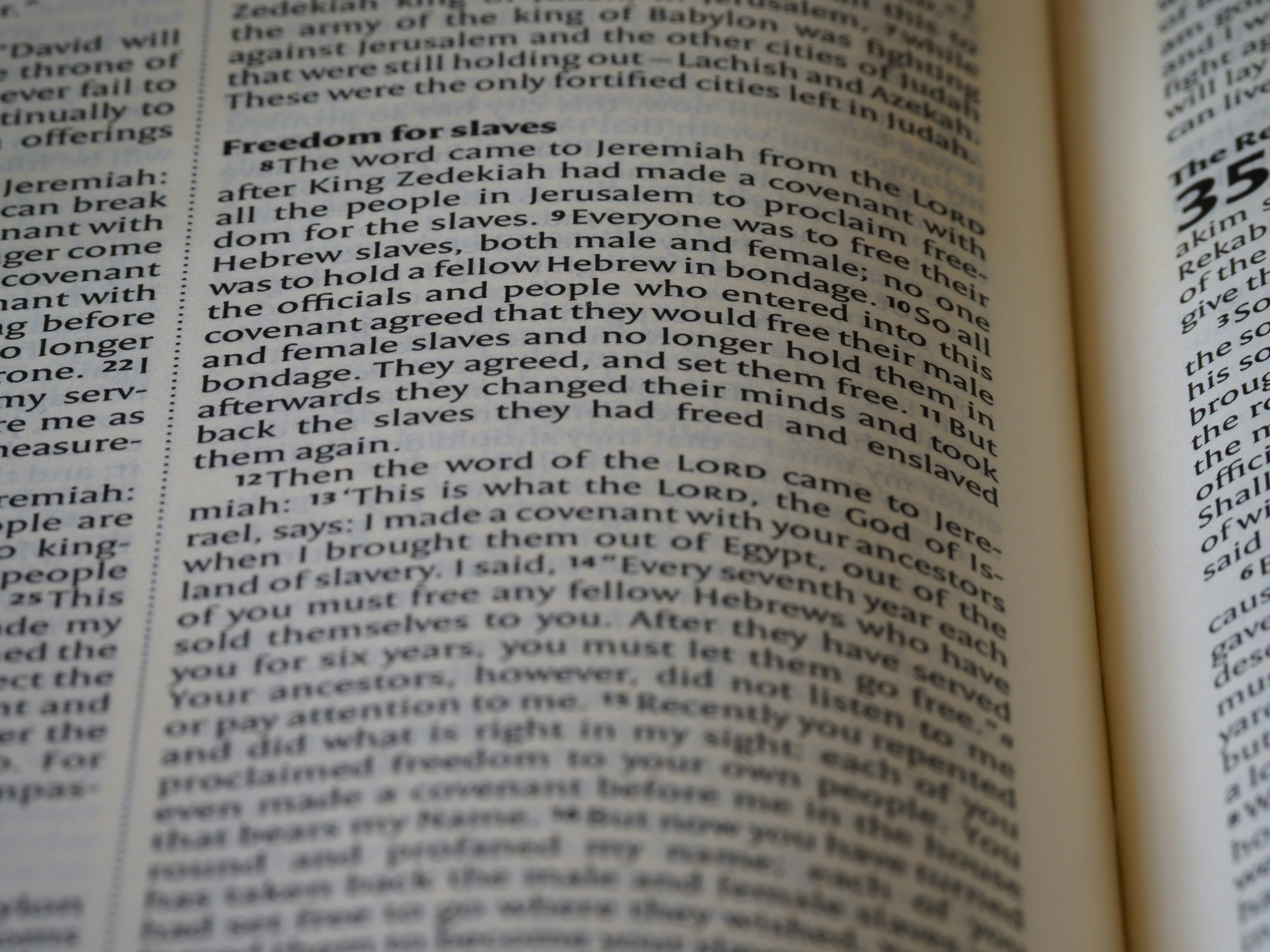
Understanding the 13th Amendment The 13th Amendment, ratified on December 6, 1865, represents a critical juncture in American history, particularly in the advancement of civil rights for African Americans. It abolished slavery and involuntary servitude, except as punishment for a crime, thereby laying the groundwork for future legislative and social reforms aimed at achieving equality. The Amendment’s roots can be traced back to the broader context of the Civil War, where the fight against the Confederacy was also a fight against the institution of slavery itself. The passage of the 13th Amendment was championed by numerous abolitionists, politicians, and leaders of the Union. Key figures such as President Abraham Lincoln played a pivotal role, utilizing his influence to promote emancipation as a war measure. During the war, the moral imperative to end slavery gained traction, causing a significant shift in public opinion. This advocacy was set against a backdrop of intense political strife, as various factions within Congress debated the future of the Union and the fate of millions of enslaved individuals. The political climate of the time was marked by a struggle for power between pro-slavery and anti-slavery factions. The Republican Party, having emerged from the abolitionist movement, found its platform centered around the idea of freedom for all individuals. The Civil War solidified the urgency for the passage of the 13th Amendment, as the Union victory prompted discussions about the reconstruction of the nation and the status of freed slaves. Ultimately, the amendment’s ratification marked a significant change in the constitutional fabric of the United States, signaling a new era in which African Americans could begin to claim their rights as free citizens. The Implications of Freedom without Economic Power The abolition of slavery in 1865 marked a significant milestone in American history, ushering in a new era of freedom for African Americans. However, this newfound freedom often came with the harsh reality of economic disenfranchisement. While individuals were freed from the shackles of bondage, they were not provided with the resources or opportunities necessary to thrive in a competitive economy. The transition from slavery to freedom did not automatically translate into equality, particularly in terms of economic power. Many newly freed African Americans found themselves without land, capital, or education, which severely limited their ability to achieve financial independence. The promise of land grants and economic support was largely unmet, leaving them to navigate a landscape marred by systemic barriers. The practice of sharecropping emerged as a dubious solution, perpetuating a cycle of debt and poverty. In this system, African Americans would rent land from white landowners in exchange for a share of the crop, often leading to exploitation and barely subsistence living. Moreover, labor exploitation was rampant, as many freed individuals were relegated to low-paying jobs that offered no room for advancement. Economic opportunities were scarce, as racial discrimination restricted access to skilled employment and education. Such circumstances perpetuated economic disparities that would haunt Black communities for generations. Without access to economic resources, the struggle for true freedom continued, affecting the social fabric and future prospects of African Americans. This intersection of freedom with economic power underscores an essential understanding of Black history, highlighting the ongoing challenges faced by these communities in their pursuit of equality. Legacy of the 13th Amendment in Modern America The passage of the 13th Amendment on December 6, 1865, marked a significant turning point in American history by signaling the formal abolition of slavery. However, the legacy of this pivotal amendment extends far beyond its initial intent, as it continues to influence discussions on racial inequality and social justice in contemporary society. While the formal institution of slavery ended, various systemic issues, such as mass incarceration and economic disparities, have arisen that disproportionately affect African Americans. Mass incarceration has emerged as a leading concern in discussions surrounding the 13th Amendment. Many advocates argue that although the amendment abolished slavery, it inadvertently allowed for a new form of servitude through prison labor. The current penal system, with its disproportionate representation of Black individuals, raises critical questions about the true nature of freedom. Activists cite the over-policing of African American communities and harsh sentencing laws as modern manifestations of racial discrimination that demand attention and reform. In addition to incarceration, economic empowerment remains a significant challenge for African Americans. Despite legal advancements since the 13th Amendment, there are ongoing disparities in wealth and employment opportunities. Efforts to address these disparities, such as advocating for fair hiring practices and equitable access to education, are essential steps towards achieving true equality. Grassroots movements led by organizations focused on civil rights, such as Black Lives Matter, have emerged in response to these challenges, further emphasizing the need for systemic change. In examining the enduring legacy of the 13th Amendment, it is clear that the fight for freedom and equality for African Americans is far from complete. Historical and contemporary issues intersect to create a complex landscape that requires continued advocacy and policy reform to ensure that the promise of the 13th Amendment is fully realized. Only through persistent efforts can the ideals of freedom and equality be truly achieved for all citizens. Commemoration and Reflection on December 19 December 19, 1865, marks a significant turning point in Black history, representing a time when African Americans began to gain momentum in their fight for freedom and equality. This date is not only a historical milestone but also serves as a reminder of the ongoing struggles faced by Black communities. In the years since, various educational initiatives have been instituted to ensure that this pivotal moment is recognized and remembered. Schools, colleges, and community organizations often host events on this day to foster awareness and understanding of its importance. Black leaders and movements play a crucial role in advocating for economic justice, promoting the significance of this date as a cornerstone of freedom. These leaders often remind us that the fight for equality extends beyond the abolition of slavery, encompassing various facets of social justice, including access
Cleopatra VII: The Wealthiest Queen Rome Ever Feared
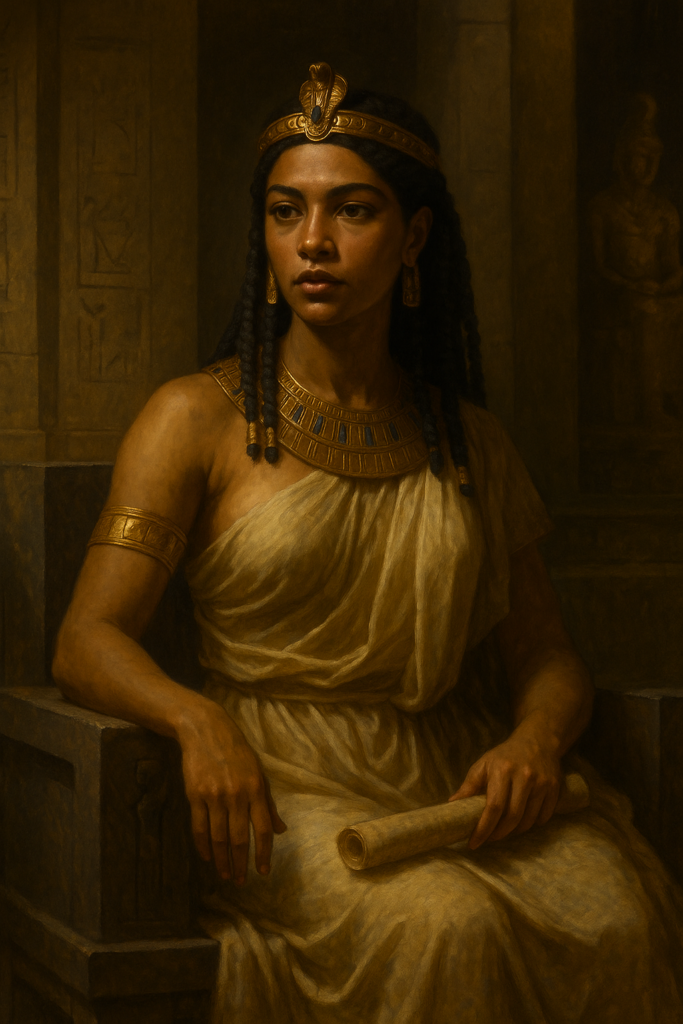
History remembers Cleopatra VII as a lover, a seductress, a woman whose power supposedly came from beauty and manipulation. That version of her story is convenient. It’s also a lie. Cleopatra VII was not dangerous because of romance. She was dangerous because she controlled one of the richest economies on Earth at the exact moment Rome was starving for resources, legitimacy, and money. Empires do not smear women they consider harmless. They rewrite the stories of rulers who threaten them. When Cleopatra took the throne of Egypt in 51 BCE, she inherited more than a crown. She inherited an economic machine that had fed civilizations for centuries. Egypt was not simply a kingdom; it was the financial backbone of the Mediterranean world. Its grain fields along the Nile supplied food to Rome’s swelling population. Its ports controlled trade routes between Africa, the Middle East, and Europe. Its treasuries held gold, silver, and state reserves accumulated over generations. Cleopatra did not stumble into power. She was trained from childhood to manage it. Unlike many rulers of her era, Cleopatra spoke multiple languages fluently, including Egyptian, Greek, and Latin. This was not a cultural flex; it was a strategic weapon. She could negotiate directly with merchants, diplomats, and military leaders without translators who diluted meaning or leaked information. She understood trade, taxation, logistics, and statecraft. Cleopatra ruled Egypt not as a figurehead but as a chief executive of a sovereign economic power. Rome, by contrast, was drowning in ambition and debt. Its military campaigns were expensive. Its political elite fought constantly for dominance. Its population depended heavily on Egyptian grain to avoid famine and unrest. Cleopatra knew this. She understood leverage better than most men who sat in the Roman Senate. Control the food, and you control the empire that eats it. When Julius Caesar entered her story, it was not romance that drew Cleopatra to him; it was survival and strategy. Egypt faced internal power struggles and Roman interference. Aligning with Caesar stabilized her throne and protected Egypt’s autonomy. In return, Rome gained access to Egypt’s resources under negotiated terms rather than outright conquest. Cleopatra used diplomacy to buy time, preserve sovereignty, and keep Egypt independent in a world where Rome swallowed kingdoms whole. After Caesar’s assassination, Cleopatra aligned with Mark Antony, not as a love-struck queen but as a ruler securing military protection and political balance. Together they controlled enormous territory, trade routes, and naval power. At their height, Cleopatra and Antony governed lands that rivaled Rome’s influence. This was not scandal; it was geopolitics. Rome did not panic because Cleopatra was charming. Rome panicked because she was effective. What followed was not merely a military conflict but a propaganda war. Octavian, later known as Augustus, understood that Rome could not admit it feared a foreign Black queen who commanded wealth, loyalty, and economic leverage. So he reframed the narrative. Cleopatra became painted as immoral, manipulative, and decadent. Antony was portrayed as weak and corrupted by foreign influence. This narrative justified Rome’s aggression and masked the truth: Rome crushed Egypt not to save morality, but to seize resources. After Cleopatra’s death, Egypt was absorbed into the Roman Empire. Its treasuries were looted. Its grain supply was nationalized for Rome’s benefit. The wealth Cleopatra once controlled now fed Roman dominance for generations. And just like that, history shifted its tone. Cleopatra’s intelligence was erased. Her financial mastery was ignored. Her leadership was reduced to gossip. But facts do not disappear simply because empires prefer myths. Cleopatra VII ruled one of the richest states in human history. She controlled food, trade, gold, language, and diplomacy with precision. She understood that power is not loud; it is organized. And that is why Rome destroyed her image after destroying her kingdom. They could defeat her militarily, but they could not allow future generations to understand what she truly represented: a sovereign ruler who proved that wealth, intelligence, and strategy are far more threatening than swords. Cleopatra’s legacy is not romance. It is a lesson. Those who control resources shape the world, and those who challenge empires rarely get fair biographies. History often belongs to the victors, but wealth always leaves a trail. And if you follow the money, the grain, and the power, you find Cleopatra VII exactly where Rome feared her most — at the center of the economic world. ❤️ Support Independent Black Media Black Dollar & Culture is 100% reader-powered — no corporate sponsors, just truth, history, and the pursuit of generational wealth. Every article you read helps keep these stories alive — stories they tried to erase and lessons they never wanted us to learn. Focus Keyphrase: Cleopatra VII wealth and power Slug: cleopatra-vii-wealth-power-rome Meta Description: Cleopatra VII was not just a queen but a powerful economic strategist who controlled Egypt’s wealth, trade, and grain supply—making her one of the most feared rulers Rome ever faced.
The 13 Buffalo Soldiers of the Houston Riot- A Dark Chapter in Black U.S. Military History

When the sun rose over Houston, Texas, on August 23, 1917, the Black soldiers of the 24th Infantry Regiment—men known with pride as Buffalo Soldiers—had already endured weeks of verbal abuse, beatings, threats, and relentless harassment by the city’s police force. These men were veterans, disciplined and decorated, trained to protect the nation overseas, yet they found themselves unprotected on American soil. Stationed in a Jim Crow city that treated Black people with open hostility, they faced a constant barrage of violence from officers who saw their uniforms not as symbols of honor, but as targets. On this day in Black History—December 11—we revisit the darkest moment that followed: the mass execution of thirteen of these soldiers after the Houston Riot of 1917, the largest mass execution of American troops in U.S. history and a chilling example of justice denied. The tension started long before the riot. Houston police would beat Black soldiers for walking on the wrong sidewalk, arrest them without cause, and assault Black women in front of them. One afternoon, police violently attacked a Black woman in the neighborhood. When a soldier stepped in to defend her, he was beaten and arrested. Later that same day, a Black military policeman was assaulted, shot at, and jailed when he tried to investigate the incident. Rumors spread through the camp that he had been killed. Fear mixed with anger, creating a storm no one could stop. Chaos erupted when soldiers, believing their comrade dead and fearing an imminent white mob attack, armed themselves to protect one another. Shots were fired in the dark. Panic ruled the city. When the smoke cleared, the Army responded not with investigation or fairness, but with swift punishment meant to appease Houston’s white leadership. Nearly 150 Black soldiers were rounded up and put on trial. They faced an all-white panel of officers, no legal representation, and no true chance to defend themselves. Witnesses contradicted one another, evidence was missing, and many of the accused had never even fired a weapon. Yet the verdict came with chilling speed: death. On December 11, 1917, before sunrise, thirteen Black soldiers were marched to a gallows built overnight. They sang hymns as they walked. Some prayed. Others looked to the sky. All maintained their innocence. Hooded and bound, they died as martyrs of a nation that demanded their loyalty but denied them dignity. For decades, this story was buried—quieted in textbooks, ignored by military historians, and dismissed as a “riot” rather than the desperate reaction of men cornered by racial terror. But as scholars revisited the case, the truth resurfaced: the trials were fundamentally unfair, the soldiers denied constitutional rights, and the rush to execution was driven by racism, pressure, and fear. The Army kept their graves unmarked for 70 years. It wasn’t until recent decades that their names were restored and their innocence acknowledged, marking a slow but powerful correction in history. These men were not criminals—they were victims of a system designed to break them. Yet this moment also revealed something deeper about Black resilience in America. Even after witnessing blatant injustice, Black troops continued to serve in World War I, World War II, Korea, Vietnam, and beyond. They fought for a country that didn’t fight for them because they believed in a future where freedom would eventually match the ideals written on paper. The story of the 13 Buffalo Soldiers forces us to face an uncomfortable truth: America has often punished its most loyal defenders when those defenders were Black. But remembering their names, their courage, and their sacrifice becomes an act of reclamation. It is a reminder that our history is not defined by oppression alone, but by the unstoppable determination of a people who refused to disappear. Today, we honor the thirteen men who walked to the gallows with dignity and faith, believing that someday the truth would set them free. Today, that truth is spoken aloud. ❤️ Support Independent Black MediaBlack Dollar & Culture is 100% reader-powered — no corporate sponsors, just truth, history, and the pursuit of generational wealth.Every article you read helps keep these stories alive — stories they tried to erase and lessons they never wanted us to learn. #BlackHistory #TodayInBlackHistory #BuffaloSoldiers #HoustonRiot1917 #24thInfantry #MilitaryInjustice #BlackHeroes #AmericanHistory #HiddenHistory #BlackDollarAndCulture #BDCHistory Keyphrase: Buffalo Soldiers Houston RiotSlug: buffalo-soldiers-houston-riot-december-11Meta Description: On December 11, 1917, thirteen Black Buffalo Soldiers were executed after an unjust trial following the Houston Riot. This long-form BD&C narrative reveals their true story, their courage, and America’s harshest military injustice. Most Americans never learned this story—but on December 11, thirteen Black soldiers were executed in silence after one of the most unjust trials in U.S. history. Click to uncover the truth.
Homer Plessy: The Wealthy Creole Businessman Who Changed American History

Early Life of Homer Plessy Homer Plessy was born in 1862 in New Orleans, Louisiana, into a wealthy Creole family, which significantly influenced his upbringing and worldview. The Creole culture was characterized by a complex identity that blended French, Spanish, African, and Native American heritages. This rich cultural background provided Plessy with an education and social standing that distinguished him within the racially stratified society of 19th-century America. His family was part of a relatively prosperous class of free people of color, many of whom owned businesses, property, and had access to better educational opportunities compared to their enslaved counterparts. This socio-economic advantage played a crucial role in shaping Plessy’s perspectives on civil rights and social justice. Plessy received a solid education, which was rare for African Americans during that era. He attended the prestigious Primary School of the Society of Saint Augustine, a school recognized for educating children from Creole families. His educational background afforded him not only academic knowledge but also an understanding of advanced societal structures. Plessy’s early life experiences cultivated a strong sense of identity and an appreciation for his Creole heritage, where family values and community ties were held in high regard. As he grew older, Plessy became increasingly aware of the injustices faced by African Americans, including the discriminatory laws that sought to segregate and marginalize people of color. This awareness ignited a desire within him to advocate for civil rights, reflecting the values ingrained in him from his family background. The legacy of his upbringing within the affluent Creole class positioned him uniquely to challenge the status quo. This combination of socio-economic privilege and a deep-rooted sense of justice would later manifest in his pivotal role in the landmark legal case that would redefine civil rights in America. Plessy’s Business Ventures Homer Plessy was not only a prominent figure in the civil rights movement but also a successful businessman in post-Reconstruction America. His entrepreneurial spirit propelled him into various industries, allowing him to navigate the complex economic landscape of the late 19th century Louisiana. Plessy’s ventures primarily revolved around property management and real estate, wherein he recognized the potential for profit amidst the growing urbanization of New Orleans. One of Plessy’s notable achievements was his involvement in a mixed-color cooperative association that aimed to empower Creole and African American residents. This association provided critical support in terms of resources and infrastructure, aiding local entrepreneurs in establishing businesses that could compete with those owned by white citizens. Through this initiative, Plessy fostered a sense of community and mutual aid, reflecting his commitment to supporting those who shared similar racial backgrounds. Moreover, Plessy’s economic pursuits operated within a unique context, as the local economy was marked by significant racial barriers and discrimination in commerce. His successes offered him a vantage point from which he could directly confront the inequities faced by marginalized communities. The wealth accumulated through his business ventures afforded him a level of social capital, enabling him to challenge the prevailing social norms and engage more actively in the fight against segregation and injustice. As a wealthy Creole businessman, Plessy was acutely aware of the race relations that shaped the environment around him. The intersection of his wealth, status, and profound understanding of the systemic issues in society prompted him to leverage his resources towards advocating for social change. This combination of business acumen and commitment to activism ultimately led Plessy to become a key figure in the landmark case, Plessy v. Ferguson, which would have a lasting impact on American history. The Landmark Case: Plessy v. Ferguson The landmark Supreme Court case, Plessy v. Ferguson, emerged from an incident that took place in 1896, involving Homer Plessy, a wealthy Creole businessman. The case was a rebellion against the entrenched system of racial segregation that was prevalent in the United States, particularly in the Southern states. Plessy, who was of mixed race and identified as Black, deliberately violated Louisiana’s segregation laws by sitting in a “whites-only” railway car. This act of defiance led to his arrest and set the stage for a pivotal legal challenge. Plessy’s legal team argued that the segregation enforced by the law violated the Thirteenth and Fourteenth Amendments of the U.S. Constitution, which abolish slavery and guarantee equal protection under the law, respectively. The defense posited that the law enforced a social stigma that perpetuated the discrimination against people of color. In stark contrast, the state argued that segregation was constitutional as it maintained public order and reflected societal norms regarding race. The case was pivotal as it delved into the complexities surrounding racial identity, questioning the legal definitions and implications of being classified as Black or white in America. The Supreme Court ultimately ruled against Plessy in a 7-1 decision, establishing the doctrine of “separate but equal.” This ruling legitimized state-sponsored racial discrimination and laid the groundwork for decades of systemic segregation. The decision had far-reaching implications for the Civil Rights Movement, galvanizing activists to challenge the legal underpinnings of racial inequality. Plessy’s role as a plaintiff was crucial in this historical context, presenting a vivid illustration of the contradictions inherent in a society that claimed to uphold the principles of freedom and equality while simultaneously enforcing discriminatory laws. Legacy of Homer Plessy Homer Plessy, a wealthy Creole businessman, played a crucial role in reshaping the landscape of civil rights in the United States, and his legacy continues to resonate to this day. His courageous act of defiance against racial segregation on public transportation culminated in the landmark Supreme Court case of Plessy v. Ferguson in 1896. Though the court ruled in favor of the “separate but equal” doctrine, which upheld state-sanctioned segregation, Plessy’s actions sparked a wave of activism that would challenge this unjust status quo over the ensuing decades. Plessy’s legacy is not solely defined by the court ruling; rather, it serves as a potent symbol of the ongoing struggle for civil rights and social justice. After his case, activists who followed in his footsteps