
The Last American Slave Ship: The Story of Cudjo Lewis and Africatown
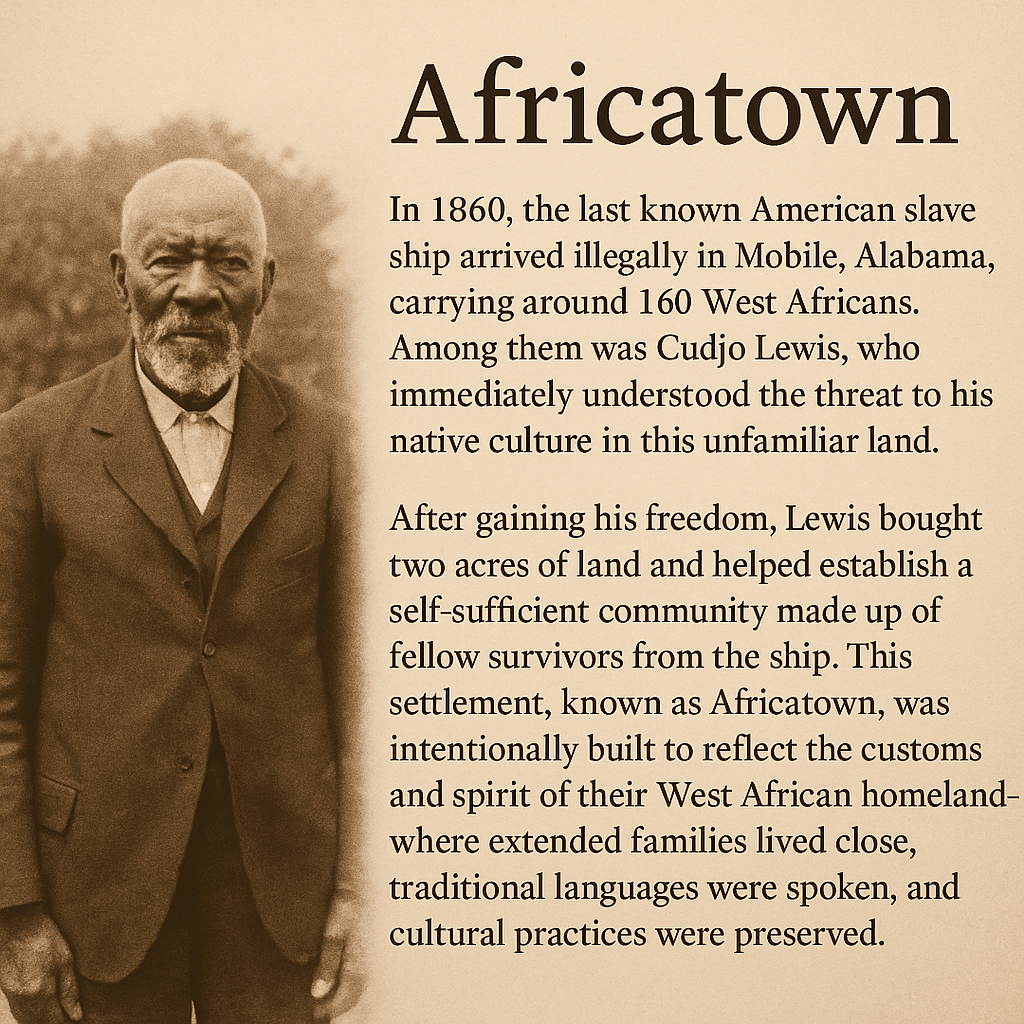
Introduction to the Last Slave Ship In the annals of American history, the arrival of the Clotilda in 1860 signifies a poignant and contentious chapter, as it marks the culmination of the transatlantic slave trade. Captained by William Foster, the Clotilda’s voyage stood in stark contrast to the legal framework established by the United States, which had outlawed the importation of enslaved individuals since 1808. Nevertheless, this ship bravely sailed into the depths of moral and legal defiance, carrying over 100 West Africans to the shores of Mobile, Alabama. The clandestine manner in which the Clotilda operated exemplifies the desperation and ongoing demand for labor during a period when slavery was already facing increasing scrutiny and resistance within the nation. In a daring attempt to bypass federal laws, Foster engaged in an illegal endeavor that would not only allow him to profit from the disreputable trade but also result in the transportation of these individuals under the most harrowing conditions. These West Africans were subsequently forced into slavery despite the illegality of their journey, symbolizing the persistent injustices surrounding the institution of slavery even as it was nearing its legal end in the United States. The story of Cudjo Lewis, one of the last survivors from the Clotilda, is inextricably linked to the ship’s legacy. After being brought to America, many of these Africans were eventually able to settle in a community that would come to be known as Africatown, a settlement established in an effort to preserve their cultural heritage amid their new reality. The arrival of the Clotilda not only serves as a stark reminder of the brutal history of slavery but also invites us to explore the rich and complex narrative of those who endured its consequences. This historical context forms the foundation for understanding Cudjo Lewis’s remarkable journey and the lasting impact of the Clotilda’s illicit voyage on American society. Cudjo Lewis: A Survivor’s Journey Cudjo Lewis, born in the West African kingdom of Dahomey in 1840, became an emblematic figure in the narrative of the transatlantic slave trade. His journey as a captive began when he was forcibly taken from his homeland aboard the notorious ship, Clotilda, in 1860. As one of the last individuals to be captured for slavery, Lewis’s story not only reflects the brutality of human trafficking but also highlights the complexities of cultural identity amidst extreme adversity. Upon reaching Alabama, Cudjo Lewis faced significant challenges as he encountered a foreign land filled with a new language and customs. This initial period of adjustment was compounded by the threat to his cultural heritage. Having been raised in a rich cultural context, Lewis was acutely aware of the potential eradication of his traditions and identity. The environment he found himself in was rife with hostility and systemic oppression, which sought to strip him of his past. Despite these overwhelming odds, Lewis exhibited remarkable resilience. His determination became evident as he sought to maintain connections to his African roots while navigating the harsh realities of enslavement. Cudjo worked tirelessly, using his skills and knowledge to create a semblance of community among fellow captives. This was not merely a survival tactic; it was an assertion of identity in the face of dislocation and despair. Lewis eventually gained his freedom, and in the years that followed, he became a voice for his community, advocating for the establishment of Africatown, a place where former slaves could preserve their heritage. Ultimately, Cudjo Lewis’s journey exemplifies the enduring human spirit amidst the traumas of exploitation and cultural disintegration. His life serves as a reminder of the resilience necessary to reclaim one’s identity and heritage in a world that seeks to erase it. The legacy of Lewis and Africatown remains a poignant testament to the strength and tenacity of those who survived the darkest chapters of American history. Gaining Freedom: The Aftermath of Slavery The story of Cudjo Lewis, a pivotal figure in American history, highlights the complex dynamics surrounding the aftermath of slavery. Following the illegal importation of enslaved Africans aboard the Clotilda in 1860, Lewis’s path to freedom was fraught with both legal and social challenges characteristic of post-Civil War America. Lewis, having survived the harrowing journey across the Atlantic and the horrors of enslavement, was granted his freedom after the Civil War ended in 1865. This transition came at a time when former enslaved individuals were navigating a rapidly transforming social landscape. In the years directly following emancipation, the legal frameworks established through the Thirteenth Amendment created pathways for liberation. However, these laws were often inadequately enforced, and many former enslaved people encountered hostility and discrimination. Lewis became a symbol of resilience in a society that was grappling with the larger implications of freedom. Upon gaining his freedom, he returned to Alabama, where he and other survivors of the Clotilda founded Africatown, a vibrant community that reflected their cultural heritage and desire for self-determination. The establishment of Africatown can be viewed as a direct response to the dislocation experienced by formerly enslaved individuals. The community became a sanctuary, fostering a sense of identity and belonging. Interwoven within the struggles for economic autonomy, social justice, and community cohesion, Lewis’s story exemplifies the complexities faced by many African Americans during this era. Social dynamics, including the interactions with the local white population and the establishment of new labor systems, influenced the development of Africatown. Overall, Lewis’s experience underscores the significance of agency in the aftermath of slavery, illustrating how former enslaved individuals laid the groundwork for their future despite the systemic challenges they encountered. Building Africatown: A Community of Hope The establishment of Africatown was a pivotal moment in the history of its residents and their quest for autonomy and community after the harrowing experience of slavery. Cudjo Lewis, a prominent figure among the survivors of the last American slave ship, played a critical role in this endeavor by purchasing two acres of land in Mobile, Alabama. This act was not merely the acquisition of property; it symbolized