There Is No Recession on Productive Land

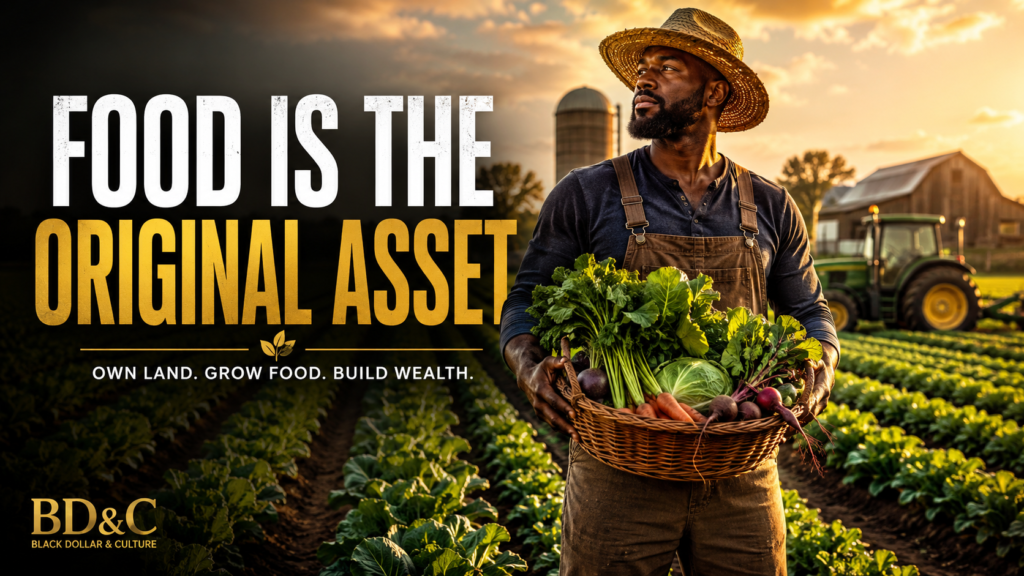
Every election season, people are promised prosperity. Every economic downturn brings fear. Every market correction sends investors scrambling for answers. Yet through every recession, depression, inflation crisis, and political transition, one asset has quietly continued creating wealth: Land. Not stocks. Not social media followers. Not government programs. Land. For thousands of years, the wealthiest families on Earth have understood a simple truth: If you control productive land, you control opportunity. While many people spend their lives chasing the next trend, landowners spend their lives building assets that continue producing regardless of who occupies the White House, what the stock market is doing, or what the latest headlines say. The power isn’t in politics. The power is in the land. Productive Land Doesn’t Watch the News Think about it. A fruit tree doesn’t stop producing because the economy enters a recession. A chicken doesn’t stop laying eggs because inflation rises. A greenhouse doesn’t care who won the election. A productive piece of land continues doing what it has always done: producing value. This is why land ownership has remained one of the most reliable paths to wealth throughout human history. Markets rise. Markets fall. But productive assets continue producing. That’s the difference between speculation and ownership. Agriculture Is the Original Wealth Builder Long before Wall Street existed, agriculture created wealth. Long before banks were built, agriculture created wealth. Long before corporations existed, agriculture created wealth. Food remains one of the few products every human being on Earth must consume every single day. People can delay vacations. People can postpone buying a new car. People can cancel subscriptions. But people cannot stop eating. Food production is one of the oldest and most essential businesses in human history. That reality is unlikely to change. Artificial intelligence may transform industries. Technology may reshape the economy. But somebody will still need to grow food. The Difference Between Consumers and Producers Many people spend their entire lives consuming. Consuming products. Consuming entertainment. Consuming trends. Consuming debt. The wealthy often focus on something different: Production. Producers create value. Producers own assets. Producers generate income. Land transforms people from consumers into producers. A small garden produces food. An orchard produces fruit. A farm produces income. A greenhouse produces opportunity. Ownership changes everything. Why Communities Should Think About Land Again Many communities spend millions of dollars every year importing food, products, and services from outside their neighborhoods. Money enters. Money leaves. The cycle repeats. But what happens when communities begin producing more of what they consume? Money circulates longer. Businesses grow. Jobs are created. Families gain skills. Ownership increases. Economic resilience improves. Every garden, farm, greenhouse, and agricultural business represents one more step toward economic independence. You Don’t Need Hundreds of Acres One of the biggest misconceptions about agriculture is that you need a massive farm to begin. You don’t. Start where you are. Plant herbs. Plant vegetables. Learn gardening. Grow fruit trees. Support local farmers. Invest in agricultural education. Purchase a small piece of rural land when possible. The goal is not to become a large-scale farmer overnight. The goal is to develop productive assets over time. Small beginnings often create large outcomes. Land Creates Legacy Many people dream about leaving wealth behind. Few people think about the assets that create wealth. Imagine passing down: These assets can continue generating value long after the original owner is gone. That is the power of ownership. That is the power of productive land. That is the power of legacy. The Future Belongs to Owners The next generation will face new challenges. Artificial intelligence. Automation. Economic uncertainty. Global competition. But one thing is unlikely to change: People will still need food. People will still need housing. People will still need land. The families that understand this today may be building the foundation for wealth tomorrow. Not through chasing trends. Not through waiting on promises. But through ownership. Final Thoughts The headlines may tell you to panic. The politicians may tell you to wait. The markets may tell you to worry. But productive land tells a different story. Plant something. Grow something. Build something. Own something. Because there is no recession on productive land. There is only opportunity for those willing to cultivate it. Continue Building Your Family’s Legacy 📘 The Family Bank Starter KitLearn how families can create their own systems for saving, investing, and building generational wealth. 📘 ILIT: Infinite Banking & Legacy PlanningDiscover strategies used to protect wealth, create financial flexibility, and leave a lasting legacy for future generations. Visit BLKCirculation.com to learn more. SEO Title: There Is No Recession on Productive Land Focus Keyphrase: Productive Land Wealth Slug: there-is-no-recession-on-productive-land Meta Description: Discover why productive land remains one of the most powerful wealth-building assets regardless of economic conditions. Learn how land ownership, agriculture, and production can create lasting financial security and generational wealth. Black Dollar & CultureOwnership. Circulation. Legacy.

How Black Communities Can Build Public Housing Without Waiting on Government Housing

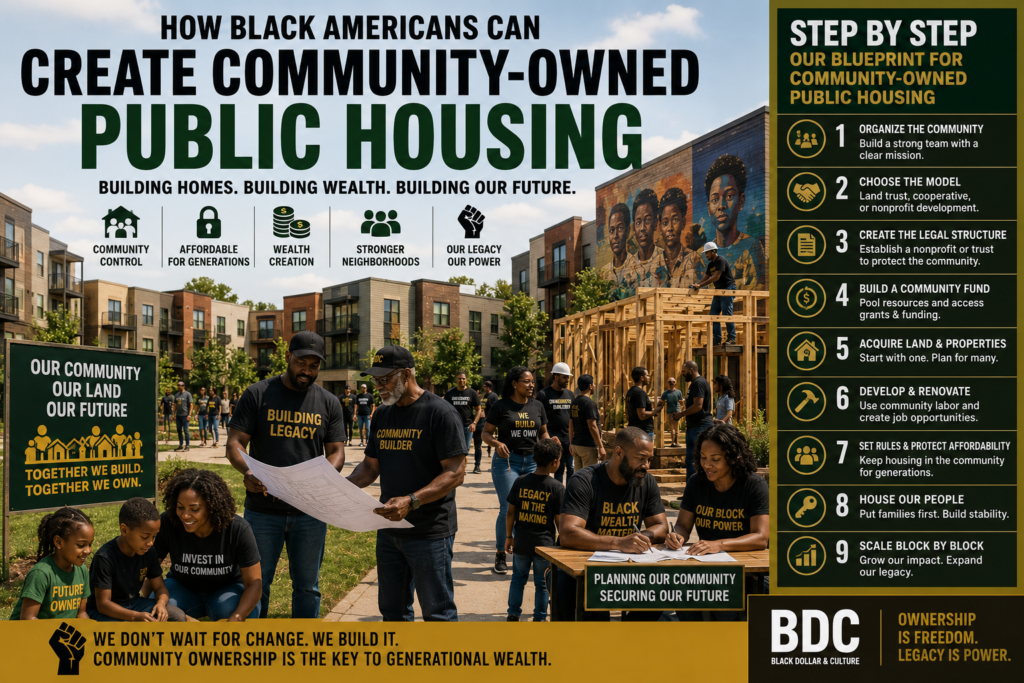
Housing has always been one of the biggest keys to power in America. Whoever controls the land controls the neighborhood. Whoever controls the neighborhood controls the businesses, schools, safety, rent prices, and future wealth of the people living there. For Black Americans, the housing conversation cannot only be about renting cheaper apartments or waiting for someone else to build affordable housing. We have to think bigger. The real question is: How can we create housing that the community owns, protects, and passes down? This is where community-owned housing comes in. Community-owned housing is when people come together to buy land, build homes, control affordability, and keep property from being taken over by outside investors. It is not just about shelter. It is about ownership, protection, legacy, and economic power. Step 1: Form a Housing Vision Group The first step is gathering the right people. This group should include: Community leaders, church leaders, real estate agents, contractors, electricians, plumbers, attorneys, accountants, business owners, investors, and serious families who care about ownership. This cannot be just a conversation group. It has to become an action group. The mission should be clear: Acquire land, build or renovate homes, and keep housing affordable for Black families and working-class families. Start with 5 to 10 serious people. Not everybody has to have money. Some people may bring skills. Some may bring land. Some may bring credit. Some may bring legal knowledge. Some may bring construction experience. The first goal is organization. Without organization, money gets wasted.Without leadership, ideas die.Without a structure, the community stays dependent. Step 2: Choose the Ownership Model Before buying property, the group must decide how the housing will be owned. There are three strong models. Community Land Trust A Community Land Trust is one of the strongest options. The community owns the land through a nonprofit trust. Families may rent or buy homes on that land, but the land itself stays protected. This keeps outside investors from buying up the neighborhood and raising prices. The land becomes a permanent community asset. Housing Cooperative A housing cooperative means the residents collectively own the property. Instead of paying rent to an outside landlord, residents own shares in the cooperative. They help make decisions, vote on leadership, and share responsibility. This works well for apartments, duplexes, townhomes, or small communities. Church or Nonprofit Housing Development Many Black churches and nonprofits already own land. Some of that land sits unused. That land could become senior housing, starter homes, rental units, tiny homes, duplexes, or family housing. Churches already have trust, leadership, and community connection. If structured correctly, church-owned land can become a powerful housing solution. Step 3: Create the Legal Structure This is where the idea becomes real. The group should create a legal entity such as: A nonprofit, a community land trust, a cooperative corporation, or a community development organization. This part matters because money, land, and housing need protection. The organization should have: Clear bylaws, a board of directors, voting rules, conflict-of-interest rules, financial transparency, and a written mission. This protects the community from confusion, corruption, and personal greed. The goal is not for one person to control everything. The goal is community stewardship. Step 4: Start a Community Housing Fund Once the structure is created, the group needs capital. Start simple. Imagine 100 families contributing $50 per month. That equals: $5,000 per month$60,000 per year Now imagine 500 families contributing $50 per month. That equals: $25,000 per month$300,000 per year This money can be used for down payments, legal fees, land surveys, property inspections, permits, repairs, and matching funds for grants. This is where Black economic circulation becomes real. Instead of money leaving the community every month, a portion of it is redirected into land ownership. Step 5: Find the First Property Do not start too big. Start with one property. The first project could be: A vacant lot, an abandoned home, a small duplex, a church-owned parcel, a tax sale property, or a small apartment building. The first property should be realistic. Do not try to build a 100-unit apartment complex on day one. Start with something the group can actually finish. The first successful project becomes proof. Proof attracts investors.Proof attracts grants.Proof attracts volunteers.Proof builds trust. Step 6: Build Partnerships Community housing cannot be built by emotion alone. It needs partnerships. The group should connect with: Local banks, Black-owned banks, credit unions, city housing departments, county officials, builders, architects, churches, nonprofits, grant writers, and real estate attorneys. The goal is to combine community money with outside funding. Community money shows seriousness. Outside funding helps scale the mission. A strong housing group can apply for grants, request donated land, use low-interest loans, and partner with local developers while still keeping community control. Step 7: Use Skilled Labor From the Community This is where housing becomes more than housing. It becomes job training. The project can include: Young people learning construction, retired tradesmen mentoring youth, local contractors getting paid, Black-owned businesses supplying materials, and families helping improve their own neighborhoods. Now the housing project creates: Jobs, skills, ownership, pride, safety, and future entrepreneurs. A house is not just a house when the community builds it. It becomes a training ground. Step 8: Set Rules That Protect Affordability This is critical. If the community builds housing but does not protect it, investors can eventually take it. Rules must be created to prevent speculation. For example: Homes cannot be flipped for massive profit.Rent increases must be limited.Priority may be given to local families.The land cannot be sold without community approval.Board members cannot secretly profit from deals.Financial reports must be shared regularly. This is how the mission stays clean. The goal is not quick money. The goal is permanent ownership. Step 9: House the First Family This is the moment everything becomes real. One renovated home.One family moved in.One block improved.One example created. That first family becomes the testimony. The community can show: This is what we built.This is what we own.This is what