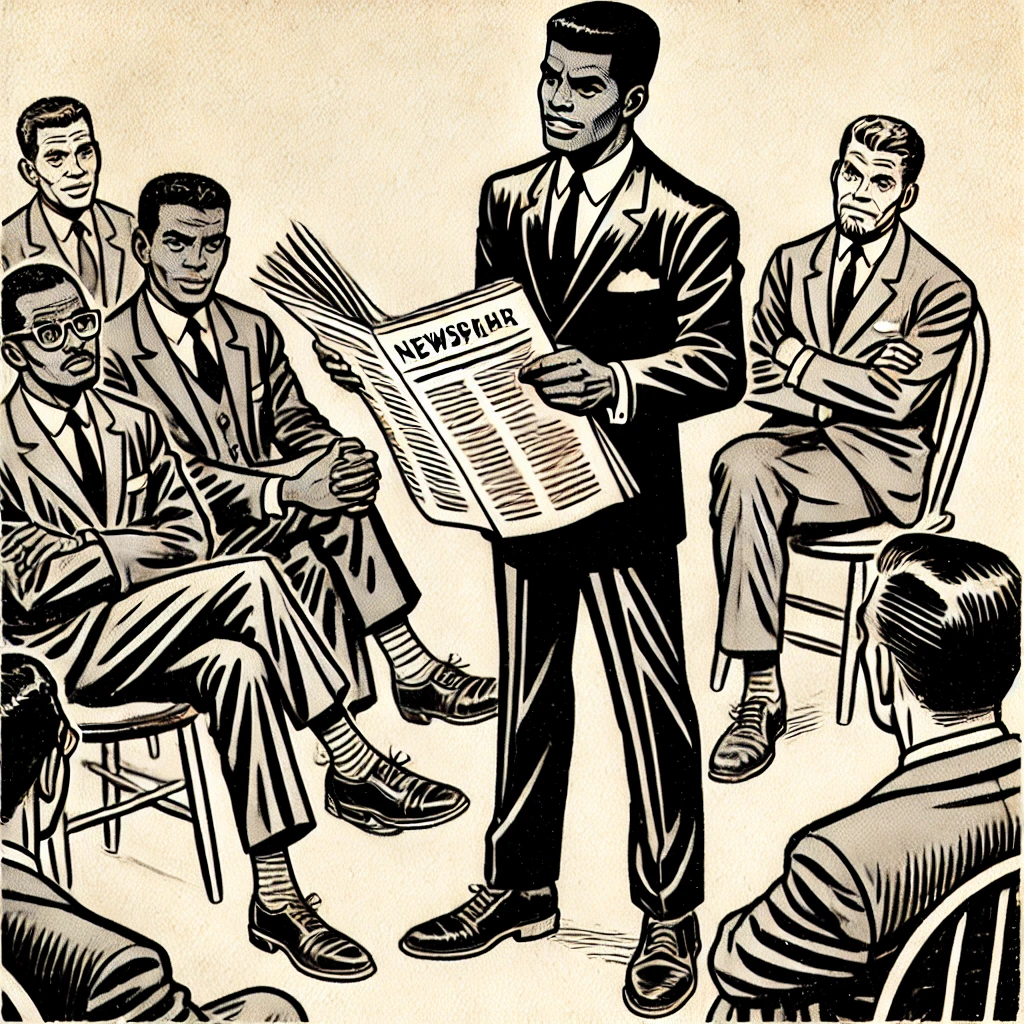
Why Working Hard Will NOT Make You Rich in 2026 (And What Actually Will)

For decades, we were taught a simple formula: work hard, stay loyal, and success will follow. That belief built careers, powered families, and shaped entire generations. But in 2026, that formula is officially broken. Not because people are lazy, but because the economy has fundamentally changed. Millions of people are working harder than ever before — multiple jobs, longer hours, constant side hustles — yet they are further away from wealth than their parents were. The problem isn’t effort. The problem is where effort is being applied. In 2026, hard work alone no longer creates wealth. Ownership, leverage, and systems do. This article breaks down exactly why working hard will not make you rich anymore — and what actually will. 1. Income Is No Longer Wealth (It’s a Temporary Tool) In the old economy, income was enough. Raises kept pace with inflation, pensions existed, and loyalty was rewarded. In 2026, income is fragile. Income today is rent, not ownership. The moment your labor stops, the money stops. Wealth, on the other hand, continues working whether you show up or not. If your entire financial life depends on a paycheck, you are one missed check away from stress — no matter how hard you work. 2. Hard Work Without Leverage Caps Your Ceiling Leverage is the multiplier that separates effort from wealth. Hard work is linear: Leverage is exponential: In 2026, wealthy individuals do not trade time for money. They use: This is why a warehouse worker can work 60 hours a week while a business owner earns more while sleeping. It’s not about who works harder — it’s about who controls the system. 3. The System Rewards Owners, Not Workers The modern economy is designed to reward ownership. Always has been. Consider who benefits most from: Not employees. Owners earn: Workers earn wages — and wages are taxed first and hardest. In 2026, if you do not own assets, you are funding someone else’s wealth with your labor. 4. AI and Automation Have Changed the Game Forever Artificial intelligence didn’t just change jobs — it changed value. Tasks that once required: Can now be done faster and cheaper by software. This doesn’t mean humans are useless. It means routine labor is losing value while strategy, ownership, and creativity gain value. Hard work used to be rare. In 2026, effort is abundant — and abundance drives prices down. What is scarce now? That’s where wealth flows. 5. Time Is the Most Expensive Currency — And Workers Sell It Cheap Time is finite. Wealthy people protect it. Workers are trained to sell time cheaply: Owners invest time once to create assets that pay repeatedly. When you trade time for money forever, you cap your future. When you invest time into assets, you build freedom. In 2026, the question is no longer “How hard do you work?”It’s “What will still pay you five years from now?” 6. Taxes Punish Earners and Reward Owners One of the most uncomfortable truths is that the tax code is not neutral. Earned income: Asset income: This is why wealthy families focus on: While workers are stuck chasing raises that vanish after taxes and inflation. Hard work alone puts you in the most expensive tax category. 7. Wealth in 2026 Is Built Through Systems, Not Sweat What actually creates wealth today? These are systems, not jobs. Systems don’t get tired.Systems don’t age.Systems don’t need permission to grow. Hard work is still required — but only at the front end. After that, systems replace sweat. 8. The Shift From Labor to Ownership Is Mandatory In 2026, wealth is no longer optional knowledge. It is survival knowledge. Those who understand ownership will: Those who don’t will: This isn’t about abandoning work ethic. It’s about redirecting effort. Hard work should be used to: Not just pay bills. 9. What Actually Makes People Rich in 2026 Here’s what consistently builds wealth now: Wealth is quiet. It compounds. It doesn’t announce itself. Final Truth: Hard Work Is Still Required — Just Not Alone Working hard is not useless. It’s just incomplete. Hard work without ownership builds someone else’s dream.Hard work with ownership builds legacy. In 2026, the people who win are not the ones who grind the most — they are the ones who build, own, and control. The era of “just work harder” is over. The era of ownership has begun. ❤️ Support Independent Black Media Black Dollar & Culture is 100% reader-powered — no corporate sponsors, just truth, history, and the pursuit of generational wealth. Every article you read helps keep these stories alive — stories they tried to erase and lessons they never wanted us to learn. Slug: why-working-hard-will-not-make-you-rich-2026Meta Description: Working hard alone won’t make you rich in 2026. Learn why income is no longer enough and what actually builds wealth today: ownership, leverage, and systems.
How a Roth IRA Can Make Your Family Rich (Not Just Comfortable)

Most families chase income.Wealthy families build systems. A Roth IRA is one of the most powerful—and most misunderstood—systems available to everyday people. Used correctly, it doesn’t just help you retire comfortably. It can quietly turn your household into a multi-generation wealth engine. Let’s break down exactly how. 1. A Roth IRA Grows Tax-Free Forever • Contributions are made with after-tax dollars• Investments grow tax-free• Withdrawals in retirement are 100% tax-free This matters because taxes are the silent killer of wealth.Every dollar that avoids taxation compounds faster—and compounding is how families get rich slowly, then suddenly. 2. Time Turns Small Contributions Into Large Outcomes • $6,500 per year sounds small• 30–40 years of compounding is massive• Growth beats hustle when time is on your side A family that starts early doesn’t need luck, crypto bets, or viral income. Time does the heavy lifting. 3. Roth IRAs Protect You From Future Tax Increases • No one knows future tax rates• Governments historically raise taxes• Roth IRAs lock in today’s tax rate forever This is wealth defense.You pay taxes once—on your terms—and never again. 4. You Can Pass a Roth IRA to Your Children • Roth IRAs can be inherited• Heirs receive tax-free growth• Funds can stretch across years This is how wealthy families move money forward without erosion. Not through income—but through ownership structures. 5. Roth IRAs Work Perfectly With Family Banks & Trusts • Roth IRAs pair well with trusts• They fit inside Family Bank strategies• They protect wealth from mismanagement This is how money stays in the family longer than one generation. 6. You Can Invest the Roth IRA—It’s Not a Savings Account • Stocks• ETFs• Index funds• Dividend assets The Roth IRA is a container, not an investment.What you put inside determines how powerful it becomes. 7. The Real Secret: It Teaches Discipline, Not Just Returns • Automatic investing• Long-term thinking• Delayed gratification Families who win financially think decades ahead. A Roth IRA trains that mindset quietly, year after year. 8. This Is How Rich Families Think Rich families don’t ask: “How much can I make this year?” They ask: “How do I protect and multiply money for the next 40 years?” A Roth IRA answers that question. Final Thought You don’t need millions to start acting wealthy.You need structures, time, and discipline. A Roth IRA isn’t flashy.It’s not loud.But it’s one of the cleanest tools ever created for turning income into legacy. 📌 Focus Keyphrase How a Roth IRA can make your family rich 🔗 Slug how-a-roth-ira-can-make-your-family-rich 📝 Meta Description Learn how a Roth IRA can quietly build tax-free, generational wealth for your family using time, discipline, and smart investing strategies.
Wealth Isn’t Loud: Why Quiet Wealth Building Always Wins

Wealth isn’t loud.It doesn’t announce itself.It doesn’t beg for attention.It compounds—quietly. In today’s world, loud money is often mistaken for real success. Social media has trained us to believe that wealth must be visible to be valuable. But history, finance, and lived experience prove otherwise. Quiet wealth building has always been the most powerful path to lasting financial freedom. Quiet wealth doesn’t seek validation. It doesn’t rely on applause or approval. Instead, it focuses on ownership, discipline, and time. While loud money performs, quiet wealth compounds. Why Quiet Wealth Building Matters Quiet wealth building prioritizes long-term outcomes over short-term attention. It looks like investing consistently, even when no one is watching. It looks like choosing assets over liabilities and patience over impulse. Most people overlook quiet wealth because it appears slow. But compounding is deceptive. What starts small grows powerful with consistency. Quiet wealth building rewards those who stay disciplined while others chase trends. The Difference Between Loud Money and Real Wealth Loud money demands to be seen. It shows up as flashy spending, constant upgrades, and public flexing. But loud money often fades quickly because it is built on consumption, not ownership. Quiet wealth building creates options. It creates freedom of movement, financial security, and generational stability. Real wealth is measured not by what you display, but by what you control. Why Quiet Wealth Has Always Been a Black Strategy Historically, Black wealth had to move quietly. From mutual aid societies to land ownership and community banking, quiet wealth building was a matter of survival. Visibility often meant risk. Silence meant protection. That strategy still applies today. Quiet wealth building allows families to grow resources, protect assets, and build legacy without unnecessary exposure. Compounding: The Power Behind Quiet Wealth Compounding is the engine of quiet wealth building. It turns consistency into momentum and patience into power. Whether through investments, businesses, or ownership, compounding rewards those who think long-term. Quiet wealth doesn’t rush. It doesn’t panic. It doesn’t chase attention. It compounds steadily—until it no longer needs to explain itself. The Black Dollar & Culture Philosophy At Black Dollar & Culture, we believe real wealth moves in silence. It is strategic, disciplined, and intentional. Quiet wealth building is not about looking rich—it’s about staying powerful. Not loud.Not flashy.Not rushed. Just consistent. Strategic. And compounding quietly. 🔑 Focus Keyphrase Quiet wealth building wealth-isnt-loud-it-compounds-quietly Quiet wealth building is how real money lasts. Learn why wealth isn’t loud, how compounding works, and why silence builds lasting power.
Why the Media Won’t Talk About Black Economic Power

The silence is intentional. While headlines obsess over Black struggle, debt, and disparity, something far more disruptive is happening just beneath the surface: Black economic power is growing—quietly, strategically, and faster than the narrative allows. Not in the loud, flashy way the media prefers, but in a disciplined, ownership-focused way that doesn’t beg for validation. And that is precisely why it isn’t covered. For decades, Black progress has been framed through a narrow lens of hardship. The story rarely evolves. When it does, it is usually softened, minimized, or quickly redirected back to inequality. What is almost never explored is the shift from income to ownership, from consumption to control, from survival to strategy. Yet across the country, Black families are buying businesses instead of brands, assets instead of applause, and influence instead of attention. The media thrives on predictability. Struggle fits. Power complicates things. Economic power forces new questions—about systems, access, and who benefits when narratives change. It challenges advertisers who profit from insecurity. It disrupts political talking points that rely on dependency. And it undermines the long-standing myth that Black progress only happens when it is granted, approved, or overseen. Look closer and the shift becomes undeniable. Black entrepreneurship has surged, not just in numbers but in sophistication. We’re seeing acquisitions, not just startups. We’re seeing families pooling capital, not individuals chasing clout. We’re seeing a growing interest in trusts, private equity, insurance strategies, land, logistics, and digital infrastructure. These are not the moves of a community “catching up.” These are the moves of a community recalibrating how power actually works. What makes this moment especially dangerous to the old narrative is that it is decentralized. There is no single leader to discredit, no single movement to co-opt, no single celebrity to spotlight and exhaust. It is happening in households, group chats, private study circles, barbershops, church basements, Discord servers, and dinner tables. Quiet wealth is harder to attack because it does not announce itself. The media also struggles to report on things it doesn’t fully understand—or control. Ownership doesn’t trend the way outrage does. Long-term planning doesn’t generate clicks like controversy. A family buying a warehouse, a logistics route, or an insurance policy that funds future generations doesn’t make for dramatic television. But it reshapes reality far more than viral moments ever could. There is another reason for the silence, one that is rarely said out loud. Black economic power changes leverage. It changes how communities negotiate, where they live, what they tolerate, and what they walk away from. It changes voting behavior, schooling choices, healthcare decisions, and labor dynamics. A population with options is harder to manage. A population with assets is harder to pressure. A population that understands money is harder to mislead. This is why the focus remains on income gaps instead of asset gaps. Income can be taxed, inflated away, and capped. Assets endure. Assets appreciate. Assets talk back. When Black families begin to understand this distinction at scale, the entire economic conversation shifts. And that shift does not benefit institutions that profit from confusion. Even the language used tells the story. The media speaks endlessly about “spending power” but avoids “ownership power.” Spending power frames Black consumers as valuable only at the register. Ownership power frames Black people as stakeholders—people who collect, not just contribute. One narrative is safe. The other is transformative. What’s happening now didn’t come from nowhere. It is the result of hard lessons learned across generations. It is the response to watching wealth extracted, neighborhoods flipped, and labor undervalued. It is the realization that visibility without ownership is a trap, and representation without control is theater. So the strategy changed. Less talking. More building. And because it doesn’t fit the expected storyline, it’s easier for the media to pretend it isn’t happening. Silence becomes a form of denial. Omission becomes a way to preserve the illusion that nothing has fundamentally changed. But it has. The irony is that by ignoring Black economic power, the media is making it stronger. What grows quietly often grows sturdier. What isn’t spotlighted isn’t sabotaged as easily. While attention is elsewhere, foundations are being laid that don’t need applause to function. Black Dollar & Culture exists to document this shift—not as hype, not as fantasy, but as fact. The goal isn’t to convince skeptics. It’s to inform builders. To connect dots. To remind people that power doesn’t ask to be acknowledged. It simply moves. The media will talk about Black economic power when it becomes unavoidable. When it disrupts markets. When it alters politics. When it refuses to behave the way it’s “supposed” to. Until then, the silence tells you everything you need to know. What they don’t talk about is often what matters most. Slug: why-the-media-wont-talk-about-black-economic-powerMeta Description: Black economic power is growing faster than the media admits. Discover why ownership, assets, and quiet wealth-building are changing the narrative—and why it’s being ignored.
How “White” Was Invented — And How Black People Were Branded in the Process
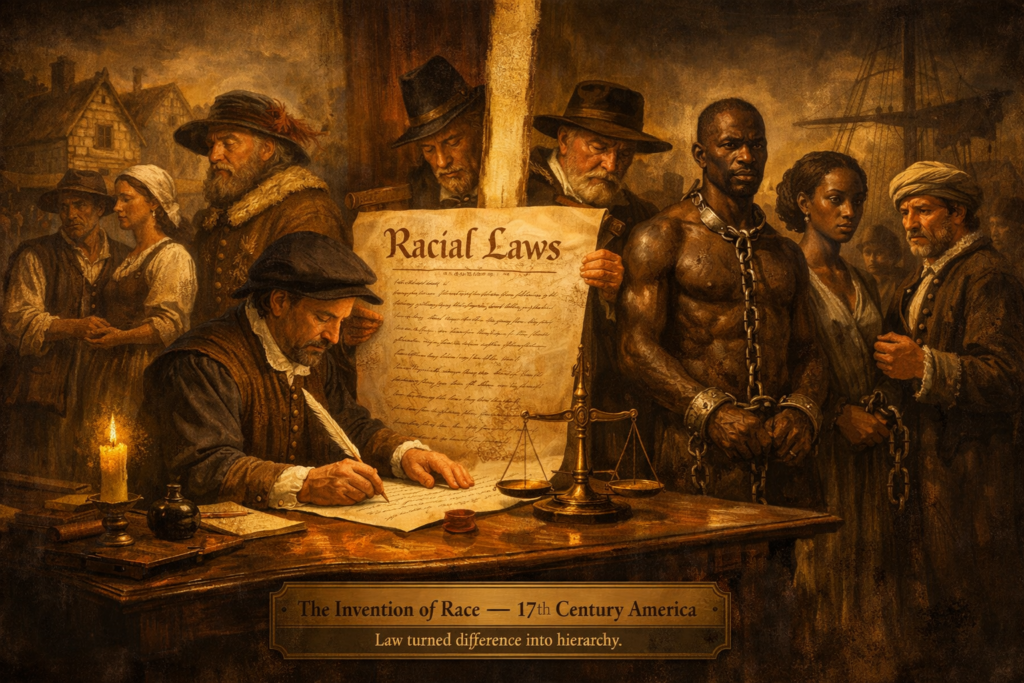
Before America existed, before plantations, before racial laws, and before the word “white” ever carried meaning, Europe was already brutal—but not divided by skin color. It was divided by power. In medieval Europe, no one woke up calling themselves white. That identity did not exist. A poor English farmer had nothing in common with a wealthy English lord, and no amount of shared skin tone could bridge that gap. Identity came from land, lineage, loyalty, and religion. You were Saxon or Norman, Irish or Frank, Catholic or Protestant, noble or peasant. Those labels determined your fate far more than complexion ever did. Most Europeans lived under a rigid system of hierarchy where kings and nobles owned land and everyone else existed to serve it. Serfs were bound to estates they would never own, working fields they could never profit from, paying taxes they could never escape. Their lives were short, their labor exploited, and their bodies disposable. Poverty was inherited. Wealth was protected. Freedom was rare. A peasant in England was closer in social status to an enslaved laborer than to a noble of his own nation. Religion sharpened these divisions even further. In Europe, belief defined belonging. Christian versus Muslim. Catholic versus Protestant. Christian versus Jewish. During the centuries when Africans and Arabs ruled much of Spain under Al-Andalus, darker-skinned people governed some of the most advanced cities in Europe. Cordoba and Granada had paved streets, libraries, and universities while much of northern Europe remained illiterate and rural. But when Christian kingdoms reclaimed Iberia during the Reconquista, they did more than seize land. They introduced a dangerous idea that would later shape the modern world: purity of blood. Spain’s “limpieza de sangre” system judged people not just by belief, but by ancestry. Converted Christians with African or Jewish lineage were still considered tainted. This was not yet whiteness, but it was the blueprint. Bloodlines were being ranked. Worth was becoming inherited. Humanity was being filtered through ancestry rather than character or faith. At the same time, Europeans themselves were being enslaved. Long before the transatlantic slave trade, bondage in Europe was common. Vikings captured and sold other Europeans across trade routes. Slavic peoples were enslaved so frequently that their name became the root of the word “slave.” Along the North African coast, thousands of Europeans were taken during raids and forced into labor within the Ottoman world. Enslavement was not racial—it was about power. Whoever controlled land, weapons, and law decided who was free. Everything changed when Europe reached the Americas. Colonial elites quickly learned a dangerous lesson: poor Europeans and Africans working together were a threat. Uprisings like Bacon’s Rebellion revealed that class solidarity could destabilize colonial power. The response was not justice, but invention. A new identity was created—one that had never existed before. “White.” Whiteness was not culture. It was not heritage. It was law. Colonial governments passed statutes that granted poor Europeans small privileges—access to land, lighter punishments, legal protections—while Africans were stripped of humanity permanently. Slavery became lifelong. Slavery became inherited. Freedom became tied to skin color. The racial categories of “white” and “black” were born together, serving opposite purposes within the same system. This invention worked exactly as intended. It divided laborers who might have united. It redirected anger away from elites and toward the enslaved. It gave poor Europeans a psychological wage in place of real economic power. They were no longer peasants or servants—they were white. And that label carried just enough status to protect the system that continued to exploit them. This is why understanding history matters. Because race was never about biology. It was about control. Whiteness was created to protect wealth, not people. Blackness was imposed to justify extraction, exploitation, and permanent subjugation. Once you understand this, the modern world begins to make sense—from wealth gaps to policing, from labor inequality to global power structures. The story we were taught was incomplete by design. But when you trace it back far enough, the truth becomes unavoidable. Race didn’t create hierarchy.Hierarchy created race. ❤️ Support Independent Black Media Black Dollar & Culture is 100% reader-powered — no corporate sponsors, just truth, history, and the pursuit of generational wealth. Every article you read helps keep these stories alive — stories they tried to erase and lessons they never wanted us to learn. Hashtags#BlackHistory #HiddenHistory #RaceWasInvented #Whiteness #BlackDollarAndCulture #Colonialism #PowerStructures #EconomicHistory #TruthOverMyths #GlobalHistory Slug:how-whiteness-was-invented-and-how-black-people-were-branded Meta Description:Discover how race was invented to protect power—how Europeans became “white,” how Black people were branded, and how hierarchy shaped the modern world.
Amenhotep III: The African Pharaoh Who Ruled Egypt at Its Absolute Peak
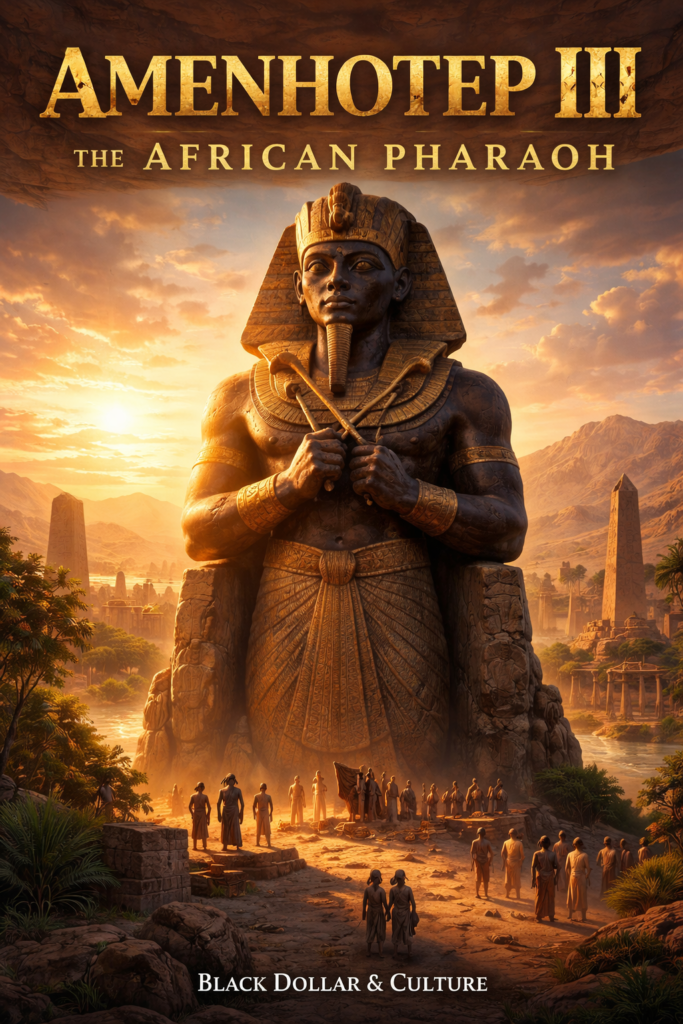
Long before decline, invasion, and distortion crept into the historical record, there was a moment when Egypt stood uncontested—politically, economically, culturally, and spiritually. That moment belonged to Amenhotep III. His reign was not built on constant warfare or desperate expansion, but on something far rarer in the ancient world: total dominance so complete that peace itself became a symbol of power. Under Amenhotep III, Egypt did not merely survive history—it defined it. He ascended the throne in the 14th century BCE, inheriting a kingdom already strong, but what he transformed it into was unprecedented. Egypt became the axis of the known world. Gold flowed through its cities like blood through arteries. Foreign kings did not challenge Egypt—they courted it. They sent tribute, daughters, luxury goods, and diplomatic letters not as equals, but as petitioners seeking favor from the African superpower seated along the Nile. This was not accidental. Amenhotep III ruled during a time when Nubian gold mines were fully operational, giving Egypt control over the most valuable resource of the Bronze Age. Gold was not symbolic—it was structural. It funded architecture on a scale never seen before, paid craftsmen whose skills bordered on divine, and allowed Egypt to project power without raising a sword. Where other empires conquered through fear, Egypt under Amenhotep III conquered through gravity. Everything was pulled toward it. The monuments tell the story even when the texts are ignored. Colossal statues rose from the earth not as propaganda, but as statements of reality. Temples were not hurried structures of defense but carefully planned expressions of eternity. The Colossi of Memnon—towering figures seated in silence—were not meant to intimidate enemies. They were meant to remind the world that Egypt, and its king, were permanent. These were not the works of a kingdom bracing for collapse, but of one utterly confident in its place atop human civilization. Amenhotep III did something few rulers in history ever achieved: he ruled so well that war became unnecessary. His foreign policy was built on diplomacy, marriage alliances, and economic leverage. The Amarna Letters—diplomatic correspondence between Egypt and other great powers—reveal foreign rulers openly begging for gold, addressing the pharaoh as a brother while knowing full well the imbalance between them. Babylon, Mitanni, Assyria—names that loom large in ancient history—all acknowledged Egypt’s supremacy during his reign. Inside Egypt, life reflected that stability. Art flourished, not as rigid symbolism but with softness, realism, and confidence. Faces gained individuality. Bodies showed movement and ease. This was the aesthetic of a society at peace with itself. Religion expanded as well, with Amenhotep III increasingly associated with divine attributes during his lifetime. He was not merely a king chosen by the gods—he was a living manifestation of cosmic order, Ma’at itself embodied in human form. It is no coincidence that his reign is remembered as the golden age. This was the apex—the point at which wealth, culture, spirituality, and global influence aligned perfectly. Everything before led to it. Everything after struggled to live up to it. Even his successors ruled in the long shadow he cast. His son, Akhenaten, would attempt to reshape religion entirely, not from weakness, but from the confidence inherited from a world already conquered by his father. Tutankhamun, whose name eclipsed Amenhotep III in modern popular culture, ruled a diminished echo of that greatness, remembered largely because the artifacts of his burial survived untouched. History, however, has a habit of obscuring African power when it becomes inconvenient. Amenhotep III is often reduced to a prelude, a name mentioned quickly before the so-called “interesting” period begins. But this framing is backwards. There is no later drama without his stability. There is no religious revolution without his wealth. There is no global Egypt without his diplomacy. He is not a footnote—he is the foundation. What makes Amenhotep III truly remarkable is not just what he built, but what he proved. He demonstrated that African civilization could dominate the world without perpetual violence. That wealth could be institutional, not extractive. That culture could be both sacred and luxurious. That leadership rooted in balance, not chaos, could sustain an empire at its absolute height. When Egypt is discussed as a mystery, as a marvel detached from Africa, Amenhotep III stands as a correction. His reign was unmistakably African in origin, power, and identity. The Nile was not a backdrop—it was the engine. The people were not passive laborers—they were participants in a civilization conscious of its greatness. This was not borrowed glory. It was built, refined, and ruled by Africans at the highest level humanity had yet seen. Amenhotep III did not rule during Egypt’s rise, nor its decline. He ruled at the peak—the summit where everything worked. And history has been trying to climb back there ever since. Slug: amenhotep-iii-african-pharaoh-egypt-absolute-peakMeta Description: Amenhotep III was the African pharaoh who ruled Egypt at its absolute peak of wealth, peace, diplomacy, and global power—an unmatched golden age in human history.
The Cheapest Way to Start Investing With Just $5 (Yes, Really)

Most people believe investing is something you do after you make money.That belief alone has kept millions of people permanently on the sidelines. The truth is uncomfortable for the system—but powerful for you: Investing doesn’t start with wealth.Wealth starts with investing. And today, that journey can begin with just $5. ❤️ Support Independent Black Media Black Dollar & Culture is 100% reader-powered — no corporate sponsors, just truth, history, and the pursuit of generational wealth. Every article you read helps keep these stories alive — stories they tried to erase and lessons they never wanted us to learn. 1. The Lie That Investing Is “Only for People With Money” For decades, investing was intentionally framed as something exclusive. You needed: This wasn’t accidental. When people believe investing is unreachable, they: The result?Generations trapped in a cycle where money passes through them, not works for them. But the rules quietly changed. Technology removed the gatekeepers—yet the old mindset remained. 2. What $5 Can Actually Buy You Today Thanks to fractional investing, you no longer need to buy an entire share of a company. You can buy a piece. That $5 can now purchase: This matters because ownership compounds, even in small amounts. While $5 in a savings account stays $5 (or loses value to inflation),$5 invested participates in growth. You’re no longer just holding money.You’re deploying it. 3. Why ETFs Are the Smartest Place to Start With $5 For beginners, the goal is not excitement.The goal is survival and consistency. That’s why Exchange-Traded Funds (ETFs) are ideal. ETFs: Instead of betting on one company, you’re betting on the system itself continuing to grow. This is not gambling.This is ownership. 4. The Real Power Isn’t the $5 — It’s the Habit Here’s what most people miss: The dollar amount matters far less than the behavior. When you invest $5: Small, repeated actions beat large, emotional decisions every time. Someone who invests $5 consistently will outperform someone who waits years for “the right time.” Because the market rewards time, not perfection. 5. A Simple $5 Investing Strategy That Actually Works This isn’t complicated. That’s the point. Step 1: Choose one broad-market ETFStep 2: Invest $5 weekly or bi-weeklyStep 3: Automate itStep 4: Ignore the noise No charts.No predictions.No panic. Over time, your money benefits from: You’re no longer guessing.You’re participating. 6. What NOT to Do With $5 Starting small doesn’t mean acting reckless. Avoid: Those strategies punish beginners and reward experience. $5 is not for chasing dopamine.It’s for building discipline and foundation. Wealth grows quietly before it grows loudly. 7. Why Waiting Is More Expensive Than Starting Small People often say:“I’ll invest when I make more.” But every year you wait: Time is the most expensive currency you own. Starting with $5 today beats starting with $500 five years from now. Because ownership rewards patience, not pride. 8. How This Connects to Generational Wealth Generational wealth doesn’t begin with inheritance.It begins with knowledge and repetition. When investing becomes normal: The amount grows later.The mindset must start now. This is how families quietly separate from the financial struggle most people accept as normal. 9. The Psychological Shift That Changes Everything Once you invest—even with $5—you cross a line. You stop asking:“How much does this cost?” And start asking:“What does this return?” That shift changes how you see: Ownership rewires thinking. And thinking shapes outcomes. 10. Final Truth Most People Never Hear You don’t start investing because you’re rich.You get rich because you start investing. The cheapest way to begin isn’t about money. It’s about deciding to own. Frequently Asked Questions Is investing $5 really worth it?Yes—because it builds habit, exposure, and discipline. The habit matters more than the amount. Is it better to save or invest $5?Emergency savings come first, but long-term growth requires investing. Saving alone does not build wealth. How often should I invest small amounts?Weekly or bi-weekly works best. Consistency beats timing. Can small investments really grow over time?Yes. Compound growth rewards time in the market, not size of the first deposit. Slug: cheapest-way-to-start-investing-with-5-dollarsMeta Description: Learn the cheapest way to start investing with just $5. Discover how small, consistent investing builds real wealth, ownership, and long-term financial freedom—even for beginners.
Madam C.J. Walker: The First Self-Made Black Woman Millionaire America Tried to Forget
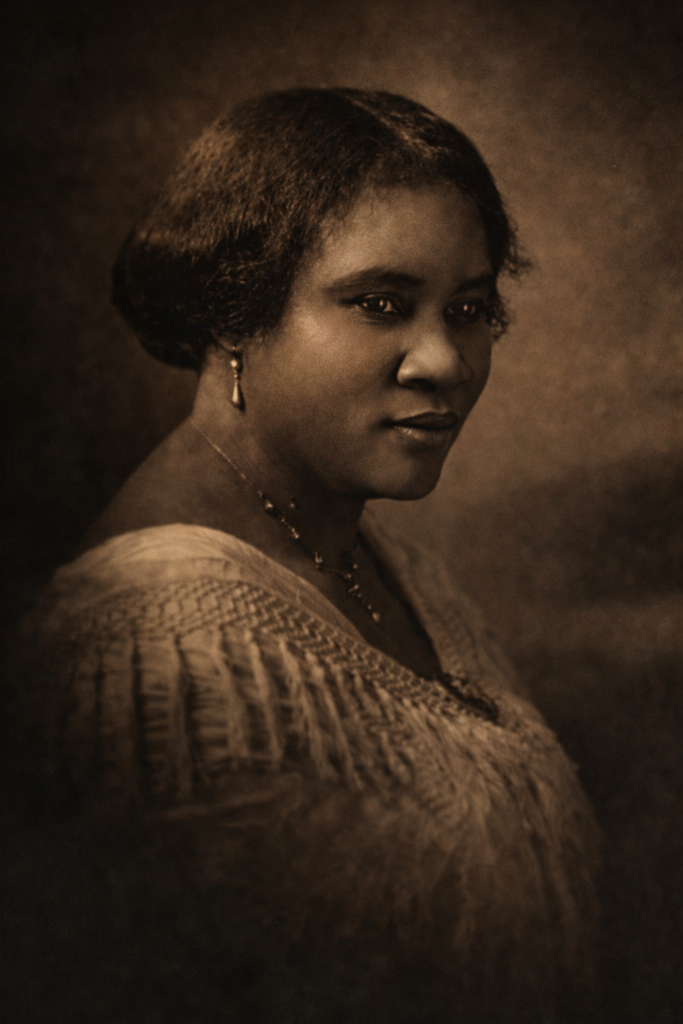
Before Silicon Valley. Before hedge funds. Before Wall Street started pretending it understood “self-made.”There was Madam C. J. Walker—a Black woman born into the ashes of slavery who built an empire so powerful it terrified the systems designed to keep her small. She was not handed opportunity.She was not invited into rooms.She was not protected by laws, banks, or sympathy. She built anyway. Born in 1867, just two years after the end of slavery, Sarah Breedlove entered a country that had legally ended bondage but economically perfected it. Her parents had been enslaved. Her childhood was marked by loss. Orphaned by seven, married by fourteen, widowed by twenty, and raising a daughter alone, she lived the kind of life America usually erases—not because it’s rare, but because it exposes the lie. The lie that success is granted fairly.The lie that hard work is enough—unless you own the system. Sarah worked as a washerwoman, scrubbing clothes for pennies while breathing in steam and chemicals that damaged her scalp so badly her hair began to fall out. But what others saw as humiliation, she treated like research. She listened. She observed. She experimented. And then she made a decision that would echo across generations: She stopped asking for permission. She studied hair care the same way financiers study markets. She learned chemistry, formulation, branding, and sales—without a degree, without capital, without protection. When she created her first successful hair product, she didn’t sell it quietly. She sold it boldly, face-to-face, door-to-door, Black woman to Black woman. She renamed herself Madam C.J. Walker—not to impress white America, but to signal authority to her own people. In an era where Black women were called “girl” well into old age, she crowned herself Madam and dared anyone to object. They didn’t know what to do with her. Walker didn’t just sell products—she built infrastructure. She opened factories. She purchased real estate. She trained thousands of Black women as sales agents, not as servants but as entrepreneurs, teaching them financial literacy, confidence, and independence in a society that wanted them invisible. Her agents—called “Walker Agents”—earned commissions, owned businesses, traveled the country, and sent their children to school. At a time when Black labor was exploited and controlled, she created ownership. And that was the real threat. By the early 1900s, Walker had built a national brand. She employed thousands. She reinvested heavily into Black institutions—schools, churches, newspapers, and civil rights causes. She donated to anti-lynching campaigns when silence was safer. She funded Black education when the state refused to. She understood something America still struggles to admit: Wealth is not about money.It’s about leverage. When she built her mansion, Villa Lewaro, in New York, it wasn’t indulgence—it was strategy. A visible declaration that Black excellence could not be hidden, that success did not need white approval to be legitimate. The backlash was predictable. White media minimized her. Historians downplayed her. The phrase “self-made” was twisted to exclude her, even though she built from literal nothing. For decades, her story was softened, diluted, reduced to “hair care” instead of what it truly was: A masterclass in Black capitalism. Madam C.J. Walker didn’t just get rich—she redistributed power. She created a blueprint modern America still refuses to teach: • Control production• Own distribution• Train your people• Reinvest into the community• Use wealth as a weapon against injustice When she died in 1919, she was one of the wealthiest women in the country—Black or white. But more importantly, she left behind a network of educated, financially independent Black women who knew their value and refused to shrink. That was her real inheritance. Today, her name is finally resurfacing, often stripped of its sharpest edges, packaged as inspiration without instruction. But Madam Walker was not a motivational quote. She was a warning. A warning of what happens when Black people are left alone long enough to build. Her life answers a question America still avoids: What would this country look like if Black builders had never been sabotaged? The answer is uncomfortable.So they buried the evidence. But history has a habit of resurfacing when the moment demands it. And right now—when ownership is once again the dividing line between survival and struggle—Madam C.J. Walker’s story isn’t just history. It’s instruction. ❤️ Support Independent Black Media Black Dollar & Culture is 100% reader-powered — no corporate sponsors, just truth, history, and the pursuit of generational wealth. Every article you read helps keep these stories alive — stories they tried to erase and lessons they never wanted us to learn. Slug:madam-cj-walker-first-self-made-black-woman-millionaire Meta Description:Madam C.J. Walker was the first self-made Black woman millionaire, building a business empire from nothing while empowering thousands of Black women and reshaping American economic history.
Don’t Get Caught Up in Sports Betting — It’s Being Aggressively Targeted at Black Communities

Sports betting isn’t just a trend.It’s a system. And like most systems that suddenly receive unlimited advertising dollars, celebrity endorsements, and algorithmic placement, it isn’t neutral — it’s strategic. Over the past few years, sports betting has been pushed into American culture at record speed. Apps are everywhere. Ads are nonstop. Promotions promise “free money.” And the messaging is clear: this is entertainment, this is easy, this is normal. But if you zoom out, a disturbing pattern appears. Black communities are being disproportionately targeted — and the consequences are quietly devastating. 1. This Isn’t Accidental — It’s a Business Model Sports betting companies don’t guess where to advertise. They analyze data. They know: Black audiences sit at the intersection of all four. That’s why betting ads flood: This isn’t about fun. It’s about volume and repeat behavior. 2. Why Sports Betting Hits Harder Than the Lottery The lottery is slow.Sports betting is constant. With betting apps, there is: You can bet: This turns betting into a habit loop — not an event. And habit loops drain money quietly. 3. The “Skill Game” Lie One of the most dangerous narratives around sports betting is the idea that it’s based on knowledge or intelligence. “You know the sport.”“You watch the games.”“You understand the players.” But betting markets are not built for fans to win long-term. They are built using: The house doesn’t beat you because you’re dumb.It beats you because it’s designed to. 4. Why This Matters for Black Wealth Every dollar lost to betting is a dollar: Sports betting doesn’t just take money — it steals time, focus, and discipline. And unlike investing, ownership, or entrepreneurship, betting creates no asset. There is nothing left behind. No equity. No growth. No compounding. Just a dopamine spike followed by loss. 5. The Psychological Trap Nobody Talks About Sports betting preys on three powerful emotions: Hope keeps you playing.Pride convinces you that you’re “one good bet away.”Recovery makes you chase losses. This cycle mirrors the same emotional traps used in: The difference is that sports betting is packaged as culture. 6. Athletes, Celebrities, and the Illusion of Access When athletes and celebrities promote betting apps, it creates the illusion that: But endorsements aren’t participation — they’re payment. The people promoting betting aren’t funding their lives with bets. They’re funding them with contracts. That distinction matters. 7. What Real Strategy Looks Like Real wealth strategy is boring.It’s slow.It’s disciplined. It looks like: There is no generational wealth blueprint that includes “consistent sports betting” as a pillar. None. Final Thought Sports betting isn’t empowering Black communities — it’s extracting from them. It converts passion into loss, attention into profit for corporations, and hope into dependency. And it does all of this while pretending to be entertainment. The real win isn’t hitting a parlay. The real win is recognizing the trap — and choosing ownership instead. ❤️ Support Independent Black Media Black Dollar & Culture is 100% reader-powered — no corporate sponsors, just truth, history, and the pursuit of generational wealth. Every article you read helps keep these conversations alive — conversations designed to protect, inform, and empower our people. Focus Keyphrase: sports betting targeting Black communitiesSlug: sports-betting-targeting-black-communitiesMeta Description: Sports betting is aggressively targeting Black communities. This article breaks down why it’s dangerous, how the system works, and why it undermines long-term wealth.
Queen Amanirenas: The Warrior Queen of Kush and Her Enduring Legacy
The Rise of Amanirenas: A Historical Overview Queen Amanirenas emerged as a significant figure in ancient history, hailing from the Kingdom of Kush, located to the south of Egypt. Her origins can be traced back to a time when the Kingdom was a powerful and prosperous entity, known for its rich resources and strategic location. Amanirenas likely belonged to the royal lineage, which granted her the privilege and responsibility of leadership during an era when female rulers were a rarity in a predominantly patriarchal society. The ascent of Amanirenas to power occurred during a tumultuous period marked by conflict and territorial disputes with Egypt. Following the invasion of Kush by Augustus Caesar, Amanirenas took control of her kingdom and positioned herself as a formidable leader. Her determination was fueled by the desire to protect her homeland from foreign aggression and to establish her reign based on strength and resilience. This was a significant departure from the traditional view of women in her time, who were often limited to domestic roles. Amanirenas’s leadership was characterized by her military prowess as well as her ability to negotiate alliances. Historical records indicate that she marred her strategic capabilities with diplomatic initiatives, which ultimately helped to unite various factions within her realm. The conflicts against the Romans, particularly during her reign in the 1st century BC, served not only to solidify her reputation as a warrior queen but also significantly impacted the socio-political landscape of the region. These key events set the stage for her legendary status and illuminated her role both as a military commander and as a political strategist within the wider context of Kushite society. The War Against Rome: Amanirenas as a Warrior Queen Queen Amanirenas, the esteemed ruler of the Kingdom of Kush, is primarily remembered for her fierce and successful military campaigns against the expansive forces of the Roman Empire during the reign of Emperor Augustus. In a series of confrontations that unfolded around 30 BCE, Amanirenas demonstrated her extensive leadership capabilities, employing strategic military tactics that would ensure her kingdom’s independence from Roman dominion. The conflict began as Rome sought to expand its territories, threatening the sovereignty of neighboring kingdoms, including Kush. Amanirenas, understanding the significance of her position, rallied her troops and initiated bold military campaigns. Her forces, notable for their resilience and commitment, utilized guerrilla warfare tactics, ambushing Roman legions and executing surprise attacks that often led to significant victories. These tactics were instrumental in overcoming the challenges posed by a more technologically advanced army. One of the most notable engagements occurred during the Roman invasion, where Amanirenas’s army, significantly outnumbered, displayed exemplary valor. The battle tactics of her forces included the use of the terrain to their advantage, as well as guerrilla tactics that allowed them to inflict considerable damage on the Roman troops. As a result of these engagements, Kush maintained its autonomy, and Amanirenas emerged as a symbol of resistance against imperial expansion. Apart from military prowess, Amanirenas’s leadership became emblematic of strength and bravery and served as a significant motivator for her people. Her success in repelling the Roman forces fostered a sense of unity among the Kushites, reinforcing their cultural identity in the face of external threats. The enduring legacy of her reign and military campaigns continues to resonate, showcasing her as a paramount figure in the annals of history, particularly in the context of resistance against imperial dominance. Cultural and Religious Contributions of Queen Amanirenas Queen Amanirenas, a pivotal figure in the history of Kush, made remarkable contributions to the cultural and religious spheres, leaving an indelible mark on Nubian heritage. Her reign was characterized by an emphasis on the arts, with notable patronage of various artistic endeavors that enriched the cultural tapestry of her kingdom. One of her significant contributions was the commissioning of grand architectural projects, including temples dedicated to both traditional Kushite deities and newly embraced practices. These structures served not only as places of worship but also as symbols of her power and commitment to the spiritual well-being of her people. Amanirenas was integral to the revitalization of local belief systems, fostering a syncretism that allowed various religious traditions to coexist. Her encouragement of the arts extended beyond architecture to include sculpture, pottery, and jewelry, which flourished during her reign. Artistic expressions of this period reflected both the strength of a warrior queen and the profound spirituality of the Kushite people. Statues and reliefs often depicted her in a formidable manner, reinforcing her status not only as a ruler but also as a divine figure, encapsulating the interrelation between leadership and religion. The economic prosperity of Kush during her reign facilitated these cultural advancements, as resources were allocated to support artists and religious practices. Moreover, Amanirenas’s cultural policies helped promote a sense of unity among her subjects, strengthening their identity and pride in their Nubian roots. Her legacy is evident in the continued reverence for these artistic and religious traditions by subsequent generations, showcasing her role as a catalyst for cultural evolution in Kush. The enduring influence of Queen Amanirenas is thus reflected in the vibrancy of Nubian culture that thrived both during and long after her reign. A Legacy Remembered: The Lasting Impact of Amanirenas Queen Amanirenas, the formidable warrior queen of the Kingdom of Kush, has left an indelible mark on both historical narratives and contemporary culture. Her reign during a time of conflict with Rome showcases her tenacity and strategic prowess, positioning her as a symbol of resistance against imperial domination. This imagery has resonated through the ages, with Amanirenas emerging as an iconic figure exemplifying the strength of female leadership. The story of Amanirenas is remembered not only in historical texts but also celebrated in modern interpretations. Scholars have revisited her life, bringing to light her contributions and the socio-political dynamics of her era. Recent academic discussions emphasize her role in the increasingly relevant dialogue surrounding the empowerment of women in history, illustrating how her legacy transcends time and geography. Through