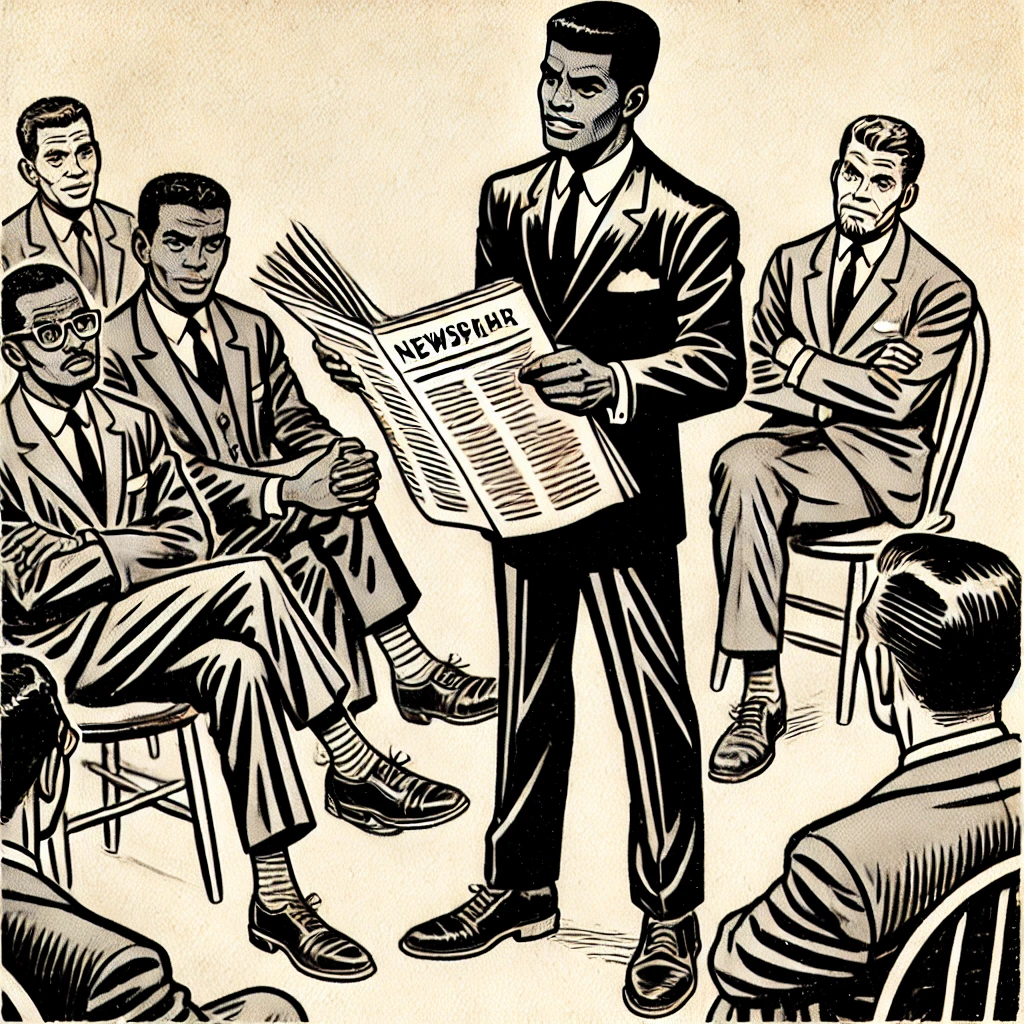
How to Build a Business That Runs Without You

The Blueprint for True Freedom, Ownership, and Scale Most people say they want to own a business, but what they really end up building is a job with a logo. If the business collapses the moment you stop answering emails, posting content, or showing up every day, you don’t own a business—you own a dependency. True wealth comes from building systems that work whether you’re present or not. This is how the wealthy buy back their time, protect their energy, and scale beyond effort. Building a business that runs without you isn’t about laziness. It’s about design. It’s about removing yourself as the bottleneck and replacing hustle with structure, clarity, and automation. This guide breaks down exactly how to do that. 1. Start With the End in Mind (Owner vs Operator Thinking) The first shift is mental. You must decide early whether you’re building: An operator asks: What do I need to do today?An owner asks: What system needs to exist so this doesn’t require me? Every task you do manually today should be viewed as temporary. If you don’t design your business with replacement in mind, you’ll trap yourself inside it. Ask yourself: Those answers reveal exactly what must be systemized. 2. Choose a Business Model That Can Actually Scale Not every business is meant to run without you. Some models are naturally scalable, others fight you at every step. High-leverage models include: Low-leverage models include: If your income depends on your physical presence or constant customization, freedom will always be limited. The goal is repeatability, not perfection. 3. Document Everything You Do (Before You Delegate Anything) Most people try to hire help too early and fail because they never defined the work. Before you outsource or automate, you must document your processes: This can be as simple as: If someone can’t follow instructions to replace you, the system—not the worker—is the problem. 4. Turn Repetition Into Automation Anything repetitive should be automated before it’s delegated. Examples: Automation removes human error and emotional burnout. It also makes your business more valuable because systems don’t quit. Key areas to automate first: 5. Build a Team Around Roles, Not People A business that runs without you is built on roles, not personalities. Instead of saying: Say: This allows you to: Start with part-time or contract help: Your job is not to do the work—it’s to manage the system that produces the work. 6. Separate Ownership From Operations One of the most powerful moves you can make is separating: As the owner, your responsibilities should eventually shrink to: If you’re still stuck in daily execution years in, the business owns you. True freedom happens when: 7. Build Systems That Make Decisions Without You The highest level of leverage is decision automation. This includes: When your business has rules, it doesn’t need constant supervision. When everything requires your opinion, burnout is inevitable. Document your values and standards so your team and systems know how to act even when you’re absent. 8. Create Predictable Cash Flow First A business that runs without you must be financially stable. Focus on: Chaos in cash flow forces you back into survival mode, which kills system-thinking. Stability buys you space. Space allows structure. 9. Design the Exit Even If You Never Leave Every strong business is built as if it will be sold—even if you never sell it. That means: A business that can be sold is a business that can run without you. Even if you never exit, you gain leverage, freedom, and peace. 10. Measure Freedom, Not Just Revenue Revenue without freedom is a trap. Track: The real flex isn’t working nonstop—it’s earning while absent. Final Thought A business that runs without you is not built overnight. It’s built deliberately. Every system you create is a brick in the wall separating your income from your time. That separation is the foundation of generational wealth. Most people chase money. Owners design freedom. Build accordingly. Focus Keyphrase: build a business that runs without youMeta Description: Learn how to build a business that runs without you using systems, automation, and scalable models. A step-by-step blueprint for true freedom and ownership.Slug: build-a-business-that-runs-without-you
Frederick McKinley Jones: The Black Inventor Who Revolutionized Refrigeration and Global Food Supply
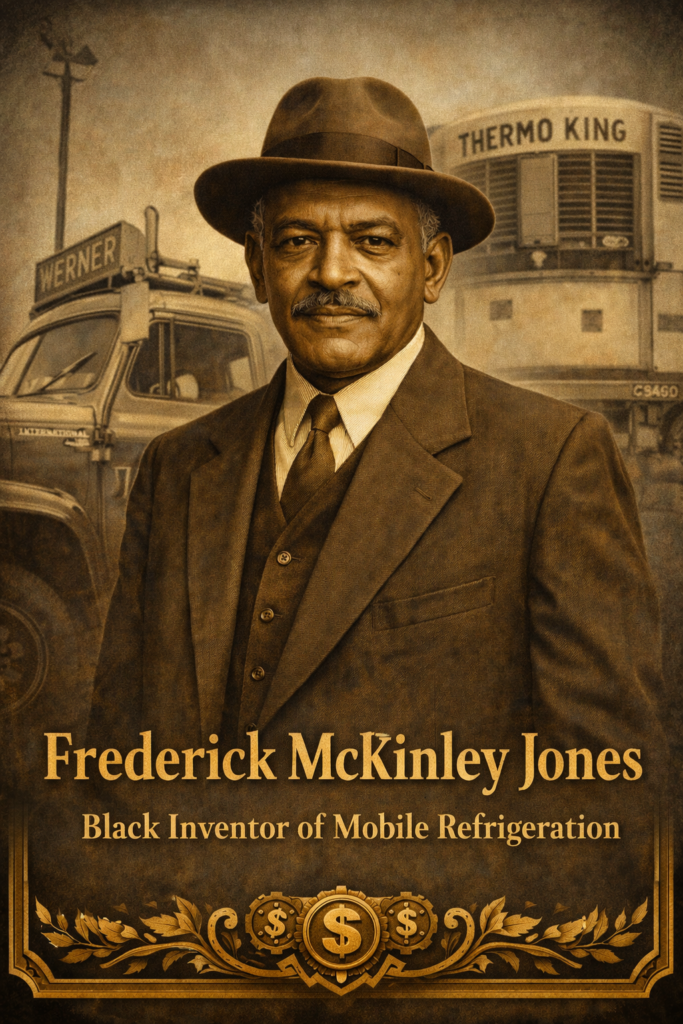
Before refrigerated trucks, the world ate locally, lived seasonally, and lost enormous amounts of food to spoilage. Fresh meat rarely traveled far. Produce rotted before reaching cities. Vaccines and blood plasma often expired before arriving where they were needed most. Entire regions were constrained not by demand, but by distance. Modern life as we know it simply wasn’t possible yet. That reality changed because of Frederick McKinley Jones. Born in 1893, Jones did not grow up with access to elite schools, laboratories, or wealthy patrons. He was largely self-taught, learning mechanics, engineering, and electronics through curiosity and necessity rather than formal education. In an America that routinely dismissed Black intelligence, Jones quietly mastered complex systems that others struggled to understand. He fixed machines. He improved them. And eventually, he redesigned an entire industry from the ground up. Jones recognized a problem most people had accepted as unavoidable: perishable goods could not survive long journeys. The solution wasn’t simply ice or insulation. It required a compact, reliable, mobile system capable of maintaining controlled temperatures while in motion. At the time, that idea bordered on impossible. Vehicles vibrated. Engines overheated. Roads were rough. Power sources were inconsistent. Yet Jones engineered a self-contained refrigeration unit strong enough to withstand travel and precise enough to preserve food and medicine. His invention of mobile refrigeration systems transformed transportation forever. Trucks, trains, and ships could now carry fresh goods across long distances without loss. Farms were no longer limited to nearby markets. Cities could grow larger without risking food shortages. Seasonal eating gave way to year-round availability. Grocery stores evolved. Supply chains expanded. Entire industries were born almost overnight. The impact reached far beyond food. During World War II, Jones’s refrigeration technology was used to transport blood plasma and medical supplies to soldiers overseas. Lives were saved not by battlefield heroics, but by temperature control. Quiet engineering became silent survival. Jones went on to earn more than sixty patents across refrigeration, engines, and electronics. He co-founded what would later become Thermo King, a company that still dominates global refrigeration transport today. Billions of dollars move through systems built on his ideas. Every refrigerated truck on the highway traces its lineage back to his work. And yet, for decades, his name was absent from classrooms, textbooks, and mainstream discussions of American innovation. This pattern is not accidental. Black inventors have repeatedly solved foundational problems only to watch their contributions be absorbed, rebranded, and monetized by others. The wealth generated often never returned to the communities that produced the ideas. Recognition arrived late, if at all. Frederick McKinley Jones was eventually awarded the National Medal of Technology, becoming the first Black American to receive the honor. It was deserved, but overdue. By then, the world had already been built on his inventions. At Black Dollar & Culture, these stories matter because they reveal something deeper than history. They show how wealth is created at the systems level. Jones didn’t invent a product. He invented infrastructure. He didn’t chase trends. He solved a permanent problem. That is where real leverage lives. Understanding his legacy is not about admiration alone. It is about strategy. Ownership. Protection. Continuity. When we study figures like Jones, we see a blueprint for how generational wealth is actually built — not through visibility, but through necessity and control of essential systems. Every cold chain, every vaccine shipment, every refrigerated aisle is proof that Black innovation has always powered the modern world, even when the world refused to acknowledge it. The work was never invisible. Only the credit was. ❤️ Support Independent Black Media Black Dollar & Culture is 100% reader-powered — no corporate sponsors, just truth, history, and the pursuit of generational wealth. Every article you read helps keep these stories alive — stories they tried to erase and lessons they never wanted us to learn. Slug: frederick-mckinley-jones-black-inventor-refrigerationMeta Description: Frederick McKinley Jones was a Black inventor whose mobile refrigeration technology transformed food distribution, medicine, and global trade.entor whose mobile refrigeration technology transformed food, medicine, and global trade. Learn the story they don’t teach.Slug: frederick-mckinley-jones-black-inventor-refrigeration
Black-Owned Businesses: Why Pouring Back Into the Community Is the Ultimate Power Move

This isn’t about charity. It’s about strategy.When Black-owned businesses reinvest into the communities that support them, they aren’t giving money away — they’re locking in longevity, loyalty, and leverage. History proves it. Modern data confirms it. And the future demands it. Before desegregation, before outside corporations flooded our neighborhoods, Black communities circulated the dollar dozens of times before it ever left. That circulation built schools, banks, hospitals, newspapers, and generational wealth. The collapse didn’t happen because the model failed — it happened because the system was disrupted. Here’s why pouring back in is not optional, but essential. 1. Community Investment Multiplies Business Survival Money spent locally doesn’t disappear — it cycles.When a Black business hires locally, sources locally, or sponsors locally, the community becomes economically invested in that business’s survival. That’s how you create customers who don’t just buy once — they defend your brand. • Local Jobs create Stable customers• Local Vendors reduce Costs and dependencies• Local Loyalty increases Lifetime value A supported community protects its own. 2. Wealth Circulation Builds Economic Immunity Every dollar that leaves the community weakens it.Every dollar that stays strengthens it. When Black businesses reinvest — through scholarships, youth programs, apprenticeships, or community real estate — they reduce dependency on outside systems that were never designed to protect us. This isn’t emotional. It’s mathematical. 3. Reinvestment Creates the Next Generation of Owners Communities don’t rise by consumption alone — they rise by ownership transfer. When successful Black businesses mentor youth, fund internships, or teach financial literacy, they aren’t just helping — they’re creating future partners, suppliers, and successors. Ownership is taught. Power is modeled. 4. Trust Is the New Currency In a world of ads, algorithms, and distractions, trust beats marketing. A business that visibly pours back into the community earns:• Word-of-mouth growth• Free brand ambassadors• Crisis-proof support People support what supports them. 5. Economic Power Is Political Power (Without Politics) You don’t need permission when you control resources. Communities with strong local businesses:• Fund their own initiatives• Solve problems internally• Negotiate from strength Reinvestment turns neighborhoods into economic blocs, not begging grounds. 6. The Blueprint Already Exists We don’t need new ideas — we need discipline and execution. From Greenwood (Black Wall Street) to Durham’s Black banking class, history shows that community-centered business models work when we commit to them long-term. The goal isn’t to escape the community — it’s to elevate it with you. The Bottom Line Black-owned businesses that pour back into the community don’t shrink — they compound. This is how legacies are built.This is how ecosystems form.This is how wealth stops leaking and starts circulating. 👉 Read more stories like this — and learn how ownership really works. ❤️ Support Independent Black Media Black Dollar & Culture is 100% reader-powered — no corporate sponsors, just truth, history, and the pursuit of generational wealth. Every article you read helps keep these stories alive — stories they tried to erase and lessons they never wanted us to learn. #BlackOwnedBusiness #BlackWealth #EconomicPower #CommunityEconomics #BuyBlack #GenerationalWealth #BlackDollar #OwnershipMindset #BlackEntrepreneurs Focus Keyphrase: Black owned businesses community reinvestmentSlug: black-owned-businesses-community-reinvestmentMeta Description: Why Black-owned businesses pouring back into the community isn’t charity — it’s a proven strategy for wealth circulation, loyalty, and generational power.
Why Gold Protects Wealth When Markets Collapse

Markets don’t collapse overnight—they unravel quietly, then all at once. Long before the headlines turn red and panic becomes fashionable, confidence begins to erode beneath the surface. Liquidity tightens, assumptions fail, and investors realize—too late—that optimism was doing more work than fundamentals. When that confidence breaks, gold does what it has always done: it holds. Gold has never been an asset of excitement. It doesn’t trend on social media, it doesn’t promise outsized returns, and it doesn’t rely on narratives. It exists for moments of stress—when systems are questioned, currencies are diluted, and trust in leadership weakens. After surviving multiple market cycles, one lesson becomes unavoidable: markets reward growth, but wealth survives through protection. When stock markets collapse, it’s rarely because companies disappear overnight. It’s because valuations were built on fragile assumptions—cheap money, endless growth, stable geopolitics. Once those assumptions crack, repricing is swift and unforgiving. Gold doesn’t reprice on earnings calls or guidance forecasts. It responds to fear, uncertainty, and instability—the very conditions that define market collapses. Cash feels safe during chaos, but history exposes its weakness. Inflation quietly erodes purchasing power while governments respond to crises with stimulus, debt expansion, and money creation. Every collapse is met with liquidity, and liquidity always comes at a cost. Gold has no printing press. Its scarcity is real, which is why it preserves value when paper assets struggle to do the same. This is precisely why central banks hold gold. Not for tradition—but for credibility. When trust between nations weakens, gold becomes neutral ground. When debt loads grow uncomfortable, gold becomes reassurance. When currencies wobble, gold becomes stability. The same logic applies at the individual level. Another overlooked advantage of gold during market collapses is optionality. The most dangerous position an investor can be in during a downturn is forced selling. Gold provides liquidity without forcing the liquidation of productive assets at the worst possible moment. It buys time, and time is often the difference between recovery and permanent loss. Gold also behaves differently than most assets during crises. While correlations across markets tend to spike during panic, gold often diverges. It may not surge immediately, but it holds ground while others fall. That stability matters far more than aggressive upside when the goal is wealth preservation. The wealthy understand this distinction clearly. They don’t buy gold to outperform equities in bull markets. They hold it to survive bear markets. Gold is not designed to make headlines—it’s designed to protect capital when headlines turn ugly. History reinforces this lesson repeatedly. Empires rise and fall. Currencies are introduced, abused, and replaced. Financial systems evolve, break, and rebuild. Through every version of that cycle, gold remains relevant—not because it is old, but because it is independent. Gold does not replace businesses, real estate, or equities. It complements them. Think of it as structural support rather than decoration. You don’t admire it when times are calm, but without it, the foundation cracks under pressure. When markets collapse, emotions spread faster than facts. Gold does not react to emotion. It doesn’t panic, doesn’t promise, and doesn’t explain itself. It simply holds value while everything else explains why it can’t. That is why gold protects wealth—not through excitement, but through endurance. ❤️ Support Independent Black Media Black Dollar & Culture is 100% reader-powered — no corporate sponsors, just truth, history, and the pursuit of generational wealth. Every article you read helps keep these stories alive — stories they tried to erase and lessons they never wanted us to learn. Focus Keyphrase:gold protects wealth Slug:why-gold-protects-wealth-when-markets-collapse Meta Description:When markets collapse and confidence disappears, gold has historically protected wealth. Learn why gold remains a powerful hedge during economic uncertainty.
Tuskegee Airmen Black History: The Elite Pilots Who Forced America to End Military Segregation
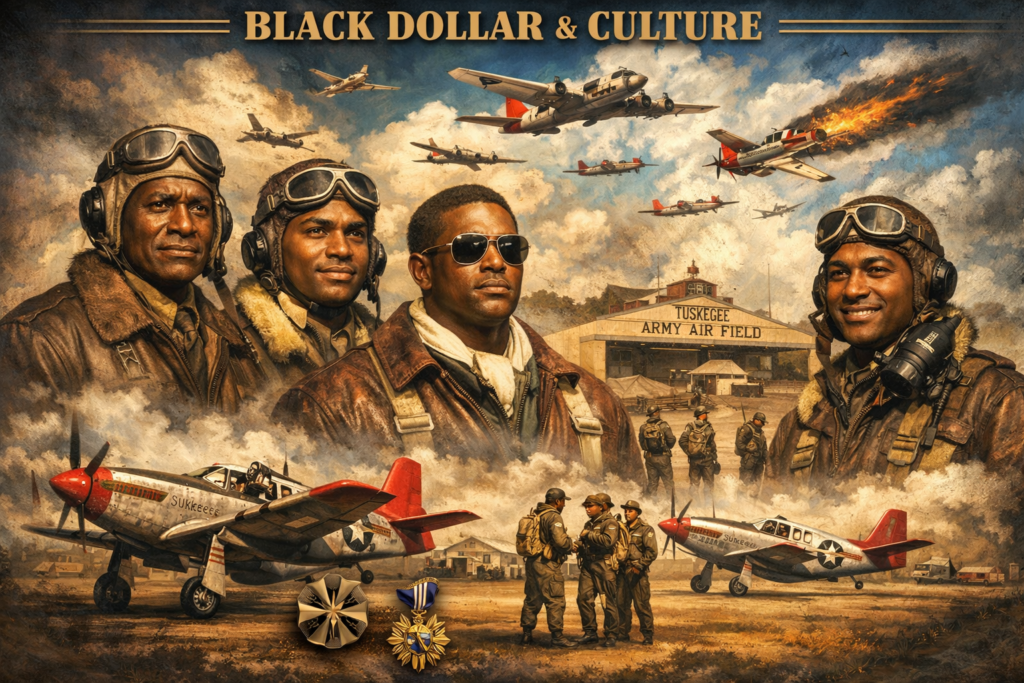
January 12, 1942 did not arrive with parades, speeches, or national celebration, but history often moves quietly before it roars. On this winter day, in a nation still shackled by segregation and racial mythology, the United States Army Air Forces authorized a program that would challenge one of America’s most deeply held lies: the belief that Black men lacked the intelligence, discipline, and courage to fly military aircraft. From this authorization emerged the men later known as the Tuskegee Airmen—a group whose excellence in the skies would force the nation to confront its contradictions. ❤️ Support Independent Black Media Black Dollar & Culture is 100% reader-powered — no corporate sponsors, just truth, history, and the pursuit of generational wealth. Every article you read helps keep these stories alive — stories they tried to erase and lessons they never wanted us to learn. The establishment of the Tuskegee program did not come from sudden enlightenment. It was the result of pressure, protest, and necessity. Black leaders, civil rights organizations, and newspapers had long challenged the military’s refusal to allow Black pilots, pointing out the hypocrisy of fighting for democracy abroad while denying it at home. World War II, with its demand for manpower, created a crack in the wall. The government conceded, but only partially, and under tightly controlled conditions designed less to empower Black airmen than to test them under a microscope. Training took place at Tuskegee Army Air Field in Alabama, a segregated base in a segregated state. The pilots were trained separately from white counterparts, often with inferior resources, outdated equipment, and instructors who expected failure. Every mistake by a Black cadet was magnified, recorded, and used as supposed proof of racial inferiority. No white unit trained under such pressure. These men were not simply learning to fly; they were fighting an unspoken trial in which the future of Black military aviation hung on every maneuver. Despite these conditions, the men excelled. They mastered navigation, aerial combat, engineering, and leadership. Many already held college degrees at a time when higher education was still largely denied to Black Americans. Their discipline was not accidental—it was forged from the understanding that mediocrity would not be tolerated. Excellence was the minimum requirement for survival, dignity, and progress. When the Tuskegee Airmen were finally deployed overseas, they were assigned to escort Allied bombers deep into enemy territory. This was among the most dangerous missions of the war. Bomber crews depended on fighter escorts to protect them from German aircraft; failure meant death. The Tuskegee Airmen, later known as the “Red Tails” for the distinctive markings on their planes, built a reputation for precision and loyalty. They stayed with the bombers. They did not abandon their posts for personal glory. As a result, they achieved one of the lowest bomber-loss rates of any fighter group in the war. This success directly contradicted decades of pseudoscience and propaganda used to justify segregation. The myth that Black men lacked the mental acuity for complex machinery collapsed under the weight of facts written in combat reports and survival statistics. The myth that Black men lacked courage evaporated in the skies over Europe. What remained was an uncomfortable truth: the barrier had never been ability—it had been racism. Yet recognition did not come easily. While white pilots were celebrated in newsreels and headlines, the Tuskegee Airmen returned home to a country still governed by Jim Crow. They could defeat fascism abroad but not segregation at home. Many were denied jobs in commercial aviation. Some were refused service in restaurants while still wearing their uniforms. The nation had used their skill but hesitated to honor their humanity. Still, history has a long memory, even when institutions try to forget. The success of the Tuskegee Airmen became impossible to ignore. Their record played a crucial role in the 1948 decision by President Harry S. Truman to desegregate the U.S. military, a move that reshaped American armed forces and set a precedent for broader civil rights reforms. Though Truman signed the order, it was the Airmen who earned it with their lives and discipline. The legacy of the Tuskegee Airmen is not confined to military history. It is a lesson in how systems preserve themselves through lies, and how those lies collapse when confronted by undeniable excellence. It is also a reminder that progress in America has rarely been gifted; it has been extracted through pressure, performance, and sacrifice. These men did not simply ask to be included—they proved that exclusion was irrational. Today, when their story is told accurately, it reframes how we understand Black history. It challenges narratives that portray Black advancement as sudden or accidental. The Tuskegee Airmen were scholars, engineers, tacticians, and leaders operating under extreme constraints. Their success was not a fluke; it was the continuation of a long tradition of Black mastery systematically obscured from public memory. January 12 should be remembered not merely as a date, but as a turning point where the lie began to crack. On that day, the United States unknowingly authorized the dismantling of one of its own racist doctrines. The men who trained at Tuskegee did more than learn to fly. They redefined what the nation could no longer deny. They turned the sky into a courtroom, and every successful mission became a verdict. Their story is not just about airplanes or war. It is about truth. And once truth takes flight, it is very hard to bring back down. Focus Keyphrase: Tuskegee Airmen Black HistoryMeta Description: Explore the true story of the Tuskegee Airmen, the Black pilots who shattered racist myths during World War II and reshaped American military history.Slug: tuskegee-airmen-black-history
Granville T. Woods: The Black Inventor Who Electrified Modern America
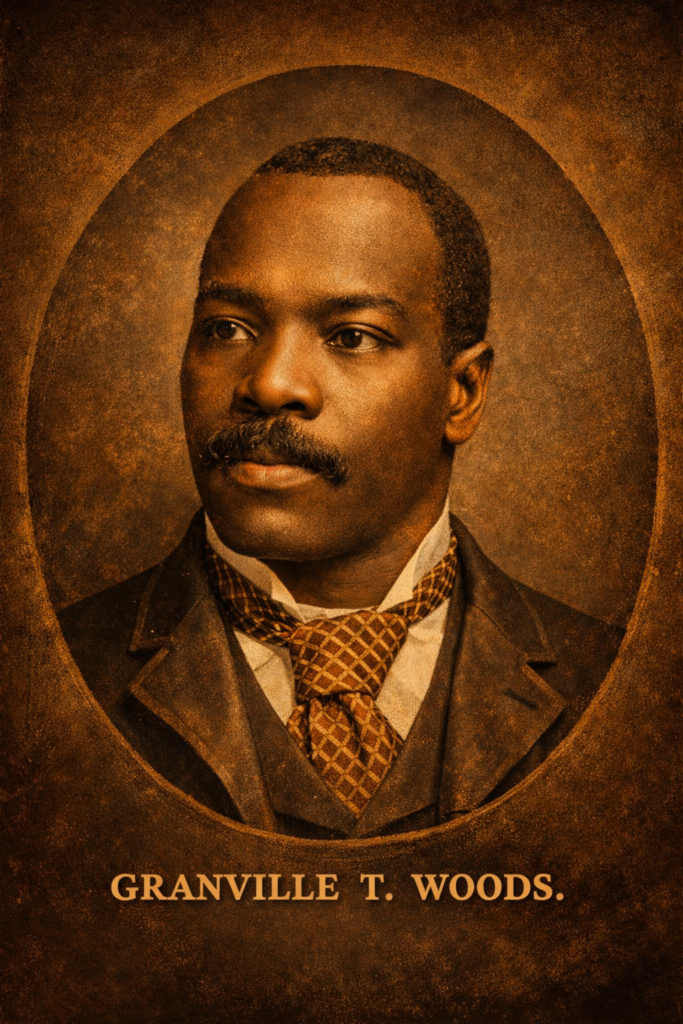
Long before America celebrated innovation as a corporate achievement, before patents became weapons and genius was filtered through race and power, a self-taught Black engineer was quietly reshaping the future of the nation. His name was Granville T. Woods, and the modern world still runs on systems influenced by his mind, even if history has tried to forget him. Born in 1856 in Columbus, Ohio, just one year after the official end of slavery, Woods entered a country that had little interest in protecting Black intellect. Formal education was limited, but necessity became his classroom. As a teenager, he worked in machine shops, steel mills, and on railroads, absorbing mechanical knowledge firsthand. Where others saw labor, Woods saw systems. Where others followed instructions, he asked why things worked—and how they could work better. Railroads in the late 19th century were expanding rapidly, but they were also deadly. Trains collided frequently because communication between moving locomotives and stations was unreliable. Signal systems lagged behind the speed of industrial growth, and passengers paid the price. Woods recognized electricity as the missing link. At a time when electrical engineering was still in its infancy, he envisioned wireless communication between trains and control stations—an idea well ahead of its time. That vision became reality through his invention of the induction telegraph. This system allowed trains to communicate with stations and other trains without physical wires, drastically reducing collisions and improving coordination across rail networks. It was not a minor upgrade; it was a foundational leap in transportation safety. Modern rail signaling, subway communication systems, and even elements of wireless transit technology trace conceptual roots back to Woods’ work. But invention was only half of Woods’ struggle. Ownership was the other. In an America where white inventors were celebrated and Black inventors were questioned, Woods was forced into constant legal battles to defend his patents. Powerful industrial figures challenged his claims, attempting to absorb his ideas into their own portfolios. Among them was Thomas Edison, one of the most famous inventors in American history. Edison disputed several of Woods’ patents, particularly those related to electrical transmission and communication systems. The legal battles were not symbolic—they were brutal, expensive, and exhausting. Yet Woods won. Multiple courts ruled in his favor, affirming that his ideas were original and his claims legitimate. These victories were rare for a Black inventor in that era and underscored the undeniable brilliance of his work. Ironically, after losing to Woods in court, Edison offered him a position at Edison Electric Light Company. Woods declined. He understood that employment would mean surrendering independence and potentially losing control of future inventions. Instead, he chose the harder path: remaining an independent inventor in a system stacked against him. Woods’ contributions extended far beyond railroads. He held more than 60 patents, many focused on electrical systems, power distribution, and transportation. His work improved electric streetcars, helped develop overhead power lines, and advanced the efficiency of electrical transmission in growing cities. Urban America—its subways, trolleys, and commuter systems—benefited enormously from his innovations. Yet unlike his white contemporaries, Woods did not amass wealth. Patent litigation drained his resources. Corporations profited from his ideas while he struggled to maintain financial stability. By the time of his death in 1910, he was respected among engineers but virtually invisible to the public. No fortune. No national recognition. No textbooks honoring his name. This pattern was not accidental. It reflected a broader American reality: Black innovation was essential, but Black ownership was optional. Woods’ story mirrors countless others where genius was extracted, repackaged, and monetized by institutions that refused to credit its true source. His life exposes the uncomfortable truth that America’s technological rise was fueled not just by celebrated inventors, but by marginalized minds denied their rightful place in history. Today, as conversations around equity, ownership, and intellectual property resurface, Granville T. Woods’ story feels painfully modern. He was not merely a victim of his time; he was a warning. Innovation without protection leads to exploitation. Genius without ownership leads to erasure. Restoring Woods to his rightful place is not about nostalgia. It is about understanding the foundation of modern America. The trains that move millions each day, the communication systems that ensure their safety, and the electrical infrastructure that powers cities all carry echoes of his work. His fingerprints are everywhere, even when his name is not. Granville T. Woods was more than an inventor. He was proof that Black intellect has always been central to progress—even when history refused to acknowledge it. Remembering him is not rewriting history. It is finally telling it honestly. Focus Keyphrase: Granville T. Woods Black InventorSlug: granville-t-woods-black-inventorMeta Description: Granville T. Woods was a brilliant Black inventor whose electrical innovations transformed railroads and powered modern America, including winning patent cases against Thomas Edison.
Bessie Coleman: The Woman Who Refused to Stay Grounded

Bessie Coleman was born on January 26, 1892, in Atlanta, Texas, at the intersection of poverty, racism, and rigid limitation. She was the tenth of thirteen children born to George and Susan Coleman, a family of sharecroppers whose lives were shaped by the unforgiving realities of post-Reconstruction America. Cotton fields, long days, and scarce opportunity defined her early years. Education existed, but barely—one-room schoolhouses, worn textbooks, and interrupted learning whenever farm labor demanded it. Yet even in those conditions, Bessie showed an early hunger for knowledge, discipline, and something beyond the horizon. Her father eventually left the family, returning to Indian Territory in Oklahoma in search of a better life, while Bessie remained with her mother, helping raise her siblings and working the fields. Poverty was not an abstract concept to her; it was lived daily. But so was resilience. She excelled in school when she could attend, eventually saving enough money to enroll at Langston University in Oklahoma. Her time there was short—financial hardship forced her to withdraw—but the seed of ambition had already taken root. She would not accept a life dictated by circumstance. In her early twenties, Bessie moved to Chicago, joining the Great Migration of Black Americans seeking opportunity beyond the South. There, she worked as a manicurist, a job that placed her in close proximity to conversation, news, and stories from beyond her world. It was in a barbershop that her life took its decisive turn. She listened as Black men returned from World War I spoke of flying in Europe. They talked about airplanes, freedom, and skies that did not feel segregated. Her brothers, particularly one who had served in France, taunted her—telling her that French women could fly planes while American Black women could not. Instead of discouraging her, the insult ignited something irreversible. Bessie Coleman decided she would fly. The problem was America had no intention of letting her do so. Every aviation school she applied to rejected her. The rejections were absolute—no appeals, no alternatives. She was dismissed not for lack of intelligence or ability, but because she was both Black and a woman. In the early 20th century, flight was considered the domain of white men only. Rather than accept the denial, Bessie made a decision that defined her legacy: if America would not teach her, she would leave America. She enrolled in French language classes, saved her earnings meticulously, and gained sponsorship from influential Black newspapers, including the Chicago Defender. In 1920, she sailed to France. This alone was radical—an unmarried Black woman traveling abroad for professional training at a time when many Americans never left their home counties. In France, she trained at the Caudron Brothers’ School of Aviation, one of the most respected flight schools in the world. Flying in the 1920s was not glamorous. Planes were unstable, cockpits open to the elements, and crashes common. Training involved risk at every step. Bessie endured crashes, injuries, and intense discipline. But she persisted. On June 15, 1921, she earned her international pilot’s license from the Fédération Aéronautique Internationale, becoming the first Black woman in the world to do so—and one of the first Americans of any race to hold that distinction. When Bessie returned to the United States, her achievement should have made her a national hero. Instead, she encountered the same walls she had left behind. Airlines would not hire her. Commercial aviation opportunities were closed. Once again, racism tried to ground her ambitions. This time, she refused to stop moving forward. Bessie turned to barnstorming—performing aerial stunts at airshows across the country. Loop-the-loops, dives, figure-eights—she mastered them all. But her performances were not about spectacle alone. They were statements. Every time she climbed into a cockpit, she challenged the idea that Black people belonged only on the ground. She attracted massive crowds, especially in Black communities, where many had never seen an airplane up close, let alone one piloted by a Black woman. She was also uncompromising in her principles. Bessie refused to perform at venues that enforced segregated seating. If Black spectators were forced to enter through back gates or sit separately, she would not fly. This stance cost her income and opportunities, but she would not trade dignity for exposure. To her, flight symbolized freedom, and freedom could not exist alongside humiliation. Her vision extended far beyond stunt flying. Bessie dreamed of opening a flight school for Black aviators—men and women—so future generations would not have to leave the country to learn what she had fought to access. She spoke publicly about this goal, emphasizing education, discipline, and ownership of the skies. She wanted Black pilots, Black mechanics, Black instructors—an aviation ecosystem independent of exclusionary systems. Tragically, that dream was cut short. On April 30, 1926, in Jacksonville, Florida, Bessie Coleman boarded a plane for a practice flight ahead of an upcoming airshow. The aircraft was piloted by her mechanic, William Wills. Bessie was not wearing a seatbelt because she was scouting the terrain below, preparing for a parachute jump she planned to perform later. Mid-flight, the plane experienced a mechanical failure—later determined to be caused by a loose wrench lodged in the engine. The aircraft went into a sudden nosedive. Bessie was thrown from the plane at 2,000 feet and died instantly. She was 34 years old. Moments later, the plane crashed, killing Wills as well. Her death sent shockwaves through Black communities across the country. Thousands attended her funeral in Chicago. Leaders, activists, and ordinary people mourned not just the loss of a woman, but the loss of a future she represented. She died without ever opening the flight school she envisioned, without seeing the aviation doors she cracked open fully swing wide. Yet her impact did not end with her life. Bessie Coleman became a symbol—of courage without permission, of ambition without apology. Her legacy inspired future generations of Black aviators, including the Tuskegee Airmen during World War II. Pilots flew in her honor. Schools, clubs, and scholarships were named
The Rubber That Bled Africa: How the Congo Funded Europe’s Rise

Europe’s modern rise did not begin in factories, parliaments, or banks. It began in the forests of Central Africa, where rubber vines wrapped around trees and human suffering wrapped around an entire civilization. Long before automobiles rolled across paved streets and before electricity lit European cities, the Congo was being drained—slowly, violently, and deliberately—to fuel an empire that the world would later call “progress.” In the late 1800s, as Europe raced into the Industrial Age, rubber became one of the most valuable resources on Earth. It powered bicycle tires, automobile wheels, electrical insulation, machinery belts, and military equipment. Demand exploded almost overnight, and with it came a question that Europe was determined to answer at any cost: where would the rubber come from? The answer was the Congo. What made the Congo especially vulnerable was not just its natural abundance, but its political erasure. At the Berlin Conference of 1884–85, European powers carved Africa into territories without African consent or presence. In one of history’s most grotesque land grabs, the Congo did not even become a Belgian colony at first—it became the personal property of King Leopold II of Belgium. A single man claimed control over a landmass nearly the size of Western Europe and renamed it the Congo Free State, though nothing about it was free. Leopold never set foot in the Congo. He did not need to. He ruled through violence, quotas, and terror, building a system that turned African lives into units of production. Villages were ordered to meet rubber quotas extracted from wild vines deep in the jungle. Failure was punished brutally. Hands were severed to prove bullets had not been wasted. Families were taken hostage. Entire communities were burned. Fear became policy. Violence became management. The rubber that arrived in Europe carried no visible bloodstains, but it was soaked in them. Each shipment represented countless hours of forced labor, starvation, mutilation, and death. Historians estimate that between 10 and 15 million Congolese people perished during Leopold’s rule—through execution, exhaustion, famine, and disease. This was not accidental. It was the cost of doing business. Meanwhile, Europe flourished. Belgium transformed. Infrastructure expanded. Wealth accumulated. Banks grew stronger. Industries advanced. Rubber profits poured into European development while Congo villages collapsed into silence. Roads and railways were built, not to connect African communities, but to remove resources faster. The Congo was never meant to be developed—only emptied. What made the system especially insidious was how it was marketed. Leopold presented himself to the world as a humanitarian, claiming to bring civilization, Christianity, and order to Africa. European newspapers repeated the lie. Investors believed it. Governments tolerated it. The suffering of African people was buried beneath propaganda and distance, hidden behind the language of “trade” and “progress.” But the truth could not stay hidden forever. Missionaries, journalists, and whistleblowers began documenting the atrocities. Photographs of mutilated Congolese men, women, and children leaked into the global consciousness. Testimonies described villages erased for missing quotas. International outrage grew. Eventually, pressure mounted enough that Belgium stripped Leopold of his personal control in 1908, officially turning the Congo into a Belgian colony. Yet the system did not disappear—it evolved. Forced labor continued under different names. Resource extraction persisted. Wealth still flowed outward, never inward. The rubber economy faded only when Southeast Asia began producing rubber more cheaply, not because African lives had suddenly gained value, but because exploitation found a more efficient location. Europe’s industrial foundations, however, were already laid. The bicycles, cars, machines, and infrastructure that symbolized modernity were built on African suffering that history textbooks rarely emphasize. Rubber was not just a material—it was a transfer of wealth, power, and future. The Congo lost generations. Europe gained centuries. Today, when people speak of Africa’s “underdevelopment,” they rarely mention how development was removed. They ask why nations struggle without acknowledging that their wealth was exported at gunpoint. The Congo was not poor—it was plundered. Its people were not unproductive—they were enslaved. Its land was not empty—it was emptied. And rubber was only the beginning. The same patterns would repeat with minerals, oil, gold, diamonds, and now the materials powering modern technology. The Congo continues to supply the world while remaining among the poorest nations on Earth, trapped in cycles designed long before independence. To understand Europe’s rise without understanding Congo’s suffering is to accept a lie. Progress did not happen in isolation. It happened through extraction, violence, and silence. The rubber that cushioned Europe’s journey into modernity crushed African lives beneath it. History remembers the factories. It remembers the kings. It remembers the empires. But it must also remember the blood-soaked vines in the Congo forests—where Africa bled so the modern world could move.
Why Saving Alone Will Never Make You Rich

Saving money is responsible.Saving money is disciplined.Saving money is necessary. But saving money—by itself—has never been the path to real wealth. That truth is uncomfortable because for generations, especially in working families, saving was taught as the finish line. “Put money away.” “Don’t spend it.” “Build a nest egg.” Those habits are important, but they are incomplete. And in today’s economy, they are dangerously incomplete. Saving Preserves Money — It Does Not Multiply It Saving is defensive.Wealth is offensive. When you save, you are protecting money you already earned. When you build wealth, you are putting money to work so it produces more money without requiring more labor from you. A savings account does one job well: it prevents loss.It does not create growth. Inflation quietly erodes the value of saved cash every year. Even “high-yield” savings accounts usually struggle to outpace the rising cost of living over long periods. This means that money sitting still is, in real terms, often moving backward. Saving keeps you stable.It does not make you free. The Wealthy Use Saving as a Starting Point, Not a Strategy Wealthy households save—but they don’t stop there. They save to deploy.They save to invest.They save to acquire assets. Savings is the staging area. Assets are the engine. Stocks, businesses, real estate, and ownership stakes are what compound over time. These assets grow, generate income, and expand purchasing power. They turn time into an ally. If your money is not growing while you sleep, it is falling behind while you work. Income Is Temporary. Systems Are Permanent. Most people are trained to think linearly:Work → Get paid → Save → Repeat That loop creates stability, not wealth. Wealth is built through systems that operate independently of your daily effort:• Automated investing• Ownership structures• Compounding returns• Tax-advantaged accounts• Reinvested profits Saving without a system is like collecting seeds and never planting them. The Real Risk Isn’t Investing — It’s Standing Still Many people avoid investing because it feels risky. Market ups and downs look scary. But the biggest long-term risk is guaranteed stagnation. Cash loses value slowly and silently.Assets fluctuate but grow over time. Avoiding risk entirely doesn’t eliminate danger—it simply chooses a slower, quieter form of loss. The wealthy understand this distinction. They don’t chase excitement. They structure exposure. They manage risk with diversification, time horizons, and discipline. Saving Buys Time. Assets Buy Freedom. Saving gives you breathing room.Assets give you leverage. Saving helps you survive emergencies.Assets help you escape dependency. This is why people can save for decades, retire with a respectable balance, and still worry about running out of money. They protected income—but never replaced it. True wealth replaces labor with ownership. The Shift That Changes Everything The question is not:“How much should I save?” The better question is:“What system will turn my savings into ownership?” Saving is step one.Investing is step two.Ownership is the destination. Those who stop at step one remain disciplined workers.Those who complete the journey become builders of legacy. Slug: why-saving-alone-will-never-make-you-richMeta Description: Saving money is important, but it will never make you rich by itself. Learn why wealth is built through systems, assets, and ownership—not just discipline.
Robert Reed Church: The Black Man Who Became the South’s First Millionaire After Slavery
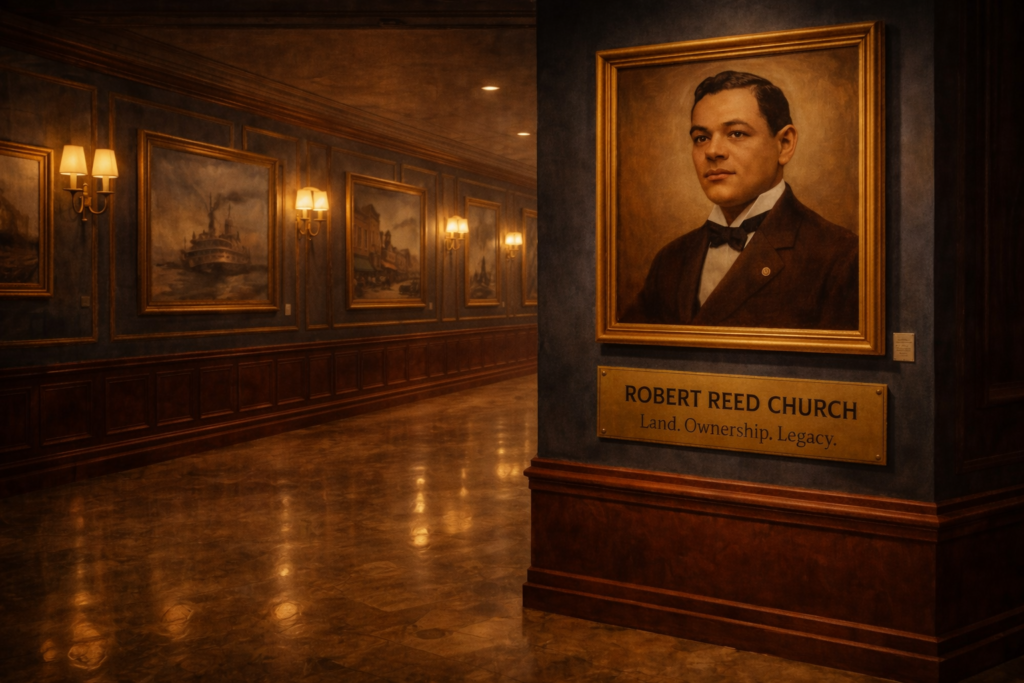
They don’t teach this story in schools because it disrupts a lie that America has spent centuries protecting—the lie that Black people never built wealth on their own, never mastered systems, never owned power before it was taken from them. Robert Reed Church did all three. Born enslaved in Mississippi in 1839, Robert Reed Church entered the world as property. His mother was enslaved. His father was a white steamboat captain who never publicly claimed him but quietly ensured that Church learned something most enslaved people were denied—how money moved. By the time emancipation arrived, Church was no longer just free. He was prepared. While many newly freed Black Americans were pushed into sharecropping—a system designed to trap them in permanent debt—Church made a different decision. He went where money flowed: the Mississippi River. As a young man, he worked on steamboats, not just as labor but as a businessman. He learned routes. He learned trade. He learned leverage. And most importantly, he learned land. After the Civil War, Memphis was chaos. Disease, political instability, and racial violence made white property owners panic. During the yellow fever epidemics of the 1870s, thousands fled the city. Property values collapsed. White landowners sold prime real estate for pennies just to escape. Robert Reed Church saw opportunity where others saw collapse. With cash saved from years of disciplined work and investing, Church bought land—lots of it. Downtown Memphis. Beale Street. Commercial corridors. Not farmland. Not scraps. Prime urban real estate. While others speculated, he owned. By the 1880s, Church was the largest Black landowner in the South. By the 1890s, he was worth over one million dollars—making him the first Black millionaire in the South after slavery, at a time when lynchings were public entertainment and Jim Crow was tightening its grip. But Church didn’t just build wealth for himself. He understood something most wealthy people do: money without community is fragile. He invested heavily in Black Memphis. He built Church Park and Auditorium, one of the largest Black-owned entertainment venues in the country. It hosted concerts, political meetings, conventions, and speeches by leaders like Booker T. Washington. When Black people were locked out of public spaces, Church created their own. He financed Black businesses when banks refused. He backed schools when the state neglected them. He used his influence to protect Black institutions during periods of racial terror—not with speeches, but with ownership and political pressure. And then came 1892. That year, Memphis exploded with racial violence after the lynching of three successful Black businessmen. Many Black residents fled the city, fearing massacre. Again, white landowners sold. Again, Robert Reed Church bought. His wealth grew not from exploitation—but from discipline, timing, and understanding systems. Church also understood legacy. His son, Robert Reed Church Jr., became one of the most powerful Black political figures in America, helping found the NAACP and turning Memphis into a center of Black political organization. This was not accidental. This was design. Robert Reed Church died in 1912, but his blueprint remains painfully relevant today. He proved that Black wealth was never impossible—only interrupted. He proved that land ownership is power. He proved that economic independence is louder than protest. And he proved that when Black people are allowed—even briefly—to operate without sabotage, they build cities. They erased his name because his existence is evidence. Evidence that Black Wall Streets didn’t appear by accident.Evidence that wealth can be built even in hostile systems.Evidence that the problem was never Black ability—but white interference. Robert Reed Church didn’t beg for inclusion. He bought the ground beneath the system—and stood on it. SEO Elements Slug:robert-reed-church-first-black-millionaire-south Meta Description:The untold story of Robert Reed Church, the first Black millionaire in the South after slavery, who built wealth through land ownership, discipline, and economic independence in Memphis.