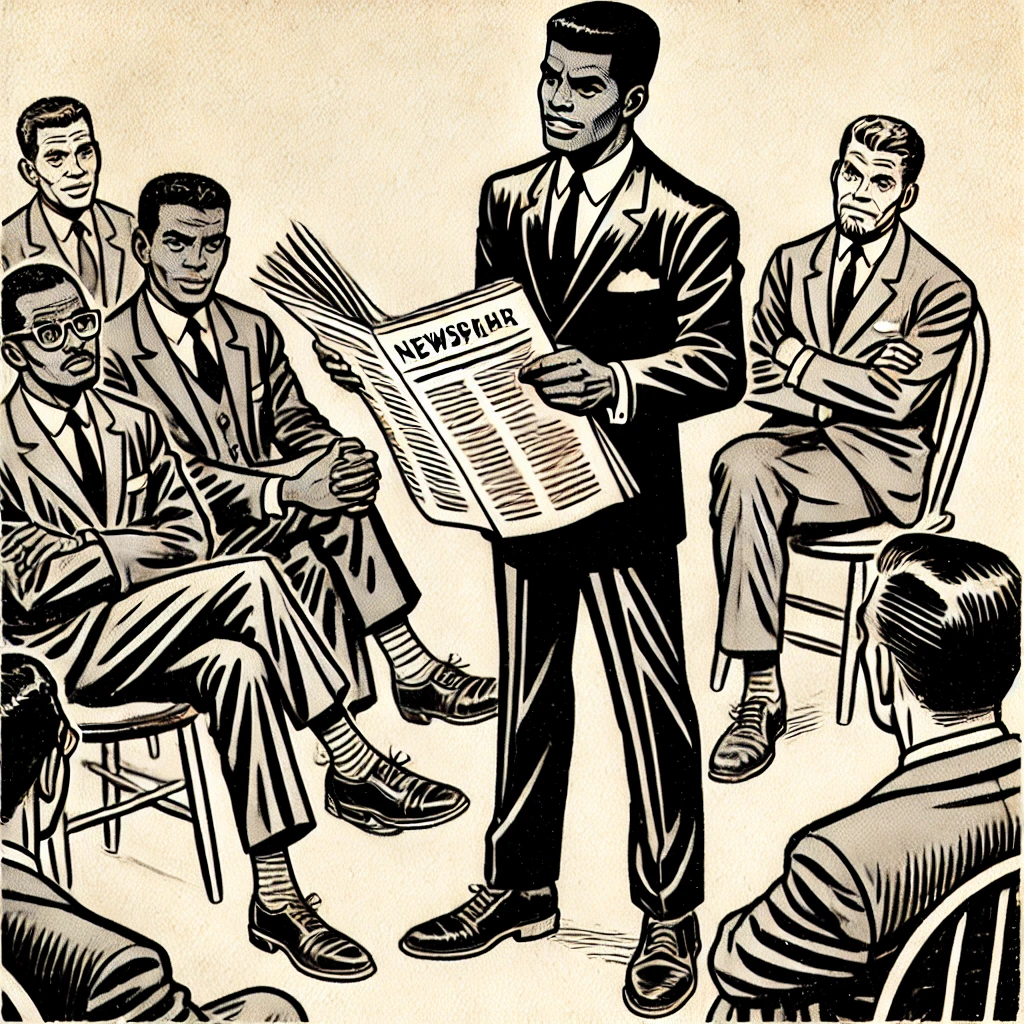
From Black Wall Street to Wall Street — The Wealth Journey They Tried to Hide

Word Count: ~1,250** America has always had two financial stories:One written in New York’s skyscrapers…And one written in the dust roads of Tulsa’s Greenwood District. But what most people don’t realize is this:The mindset, brilliance, and structure of Black Wall Street didn’t die in 1921 — it lives inside today’s Black entrepreneurs, investors, and wealth-builders. This is the journey nobody talks about:How we went from owning our own economy to learning the rules of their economy — and how we’re reclaiming both. 1. Black Wall Street Was America’s First Financial Blueprint Long before analysts, hedge funds, and market forecasts, Black Wall Street operated on principles Wall Street would later celebrate: Doctors, lawyers, tailors, pilots, barbers, real estate developers — all within walking distance.Greenwood wasn’t just rich.It was organized. And that’s the secret America never wanted us to know. 2. The Fall Was Violent — But the Model Was Brilliant The Tulsa Massacre burned buildings, businesses, and dreams.But it never burned the blueprint. Families who fled Greenwood carried their knowledge, discipline, and structure into cities like Chicago, Detroit, Oakland, and New York. And slowly, the mindset of Black ownership made its way into Wall Street itself — not through acceptance, but through relentless determination. 3. Cracking the Code: How Black America Entered Wall Street Entry wasn’t given.It was fought for. From the first Black stockbrokers on Wall Street to the rise of: We didn’t just “join” Wall Street — we forced the doors open and built new ones. Today, more Black investors are entering the market than ever before, proving that once the knowledge gap closes, the wealth gap follows. 4. The Same Principles Still Win Today The same formulas that made Greenwood powerful are the ones that build wealth in today’s markets: ✔ Ownership over labor Greenwood built businesses; Wall Street buys them. ✔ Community investing Greenwood circulated the dollar; today we invest in Black-owned funds and enterprises. ✔ Family wealth structure Greenwood families passed businesses down; today we pass down trusts, stocks, and insurance-backed assets. ✔ Economic collaboration Greenwood had co-ops and community lenders; today we build investment groups, business circles, and mastermind networks. Nothing changed about what works — only the environment changed. 5. From Main Street to Markets: How You Build the Bridge If Black Wall Street taught us ownership, Wall Street teaches us leverage. To build wealth in the modern world, you need both. Here’s how to combine them: 1. Start with Ownership (Black Wall Street mindset) Ownership is the foundation. 2. Multiply with Markets (Wall Street strategy) The markets are the multiplier. 3. Protect It (Legacy strategy) This is how you preserve what you build. 6. History Didn’t End When the Fire Started — and Neither Did We They burned the buildings.They didn’t burn the brilliance. Today’s Black financial movement — from YouTube creators to fintech innovators, investors, entrepreneurs, and educators — is the modern continuation of the spirit of Greenwood. We’re not rebuilding one district.We’re creating a nationwide ecosystem of Black wealth-builders. Final Word: From One Wall Street to Another Black Wall Street showed us the power of ownership.Wall Street shows us the power of leverage. When we combine the two, we don’t just build wealth —we build an economic legacy that no system, no fire, no barrier can erase. Don’t just learn the markets — master the mindset.That’s how we rise from surviving their system to building our own. #BlackWallStreet #BlackWealth #StockMarket #GenerationalWealth #BlackDollarAndCulture
The Government Shutdown Is Finally Over — What It Really Means for Black America’s Finances

Word Count: ~1,200 For over a month, federal workers, small business owners, and families across the country have lived in uncertainty. The government shutdown — the longest in U.S. history — has finally come to an end. But for Black America, the effects of this shutdown didn’t just pause paychecks. It exposed the fragile line between stability and survival. Let’s break down what this means for our communities, our wallets, and our wealth-building future 1. The Shutdown’s Real Victims: Black Federal Workers Black Americans make up roughly 18% of the federal workforce, far above our percentage of the U.S. population. That means when the government shuts down — we’re hit the hardest. During the 43-day freeze, thousands of Black families went without paychecks, forced to rely on savings (if they had any) or credit cards to get by. Many were essential workers — still showing up every day with no pay, keeping America running while Washington played politics. You can’t build generational wealth when your income stops but the bills don’t. 2. Small Businesses Took a Gut Punch For Black-owned businesses, the shutdown didn’t just close doors — it cut off oxygen. No new federal contracts.No loans from the Small Business Administration (SBA).No grants for minority business programs. Some entrepreneurs had pending deals stuck in limbo for over a month — opportunities that could’ve changed their trajectory. And unlike major corporations, most small Black-owned businesses don’t have the cash reserves to survive long delays. 3. SNAP, Housing, and Healthcare Scares Beyond jobs, the shutdown froze vital social safety nets. Millions of Americans — especially Black families — faced threats to SNAP benefits, HUD housing, and even healthcare renewals. For many, that meant skipping meals, juggling bills, and living under the constant anxiety of “What happens next?” This wasn’t just political — it was personal. 4. The Bigger Picture: Why We Need Our Own Systems The shutdown revealed something we can’t ignore — dependency on systems we don’t control leaves us vulnerable. We can’t keep waiting for the government to “open back up” to survive.We need community-owned solutions: Because no shutdown can stop ownership. The goal isn’t to escape the system — it’s to outgrow it. 5. Financial Lessons From the Shutdown This moment taught us five powerful lessons every family should take seriously: Because the next time politics pauses the country, your household shouldn’t have to pause too. 6. What’s Next for Black America’s Finances With the shutdown over, back pay will help — but it won’t erase the damage.Debt piled up. Credit scores dropped. Savings drained. The next move for us must be about financial independence. That means building wealth we control — through: The shutdown might be over. But the mission continues — building wealth that no political gridlock can take away. Final Word: We Can’t Be Shut Down The government reopening doesn’t mean everything’s fixed.It just means the game reset — and we can’t keep playing defense. Now’s the time to double down on ownership, emergency planning, and collaboration. Because while the government may shut down, Black wealth must stay open. When systems stop, ownership keeps going. That’s how we win — every time. #GovernmentShutdown #BlackWealth #FinancialFreedom #BlackDollarAndCulture #EconomicEmpowerment
How “Famous Amos” Lost His Company — and the Lesson Every Entrepreneur Should Learn

Word Count: ~1,200 We all know the name: Famous Amos.Those small, crunchy, chocolate chip cookies that filled lunchboxes, gas stations, and grocery shelves for decades. But behind that brand was a man — Wally Amos — a Black entrepreneur with a million-dollar smile and a dream even sweeter than his cookies. He built an empire that changed snack food forever… then lost it all.And his story holds one of the most important wealth lessons every entrepreneur should know. 1. The Rise of the Original Cookie King In the 1970s, Wally Amos wasn’t just baking cookies — he was baking history. Before the world knew him as Famous Amos, he was a Hollywood talent agent representing legends like Simon & Garfunkel and Diana Ross. But his true passion was in the kitchen. Using his aunt’s recipe, he started gifting homemade chocolate chip cookies to clients. They were so good, people said, “You could sell these.”So he did. In 1975, he opened the first gourmet cookie store in Los Angeles — with just $25,000 in startup money and his magnetic personality as his main ingredient. Within a few years, Famous Amos became a nationwide sensation. His smile was the brand. His recipe was the soul. His cookies were the dream. 2. The Sweet Taste of Success Wally was a natural-born marketer.He wore his straw hat and bow tie everywhere, personally greeting customers and signing boxes like autographs. By the early 1980s, his cookies were in every grocery store in America.He became the first Black entrepreneur to build a major national food brand from scratch. Sales exploded.Media appearances followed.And “Famous Amos” became not just a product — but a symbol of Black excellence and entrepreneurship. 3. The Bitter Turn — Losing the Brand But fame can be expensive. As the company grew, so did its costs.Wally took on investors to help expand, and over time, he gave away more and more ownership. By the mid-1980s, his shares were diluted — and by 1988, he had completely lost control of his company and his name. That’s right:He no longer owned Famous Amos, and he wasn’t even allowed to use his own name on future businesses. It’s the cruelest twist in entrepreneurship — building a brand so powerful that you can’t even use your own name. 4. The Emotional Cost of Selling Out When Wally lost his company, he also lost his identity. Imagine watching the cookies you created being sold on shelves with your face — but not your profits. He said in interviews that losing “Famous Amos” felt like losing a part of himself.But he didn’t stop there. He later launched new ventures like “Uncle Noname’s Cookies” and “The Cookie Kahuna,” continuing to share his recipes and his joy. But the brand power he built under “Famous Amos” was gone — and the big corporations who bought it continued to profit off his legacy. 5. The Lesson: Own Your Name, Own Your Power Wally’s story is bigger than cookies.It’s about ownership. He was the heart of the brand — but not the holder of the equity. And that’s the biggest mistake too many creators and entrepreneurs make. Talent creates value. Ownership keeps it. If your business has your name on it — trademark it.If you build a brand — protect it before you promote it.And if you take on investors — read the fine print twice. Because in business, control is sweeter than any cookie. 6. The Rebirth of Wally Amos Even after losing everything, Wally never stopped smiling. He became an author, motivational speaker, and advocate for literacy.He once said, “You can’t be famous for being famous. You have to stand for something.” And he did.His life became a testament to resilience — to starting over with humility, humor, and hope. Famous Amos is now owned by the Ferrero Group (the same company that makes Nutella and Ferrero Rocher).But the man who started it all still represents the heart of the brand. Because you can’t trademark legacy — only ownership. 7. The Real Takeaway for Black Entrepreneurs Wally Amos’s story should be taught in every business class. It’s proof that creativity alone isn’t enough.You need contracts.You need trademarks.You need to understand how to own the empire you build. The next generation of Black creators must move from talent to ownership, from brand deals to brand equity. Because in America, the recipe for wealth isn’t just genius — it’s legal structure. Final Word: Never Lose Your Name Wally Amos’s story is both inspiring and heartbreaking. He built a household name from nothing.He broke barriers and built a legacy of joy and entrepreneurship.But he lost it because the system wasn’t built to protect him. The world still eats his cookies — but only a few know his story. So next time you see “Famous Amos” on a shelf, remember:Behind that label was a man who showed us how far vision can take you — and how ownership can keep you there. Don’t just build brands. Build ownership. #FamousAmos #BlackEntrepreneurs #Ownership #BlackHistory #BlackDollarAndCulture
November Side Hustles That Can Make You Extra Cash Before the Year Ends

Word Count: ~1,250 The holidays are coming fast — and so are the bills.But November isn’t just about turkey, football, and Black Friday deals. It’s also the perfect month to stack a little extra cash before the year closes out. So if you’ve been side-eyeing your wallet and wondering how to get your bag up before 2026 hits — here are November side hustles that don’t require a degree, a boss, or a miracle. 1. Sell Digital Products for Holiday Shoppers This is the season for printables, planners, eBooks, and digital gifts. Use platforms like Etsy, Stan Store, or Shopify to sell simple products like: People are spending — but they also want instant downloads.Create once. Sell forever. Digital products are the modern version of owning a vending machine online. 2. AI-Powered Freelancing AI isn’t replacing you — it’s supercharging you. Use tools like ChatGPT, Canva, and Jasper to offer: You can easily find clients on Upwork, Fiverr, or Facebook groups. AI helps you deliver faster, and clients pay for speed + quality. Don’t just scroll AI — sell with it. 3. Airbnb or Turo for the Holidays November is travel season.If you’ve got a spare room, car, or vacation space — this is the month to rent it out. List your ride on Turo or your home on Airbnb.Even renting for two weekends could cover a bill or fund your holiday shopping. Pro tip: Offer “holiday packages” — like car add-ons, snacks, or gift baskets to increase reviews (and income). 4. Seasonal Pop-Up or Craft Booths The holiday markets are packed with shoppers looking for gifts.Set up a booth for: November through December is gift season gold — and local pop-ups often cost less than $100 to join. You’re not just selling products — you’re building visibility for your brand. 5. Social Media Affiliate Marketing Turn your phone into a paycheck. Join affiliate programs through Amazon, ShareASale, or Impact — and promote products you already use.If your content gets consistent views, those clicks add up. Focus on trending products like: Affiliate marketing is the definition of “get paid while you sleep.” 6. Start a YouTube Shorts or TikTok Page Short-form content is dominating — and monetization is at an all-time high. Pick a niche you love (finance, food, motivation, or reviews) and post daily for 30 days.Use trending sounds, consistent captions, and AI tools for editing. By January, you could have 10k+ followers and new income streams from brand deals or digital products. Your phone isn’t just entertainment — it’s equity. 7. Resell Black Friday Finds Black Friday + Cyber Monday = your flipping season. Buy discounted electronics, fashion, or collectibles — then resell them on eBay, Facebook Marketplace, or StockX.You’d be shocked how many people miss deals and buy later at full price. It’s not luck — it’s timing. 8. Teach What You Know Your knowledge is a currency. Teach online through: Whether it’s fitness, finance, or photography — someone’s willing to pay for your wisdom. And November is prime time for “new year, new skill” buyers. 9. Virtual Assistant Work With holiday chaos, businesses are begging for help managing their emails, DMs, and schedules. Offer VA services remotely: Charge $25–$50 an hour, and work from your laptop.By December, you’ll have consistent clients — and a clearer path into entrepreneurship. 10. Bundle Your Hustles The ultimate wealth trick: don’t just do one.Combine two or three and create synergy. Example: Each hustle feeds the other. That’s compound income. Final Word: November’s the Month to Build Momentum Don’t wait for January 1st to start fresh — start now.One small hustle can become your full-time income if you’re consistent. Because every big brand started as a side hustle that someone refused to quit. You don’t need more time — just more intention. So, this November, don’t just spend money.Multiply it. #SideHustles #FinancialFreedom #BlackDollarAndCulture #Entrepreneurship #WealthBuilding
How to Get Out of Debt & Build Assets

Word Count: ~1,250 Let’s be real — debt feels like quicksand.You work, you grind, you pay… and somehow, it’s still there. But what if I told you that debt isn’t the end of your wealth story — it’s the beginning of your financial power? Because once you learn how to master debt and flip that same energy into asset building, you stop surviving and start stacking. So let’s talk about how to get out of debt and build assets — step by step, the Black Dollar & Culture way. 1. Face the Numbers, Don’t Fear Them You can’t fix what you won’t face. Grab every bill, statement, and credit report — yes, even the ones hiding in your inbox like bad memories.Add up your total debt.Now separate it: This is your financial x-ray.You can’t treat the illness if you don’t know where it hurts. Clarity is power. Avoidance is debt’s best friend. 2. Attack the High Interest First Credit cards are like vampires — they suck your money dry while you sleep. Start with the highest-interest balances first using the avalanche method.Pay minimums on everything else, and throw every extra dollar at the worst offender. Once that’s gone, roll that same payment to the next debt.That’s called momentum money — and it works faster than you think. Every debt you destroy is a raise you gave yourself. 3. Create a Freedom Budget Your budget isn’t a punishment — it’s your permission slip to build freedom. Split your income into three buckets: Even while paying off debt, never stop investing.Because if you wait until “everything’s paid off,” you’ll lose years of compounding. You can walk out of debt and build wealth at the same time — just with balance. 4. Build an Emergency Fund First Before you pay off another dollar, save at least $1,000.That’s your buffer between progress and panic. After that, aim for 3–6 months of expenses.Because the moment life hits — car trouble, layoff, medical bill — your debt plan will crumble without it. An emergency fund keeps you from using credit to survive. 5. Automate Your Progress If you have to rely on discipline every month, you’ll lose. Set up automation: Systems beat willpower every time. When your money moves automatically toward your goals, you start building wealth in your sleep. 6. Replace Liabilities With Assets Here’s where we flip the script. Once you free up cash from paying off debt, redirect it into assets — things that grow or pay you back: Every time you pay off a debt, buy an asset.That’s how you turn struggle into strategy. 7. Build Credit While You Build Wealth Getting out of debt doesn’t mean avoiding credit — it means mastering it. Keep old accounts open, pay on time, and keep your utilization under 30%.Once your score climbs, use it strategically: Good credit isn’t wealth — it’s access to wealth. 8. Protect What You Build Once you start stacking, protect your progress. That means: Because the goal isn’t just to be debt-free — it’s to be free, period. 9. Learn to Use Debt Like the Wealthy Do Here’s the twist: wealthy people don’t avoid debt — they leverage it. The difference is purpose.They use debt to buy assets that make money — not things that lose value. Bad debt buys comfort.Good debt buys control. When you understand that difference, you’ll never look at credit the same way again. 10. Celebrate Your Financial Freedom When that last payment clears, don’t just breathe — build.Take that same “debt payment” money and invest it. If you were paying $300/month in debt and invest it for 10 years at 8% — that’s $55,000+ waiting for you. That’s the power of redirection. Final Word: From Debt to Dynasty Debt is a season — not a sentence. Once you face it, fix it, and flip it into ownership, your financial story changes forever. You don’t have to be rich to start building assets — you just have to start where you are.Because the real flex isn’t being debt-free — it’s being asset-rich. Freedom doesn’t start when you pay off debt.It starts when you realize you were never meant to stay in it. #DebtFreeJourney #BlackWealth #FinancialFreedom #BlackDollarAndCulture #WealthBuilding
The Power of Compound Ownership

Word Count: ~1,250 Everyone’s heard of compound interest — how money grows faster the longer it’s invested. But few people talk about something even stronger: compound ownership. That’s when your assets start owning assets.When your business owns your brand.When your trust owns your life insurance.When your investments own your time. Compound ownership isn’t just financial — it’s freedom multiplied.And it’s how families turn one generation of work into ten generations of wealth. 1. What Is Compound Ownership? Compound ownership is what happens when one level of ownership creates another. For example: It’s wealth that builds more wealth automatically — not because you work harder, but because your ownership keeps stacking. The poor work for money.The middle class works for comfort.The wealthy work for ownership. 2. Ownership Is the Real Compound Interest Albert Einstein called compound interest the eighth wonder of the world.But if he’d seen how ownership works, he might’ve said there’s a ninth. When you own assets — stocks, businesses, real estate, intellectual property — their growth compounds just like interest. Every year, your portfolio doesn’t just earn returns — it gains control. Because with ownership comes leverage.And with leverage comes freedom. 3. Start Small, Think Legacy You don’t need to be rich to start building ownership.You just need consistency. Start with one thing you can control: Every ownership step — no matter how small — compounds over time. That $100 investment today could fund your child’s business tomorrow.That one brand you start now could turn into a family corporation later. 4. Let Your Entities Work for Each Other The secret of the wealthy isn’t how much they earn — it’s how they structure what they own. Here’s a simple example of compound ownership in action: That’s not luck.That’s strategy. You’ve just created a cycle where your assets protect, fund, and grow each other — forever. 5. Compound Ownership vs. Consumer Culture Let’s be honest — we were trained to spend, not to own.We’re taught to chase paychecks, brands, and lifestyles — not equity. Every purchase is either making someone rich or keeping you broke. The goal is to flip that equation. Instead of asking, “Can I afford it?” start asking, “Can I own the company that makes it?” Don’t just buy Nike — own Nike.Don’t just use Apple — invest in Apple.Don’t just rent a house — own one. Because consumers build empires for others.Owners build empires for their families. 6. The Generational Effect When ownership compounds across generations, the results are unstoppable. One property turns into three.One family trust becomes a dynasty.One brand name becomes a legacy. Your children shouldn’t start from scratch — they should start from structure. That’s what compound ownership does: it hands the next generation not just wealth, but the system to keep it growing. Real wealth is not what you leave them — it’s what you teach them to build. 7. Tools to Build Compound Ownership in 2025 Here’s where to start: Each of these layers stacks into your legacy like bricks — solid, structured, and self-sustaining. 8. The Real Secret: Time + Ownership = Freedom It’s not timing the market. It’s owning something long enough for time to reward you. Every year your assets exist, they grow — and so does your leverage.Ownership compounds faster than income because income ends when you stop working.Ownership keeps paying — even in your sleep. That’s the game the wealthy have been playing for centuries.It’s time we start playing it too. Final Word: Build What You Want to Pass Down Compound ownership isn’t just a strategy — it’s a mindset. Every business, trust, and investment you create becomes part of a tree that keeps growing long after you’re gone. Don’t just chase compound interest.Build compound ownership. Because money grows.But ownership multiplies. #Ownership #GenerationalWealth #BlackDollarAndCulture #FinancialFreedom #LegacyBuilding
How to Set Up an Irrevocable Life Insurance Trust (No Lawyer Needed)

Word Count: ~1,250 You don’t need a $500-an-hour attorney to protect your family’s legacy.You just need the right knowledge — and the courage to do what wealthy families have been doing for generations. It’s called an Irrevocable Life Insurance Trust, or ILIT for short. And if you want to transfer wealth tax-free, keep life insurance proceeds out of probate, and ensure your family stays protected for decades — this is the secret the wealthy have quietly mastered. Let’s break down how to set up an ILIT without a lawyer, step-by-step, in plain English. 1. What Exactly Is an Irrevocable Life Insurance Trust? An ILIT is a legal trust that owns your life insurance policy. That means: In short: 2. Why It’s Called “Irrevocable” (and Why That’s a Good Thing) “Irrevocable” means you can’t change it once it’s set up — and that’s exactly what makes it powerful. When you give ownership of your life insurance policy to the trust, you’re removing it from your personal estate.That protects it from: Once it’s in the trust, it’s locked for your family’s benefit — not subject to outside interference. In legacy planning, “control” isn’t always power — protection is. 3. Step 1: Choose Your Trustee This person will manage the trust. Pick someone responsible, trustworthy, and financially sound — usually: Avoid naming yourself — that defeats the purpose. The trustee will handle the insurance policy, pay premiums (using funds you gift), and distribute proceeds after your passing. 4. Step 2: Choose Your Beneficiaries This part’s simple — who do you want to receive the money? You can name: Be clear and specific. You can also decide how they receive it — lump sum, annual payments, or milestone-based (like college or home purchases). 5. Step 3: Draft the Trust Document You don’t need an attorney for this part if you use the right template. You can create an ILIT using trusted online platforms such as: The trust document must clearly state: Once completed, sign and notarize it. 6. Step 4: Transfer Ownership of the Policy This is critical. Contact your insurance provider and request a change of ownership form.List your new trust as the owner and beneficiary of the policy. Example: Owner: The [Your Last Name] Family Irrevocable Life Insurance TrustBeneficiary: The [Your Last Name] Family Irrevocable Life Insurance Trust This ensures the policy payout flows directly to the trust — not your estate. 7. Step 5: Fund the Trust Your trust needs money to pay premiums. You’ll make annual “gifts” to your trust — and your trustee will use that money to pay the policy premiums. Each year, your trustee should send out a “Crummey Letter” (a short notice that keeps the trust IRS-compliant).Don’t worry — most templates and software include this automatically. 8. Step 6: Keep It Organized and Protected Once your ILIT is active, keep copies of everything: Store these in a safe place — ideally a fireproof safe or digital vault.And make sure your trustee knows where everything is. 9. The Hidden Benefits Wealthy Families Know That’s why ILITs are often called the “invisible vault” of generational wealth. 10. You Don’t Need Millions to Set One Up This isn’t just for the rich. You can set up an ILIT with: That’s it. The same strategy used by multi-millionaires is now accessible to families who simply want to protect their legacy without paying legal fees. Legacy is not about how much you have — it’s about how much stays in your family when you’re gone. Final Word: Protect It Like You Built It You worked hard for your money.Now make sure it stays where it belongs — in your family. An Irrevocable Life Insurance Trust is more than a financial tool — it’s a declaration that your family’s future matters. No lawyers. No loopholes. Just structure, strategy, and security. Because wealth isn’t what you earn — it’s what you keep. #FamilyTrust #LifeInsurance #LegacyPlanning #BlackDollarAndCulture #GenerationalWealth
How to Build Wealth as a Couple or Family

Word Count: ~1,250 They say two heads are better than one — but when it comes to money, that’s only true if those two heads are thinking in the same direction. Wealth isn’t just built with paychecks and investments — it’s built with partnership, purpose, and planning. And if we’re serious about creating generational wealth, it starts at home — with the people who share your last name. So whether you’re married, engaged, or simply raising a family together, here’s how to build wealth as a couple or family in a way that lasts. 1. Talk About Money — Before It Talks About You Most relationships fail financially not because of lack of love, but lack of communication. Before you invest, before you save, before you start your “we rich now” dance — sit down and talk about your money habits. Ask the real questions: Be honest. Be transparent. Because secrets destroy wealth faster than bad investments. The couple that talks about money stays rich together. 2. Build a Family Financial Blueprint A dream without a plan is just a wish — and wishes don’t compound. Create a family wealth blueprint that includes: Then assign roles.If one person’s the investor and the other’s the saver — great.If one handles bills while the other handles growth — perfect. The goal isn’t to be equal in every task.It’s to be equally invested in the mission. 3. Combine Power, Not Just Paychecks Combining finances doesn’t mean losing independence — it means multiplying strength. Start by having: When your money works as a team, your family becomes an economy. Two incomes. One vision. Infinite potential. 4. Invest Together — Even in Small Amounts You don’t need to start with thousands — just consistency. Pick one platform (Fidelity, Robinhood, or M1 Finance) and start investing in: Turn investing into a family activity.Talk about stocks at dinner. Teach your kids what ownership means. You’re not just investing money — you’re investing mindset. 5. Build a Family Business or Side Venture The most powerful wealth builders in history didn’t just save — they owned. You don’t need a Fortune 500 business. Start small: A family business gives you cash flow, control, and community pride. And when your kids see ownership in action, they’ll never beg for opportunity — they’ll create it. 6. Protect the Bag — Trusts, Insurance, and Wills Building wealth is one thing. Protecting it is another. Create a safety net that outlives you: The goal isn’t just to pass down money — it’s to pass down systems. If your wealth dies with you, it was income, not legacy. 7. Make Wealth a Family Culture Your family should treat wealth like a lifestyle — not a topic for “someday.” Do monthly money meetings.Celebrate savings goals.Talk openly about business ideas. Teach your kids how to handle money early — budgeting, investing, ownership, generosity. Wealth isn’t taught in most schools.So it’s up to us to make our homes the classroom. 8. Keep Love at the Center Money can build empires — or destroy them.Keep perspective. No matter how much you earn, always remember why you’re doing it: Wealth should strengthen your love, not stress it.So every now and then, close the laptop, grab your partner’s hand, and remember: The richest families are the ones that never forget their “why.” Final Word: Build Wealth Together, Stay Rich Forever Money multiplies when two people move in the same direction. When you and your partner build, save, invest, and protect together — you’re no longer chasing wealth.You’re building generational freedom. Because one person with a dream can make a difference.But a family with a plan?They can change history. #FamilyWealth #BlackDollarAndCulture #FinancialFreedom #MarriageAndMoney #GenerationalWealth
The Real Woman Behind Aunt Jemima

Word Count: ~1,250 You’ve seen her face on syrup bottles and pancake mix boxes for decades.That warm smile. That headscarf. That image that became one of the most recognizable brands in American history. But behind the logo was a real woman — a pioneer, a cook, and a performer who was far more than a marketing character. Her name was Nancy Green, and her story is one of brilliance, exploitation, and the power of legacy. 1. From Slavery to Symbol Nancy Green was born into slavery in Montgomery County, Kentucky, in 1834.She lived through an era that denied her humanity — yet she became one of the most influential figures in American consumer history. After gaining her freedom, Nancy moved to Chicago, where she worked as a cook and caretaker. Her skills in the kitchen weren’t just good — they were legendary. So legendary, in fact, that in 1893, she was chosen to represent the Aunt Jemima brand at the World’s Fair in Chicago. That moment changed everything. 2. The Birth of an Icon The Aunt Jemima character was created by two white men — Charles Rutt and Charles Underwood — who based the brand on a minstrel song that mocked Black women. But Nancy Green brought the character to life in a way they never expected. At the World’s Fair, she drew huge crowds. Her pancakes were famous. Her personality was electric. Her storytelling captivated audiences. She turned a caricature into a character — real, relatable, and full of joy. People didn’t just love the pancakes. They loved her. 3. The Face of a National Brand — Without the Fortune Nancy Green became the first living trademark in American advertising history.Her face and likeness sold millions of products. But while her image built wealth for others, she never shared in that success. Quaker Oats bought the Aunt Jemima brand in 1925 and kept her image on the packaging for nearly a century — without ever properly crediting or compensating her descendants. It’s a painful reminder of how Black labor, talent, and creativity built industries that often excluded the very people who made them thrive. Her face made millions. But her legacy was hidden in the fine print. 4. Beyond the Brand — The Real Nancy Green Nancy Green wasn’t just a “mammy” stereotype.She was a philanthropist, a missionary, and a woman of deep faith. She used her platform to support her church and local causes in Chicago.She was known for feeding the hungry, caring for children, and serving her community with the same warmth that made her famous. When she passed away in 1923, she was buried in an unmarked grave — her contributions to history left untold for nearly a century. 5. The Rebrand That Sparked Reflection In 2020, following nationwide conversations about racial imagery and justice, Quaker Oats retired the Aunt Jemima brand. They replaced it with Pearl Milling Company, the original name of the mill that created the pancake mix in 1888. While the move was symbolic, it sparked something more powerful: a reckoning. People began asking, “Who was the real woman behind Aunt Jemima?”And that question led millions to Nancy Green — her story, her strength, and her silence. 6. The Lesson: Own Your Image, Own Your Power Nancy’s story isn’t just history — it’s a blueprint. It reminds us that ownership matters.That every face, every brand, every idea has value. And that when we build — whether it’s a blog, a product, or a brand — we must protect it, name it, and profit from it. The same way they trademarked her image, we must trademark our legacy. Because if you don’t own your image, someone else will — and they’ll sell it back to you. 7. Reclaiming the Narrative Today, Nancy Green’s story is finally being told by educators, historians, and creators like you — people dedicated to rewriting what was erased. Her legacy is more than a syrup bottle. It’s a lesson in self-worth, ownership, and resilience. She was more than Aunt Jemima.She was the blueprint for turning struggle into story — and story into power. Final Word: From Pancakes to Power Nancy Green’s name deserves to be remembered — not as a logo, but as a legacy. She showed the world that even when the odds are stacked, your gift can make the world stop and watch.But her story also warns us — that brilliance without ownership can become bondage all over again. So today, when you see that smiling face on a vintage box, remember the woman behind it.A woman who cooked her way into history.A woman who made a brand unforgettable — even when the world tried to forget her. #NancyGreen #AuntJemima #BlackHistory #BlackExcellence #BlackDollarAndCulture
7 Streams of Income Black Families Can Build Now

Word Count: ~1,250 You’ve heard it before: “The average millionaire has seven streams of income.”But here’s the truth they don’t tell you — those seven streams didn’t appear overnight.They were built brick by brick, idea by idea, and habit by habit. For Black families especially, building multiple income streams isn’t just about wealth — it’s about freedom.It’s about never being one paycheck, one job, or one system away from survival. So today, we’re breaking down seven powerful income streams that every Black family can start building right now. 1. Earned Income — Your Current Job or Skill This is your 9 to 5, your freelance gig, or your main hustle — the foundation. It’s not the enemy. It’s the launchpad.Use your earned income to fund investments, start businesses, or pay down debt. The goal is to let your job finance your freedom — not define it. Don’t just work for your money — make your money start working for you. 2. Business Income — Create Something You Own This is where true freedom begins. Start small — an online store, a service, a digital product, or a side brand.It doesn’t have to replace your job today; it just has to create ownership tomorrow. Examples: The key is ownership — because business income gives you control. 3. Investment Income — Make Your Money Work Stocks, ETFs, crypto, REITs — whatever you choose, make sure your money is earning while you’re not. Start simple: Your money should be in motion, not sitting still.Because the longer it works, the sooner you won’t have to. 4. Real Estate Income — Build Wealth You Can Touch Land. Homes. Property.This is where generational wealth gets real — literally. Buy, rent, or flip, but own something.Even if it’s one property, one lot, or one Airbnb — start there. Real estate pays you three ways: Black Wall Street, Rosewood, and countless others proved this:Ownership of land is ownership of legacy. 5. Passive Digital Income — Make Money Online While You Sleep The digital world is the new frontier of Black entrepreneurship.We’ve gone from building physical towns to building digital ones. Start with what you already have: These assets take time to build — but once they’re up, they work 24/7.That’s not a side hustle — that’s digital real estate. 6. Royalties and Licensing — Get Paid for What You Create Music, books, designs, inventions — our creativity is currency. Turn your talent into royalties: Once your work is out there, every play, purchase, or download sends you a check.That’s how artists become entrepreneurs — by protecting their IP. Own your art. Don’t rent your genius. 7. Trusts and Family Banks — Build Generational Streams This is the long game. You can have seven incomes for yourself — or you can build systems that feed your family for generations. Start a Family Trust or Family Bank.Use it to: This is how families like the Rockefellers and Fords kept their wealth — by institutionalizing it. You don’t need millions to start.You just need intention — and consistency. Final Word: From Surviving to Scaling You don’t have to be rich to start building streams of income.You just have to start — one stream at a time. Because wealth isn’t built in a day — it’s built daily.And the moment you stop depending on one income, you start depending on yourself. Black families have built nations, cities, and movements.Now it’s time to build financial empires. Seven streams. One legacy. Endless possibilities. #FinancialFreedom #BlackWealth #GenerationalWealth #BlackDollarAndCulture #PassiveIncome